Your VCT floor isn't just a solid surface; it's a porous system that begins to degrade the moment its protective seal fails. If you've noticed that your facility looks dim despite a rigorous schedule, you aren't alone. Many local business owners find that traditional mopping isn't enough to stop deep scuff marks or that heavy yellowish buildup in the corners. Effective commercial VCT floor cleaning requires more than just soap and water. It demands a methodical understanding of the material's science to prevent the high cost of a total floor replacement.
We understand the pride you take in your professional environment and the frustration that settles in when your maintenance efforts don't seem to show. Reliable maintenance provides more than just a clean surface; it offers a foundation of safety and professionalism for everyone who walks through your doors. This guide will show you how to protect your investment by mastering the science of VCT care. We'll walk through the essential steps of a preservation strategy, moving from the nuances of daily maintenance to the technical precision required for professional restoration and protection.
Key Takeaways
- Understand why VCT requires a specialized preservation approach compared to other vinyl surfaces due to its unique limestone composition.
- Discover how microscopic abrasions trap contaminants and why surface-level cleaning often fails to reach deeply embedded soil.
- Learn why daily mopping doesn't always result in a truly clean floor and how to avoid the common "gray water" effect in high-traffic zones.
- Master the technical steps of professional commercial VCT floor cleaning, including the critical process of neutralizing pH levels during a strip and wax.
- Explore how strategic additions like walk-off mats and customized maintenance schedules can prevent up to 80% of soil from ever entering your facility.
What is Commercial VCT Flooring and Why Does It Require Special Care?
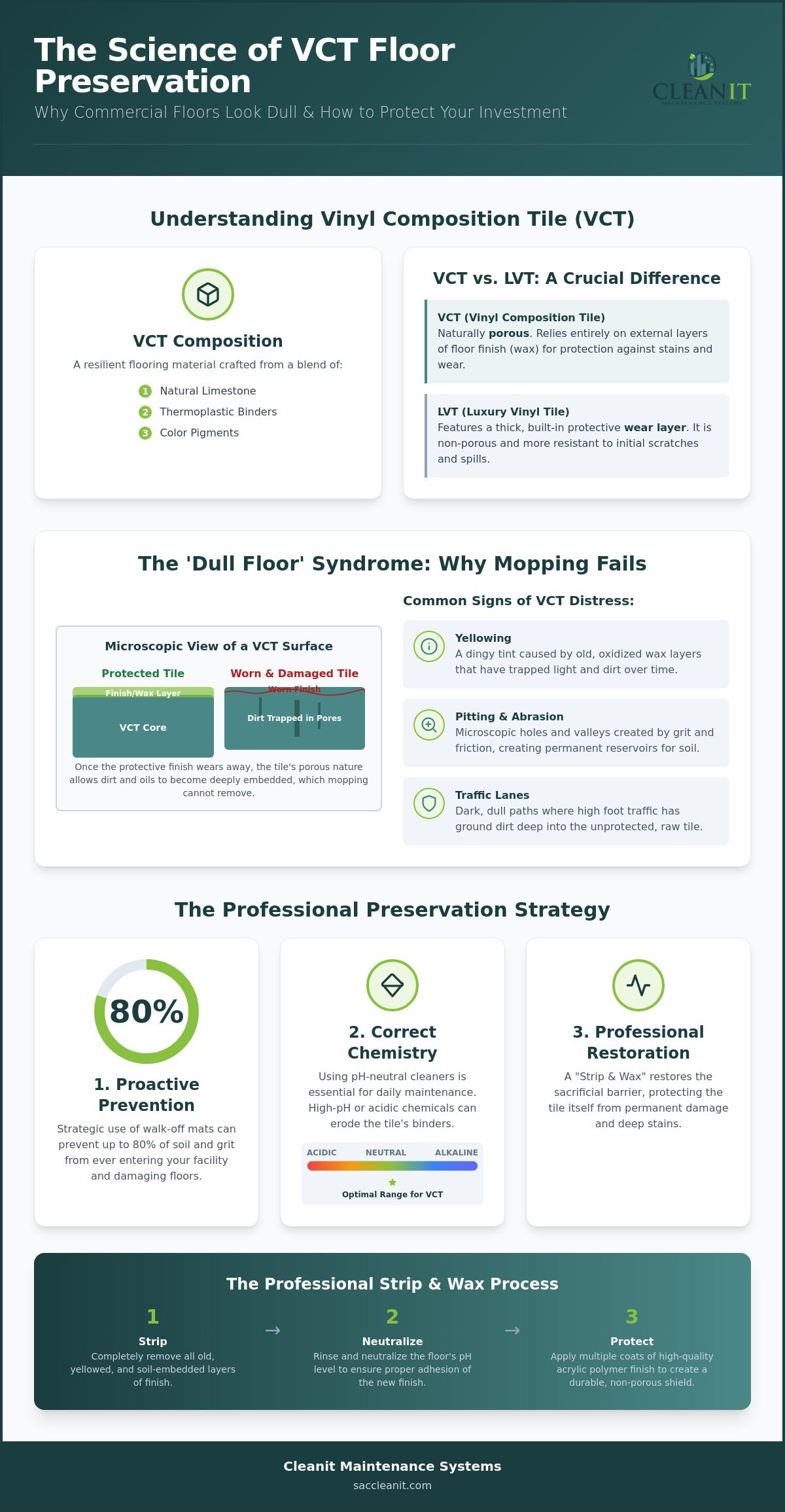
Vinyl Composition Tile, or VCT, is a resilient flooring material crafted from a precise blend of natural limestone, thermoplastic binders, and pigments. If you've ever wondered What is VCT flooring, it's essentially a high-density product designed to withstand significant pressure and weight in high-traffic environments. While it's often compared to Luxury Vinyl Tile (LVT), the two materials require vastly different care. LVT usually features a thick protective wear layer that resists scratches, whereas VCT is naturally porous and relies entirely on layers of floor finish for its protection. This makes professional commercial VCT floor cleaning a necessity rather than an elective service for facilities in the healthcare, education, and retail sectors.
To see how professional restoration can transform a worn surface and extend its life, watch this helpful video:
The History and Popularity of VCT in Commercial Spaces
For over 30 years, VCT has earned its reputation as the workhorse of the commercial industry. It's a staple in many Sacramento office buildings and complexes because of its incredible lifespan when managed correctly. The initial cost-benefit analysis is often what draws facility managers in; it's one of the most affordable hard surfaces to install. However, that low upfront cost comes with a trade-off. VCT is high-maintenance by design. Without a consistent program for commercial VCT floor cleaning and finishing, the tiles quickly lose their structural integrity and aesthetic appeal. Neglect often leads to permanent damage that mopping simply cannot reverse.
Just as VCT has a storied role in commercial spaces, other flooring materials have their own rich industrial backgrounds. Experts like The Rutland Cleaning Company provide valuable context on the history of carpet manufacturing, demonstrating how the evolution of floor coverings has consistently shaped the professional cleaning industry.
The 'Dull Floor' Syndrome: Why Mopping Isn't Enough
Many facility managers struggle with floors that look perpetually "dirty" even after a fresh mop. This happens because the factory finish is thin and wears down quickly under foot traffic. Once that seal is gone, soil and oils become deeply embedded in the tile's pores. You'll start to see the classic signs of distress:
- Yellowing: A dingy tint caused by old, oxidized wax layers that have trapped light.
- Pitting: Small holes or indentations where the tile material has begun to erode from grit.
- Traffic Lanes: Dark, dull paths where high foot traffic has ground dirt into the raw tile.
Standard cleaning won't fix the problem at this stage. We focus on preservation over simple cleaning. It's about restoring the protective barrier before the tile itself becomes permanently damaged. By understanding the science behind the material, we can remove the operational burden of floor care from your shoulders and ensure your facility remains a pillar of professionalism in the community.
The Science of VCT Porosity: How Soil and Oil Get Trapped
To understand why your floors look dull, you have to look at the surface under a microscope. While VCT is incredibly durable, it's a composite material that remains naturally porous. These microscopic voids act like tiny sponges for grease, oil, and fine particulates. As employees and customers walk across the floor, their shoes carry in grit that acts as a fine abrasive. This friction creates micro-abrasions, or tiny valleys, in the tile's surface. Without a professional approach to commercial VCT floor cleaning , these valleys become permanent reservoirs for dirt that standard cleaning methods simply cannot reach.
Traditional mop-and-bucket methods often exacerbate the problem. When a mop becomes saturated with gray water, it doesn't lift the soil; it redistributes it. The liquid carries contaminants deep into the tile's pores, where they settle as the water evaporates. Over time, this creates a dingy, hazy appearance that no amount of daily mopping can fix. Additionally, the choice of cleaning agent is critical. Using high-pH or overly acidic chemicals can weaken the thermoplastic binders that hold the limestone together. Sticking to pH-neutral cleaners is essential for maintaining the structural integrity of the tile while removing surface-level debris without causing chemical erosion.
The Chemistry of Floor Finish (Wax)
Acrylic polymer finishes serve as a sacrificial barrier, taking the brunt of foot traffic so the tile doesn't have to. These polymers form a chemical bond with the tile surface, creating a smooth, non-porous shield that prevents soil from reaching the limestone base. The percentage of solids content in floor wax determines how much protective material remains on the floor after the water evaporates, directly influencing both the level of shine and the finish's long-term durability. By maintaining this barrier, we ensure that the tile remains protected from the deep-set staining that leads to premature replacement.
Environmental Factors in the Greater Sacramento Area
Our local environment presents unique challenges for floor preservation. In the Greater Sacramento area, Central Valley dust is a constant presence. This fine silt acts like sandpaper on VCT finishes, accelerating the wear and tear on your floor's protective seal. High summer temperatures also play a role; they can cause the finish to cure too quickly, potentially leading to brittleness if not managed correctly. Humidity levels must also be monitored during the restoration process, as excess moisture in the air can significantly extend the drying time between coats of wax. If you're concerned about how the local climate is impacting your facility, we're here to help you assess your floor's current condition and build a plan that lasts.
The Limitations of Daily Mopping for Commercial Vinyl Floors
Many facility managers believe that if a floor is mopped every night, it's clean. This is a common misconception that can lead to long-term damage. Mopping is a vital surface-level maintenance task, but it isn't a deep cleaning solution. In high-traffic environments, mopping alone fails to address the grit that has settled beneath the surface finish. It's a baseline of care that keeps a building presentable, but it doesn't preserve the material's integrity over time.
This is where the "Gray Water" effect becomes a problem. As a mop bucket becomes increasingly contaminated, it stops lifting dirt and starts redistributing it across the floor. The water carries fine particles and oils into the microscopic pores of the tile. Without the specialized tools used in professional commercial VCT floor cleaning , traditional mopping can actually push contaminants deeper into the tile's structure. Instead of removing the burden of dirt, you're simply moving it around.
There's also the issue of chemical residue. If mop water isn't changed frequently or if the detergent ratio is off, a sticky film begins to build up on the floor. This residue acts like a magnet, attracting more soil and making the floor look dingy faster. It's a cycle that simple mopping cannot break. Furthermore, improper mopping techniques or using plain water without the right surfactant can leave behind slick spots or oily films. This increases the risk of slip-and-fall accidents, creating a significant liability for your business.
The Difference Between Sanitizing and Restoring
It's vital to distinguish between sanitizing a surface and restoring its integrity. Daily janitorial staff play an essential role in maintaining a baseline of hygiene. Our daily cleaning services are designed to remove surface bacteria and loose debris. However, these teams often don't have the heavy-duty equipment required for deep commercial VCT floor cleaning and restoration. Restoration involves removing the embedded grit and damaged wax layers that daily mopping simply cannot reach. It's the difference between wiping down a counter and refinishing a piece of furniture.
Identifying When You Need Professional Intervention
How do you know when your maintenance routine has reached its limit? You can perform a simple "Tape Test" to check your floor's condition. Press a piece of clear adhesive tape onto a clean section of the floor and pull it up. If the tape comes away with a yellow or gray film, your finish is failing. This "yellowing" occurs when old wax layers oxidize and trap dirt within the finish itself. If the tiles feel brittle or show signs of pitting, you're approaching the point of no return. Catching these signs early allows for restoration before the tile becomes too damaged to save, removing the need for a costly full replacement.
The Professional VCT Cleaning Process: Stripping, Waxing, and Buffing
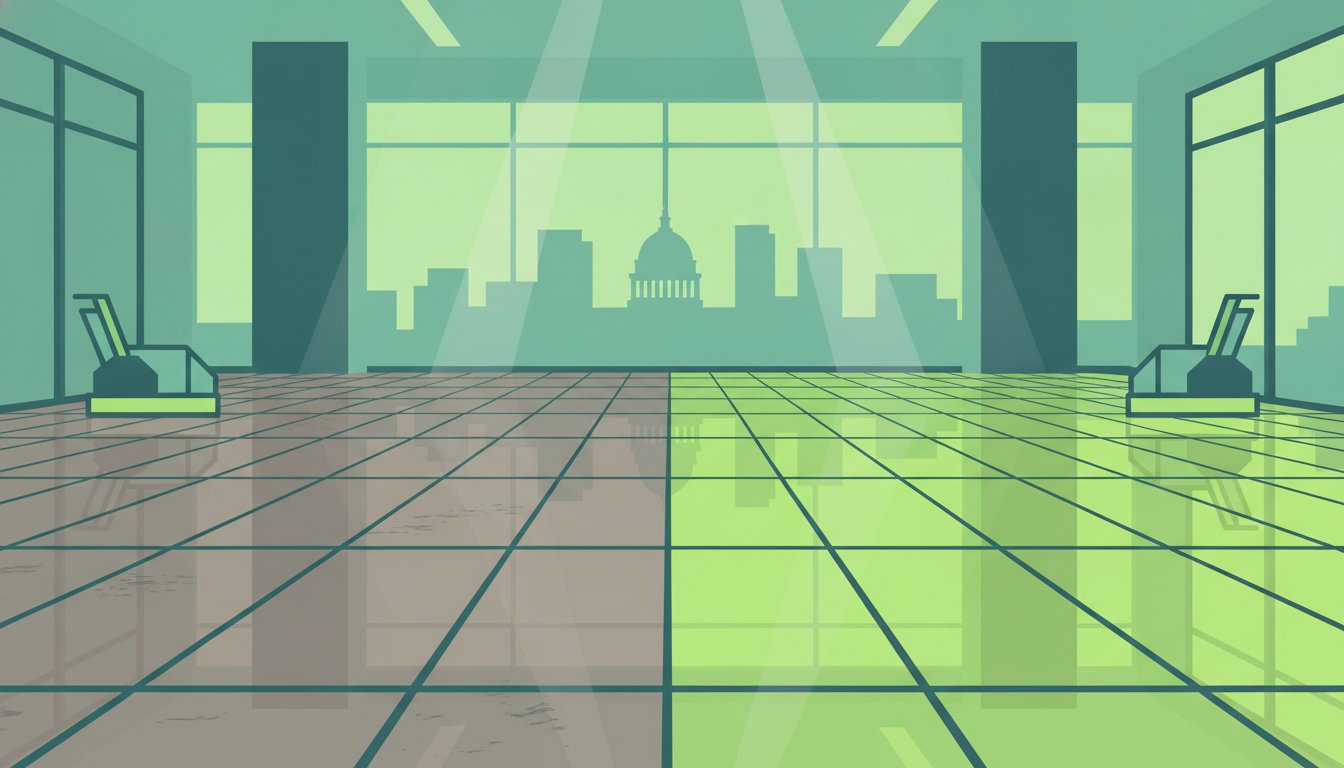
Professional commercial VCT floor cleaning is a methodical restoration process that goes far beyond surface scrubbing. It begins with a complete reset of the floor's condition. We remove every layer of old, oxidized finish to reach the raw tile, ensuring a clean slate for new protection. This restoration cycle is essential for maintaining the longevity of your facility's assets and preventing permanent material degradation. Once the old wax is gone, we focus on neutralizing the floor's pH levels. Applying a finish to a floor that is still too alkaline from stripping chemicals will cause the new wax to fail, leading to peeling or "ghosting" effects that compromise the floor's appearance.
Step 1: Chemical Stripping and Slurry Removal
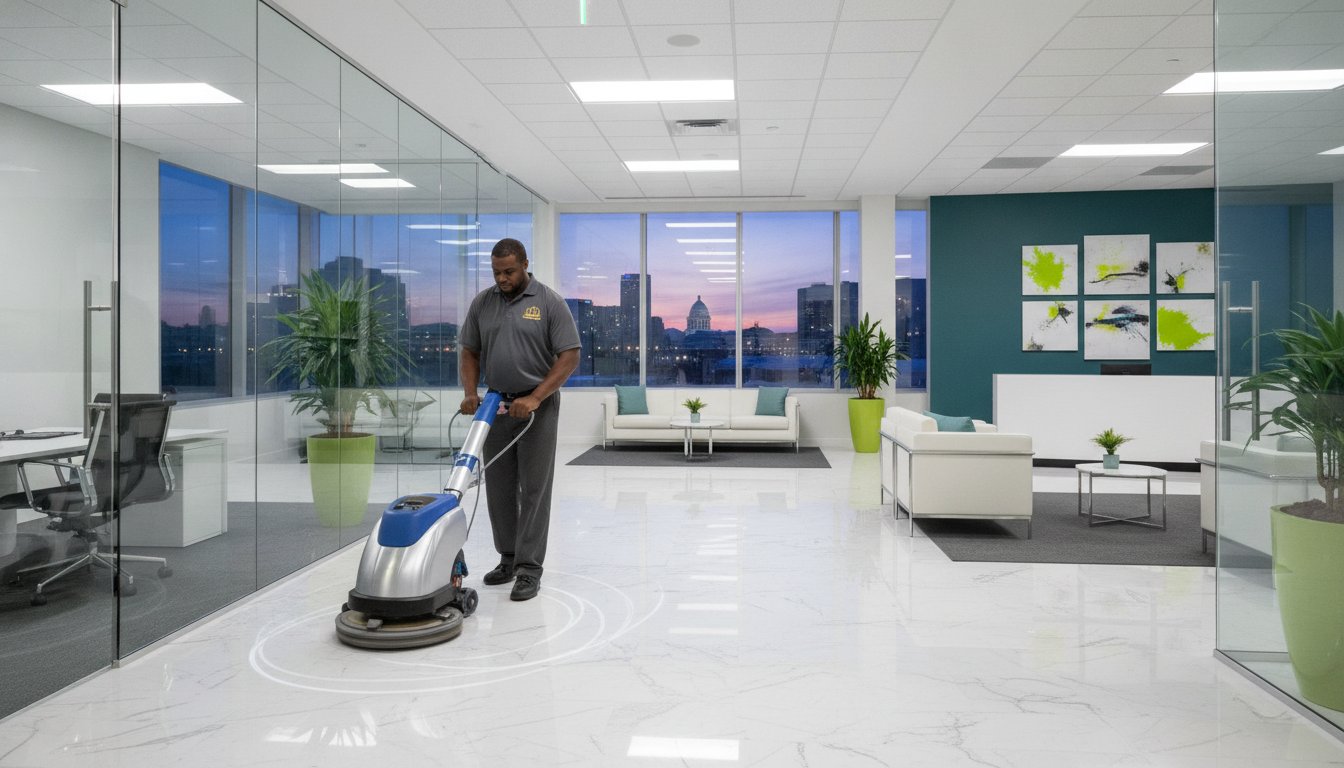
The first step involves applying professional-grade chemical strippers that emulsify years of built-up wax. These chemicals turn the solid finish into a liquid slurry. We then use heavy-duty floor machines equipped with specialized pads to agitate the surface, lifting deeply embedded soil and old pigments. This slurry must be vacuumed and removed entirely to prevent contaminants from resettling. We follow this with a meticulous rinsing process. If even a small amount of residue remains, it can prevent the new finish from bonding, which creates unsightly white patches or premature wear.
Step 2: Precision Application of Floor Protection
Once the tile is raw and neutralized, we begin the application of high-solids floor finish. For high-impact environments like manufacturing facilities in Sacramento, we typically recommend a standard of 3 to 5 coats. We use a "cross-hatch" application method, applying the first coat in one direction and the subsequent coat perpendicularly. This technique ensures total coverage and eliminates thin spots that could leave the tile vulnerable. The drying time between coats is the most critical factor in finish hardness because it allows the polymer chains to interlock and cure into a dense, impact-resistant shield. If a second coat is applied too soon, it traps moisture, resulting in a soft finish that scuffs easily.
Step 3: Maintenance Buffing and Recoating
Restoration doesn't always require a full strip. We often utilize "top-scrubbing" to remove just the top layer of dirty wax before applying a fresh recoat. This extends the life of your floor and reduces long-term capital expenditures. To achieve a high-gloss, "wet-look" shine, we use high-speed burnishing. This process heat-treats the wax, causing the polymers to fuse together and increase the floor's resistance to scuffs and black marks. For a deeper look at these technical steps, you can explore our guide on commercial floor stripping and waxing Sacramento. If your floors have lost their luster, we invite you to schedule a professional floor assessment with our team today.
Ensuring Floor Longevity: A Strategic Partnership Approach
Preserving your facility's assets requires a shift from reactive cleaning to a proactive partnership. When you view floor care as a long-term investment, you reduce the operational burdens that often fall on facility managers. A customized maintenance schedule is the foundation of this approach. By integrating specialized commercial VCT floor cleaning into your broader facility plan, you ensure your floors remain a pillar of your professional image rather than a mounting liability. This strategy aligns professional care with your building's specific traffic patterns, which significantly lowers long-term capital expenditures.
A key component of this preservation strategy is soil containment. Strategic placement of walk-off mats can prevent up to 80% of outdoor soil and grit from ever reaching your VCT. In our local climate, where Central Valley dust is a persistent challenge, these mats act as the first line of defense. We also prioritize the use of low-VOC and green-certified chemicals. This commitment to indoor air quality is a vital standard of modern commercial janitorial programs that protect both the environment and the health of your occupants.
The ROI of Professional VCT Care
The financial logic of consistent maintenance is undeniable. While annual stripping and waxing involves a regular service fee, it's far more affordable than a total floor replacement every five years. Beyond the direct costs, clean floors have a profound impact on employee morale and client first impressions. A dull, yellowed floor suggests neglect, whereas a bright, well-maintained surface communicates stability and attention to detail. This professional image begins at the curb, where maintaining clean sidewalks with a service like Warrens Power Washing can further enhance your facility's appeal while minimizing the debris tracked onto your VCT. Regular professional care also maintains the slip-resistant properties of the floor finish, which directly reduces your facility's liability risks.
Why Cleanit Maintenance Systems is Sacramento’s Trusted Partner
Cleanit Maintenance Systems has served the Greater Sacramento area for over 30 years, establishing a reputation for unwavering reliability and professional calm. Our approach is rooted in the strength of our professional relationships and the quality of our personnel. Every member of our team is thoroughly vetted and trained in the technical nuances of commercial VCT floor cleaning . We utilize professional-grade equipment to ensure consistent, high-standard results across every square foot of your facility.
We don't just provide a service; we offer a dependable partnership that removes the stress of facility maintenance from your shoulders. We pride ourselves on the discipline and integrity we bring to every local service area we touch. If you're ready to protect your investment and improve your facility's environment, we're here to help. We invite you to contact Cleanit Maintenance Systems for a floor assessment and discover the peace of mind that comes with professional floor preservation.
Protecting Your Facility’s Long-Term Foundation
Understanding the science of your floors is the first step toward moving away from the cycle of dull surfaces and temporary fixes. VCT is a porous material that demands a sacrificial barrier to resist the abrasive dust and high temperatures common in our region. While daily efforts are vital, a strategic approach to commercial VCT floor cleaning ensures your investment remains protected for years to come. By prioritizing professional restoration over simple maintenance, you remove the heavy burden of premature floor replacement and maintain a professional environment that reflects the quality of your business.
Serving the Sacramento community since 1994, our team brings a sense of professional calm and unwavering reliability to every project. We are specialized Floor Restoration & Protection experts who rely on vetted, highly disciplined personnel to deliver consistent results. We invite you to take the next step in preserving your facility's assets. Request a Professional VCT Floor Assessment from Cleanit today to ensure your environment is in safe, capable hands. We look forward to building a lasting partnership that keeps your business looking its best.
Frequently Asked Questions
How often should commercial VCT floors be stripped and waxed?
Most facilities find that a full strip and wax every 12 months is sufficient to maintain the tile's integrity. However, high-traffic environments like retail entryways or healthcare corridors may require this service every 6 months. Regular maintenance, such as professional buffing and top-scrubbing, can often extend the time between these full restoration cycles by keeping the top layer of finish resilient.
Can I use a regular mop and bucket to clean my VCT floors?
You can use a mop for immediate spills, but it shouldn't be your primary method for commercial VCT floor cleaning . Mops tend to redistribute soil into the tile's microscopic pores rather than extracting it. Over time, this leads to a dingy appearance that only professional-grade equipment can resolve. For daily care, using a microfiber system is a more effective way to lift dirt without leaving behind gray water residue.
Why do my VCT floors look yellow or cloudy?
Yellowing is a clear sign that old layers of floor finish have oxidized or that dirt has been trapped between coats of wax. Cloudiness usually indicates that a cleaning chemical was not properly rinsed or that moisture was trapped beneath the finish during application. These visual issues suggest the protective barrier has failed and a professional reset is necessary to restore the floor's original clarity and color.
Is there a difference between VCT buffing and burnishing?
The main difference is the speed of the machine and the level of shine produced. Buffing uses a low-speed machine to remove surface scuffs and restore a soft, clean glow to the floor. Burnishing uses a high-speed machine to heat-treat the wax, creating a hard, mirror-like "wet look" shine. This high-speed process actually fuses the polymer chains together, making the finish more resistant to future scuffs and black marks.
How long does the stripping and waxing process take for a standard office?
A standard office area typically requires 8 to 12 hours to complete the full restoration process. This timeline allows for the meticulous removal of old finish, the essential neutralization of the floor's pH, and the application of multiple coats of wax. We schedule these services during off-hours so the finish can cure undisturbed, ensuring the floor is safe and ready for your team the next morning.
What is the best way to remove black scuff marks from VCT?
For isolated marks, a soft cloth or a specialized floor eraser can lift the rubber without scratching the wax. If scuffing is widespread across your facility, a professional spray-buffing or high-speed burnishing session is required. These methods smooth out the existing finish and erase the marks while reinforcing the floor's protective barrier against future impact.
Can VCT floors be cleaned during business hours?
Routine maintenance like sweeping and light mopping can happen during the day, but stripping and waxing must occur when the building is vacant. The chemicals used to emulsify old wax and the multiple layers of wet finish create significant slip-and-fall liabilities. Performing these tasks after-hours ensures the safety of your staff and allows our personnel to work with the focus and discipline required for a perfect result.
What happens if I don't wax my VCT floors?
If you don't maintain a wax barrier, the raw tile is directly exposed to moisture, oils, and abrasive grit. VCT is naturally porous, so it will quickly absorb contaminants that cause permanent staining and structural damage like pitting or cracking. Once the tile itself is eroded, commercial VCT floor cleaning can no longer restore the surface, and you'll be forced to invest in a costly and disruptive total floor replacement.