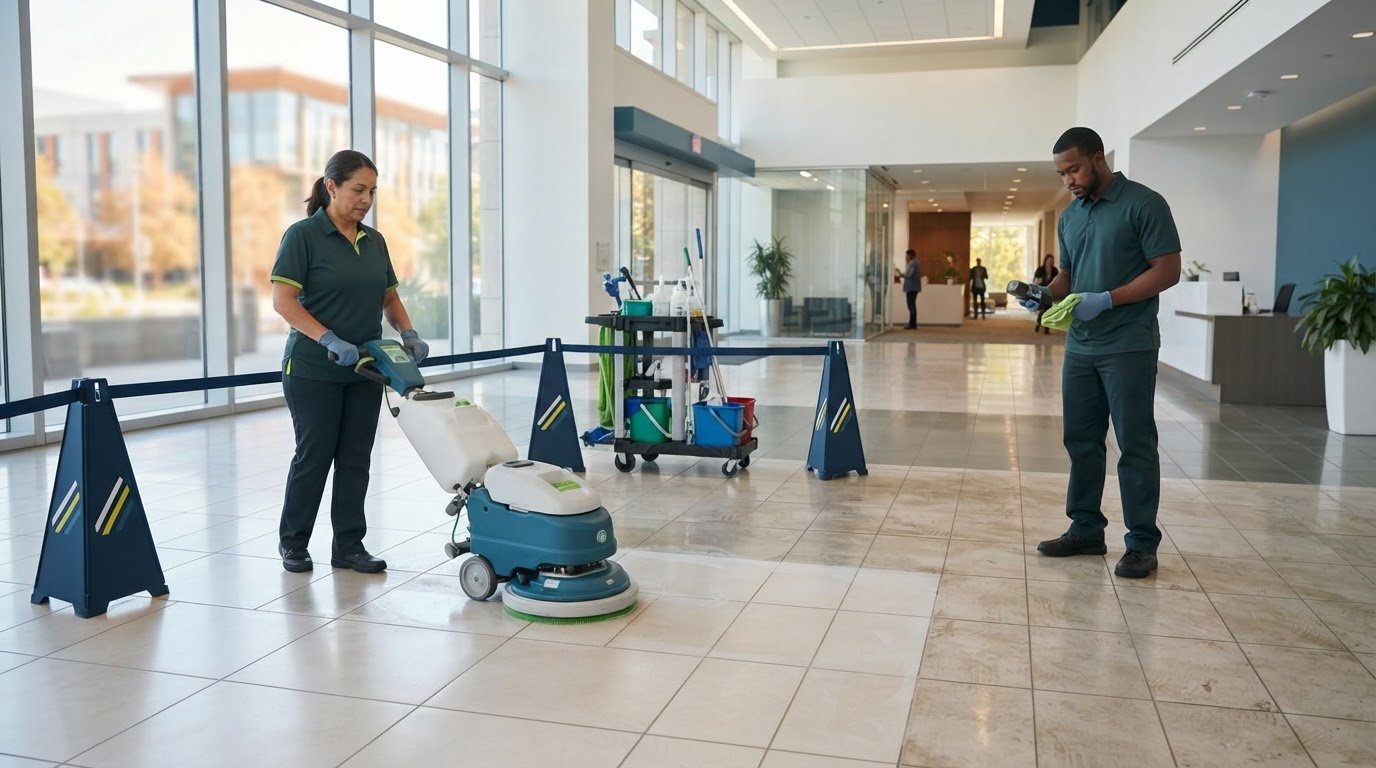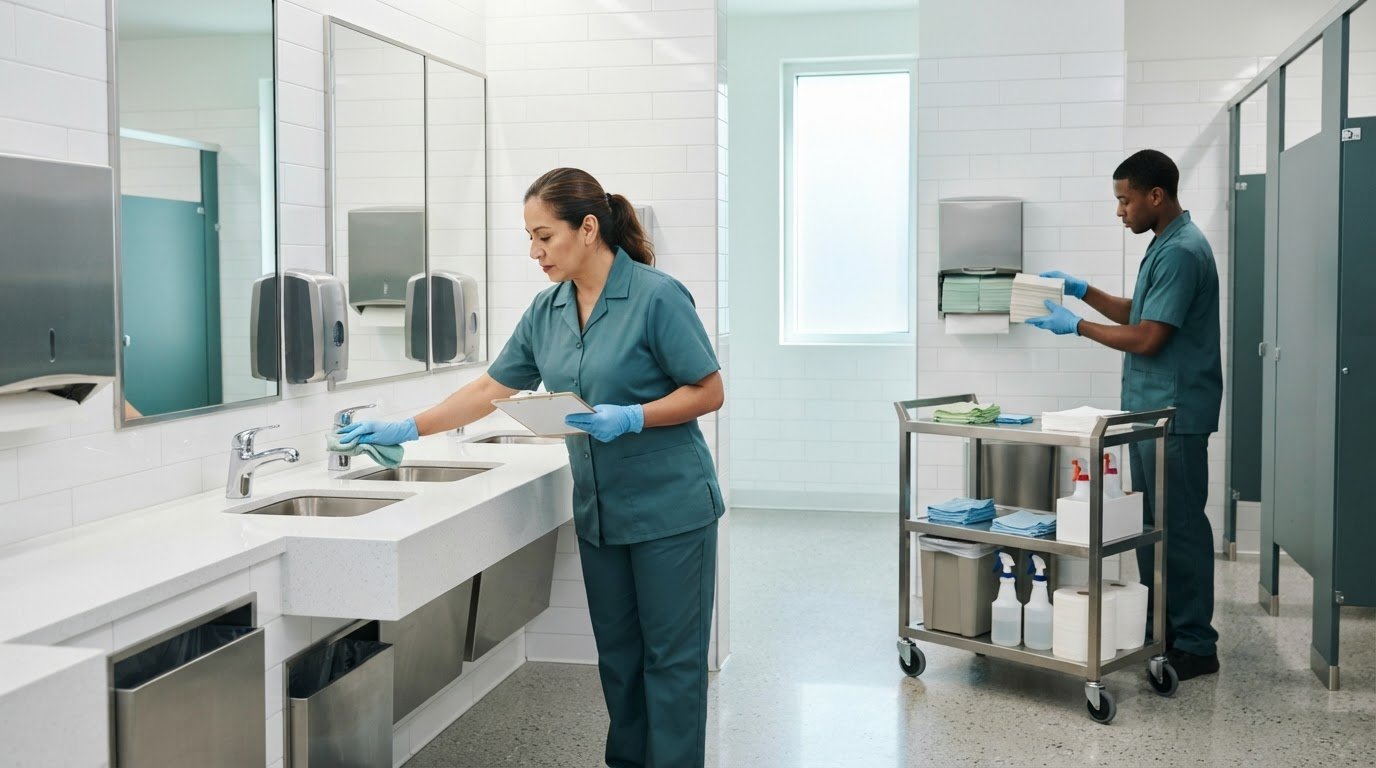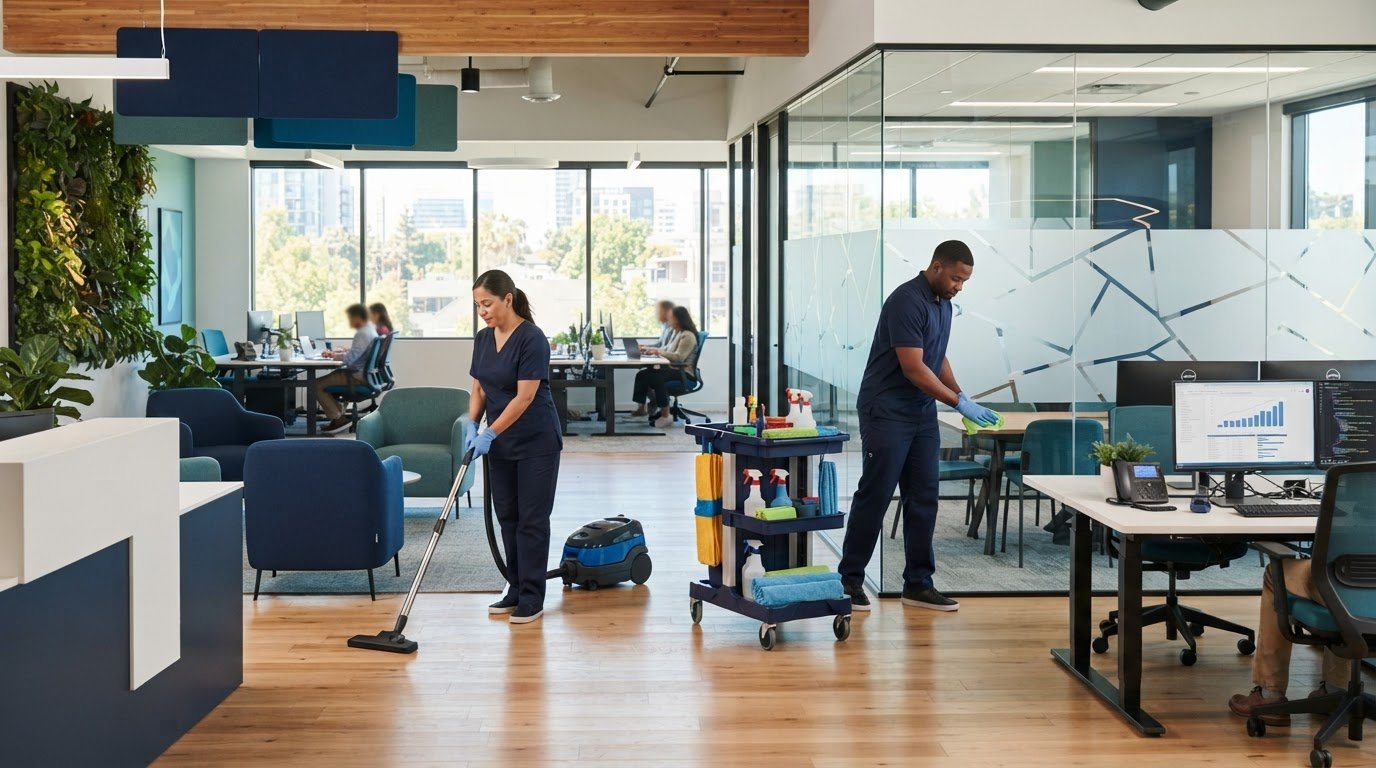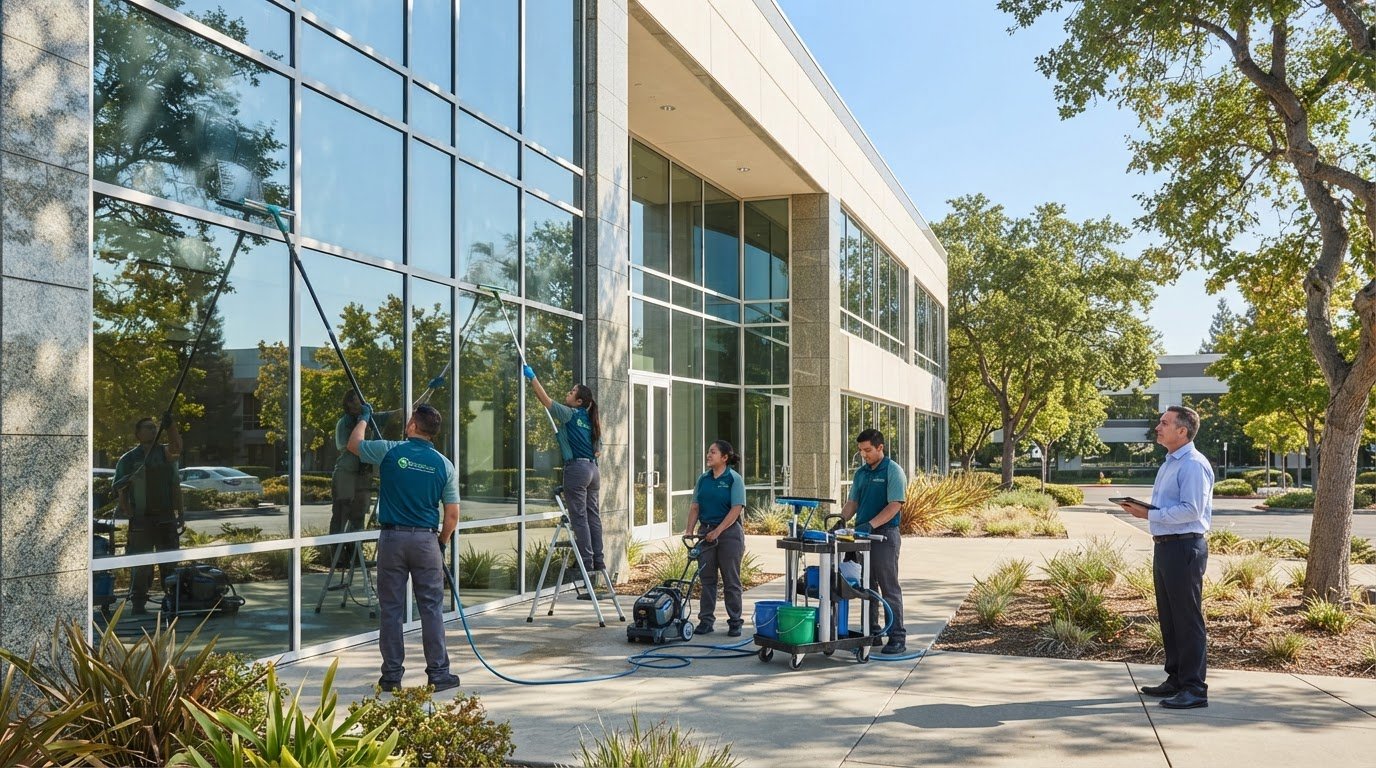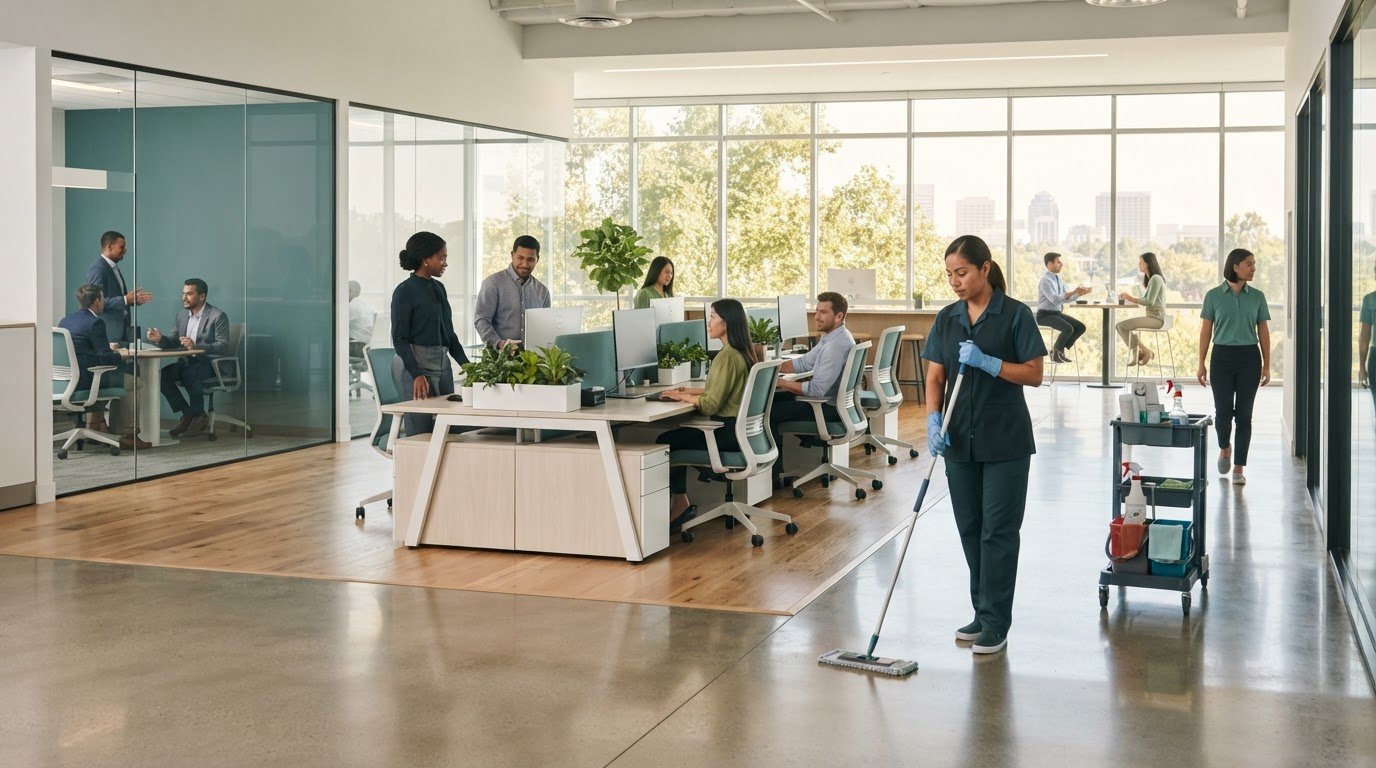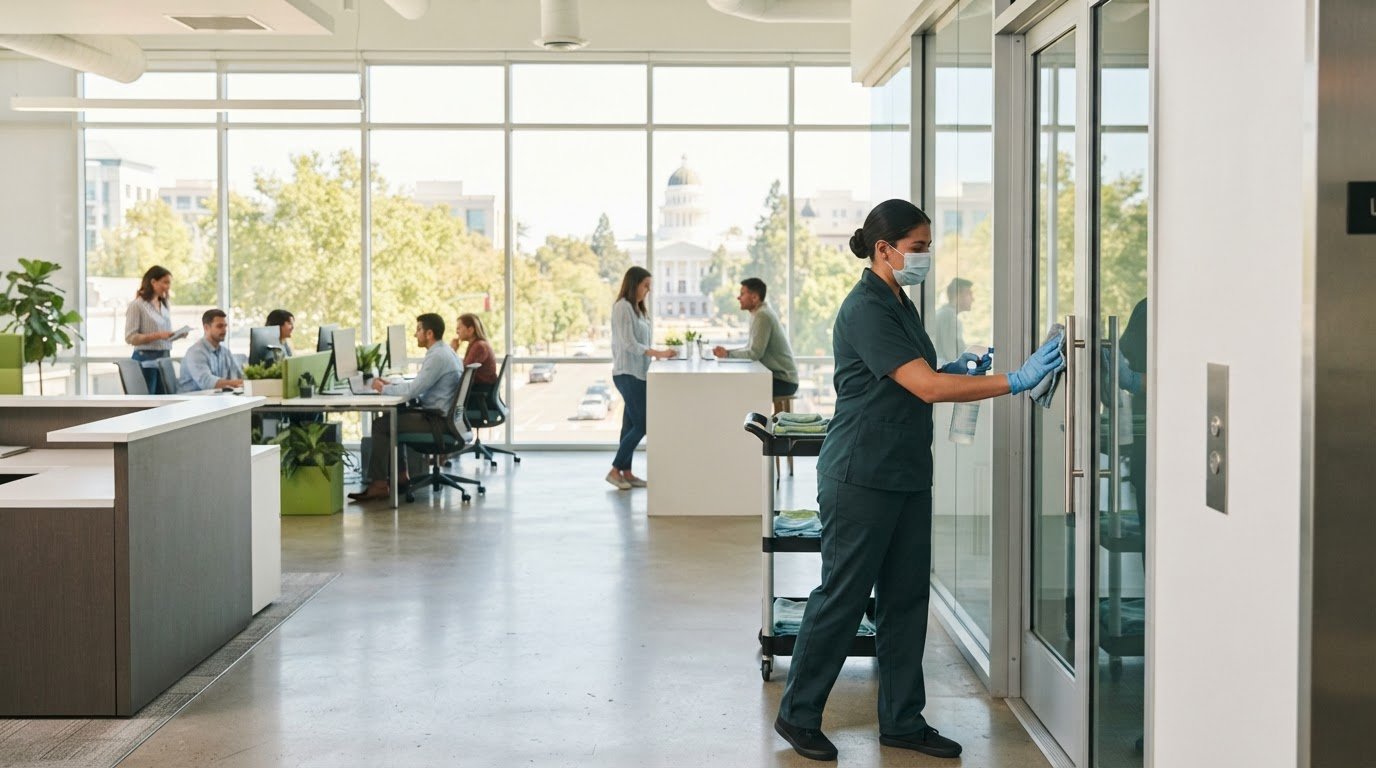


A cubicle can look tidy while dust gathers along partition edges, fingerprints build up on shared touchpoints, and marks remain on desktops. Effective office cubicle and partition cleaning is not one-size-fits-all: fabric panels and hard surfaces call for different care, and the right routine should reflect how people use the workplace.
It’s understandable to want partitions cleaned thoroughly without disrupting employees or risking damage to their finishes. The challenge is deciding which tasks belong in regular office cleaning, when focused partition care makes sense, and how often each area needs attention. A clear scope helps make everyday marks manageable before they become distractions.
This guide explains how routine cleaning compares with targeted care, what to consider for common partition surfaces, and how traffic and shared use affect a practical schedule. You’ll also learn how to define the cleaning scope and coordinate access around workstations. For Sacramento workplaces, Cleanit Maintenance Systems provides commercial office cleaning shaped around how the workplace operates, with more than 30 years serving the Greater Sacramento area.
Key Takeaways
- Set a clear scope for office cubicle and partition cleaning, including accessible panel faces, frames, ledges, and shared contact surfaces.
- Match care to the partition material. Fabric, laminate, vinyl, and painted frames may respond differently to moisture and friction.
- Compare routine in-house touch-ups with professional cleaning by considering scope, consistency, scheduling, and employee coordination.
- Prepare by agreeing on priorities, identifying sensitive areas, coordinating workstation access, and reviewing the results.
- Shape a Sacramento office cleaning plan around how your team uses the space and the operational needs of your workplace.
Why Office Cubicle and Partition Cleaning Deserves a Defined Plan
Partitions shape how employees share an office, but their upkeep can be overlooked when attention goes to floors and desktops. Office cubicle and partition cleaning means maintaining accessible panel faces, frames, ledges, edges, and shared contact surfaces as part of the workplace cleaning scope. Workstation cleaning focuses on accessible surfaces and touchpoints around each cubicle. General floor and desk upkeep focuses on shared horizontal surfaces and walking areas. Naming these tasks helps prevent partition care from falling between routine duties.
Materials matter, too. Fabric panels, laminate, vinyl, and painted frames can have different care requirements, so the surface finish and manufacturer guidance should inform the cleaning approach. A method suited to one material may be unsuitable for another. Identifying surfaces first helps protect finishes and makes the work easier to define.
What accumulates on office cubicles and partitions?
Dust can settle along ledges, frames, and panel edges, while hands leave visible marks near openings, corners, and other frequently reached areas. Occasional spills and surface spots may need attention as well. How quickly they appear depends on traffic, shared use, and the layout of the work area. For example, a tightly arranged workspace may have panel edges that employees touch more often than those in a lightly used section.
These are usually routine appearance and upkeep concerns, not a reason to treat every partition as a specialized sanitation issue. A known illness or a specific contamination concern may call for a separate response. Keeping those needs distinct helps teams choose an appropriate level of care without overstating the risks of ordinary dust or fingerprints.
Which parts of a workstation need attention?
A useful scope can name accessible panel faces, exposed edges, frames, and ledges, along with shared touchpoints such as drawer handles or common equipment surfaces. The role of an office cleaner often includes maintaining cubicles and partitions. Employee-owned electronics, paperwork, and personal belongings are different. Leave them outside the cleaning scope unless the workplace has established clear handling instructions. This distinction protects personal items and sets practical expectations for staff.
Consistency begins with agreement. A coordinated office cleaning plan can define which workstation surfaces are included, which areas need special handling, and how access is coordinated around employees. With a clear scope, recurring care is easier to organize and review. Cleanit Maintenance Systems provides commercial office cleaning in the Greater Sacramento area, with plans tailored to workplace operations and employee use.
How Partition Materials Shape Office Cubicle Cleaning
A single workstation can include several finishes, and each may respond differently to moisture, friction, and cleaning agents. Match the cleaning technique to the surface material and its manufacturer’s guidance. This helps protect finishes while keeping routine care practical. Before cleaning, identify the material where possible and review its care instructions. If a method is unfamiliar, test it in an inconspicuous area first and look for changes before proceeding.
Surface care is also part of a well-managed workplace. OSHA’s Sanitation Standard (1910.141) addresses sanitary conditions in the workplace. For partition upkeep, the practical takeaway is to establish a sensible routine and choose methods that respect the surfaces being maintained.
What should cleaning plans consider for fabric panels?
Fabric panels can hold visible dust and show spots differently from smooth finishes. Gentle dust removal may be suitable for routine care, but the right approach depends on the panel’s care guidance and condition. For a fresh spot, blot gently rather than rubbing aggressively, which can spread the mark or disturb the fabric’s surface. Avoid saturating the panel. Deep or persistent stains need a suitable, material-aware cleaning process rather than repeated scrubbing with an untested product.
How should hard partition surfaces be maintained?
Laminate, vinyl, and painted frames may all show fingerprints and everyday marks, but they aren’t interchangeable. A cleaner or abrasive approach that seems suitable for one finish could dull, scratch, or otherwise affect another. Follow the manufacturer’s instructions, handle surfaces gently, and test an unfamiliar method in a hidden spot. Keep excess moisture away from seams, joints, hardware, and nearby electronics, where liquid can collect or cause problems.
Let the type of soil guide the next step, too. A light fingerprint on a hard panel is different from a dried spill or a mark on fabric. If a spot remains, don’t automatically apply more friction or moisture. Pause and reassess the material guidance instead.
- Fabric panels: Consider gentle dust removal for routine care and blot fresh spots rather than rubbing.
- Laminate and vinyl: Address fingerprints with an approach suited to the specific finish, taking care around seams and edges.
- Painted frames: Use a light touch and don’t assume a method safe for another surface is suitable here.
A surface-by-surface approach makes office cubicle and partition cleaning more consistent without relying on one method for every panel. As part of commercial office cleaning, workstation care can be planned around the finishes present and the needs of the workplace.
Routine In-House Care vs. Professional Cubicle Cleaning
In-house touch-ups and recurring janitorial service serve different purposes. Employees may address a small, visible issue as it arises, while a planned cleaning scope helps maintain consistent coverage across shared workstations. The right balance depends on how the office is used, where marks accumulate, and what employees can reasonably handle without taking on specialist cleaning responsibilities.
Use this comparison to clarify the difference:
Task scope: In-house care can address small, immediate appearance needs. Recurring service can cover defined workstation surfaces across the office as part of a broader cleaning plan.
Consistency: Touch-ups depend on staff noticing and addressing an issue. A scheduled scope makes it easier to provide repeatable attention across multiple cubicles.
Scheduling: Employees can respond to a fresh, minor mark as appropriate. Professional cleaning can be arranged around the workplace’s operations and access needs.
Coordination: Informal touch-ups can leave people unsure who handles a task. An agreed plan clarifies responsibilities and helps reduce missed or duplicated work.
Neither approach needs to follow a universal frequency. Consider occupancy, shared use, visible soil, and workstation layout. A heavily used area may need attention more often than a quieter one. Note what builds up between scheduled visits, then adjust the scope based on what you observe rather than relying on a calendar alone.
When can employees handle routine touch-ups?
Employees can help with light, immediate upkeep when workplace expectations make the task clear. That might mean reporting a spill or tidying a shared surface within established workplace guidance, not taking responsibility for specialist cleaning or unfamiliar materials. Personal belongings and electronics should remain under their owners’ control. Clear boundaries also help prevent two people from assuming the other will handle a task, or leaving it unaddressed.
When does recurring professional cleaning make sense?
Recurring cleaning is useful when the office needs steady coverage across many workstations, not just occasional attention to the most visible spots. A defined scope can account for shared areas, access, and employee activity, then be coordinated with business operations. Cleanit’s daily office cleaning services can be part of a broader plan tailored to workplace needs.
For a practical decision, separate occasional needs from issues that keep returning across the office. If touch-ups are inconsistent or shared responsibilities remain unclear, incorporating office cubicle and partition cleaning into recurring janitorial care can establish more dependable coverage. Adjust the plan as occupancy, visible soil, or workstation use changes, so the scope continues to fit the way your Sacramento workplace operates.
How to Plan Cubicle and Partition Cleaning Without Disrupting Work
A well-coordinated plan gives cleaners clear access while helping employees stay focused. Before service begins, facilities managers can agree on the work area, identify surfaces that need special attention, and decide how staff should prepare their workstations. The plan should reflect occupancy and daily work patterns, since a busy shared area may need a different approach from a quieter section.
Use this preparation sequence to clarify responsibilities and expectations:
- Agree on the scope. Identify the workstations, shared partitions, accessible surfaces, and priority areas included. Note any spaces that should remain untouched.
- Identify sensitive areas. Flag delicate finishes, restricted work zones, and surfaces that need specific handling. Keep personal belongings and desk electronics under their owners’ control.
- Coordinate access. Decide how employees will make work surfaces accessible, such as clearing loose items from the area to be cleaned. Establish how access changes will be communicated.
- Review the results. After service, check whether the agreed areas were covered and whether the plan fits the workplace. Use observations to refine the scope or timing.
What should facilities managers clarify before service begins?
Be specific about which workstations and shared partitions are included, any access limits, and areas that need priority attention. Set an expectation that staff move or secure their own belongings and electronics rather than leaving cleaners to handle them. Agree on a simple process for reporting access changes or unusual spills, so updates reach the right people and responsibilities remain clear.
How can cleaning fit into the office schedule?
Cleaning an occupied office may require coordination around meetings, workstation use, and employee movement. Quieter or after-hours timing may offer more access, depending on the business’s operations and service arrangements. In either case, align the schedule with observed traffic and soil levels rather than assuming every area needs identical attention. Coordinated office cleaning can connect workstation care with the wider cleaning plan, while commercial janitorial services in Sacramento can address broader facility needs.
A practical office cubicle and partition cleaning plan connects scope, access, and timing. Cleanit Maintenance Systems has served the Greater Sacramento area for more than 30 years, tailoring commercial cleaning plans to workplace operations. Discuss a cleaning plan for your Sacramento workplace to coordinate workstation care with the way your team uses the office.
A Sacramento Office Cleaning Plan for Cubicles and Partitions
Reliable workstation care works best as part of a broader commercial janitorial and office cleaning plan. Rather than treating each partition as an isolated task, Cleanit Maintenance Systems can tailor cleaning plans to how your office is used, how employees access work areas, and which surfaces or shared spaces need attention. This coordinated approach connects cubicle care to day-to-day operations instead of leaving it as an occasional extra.
Cleanit serves the Greater Sacramento area and has more than 30 years of local operating experience. For Sacramento workplaces, office cubicle and partition cleaning can be planned alongside other agreed office cleaning tasks, with scope and timing shaped around the facility.
How can cubicle care fit into broader office cleaning?
Partition upkeep can sit alongside agreed tasks for work areas, common spaces, and other accessible surfaces. In a building with multiple office areas, a coordinated office buildings and complexes plan can help align workstation care with the needs of the wider facility. Organize the scope around the building’s use and access requirements.
This general office guide focuses on ordinary workplace upkeep. Facilities with specialized sanitation needs require a separate, appropriate scope rather than assumptions based on standard office routines.
What is the next step for a Sacramento workplace?
Start with a practical picture of the space: facility size, workstation layout, operating hours, and the areas that matter most to your team. Sharing these details helps establish a cleaning plan that reflects real access patterns and business needs. Cleanit can tailor service planning to your workplace requirements, bringing workstation care into a dependable office cleaning approach.
It also helps to note where access is restricted, how staff prepare desks, and whether use varies across different parts of the office. These details give the plan an operational foundation and help coordinate cubicle care with other agreed tasks, without imposing the same schedule on every area.
Cleanit’s locally rooted team understands the value of steady, well-coordinated service. If your Sacramento workplace is ready to include cubicle care in its office cleaning plan, discuss a tailored office cleaning plan with Cleanit. This is a practical first step toward shaping service around your facility and the way employees use it.
Make Your Next Cleaning Plan Work for Your Team
A dependable care plan starts with a practical question: what should employees notice is better after cleaning? It might be fewer visible marks on shared panels, clearer responsibility for workstation access, or a scope that fits the rhythm of a busy office. Defining that priority gives your team a useful reference point as you shape ongoing office cubicle and partition cleaning .
Choose the workplace needs that matter most, then build a plan around them. As your office changes, the cleaning scope can adapt, keeping care connected to how people use the space rather than relying on a routine that no longer fits. A thoughtful approach makes workstation upkeep easier to manage and more consistent for everyone.
Cleanit Maintenance Systems provides office cleaning for Sacramento workplaces, planned around their operations. Talk with Cleanit about your workplace cleaning needs to take the next step toward a cleaner, more welcoming office.
Frequently Asked Questions
How often should office cubicles and partitions be cleaned?
Set the schedule according to how quickly workstations collect visible soil, rather than following a universal calendar rule. A shared area used throughout the day may need closer attention than a lightly occupied corner. Track when marks or dust return between visits, then adjust the cleaning plan. In Sacramento offices, changes in occupancy or the way teams use shared workstations can also be a reason to review the cadence.
Can fabric office partitions be cleaned without damaging them?
The suitable approach depends on the fabric and its care instructions. Check the panel’s label or manufacturer guidance before choosing a cleaning method, and test an unfamiliar approach on a hidden area. Avoid soaking the material or using force to remove a spot. If the fabric changes appearance during a test, stop rather than extending the method across the panel.
What is the safest way to remove a stain from a cubicle panel?
Start by identifying the panel material and checking its care guidance before treating the mark. For a fresh spill, gently absorb excess liquid with a cloth rather than rubbing it outward. Don’t combine cleaning products or apply an untested substance. If the stain persists, pause and reassess the recommended care approach instead of repeating treatment, which could spread the mark or affect the finish.
Should employees clear their desks before office partition cleaning?
Employees should move personal belongings and secure their own electronics if those surfaces need to be reached. A completely empty desk may not be necessary if the agreed scope covers only accessible partition surfaces, but clear access helps avoid missed areas. Set expectations in advance about what staff should move and what cleaners should leave untouched. That division protects personal items and makes workstation preparation more predictable.
Can cubicle cleaning take place while an office is occupied?
It can be planned for an occupied office if access and employee activity are coordinated. For example, work can be organized by area so staff know which workstations are being attended to and can avoid blocking access. Communicate changes such as a meeting or a temporarily restricted desk. The plan should respect the business’s working patterns and keep disruption as low as practical.
What should be included in a cubicle cleaning service scope?
A useful scope clearly names the surfaces and boundaries: accessible partition faces, frames, ledges, and any shared touchpoints included in the work. It should also record excluded areas, access limits, material care considerations, and how staff prepare desks. For consistent office cubicle and partition cleaning , include a way to report missed access or changing needs, then review the scope if workstation use or layout changes.