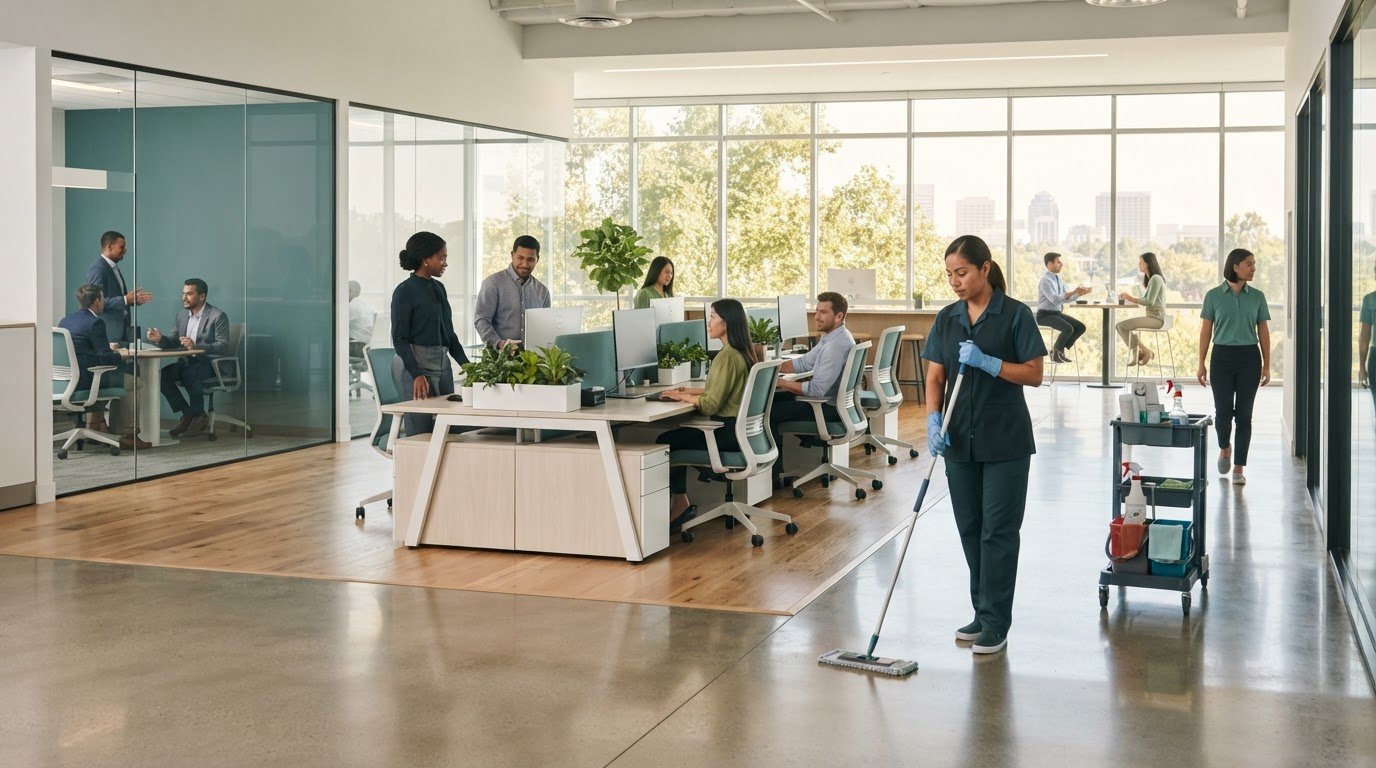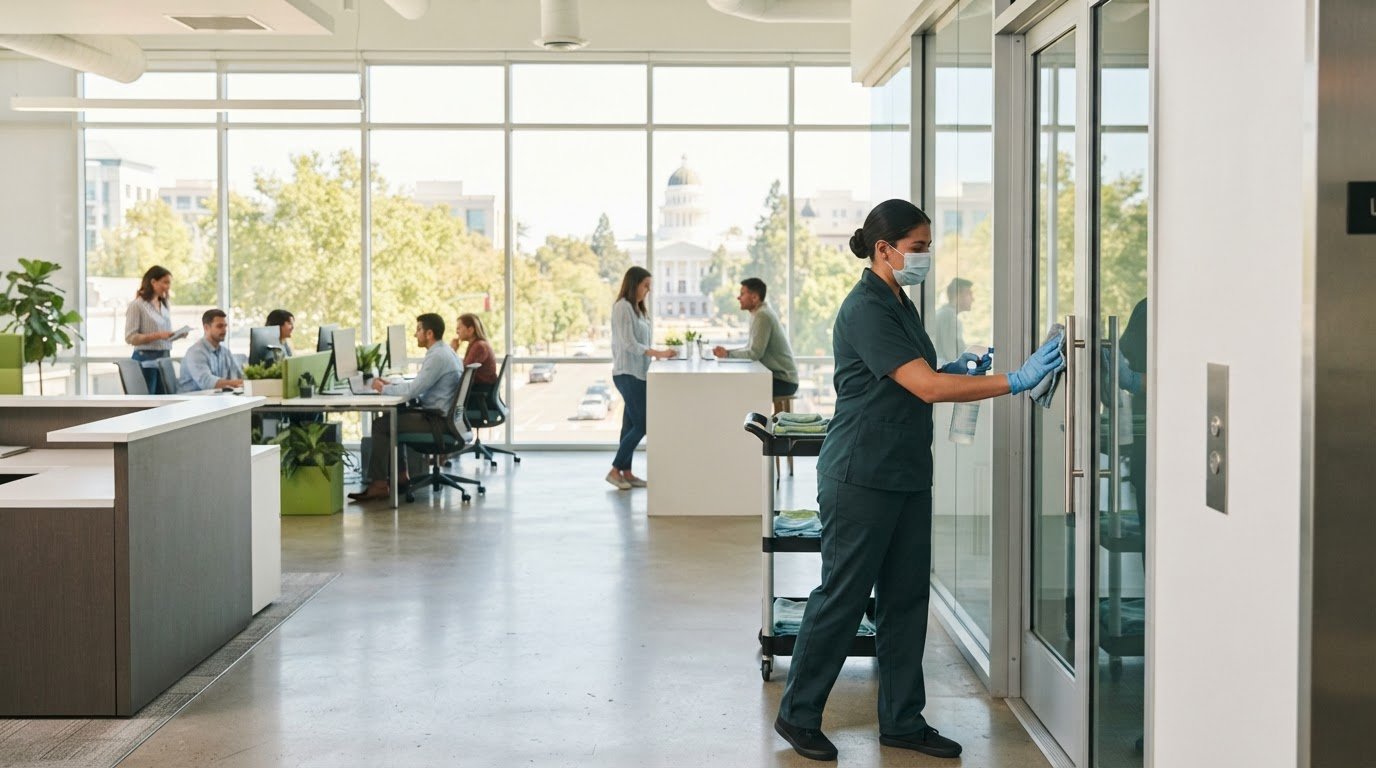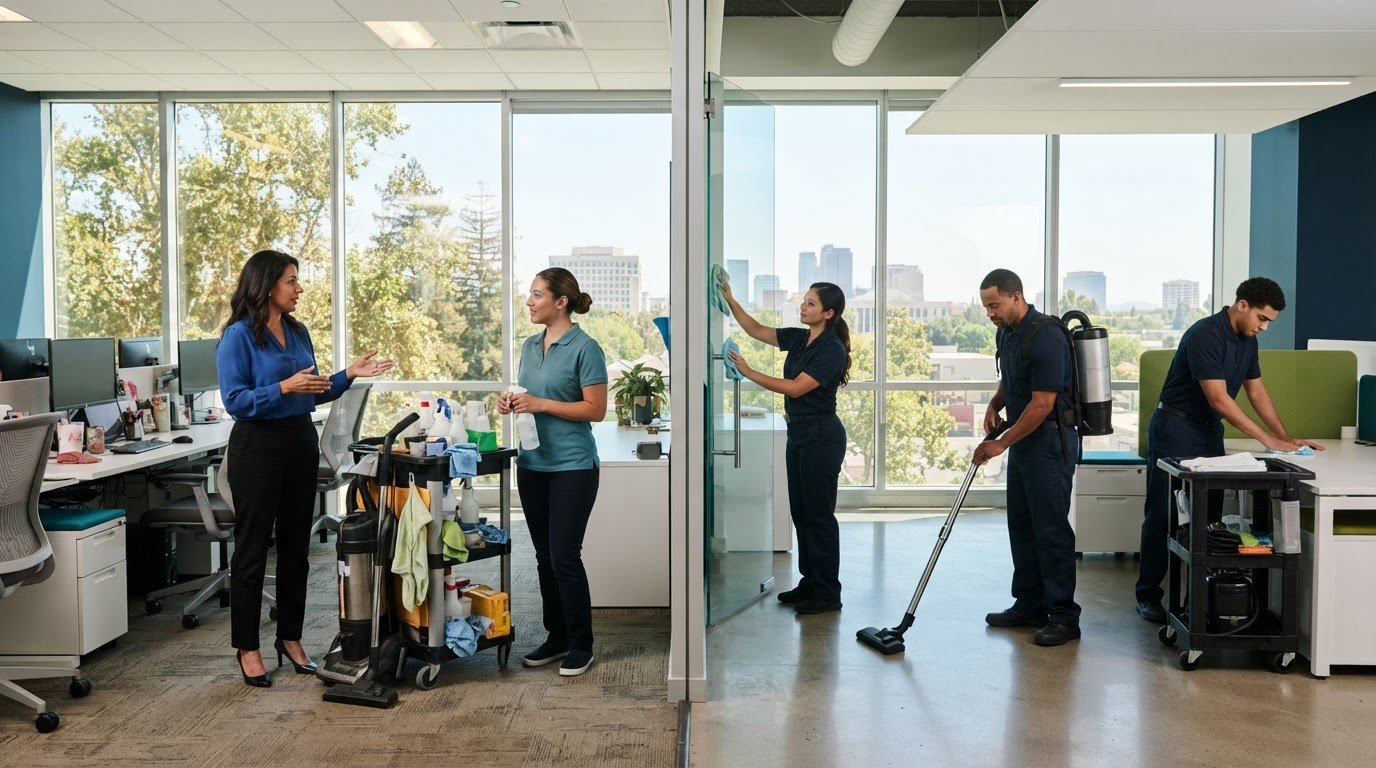


A floor’s appearance is only part of the maintenance picture. For Sacramento businesses, commercial tile and grout cleaning is also about matching care to the surface, traffic level, and workday. A practical plan for commercial tile and grout cleaning Sacramento facilities can rely on addresses embedded soil and the time floors need to dry before regular foot traffic resumes.
Discolored grout can make a well-used space look neglected, while moisture or cleaning residue can affect footing. These issues call for more than a one-size-fits-all schedule. Cleanit Maintenance Systems serves the Greater Sacramento area with commercial janitorial services and floor restoration and protection, helping facilities plan floor care alongside broader cleaning needs.
This guide explains how to assess tile and grout, compare cleaning approaches, and build routines around your facility’s surfaces, traffic, and operating schedule. It also covers how to plan for cleaning, drying, and pedestrian safety so your team can maintain a more consistent floor appearance with less disruption.
Key Takeaways
- Plan commercial tile and grout cleaning Sacramento facilities around the floor surface, soil conditions, foot traffic, and operating schedule.
- Distinguish routine soil removal from targeted grout care and broader floor restoration to set clear maintenance priorities.
- Assess the floor before choosing an approach instead of applying one method to every tile surface.
- Include signage, access limits, spill response, and drying checks in the cleaning plan to support safer reopening.
- Coordinate tile and grout care with a broader floor maintenance plan that fits your facility’s needs and daily operations.
Why commercial tile and grout cleaning in Sacramento matters for floor safety
Tile can look clean while grout lines hold soil, or appear bright while moisture remains underfoot. For facility managers, floor care is both a maintenance concern and part of planning how people move through a space. Commercial tile and grout cleaning Sacramento facilities use should reflect the floor’s condition, nearby activity, and the checks needed before an area returns to normal use.
Commercial tile and grout cleaning is the planned removal of soil from tile surfaces and grout lines, carried out within a floor-care routine that includes hazard checks, moisture control, and safe reopening. Routine cleaning addresses everyday soil. Restoration and protection are broader floor-care services that may involve additional attention to the surface. Neither a freshly cleaned appearance nor a restored finish proves that a floor is slip-resistant. Conditions can change with moisture, residues, wear, and the material itself.
In Sacramento facilities, entrances can collect outdoor soil and spills can occur throughout the day. Cleaning needs depend on where and how a floor is used, not just on its appearance. A consistent plan connects visual checks with practical safety steps instead of treating cleaning as a stand-alone task.
How tile, grout, traffic, and moisture affect maintenance needs
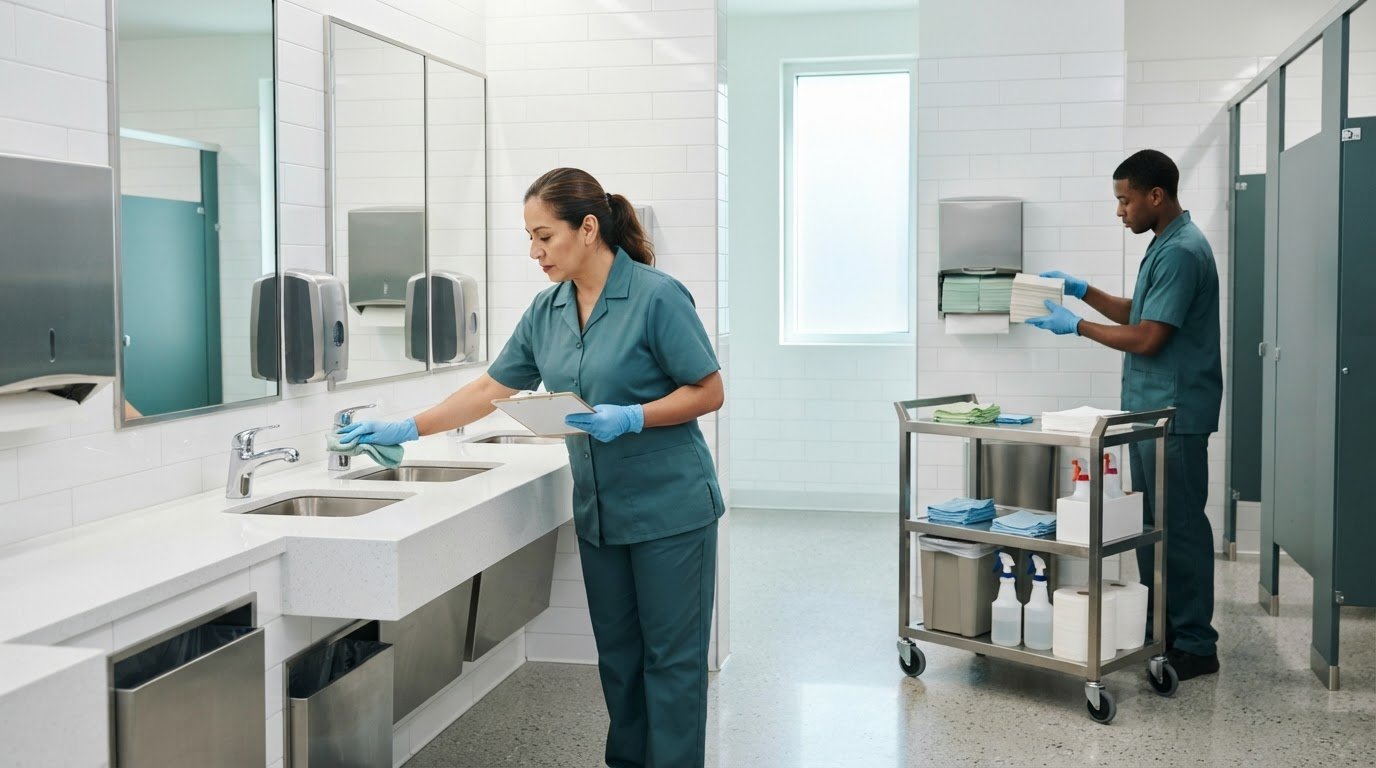
Foot traffic carries soil across tile and into grout lines; spills can leave wet or sticky areas that need timely attention. Grout may be more porous than the tile beside it, but materials and finishes vary, so care shouldn’t assume every floor responds alike. Entrances may collect tracked-in soil, restrooms need attention to recurring moisture, and food-service areas may face frequent spills. Match the care to each area’s use.
For general background on how floor types and cleaning choices can differ, see Floor Cleaning Methods and Considerations. The practical lesson is to assess the actual surface and conditions before selecting an approach, rather than relying on one routine everywhere.
What a floor-safety routine should account for
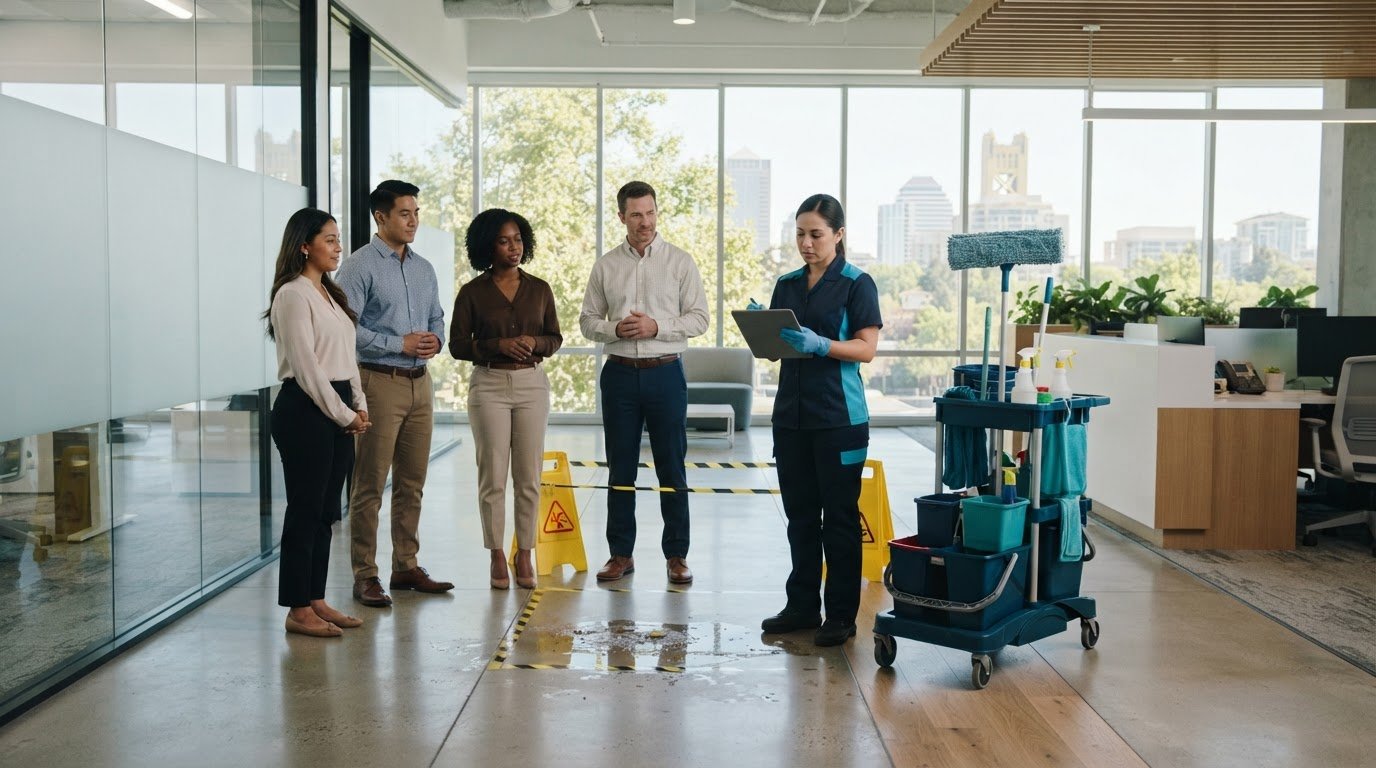
A workable routine has four steps: recognize hazards, control access during cleaning, allow the floor to dry, and check conditions before reopening. Signs and temporary access restrictions direct pedestrians around active work, while prompt spill response addresses unexpected wet areas. Drying checks matter because a floor with moisture or residue may not be ready for ordinary foot traffic.
OSHA’s Walking-Working Surfaces standard, 29 CFR 1910.22, says floors must be kept clean and orderly and, where feasible, dry. Cleaning supports a broader safety program, but it can’t guarantee slip prevention. Facility teams should watch for changing conditions, including new spills, tracked-in soil, or areas that stay damp. Cleanit Maintenance Systems provides commercial cleaning and floor restoration and protection for Greater Sacramento businesses.
How commercial tile and grout cleaning works across different floor surfaces
A sound cleaning plan follows a clear sequence: identify the floor, assess its condition, understand the soil, choose an approach suited to those findings, and review the result. Identify the material before selecting a method because the same cleaning approach can affect different tile and stone surfaces in different ways. This keeps decisions grounded in the facility’s actual floors rather than assumptions based on appearance alone.
For commercial tile and grout cleaning Sacramento facilities need, note where soil collects, how the area is used, and whether the floor shows visible wear or has a history of previous treatments. These details help shape a facility-specific plan. Water use, cleaning solution, temperature, pressure, and soil removal should be considered for the particular surface, not treated as interchangeable settings.
Identify tile and grout before choosing a cleaning approach
Ceramic and porcelain tile differ from natural stone, and stone varieties such as marble, slate, travertine, and limestone can have distinct care needs. During a site review, document the material when known, along with worn areas, previous treatments, persistent discoloration, and locations that soil quickly. This record gives facility teams a reference for planning and evaluating results over time.
Grout lines also need individual attention. Their condition and response may differ from the tile beside them, so a plan should account for both materials rather than treating the floor as uniform. If the material is uncertain, identifying it is a more reliable first step than choosing a process based only on a small test area or visual impression.
Understand cleaning, restoration, and grout protection
Routine cleaning removes day-to-day soil. Floor restoration and protective treatments address broader maintenance needs and should be considered in light of the floor’s condition and intended use. Discoloration can result from embedded soil, wear, or previous treatments. Cleaning may change its appearance, but the outcome depends on the cause and the surface condition.
Grout sealer is a separate maintenance consideration. It may help limit how readily some soils or spills affect grout, but it doesn’t replace cleaning, spill response, or floor-safety controls, and it doesn’t establish that a surface is slip-resistant. Any protection plan should account for site conditions rather than assume a fixed service life.
Workplace floor care also connects to hazard prevention. OSHA’s guidance on walking and working surfaces provides context for keeping walking areas orderly and addressing hazards. Review whether soil or moisture remains and whether the floor is ready for normal use, not simply whether it looks brighter. Cleanit Maintenance Systems provides commercial cleaning and floor restoration and protection for Greater Sacramento facilities. Matching care to the material and maintenance goals helps teams make informed decisions as part of a broader floor-care plan.
Compare commercial tile and grout cleaning approaches for your Sacramento facility
Choose a service scope based on the facility’s priority: improve appearance, manage recurring soil, or address a documented floor concern. Commercial tile and grout cleaning Sacramento plans should also account for the surface, traffic, and practical limits on access. Use this comparison as a starting point, then tailor the plan to the site.
| Approach | Surface and soil | Traffic and service scope | Operational timing |
|---|---|---|---|
| Routine cleaning | Suitable for ongoing surface soil on identified tile types; the plan should reflect how quickly soil returns. | Supports regular upkeep across areas such as corridors or entrances, with frequency based on observed conditions. | Coordinate access and drying checks with the facility’s normal activity. |
| Targeted grout treatment | Consider for localized grout discoloration or buildup after the source and condition have been assessed. | Focuses on specific problem areas rather than assuming the entire floor needs the same scope. | Plan for controlled access to the affected area and allow time for it to be checked before reopening. |
| Broader floor restoration | Consider when wear, persistent appearance issues, or floor condition calls for more than routine soil removal. | May fit facility-wide floor-care planning; the scope should reflect different surfaces and zones. | Coordinate work areas and pedestrian routes so facility operations can be managed around the work. |
Surface type matters in every case. A plan for ceramic or porcelain tile may not suit natural stone, and the extent of soil or wear can change the appropriate scope. The table frames the options but doesn’t replace a site assessment or establish a guaranteed result.
Match service scope to the floor condition and use
Start by mapping conditions by zone. An entrance may collect tracked-in soil, a corridor may experience steady foot traffic, and a restroom may need attention to recurring moisture. A localized grout concern may call for a narrower focus, while widespread wear may point toward broader restoration planning. Set priorities from observed conditions instead of applying a fixed frequency to every room.
For broader context on how floor care fits into facility upkeep, review this commercial floor cleaning guide.
Compare operational fit, not just the cleaning method
A suitable plan accounts for when people use an area, how access will be restricted, how pedestrians will be routed, and how drying will be checked. Clear communication about work zones and reopening helps staff coordinate around the work. For office settings, office building cleaning services connect floor care with the demands of an active facility.
Before setting priorities, record the surface, visible condition, traffic level, and recurring concerns for each zone. This makes it easier to distinguish an appearance goal from an ongoing maintenance need or a documented safety concern, then align the service scope and timing with facility operations.
How to plan tile and grout cleaning within a floor-safety program
Plan the work as a sequence, not simply as a cleaning appointment. For commercial tile and grout cleaning Sacramento facilities can fit into daily operations, begin with a site review, map work areas, coordinate access, control pedestrian movement, and check each area before reopening. This brings cleaning, communication, and follow-up into one practical routine.
- Review the site. Note floor surfaces, recurring soil or spills, current concerns, and areas with steady foot traffic.
- Map work zones. Mark the areas to be cleaned and identify entrances, corridors, exits, and accessible alternate routes.
- Coordinate timing. Consider how staff, visitors, deliveries, and normal operations use each zone, then communicate the planned work and temporary access limits.
- Set controls. Place suitable warning signs and barriers before work begins, and keep them in place while floors are being cleaned or drying.
- Respond to new spills. Give staff a clear way to report unexpected moisture or soil so the affected area can be addressed promptly.
- Check before reopening. Look for moisture, residue, and remaining hazards, then have the responsible facility team determine whether the area is ready for normal use.
These steps help prevent people from walking through active work areas or entering a floor before it has been checked. A defined pedestrian route is especially useful when a corridor or entrance is temporarily restricted. Keep the route clear, make temporary limits visible, and share changes with the people who use the space.
Prepare work areas and communicate with occupants
Map foot traffic and operating patterns as carefully as the floor itself. A reception entrance may need a different alternate route than a back corridor, while a restroom closure may require clear directions to another facility. Tell staff and visitors which areas will be limited and when. Use visible signs and barriers to separate pedestrians from active cleaning and drying areas.
Check floors before reopening and record follow-up needs
At the end of the work, inspect for visible moisture, residue, spills, or anything else that could affect safe passage. The facility’s responsible team should decide whether to reopen based on actual conditions, not just the planned schedule. Record spots that remain difficult to maintain or repeatedly collect soil, then use those observations to refine future work.
That record helps facility teams distinguish a one-time issue from a recurring maintenance need and adjust schedules or routing accordingly. For an office property, connect zone planning with broader office building cleaning services so floor care can be coordinated with how the building is used. Cleanit Maintenance Systems provides commercial cleaning and floor restoration and protection for Greater Sacramento facilities.
Plan Sacramento commercial tile and grout care with a dependable facility partner
A dependable plan begins with four decisions: identify the floor surfaces, define facility priorities, put practical work-area controls in place, and schedule care around how the building operates. Commercial tile and grout cleaning Sacramento facilities need shouldn’t be treated as an isolated task. Coordinate it with commercial janitorial work and broader floor restoration and protection, shaping the scope around the facility instead of a fixed routine.
Cleanit Maintenance Systems provides commercial janitorial services in the Greater Sacramento area, including daily office cleaning and day porter services, along with floor restoration and protection. Its commercial cleaning work can be coordinated with a facility’s surfaces and operating demands rather than assuming every site follows the same routine.
Coordinate tile care with the facility’s wider cleaning plan
Recurring janitorial routines help manage everyday upkeep; floor restoration and protection address broader floor-care needs. Coordinating the two helps teams distinguish regular maintenance from work that calls for a separate scope, without treating every tile area the same. For example, a public entrance may need a different plan from a staff corridor, while a clinic’s traffic patterns and room use shape how cleaning is coordinated. Cleanit’s medical office cleaning services are planned for the needs of clinical facilities.
Keep the plan specific: note the material in each area, the condition of tile and grout, recurring soil or moisture concerns, and how people move through the space. Then coordinate the proposed work with the facility’s operating schedule and pedestrian routes. This helps teams plan practical access controls and avoid unnecessary disruption.
Prepare useful details for a commercial service discussion
A concise site summary makes planning more focused. Gather details such as:
- Known floor materials and the locations where they’re installed.
- Areas of concern, including visible discoloration, wear, or recurring soil.
- How each area is used and where foot traffic is heaviest.
- Operating constraints, preferred access windows, and pedestrian-flow considerations.
- Any previous floor treatments or maintenance observations that may inform planning.
These details help frame a facility-specific discussion about priorities and coordination. They also give teams a basis for aligning floor care with wider maintenance needs instead of choosing a scope based on appearance alone.
For a practical next step, discuss your facility’s commercial cleaning needs with Cleanit Maintenance Systems. Focus the conversation on your surfaces, operating conditions, and priorities.
Turn floor-care observations into a workable next step
Before planning your next service, bring together the people who understand the space’s daily demands: facility staff, cleaning teams, and those who manage pedestrian access. Agree on the areas that need attention, the outcomes that matter most, and practical limits on timing or access. A shared brief gives everyone the same priorities and makes coordination more straightforward.
Commercial tile and grout cleaning Sacramento facilities can benefit from a plan that accounts for both floor condition and how the space functions. Keep a simple record of recurring concerns and changes in use, then revisit it as facility needs evolve. This helps your team make considered maintenance decisions instead of relying on a schedule that may no longer fit.
Cleanit Maintenance Systems provides commercial janitorial cleaning and floor restoration and protection for businesses in the Greater Sacramento area. Discuss commercial floor care for your Sacramento facility to plan around your workplace’s surfaces, priorities, and operating needs.
Frequently Asked Questions
How often should commercial tile and grout be professionally cleaned?
There’s no single schedule for every facility. Set timing based on how quickly soil returns and what each area experiences. In a Sacramento office, a busy entrance may need more frequent attention than a lightly used meeting room. Track visible buildup, recurring spills, and grout appearance by zone, then review the pattern with your cleaning team to adjust commercial tile and grout cleaning Sacramento schedules to actual conditions.
Can commercial tile and grout cleaning help prevent slips?
Cleaning can remove soil or residue that may contribute to slippery conditions, but it can’t guarantee slip prevention. Consider the source of a concern: tracked-in debris at an entry, a spill near a service counter, or moisture around a restroom sink. Address immediate hazards promptly, and assess whether the floor is dry and clear before regular use resumes. Footwear, surface condition, and new spills can also affect traction.
What happens if grout remains discolored after cleaning?
Persistent discoloration doesn’t necessarily mean the cleaning failed. The color may relate to wear, staining, previous treatments, or a change in the grout itself, and these causes can respond differently to care. Compare the area with a record or photo taken before service, noting whether discoloration is uniform or concentrated in specific lines. That observation can guide future maintenance decisions without assuming another cleaning will remove it.
Is grout sealing necessary after commercial tile cleaning?
No, grout sealing isn’t automatically necessary after every cleaning. It’s a separate maintenance option to consider based on grout condition, facility use, and cleaning priorities. Sealer doesn’t replace routine soil removal or spill response, and it shouldn’t be treated as a permanent barrier. If sealing is part of a plan, record treated areas and reassess their condition during regular floor reviews rather than assuming protection lasts indefinitely.
Can a business keep operating during commercial tile and grout cleaning?
Often, operations can continue if the work is coordinated around access and pedestrian movement, but the plan depends on the area and scope. A team might divide a corridor into sections or redirect visitors around a restroom entrance while work is underway. Communicate temporary limits in advance, use visible signs or barriers, and keep alternate routes clear. Don’t reopen a treated area until the responsible facility team has checked its condition.
How can a facility tell whether its floor-cleaning routine is working?
Use consistent observations, not appearance alone. Record recurring soil locations, how quickly areas look dirty again, repeat spills, and any residue or moisture concerns after cleaning. Compare the same zones over time and note changes in traffic or use that might explain a difference. If a problem repeatedly returns in one location, consider whether the routine, access pattern, or spill response needs adjustment.
Does every tile type use the same commercial cleaning method?
No. Ceramic and porcelain tile differ from natural stone, and stone types can also vary in their care needs. Identify the surface before selecting an approach, considering grout, visible wear, and previous treatments. For example, a method suitable for one tile may not suit a stone floor. Avoid applying the same solution or process across mixed surfaces without assessing the materials first.
What should a Sacramento facility include in a floor-safety cleaning plan?
Include a floor and traffic map, known surface materials, recurring spill or soil locations, and a clear way to report new hazards. Set out how work areas will be marked, how pedestrians will be routed, and who checks conditions before access resumes. Also record follow-up needs by location. A plan that reflects the building’s actual use helps Sacramento teams coordinate cleaning with daily activity and respond consistently as conditions change.