

Natural stone can remain in service for 50 to 100 years when it’s well maintained, but that longevity depends on how the floor is cleaned and protected. Effective natural stone floor care for businesses accounts for the stone’s porosity, surface finish and daily foot traffic, rather than treating every floor the same.
It’s reasonable to expect a durable stone floor to maintain its appearance with routine cleaning. Yet unsuitable products can etch or dull the surface, while grit, spills and worn sealer can gradually affect its finish. A penetrating sealer typically needs reapplication every one to three years, depending on traffic and the stone’s porosity.
This guide explains how marble, granite, limestone and other stones age in commercial spaces, and how finishes, cleaning products and maintenance routines affect durability and slip resistance. Learn why acidic or abrasive cleaners can be unsuitable, how routine care helps preserve the floor, and when professional restoration may be appropriate.
Key Takeaways
- Choose a finish with daily traffic and floor use in mind; a consistent surface can be easier to maintain in busy commercial spaces.
- Match care to the stone: porous materials and softer stones may need more careful protection than harder, less porous options.
- Use stone-appropriate cleaning products and gentle methods to help avoid etching, surface damage and a worn appearance.
- Distinguish routine cleaning from restoration. Identifying the stone and any existing sealer helps guide the right approach.
- When a floor needs restorative attention, Cleanit Maintenance Systems offers Floor Restoration & Protection for commercial spaces.
Commercial stone floor finishes and slip resistance
In commercial facilities, a stone floor’s finish affects its appearance, upkeep and performance underfoot. The right choice depends on traffic, stone type and conditions around entrances and work areas.
Finish Choices for Commercial Stone Floors
A stone finish is the treatment of its visible surface, such as a honed or highly polished appearance. Honed finishes can be practical in busy restaurants, hotels and shops because they help maintain a consistent look. Heavy foot traffic can quickly dull a polished surface, which may also become slippery. Choose a finish based on both appearance and how the floor is used, not shine alone.
Matching Stone to Traffic Levels
Matching stone to traffic means considering its hardness and porosity alongside the number and type of daily users. The Mohs scale ranges from one to 10; granite measures 6 to 7, while marble measures 3. That difference helps explain why stone types respond differently to repeated contact and maintenance. A corporate lobby with steady foot traffic has different demands from a lightly used meeting room, so material selection should reflect the specific space.
Selecting Finishes for Busy Floors
Choosing a finish for a busy floor means balancing appearance, routine cleaning and how the surface responds to traffic. A honed finish may suit a shop or hotel where steady use makes a uniform look practical. Highly polished stone can need more attention to maintain its shine, particularly in heavily traveled areas. Appearance alone does not determine slip resistance: the stone, finish and floor conditions all matter.
Natural stone flooring can suit offices, hotels, restaurants and retail spaces, but each area places different demands on the finish. An entrance exposed to tracked-in grit needs attention to surface wear, while a broad lobby floor may show changes in polish along walking routes. These patterns can guide maintenance and help protect the floor’s appearance without assuming every area ages at the same rate.
Lifecycle value reflects the useful service a floor provides over time, not just its initial appearance. Well-maintained natural stone flooring can have a service life of 50 to 100 years. However, a penetrating sealer wears away and does not permanently protect stone; it typically needs reapplication every one to three years, depending on traffic intensity and porosity. Regular care helps preserve the beauty of the stone and supports its continued use.
Durability and longevity of stone floors in offices
Natural stone’s durability depends on the material, maintenance and working conditions. In an office, traffic paths, moisture and furniture can cause different areas to age at different rates.
Durability Under Heavy Foot Traffic
Durability under heavy foot traffic is a floor’s ability to withstand repeated use while remaining serviceable. Commercial stone can handle substantial wear, and granite floors in major airports have remained in daily use for 40 or more years with periodic polishing and sealing. Office entryways and main corridors face constant movement, so tracked-in grit and concentrated walking paths can gradually affect the surface.
Practical protection helps limit avoidable wear. Entry mats reduce dirt and grit tracked in on shoes, while pads beneath office chairs and desks help protect the floor from heavy furniture. Unlike linoleum, stone does not peel up at the edges in the same way. Aging is more likely to appear as changes in polish, surface condition or wear patterns.
Moisture Resistance and Floor Longevity
Moisture resistance describes how well a stone floor handles water exposure without staining or other damage. Natural stone can retain stains, so a spill left on an office floor may affect its appearance. Sealer offers protection, but wears over time and does not shield the stone permanently. Prompt spill cleanup and ongoing floor care help preserve its condition.
Moisture and daily use can create uneven results across one interior. A lobby near an entrance may encounter tracked-in water, while areas beneath large furniture see less foot traffic. During an office refit, moving a desk or rug can reveal a section with a different level of wear. Planning restoration for the full floor helps address these visible contrasts.
Crystallization for Shine and Durability
Crystallization is a restoration finishing step that uses a polishing compound or crystallizer to add shine to stone. It may be relevant when an office floor’s polished appearance has dulled, but shine alone does not indicate lasting durability. The stone’s condition and wear pattern should guide restoration, especially where high-traffic routes look different from covered areas.
Restoration may also involve honing, which uses diamond abrasive pads to refine the stone surface. This can address wear before a final polishing step adds shine. Marble office flooring needs regular maintenance to preserve its shine and help prevent staining, so a consistent program is more useful than relying on a single treatment. It helps keep exposed and sheltered sections looking more consistent.
When an office floor shows worn paths, dull areas or differences revealed after furniture moves, discuss floor restoration options as part of a considered maintenance plan.
Stone types including marble, granite, onyx, quartzite, travertine, slate, limestone, and sandstone
Natural stone materials differ in hardness, porosity and appearance. Identifying the specific stone helps determine suitable protection and maintenance for a commercial floor.
Characteristics of Granite, Limestone, Marble, and Travertine
Granite measures 6 to 7 on the Mohs hardness scale, while marble measures 3 and limestone measures 3 to 4. Limestone is more porous than some stones and can require sealing to help prevent stains. Travertine also benefits from regular sealing against moisture and stains. These differences matter because the same care approach won’t suit every stone.
Onyx, quartzite, slate and sandstone also appear in commercial flooring, but their names alone do not determine the right maintenance method. Natural stone is porous and can retain stains, and each piece has its own appearance. Before choosing a cleaner or restoration process, identify the stone and find out whether it has been sealed. These details guide care for the actual floor, not just its broad material category.
Marble, Limestone, and Travertine Flooring
Marble, limestone and travertine flooring each require attention to the stone’s condition and protective treatment. Limestone’s porosity can make sealing useful for stain prevention, while regular sealing helps protect travertine from moisture and stains. Marble in commercial settings needs extra care. These distinctions matter in offices and public areas, where spills or changes in surface appearance can affect how a floor looks.
Stone selection also involves the visual character of individual pieces. No two natural stone pieces are alike, so a finished floor may vary from tile to tile. That variation is part of the material’s appearance, not necessarily a sign of damage. In a large lobby or reception area, understanding this variation helps owners set realistic expectations for visual consistency and plan care for the specific material.
Marble’s Appearance and Care Needs
Marble is often selected for its distinctive, refined appearance, but its Mohs hardness of 3 helps explain why it needs careful handling. In a commercial setting, regular maintenance helps preserve its shine and guard against staining. The material’s visual appeal and care needs should be considered together, particularly in office areas where foot traffic is concentrated.
For marble, limestone or travertine, care starts with identifying the stone and whether it has been sealed. Use a mild, pH-neutral cleaner for routine stone-floor cleaning; acidic products can etch natural stone, especially marble. Sealing is also relevant for porous limestone and travertine. Matching the method to the stone helps protect its appearance without assuming every natural surface responds alike.
Professional restoration and maintenance programs
A stone-floor program combines routine cleaning with planned restorative work. The right approach depends on the stone, its condition, existing sealer and facility use.
Routine Stone Floor Cleaning
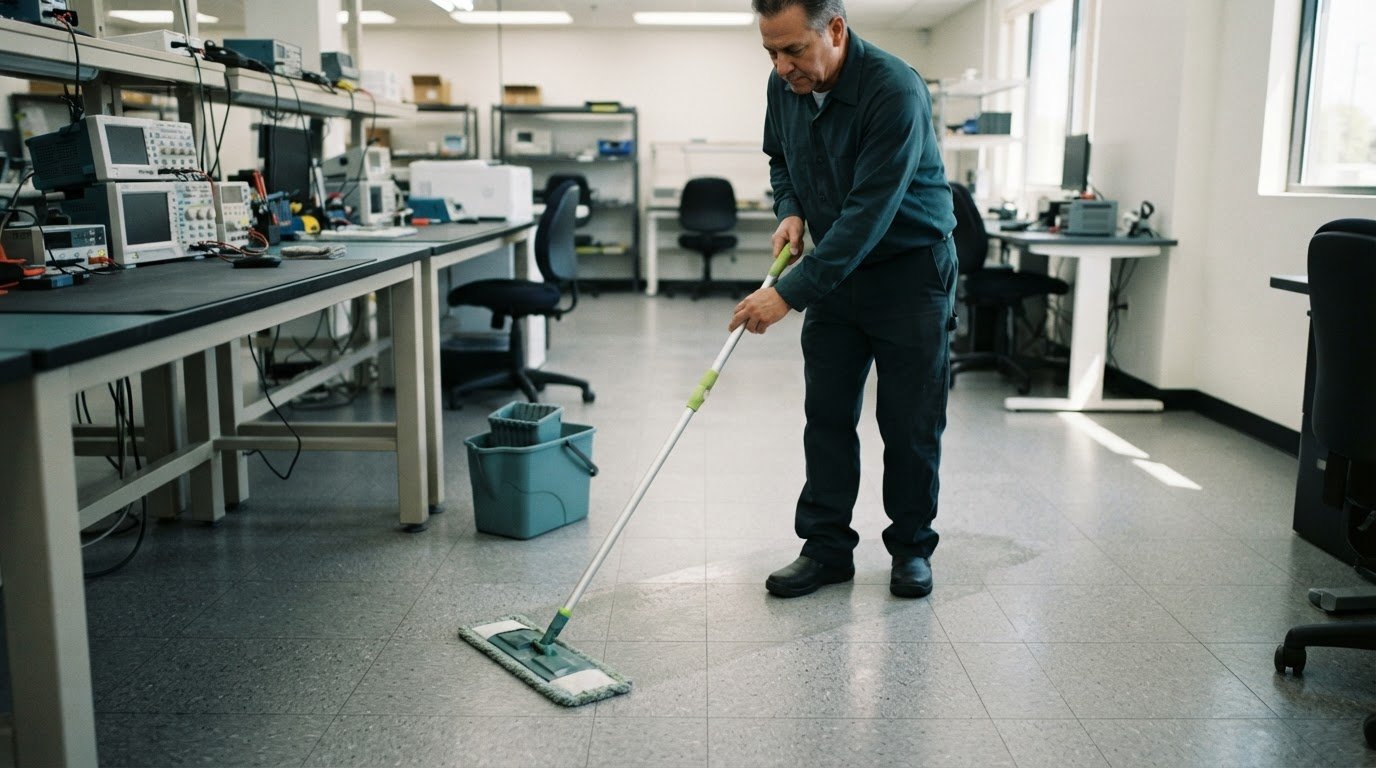
Routine cleaning removes soil before it builds up and dulls the floor. A daily sequence can include dust mopping, wet mopping and then drying the surface. Microfiber works well for dry dusting, while a cotton mop can handle regular wet cleaning. Drying after mopping helps prevent streaks and reduces the risk of a wet-floor trip hazard.
A facility plan should account for traffic patterns, stone type and cleaning needs in different areas. A reception floor may collect grit near the entrance, while a meeting room sees less foot traffic. Staff can handle daily and interim care; restorative work may require professional attention. A deep clean can also be scheduled during a refit, when moving furniture reveals uneven wear.
Sealing, Polishing, Honing, and Refinishing
Sealing protects against moisture and staining; polishing improves shine, honing refines the stone surface, and refinishing describes broader restorative work. These terms are not interchangeable, so distinguishing them helps match the work to the floor’s condition. Honing uses diamond abrasive pads, and restoration may end with polishing compound or crystallizer to add shine.
For interim cleaning, light, nonaggressive buffing with a rotary machine and polishing compound can refresh the surface. Deeper restoration uses diamond pads of different grits to grind and refine the stone. The process should start with a higher-grit, less-coarse pad, then move to a coarser, lower-grit pad for deeper scratches. This measured progression avoids starting with an unnecessarily aggressive treatment.
Removing Stains, Etching, and Scratches
Stains, etching and scratches affect stone in different ways, so treatment depends on the mark and material. Clean spills promptly to reduce the chance of staining. Acidic cleaners can etch natural stone, especially marble, while honing can address surface scratches through controlled abrasion.
Before treating a deeper stain or scratch, identify the stone and any existing sealer. This helps guide the choice of products and techniques. Avoid abrasive tools and harsh chemicals, which can damage the surface. A professional can assess the need for deeper cleaning or stain removal and choose an approach suited to the stone rather than applying the same method to every floor.
Maintenance timing should reflect facility conditions, not a universal calendar. A limestone floor at The Crown and Anchor received a deep clean one year after installation, showing how a site’s needs can prompt restorative work. Regularly observe traffic lanes, spills and finish changes to plan cleaning, sealing or restoration thoughtfully.
Cleaning products suitable for natural stone
Choosing cleaning products is central to natural stone floor care for businesses. Use a mild, pH-neutral cleaner formulated for natural stone as part of routine care. Acidic cleaners can etch the surface, especially marble, and abrasive cleaners or tools can damage the finish. A compatible cleaner removes regular soil without harsh chemistry or unnecessary specialty products.
Product selection depends on the stone and its condition. Marble, limestone and travertine differ in porosity and care needs, so do not assume one product suits every surface. Identify the stone and determine whether it has an existing sealer before setting a cleaning routine. Acidic products pose a particular risk to marble, while stain prevention is important for porous limestone.
Commercial stone and tile floors do not need homemade solutions or a large collection of specialty cleaners. A mild, pH-neutral product can handle regular mopping when it suits the floor. Compatibility matters more than product quantity. For natural stone floor care for businesses, choose a cleaner made for stone and follow its directions within the facility’s established cleaning process.
Acidic cleaners can etch stone rather than simply lift soil. Marble is especially vulnerable, so vinegar-based solutions and other acidic products are unsuitable for its surface. Abrasive powders, scouring pads and rough tools can also mark a polished finish. If a stain remains after routine cleaning, do not switch to stronger chemicals or more forceful scrubbing. Let the type of mark and stone guide the next step.
Cleaning methods affect a floor’s appearance as well as its cleanliness. Residue or streaks can obscure natural colors, while abrasive action may alter the finish. Use microfiber for dry dusting and a cotton mop for regular wet cleaning. Dry the surface after mopping to reduce streaks and avoid leaving a wet walking area. Promptly clean spills to help limit staining and water damage.
For a stubborn mark, first distinguish a stain from etching or surface wear, then consider the stone. Those details help identify a suitable treatment; one cleaner will not resolve every issue. Deeper cleaning and stain removal may require specific products and techniques. Natural stone floor care for businesses should be based on the material and floor condition, not a stronger all-purpose cleaner.
For guidance on cleaning products and methods suited to a commercial stone floor, contact Cleanit Maintenance Systems.
Cleanit Maintenance Systems: Floor Restoration & Protection
Cleanit Maintenance Systems provides Floor Restoration & Protection for commercial stone floors that have dulled, become scratched or developed uneven wear. It’s a practical next step when routine cleaning no longer addresses the floor’s condition, or when a facility needs restorative care alongside regular upkeep.
For ongoing facility care, Commercial Janitorial, Office Cleaning and Daily Cleaning Services support a consistent cleaning routine. Keeping routine cleaning separate from restoration helps facilities manage everyday soil while giving worn stone the attention it needs.
If your commercial stone floor needs restoration, contact Cleanit Maintenance Systems to discuss your facility’s needs.
Build a Care Plan That Keeps Pace With Your Facility
Treat the floor as part of your facility’s operating plan, not a surface to address only when its appearance changes. For natural stone floor care for businesses, connect maintenance decisions to how each space is used, how traffic shifts and how cleaning fits into daily operations.
A simple floor record supports consistent decisions over time. Note the stone type, finish, areas with concentrated use and any restoration completed. When a lobby, corridor or work area changes function, revisit the care plan to ensure it still suits the space. This gives facility teams a clearer basis for planning routine care and identifying when a floor needs more than everyday cleaning.
Cleanit Maintenance Systems can help businesses consider the next practical step for their commercial stone floors. Contact Cleanit Maintenance Systems to discuss your facility’s needs, and move forward with a considered plan for caring for the space.
Frequently Asked Questions
How will this weather with time?
Natural stone usually shows its age through changes in appearance, especially along regular walking routes. Look for dull patches, scratches, stains or differences between exposed and covered areas. A reception desk or rug can conceal these contrasts until furnishings move. Track changes during routine facility checks; their location and pattern can help distinguish ordinary traffic wear from a spill or isolated surface damage.
Who will be maintaining the stone?
Facility staff can manage routine care, while restorative work may call for a professional. Assign responsibility for everyday soil and spill response, and identify who handles persistent stains, scratches or uneven polish. In a Sacramento office, a simple floor log helps communicate where changes appear and what cleaning has already been tried.
How should businesses clean and maintain natural stone floors?
Use a consistent routine suited to the floor’s use and stone type. Remove dry soil before wet cleaning, address spills promptly and dry the surface after mopping. A busy entrance, for example, may need closer attention than a lightly used meeting room. Record recurring trouble spots so care responds to actual conditions instead of treating every area alike.
What cleaning products are safe for marble, granite, limestone, travertine, and slate floors?
A mild, pH-neutral cleaner formulated for natural stone is a suitable starting point for routine cleaning. Avoid acidic products, which can etch stone, particularly marble, and abrasive cleaners or tools that may damage finishes. Granite, limestone, travertine and slate still need material-aware care. If a mark remains after regular cleaning, do not try progressively harsher products; let the stain and stone type guide treatment.
How often should commercial natural stone floors be cleaned, sealed, and polished?
Clean floors according to soil and traffic, and assess sealing based on stone porosity and use. A penetrating sealer typically needs reapplication every one to three years, depending on those conditions. Polishing has no universal schedule; visible dullness and wear help determine when it may be needed. A maintenance record helps teams distinguish routine cleaning from work intended to renew the finish.
What are the best commercial floor mats and daily care practices for natural stone?
Choose entry mats that capture tracked-in grit, and position them where people enter from outside. Grit carried across stone can contribute to scratches and surface wear. Include regular mat care in the facility’s cleaning routine so captured soil does not spread back onto the floor. Furniture pads beneath office chairs and desks can also help limit damage in areas with heavy or frequently moved furniture.
How much does professional natural stone floor cleaning and restoration cost per square foot in the U.S.?
The cost depends on the floor and the work required, such as cleaning, honing or polishing. Relevant factors include the floor’s size, stone type and current condition. A stained marble reception area may need a different scope from routine upkeep on another stone. For Sacramento facilities, Cleanit Maintenance Systems provides Floor Restoration & Protection for commercial floors.
What slip-resistance risks do natural stone floors pose in commercial spaces, and how can they be reduced?
Highly polished stone in a busy commercial setting can become slippery and lose its polish quickly under heavy traffic. Wet areas and tracked-in debris also require careful floor management. Consider how each area is used when choosing a finish, keep entry points clear of grit and dry the floor after wet cleaning. These practices help address common conditions that affect performance underfoot.