Reliable property management cleaning solutions pair a recurring schedule with task-specific care for entrances, hallways, shared restrooms, and other common areas. Depending on how a property is used, these spaces may need daily attention or service several times a week, while planned maintenance can take place weekly, bi-weekly, or monthly.
Keeping shared spaces presentable takes more than reacting when something looks dirty. Property managers need a clear plan for high-traffic areas, periodic deep cleaning, safety practices, and communication that keeps service aligned with the building’s day-to-day use.
This article explains how to build a practical cleaning plan for multi-unit and commercial properties, what common-area care can include, and how recurring service supports consistent standards throughout a building. It also covers how day porter services, cleaning checklists, and scheduled maintenance can fit into the plan, making responsibilities clear and the work easier to manage.
Key Takeaways
- Shape a cleaning plan around how each building is used, with clear task lists, communication, and room for seasonal or move-related needs.
- Prioritize entrances, hallways, and shared restrooms according to traffic, then use scheduled detail work to maintain a consistent standard.
- Consider how daily cleaning and day porter services can support active properties as needs change throughout the day.
- Build health and safety practices into the cleaning approach, including specialized COVID-19 cleaning protocols where appropriate.
- Use recurring whole-building care to plan for deeper maintenance, and see how Cleanit Maintenance Systems’ commercial janitorial and office cleaning services can support shared spaces.
Cleaning plans for multi-unit and commercial properties
A practical property management cleaning solution starts with the building’s use, occupancy patterns, and shared-space demands. A multi-unit residential property may need coordinated cleaning between move-outs and new arrivals. An office building may prioritize reception areas, meeting rooms, and washrooms during operating hours. Commercial cleaning works best when every task has a defined location, frequency, and completion standard.
Set a recurring schedule around actual use. Plans can run weekly, bi-weekly, or monthly, with daily or more frequent service for busy common areas. Include seasonal exterior work, such as façade washing, when it is part of the property’s maintenance plan. Deep-cleaning tasks may include carpet shampooing, window washing, and sanitizing amenities. Regular inspections and clear communication help property managers adjust tasks as building use changes.
Separate routine janitorial work from periodic projects. An office cleaning schedule, for example, might cover desks, floors, and shared restrooms, with carpet care listed separately. A residential checklist might assign move-out cleaning to vacant units and recurring care to lobbies and corridors. Label each task by area, timing, and expected result. This makes completed work easier to review and missed items easier to spot.
What should a property management cleaning checklist include for common areas and rental units? List entrances, hallways, shared restrooms, and the tasks required between move-ins and move-outs. Weekly items might include dusting, vacuuming, and window cleaning, with deeper cleaning scheduled separately.
What cleaning standards apply to move-in and move-out inspections? Use the same written, property-specific checklist for each turnover, covering surfaces, floors, fixtures, and visible condition. Record exceptions clearly so cleaning teams and property staff can distinguish cleaning tasks from repairs.
What are the best cleaning companies and software solutions for property managers? Look for a commercial cleaning provider that uses a property-specific checklist, communicates completed work, and can follow the building’s schedule. Software can organize work orders, recurring tasks, inspection notes, and updates in one record.
What licenses, insurance, and contracts should property managers require from cleaning vendors? Ask for a certificate of insurance before proceeding with discussions, and establish relevant licensing requirements according to local rules. The written agreement should define areas, tasks, timing, access arrangements, reporting, and how schedule changes are handled.
How do property management cleaning costs and regulations vary by location? Costs depend on the property’s size, condition, service frequency, and selected tasks; local rules can also affect operating requirements. A plan for office buildings and complexes should therefore reflect the site’s specific layout and cleaning priorities.
Common-area cleaning
Shared spaces shape tenants’ experience from the moment they enter. A lobby with clean floors and clear surfaces feels cared for; a corridor with dust or tracked-in debris quickly stands out. Assign each space specific tasks instead of treating the whole property as one zone. This makes expectations clearer for the cleaning team and easier for property staff to review.
Map the shared spaces and consider how people use them. A multi-unit building may have a lobby, corridors, stairwells, elevators, laundry rooms, and shared restrooms. An office property may also include reception areas, meeting rooms, and shared kitchens. Entrances, hallways, and shared restrooms may need daily cleaning or attention several times a week, depending on the property. Set frequency according to traffic and observed conditions, rather than applying the same schedule everywhere.
Consistency comes from assigning tasks to locations and setting a repeatable sequence. A cleaner might work from the entrance inward, removing visible debris before cleaning floors and touchpoints. A weekly routine can include dusting, vacuuming, and window cleaning. Listing the same areas and tasks on each checklist helps teams follow a steady process, even in buildings with multiple floors or wings.
A practical checklist can group work by area:
- Entrances: Clean visible floor debris, glass, and accessible surfaces.
- Hallways: Address floors, ledges, and dust that tenants notice along their route.
- Shared restrooms: Clean fixtures, counters, and floors, then record completed tasks.
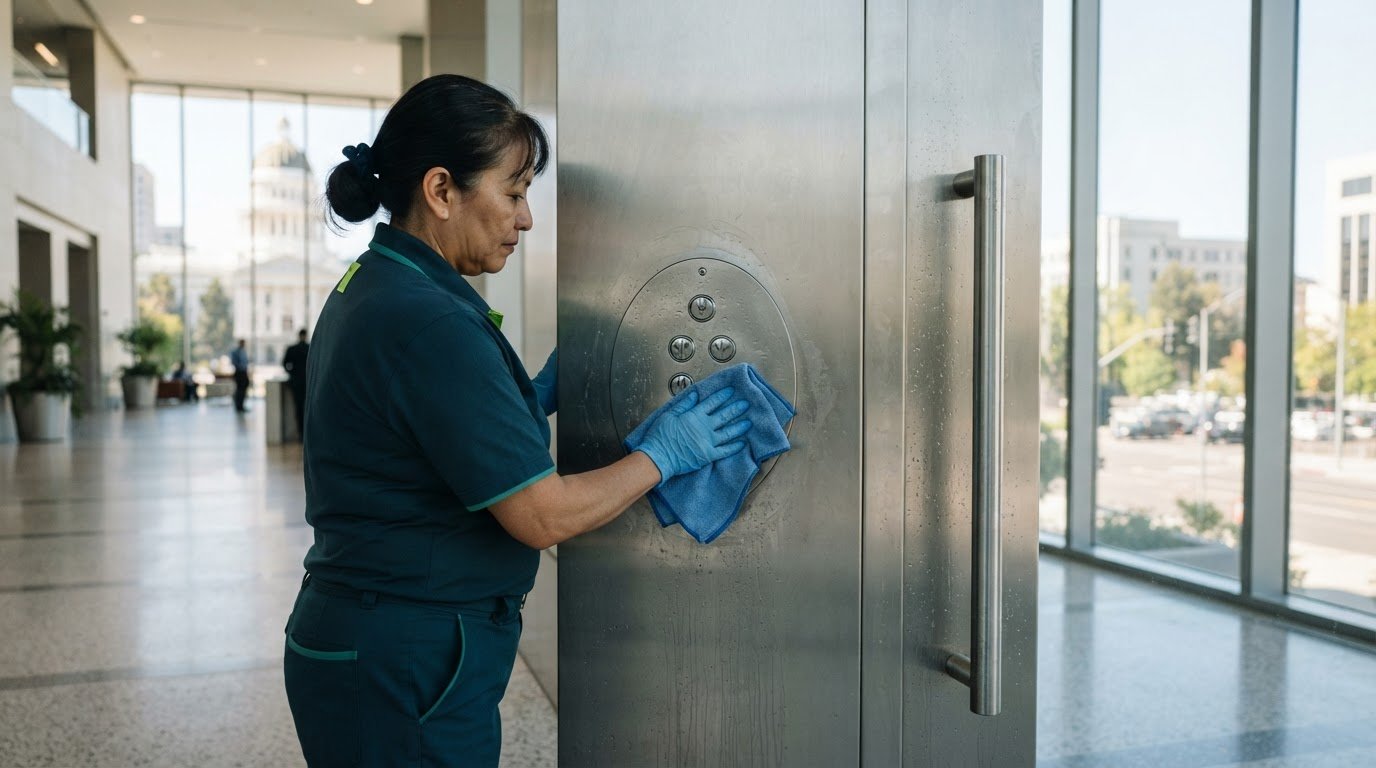
- Elevators and lobbies: Include doors, buttons, and other frequently touched surfaces in the routine.
These examples help organize work, but the property’s layout determines the final checklist. A busy lobby may need more frequent attention, while a quieter meeting room may suit a scheduled detail clean. Specific task descriptions also reduce ambiguity. “Clean lobby” is less useful than listing the floors, glass, waste bins, and surfaces that need attention.
Review the checklist against actual conditions. If tenants track debris into an entrance after wet weather, record that area for closer attention during those conditions. If a shared restroom needs more frequent service, adjust its task schedule without changing every other zone. For help shaping a routine around shared spaces, discuss a common-area cleaning plan that fits the property’s needs.
When choosing support for the routine, compare cleaning vendors on the same practical criteria: trained employee counts, service-area coverage, facility-type experience, and property-manager references. Keeping those points together makes it easier to assess whether a vendor’s offering fits the building’s shared spaces, rather than relying on a general description of its services. Consider each criterion against the tasks already identified for entrances, corridors, elevators, and other common areas. Property-manager references can inform the comparison, while facility-type experience and service-area coverage clarify how closely a vendor aligns with the property’s needs. A clear comparison supports a considered choice of cleaning partner and keeps attention on the requirements of the common-area routine.
Cleaning features and differentiators
A dependable cleaning program consistently turns a written plan into completed work. A weekly schedule, for example, should identify assigned areas, expected tasks, and how exceptions are recorded. This helps property managers distinguish a one-time issue, such as a spill, from a recurring gap that needs attention. Clear responsibilities also make service adjustments easier to discuss.
Look for practical signs of commitment in the operating process. A property-specific checklist, regular inspections, and direct communication between the cleaning team and property management can help keep expectations aligned. Ask how the provider handles staff no-shows before a tenant event, and how managers reach the point of contact at 6 AM on a Tuesday. These details show whether the service plan accounts for real operating pressures.
How do you compare in-house cleaners with outsourced cleaning services? Compare who recruits and trains staff, manages absences, provides supervision, and reports completed work. An in-house team gives managers direct oversight, while an outsourced service handles these operational responsibilities under its service arrangement.
Quality control should be specific enough to measure. For example, a review can record whether scheduled tasks were completed, note areas needing follow-up, and assign responsibility for the next step. Ask what the quality-control process looks like after the first 90 days. That point helps clarify how initial observations become an ongoing routine, rather than a checklist that no one revisits.
How can property managers schedule, track, and quality-check cleaning work? Use a shared schedule for recurring tasks, a checklist or work-order log to record completion, and inspections to document follow-up. For example, log a missed lobby task with its location, date, and resolution so both teams have a clear record.
Useful differences are operational, not just descriptive. Property managers can compare these elements to understand how a service will work in practice:
- Staffing: Clarify whether the provider hires and trains its own employees or relies on outside labor.
- Coverage: Consider trained employee counts, service-area coverage, and experience with the property type.
- Communication: Identify the contact route for schedule changes and time-sensitive building needs.
- Follow-through: Set a process for recording inspections, open items, and completed corrections.
Tenant satisfaction is easier to support when service records reflect what people experience. If an office lobby repeatedly needs extra attention, managers can use inspection notes to discuss a targeted change. A regular review makes scheduled work visible, records gaps, and grounds adjustments in documented conditions.
Cleaning health and safety
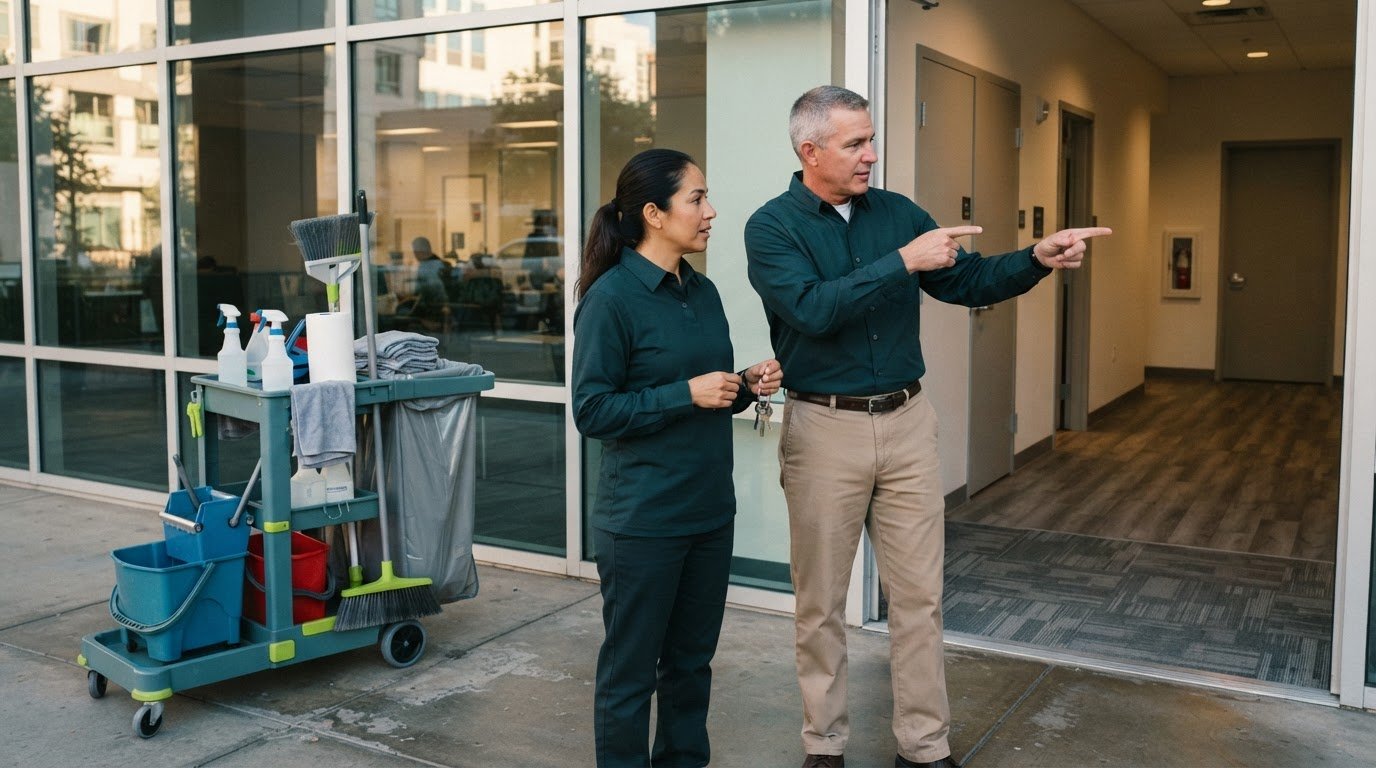
A safe cleaning operation starts with clear work boundaries. Before service begins, identify occupied areas, restricted rooms, sensitive equipment, and tenant access routes. For example, a cleaner entering an office suite should know which rooms are included and where supplies belong. Clear instructions help prevent accidental access, misplaced items, and interruptions to building operations.
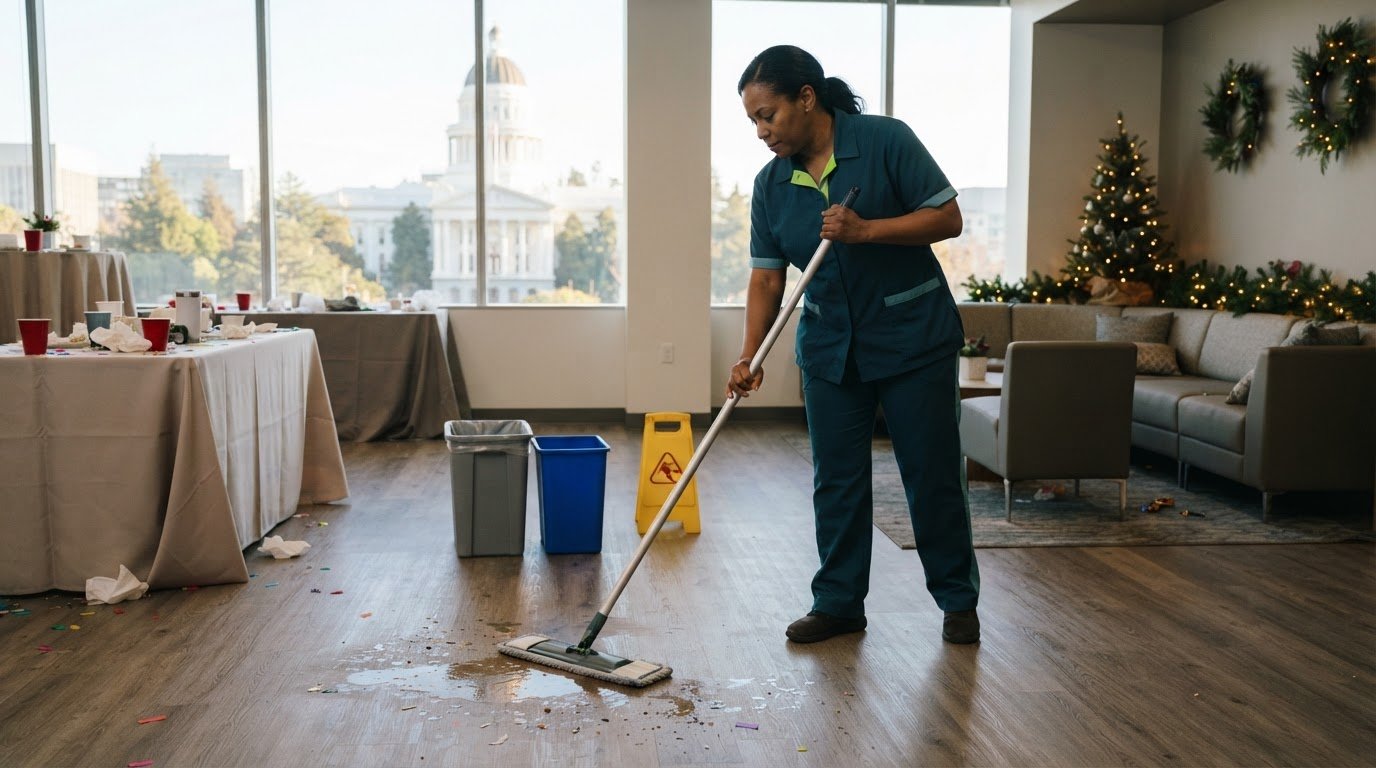
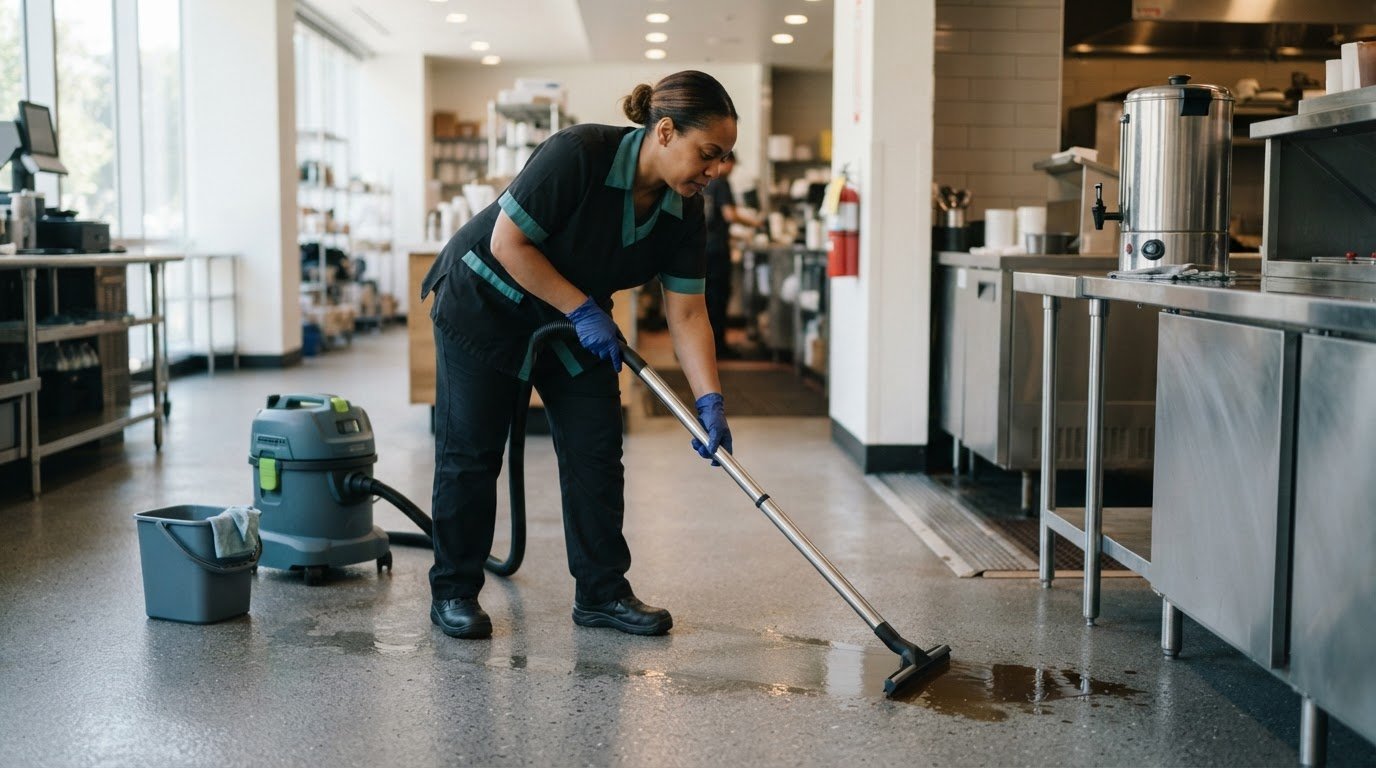
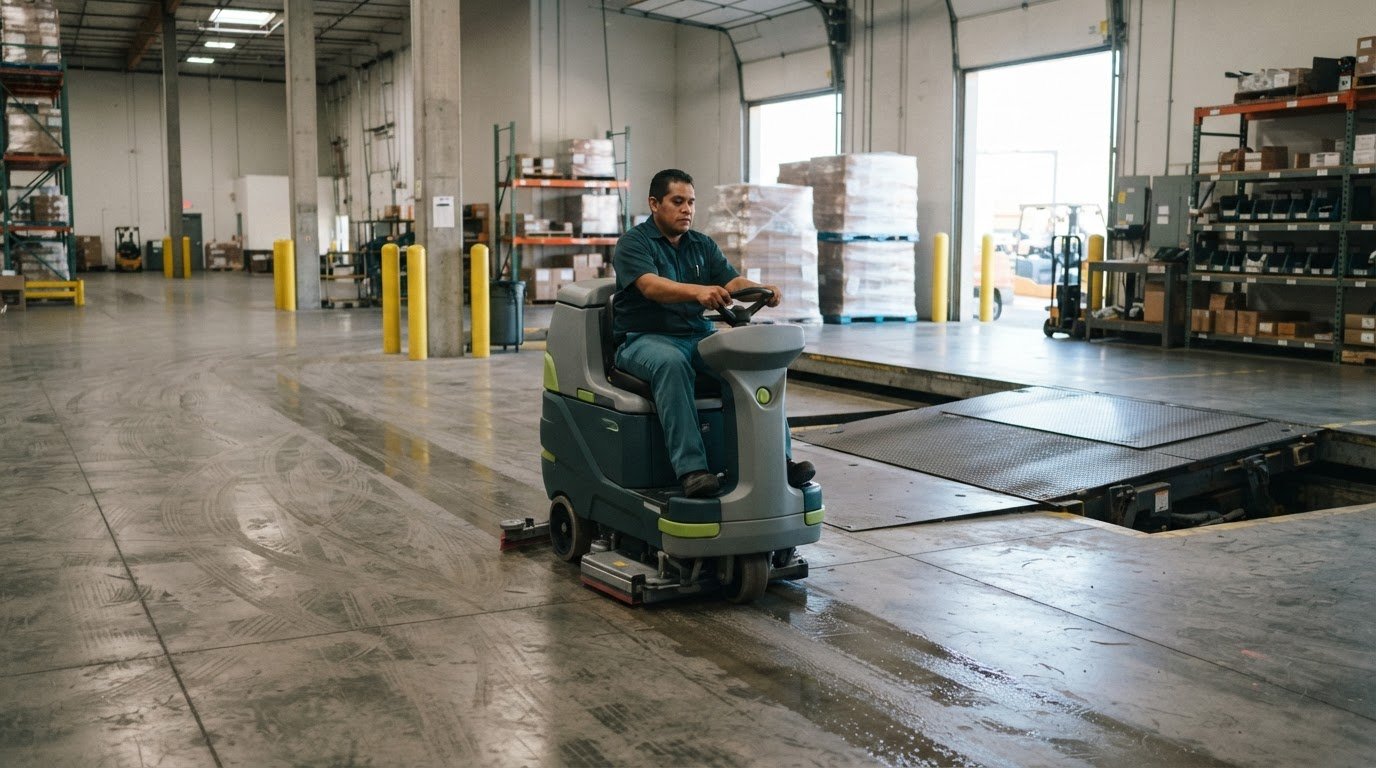
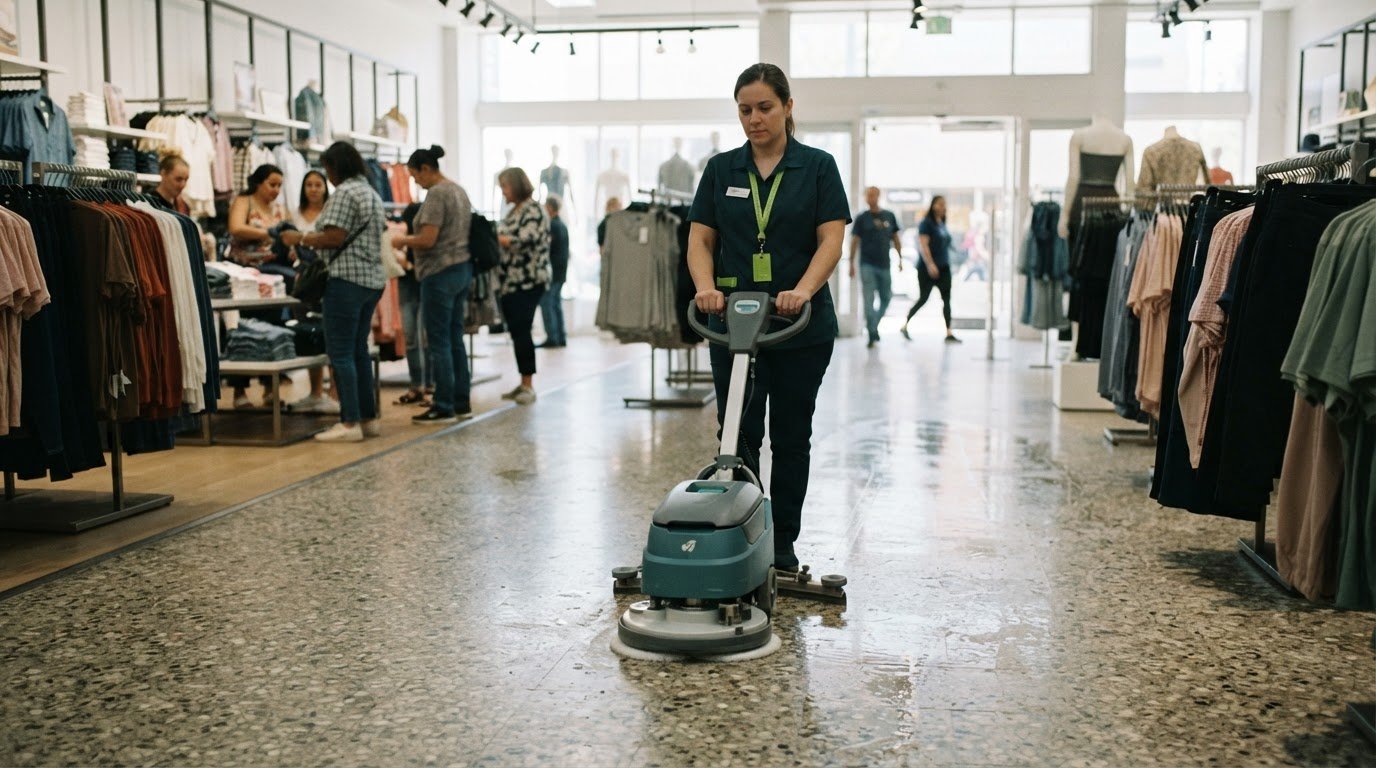
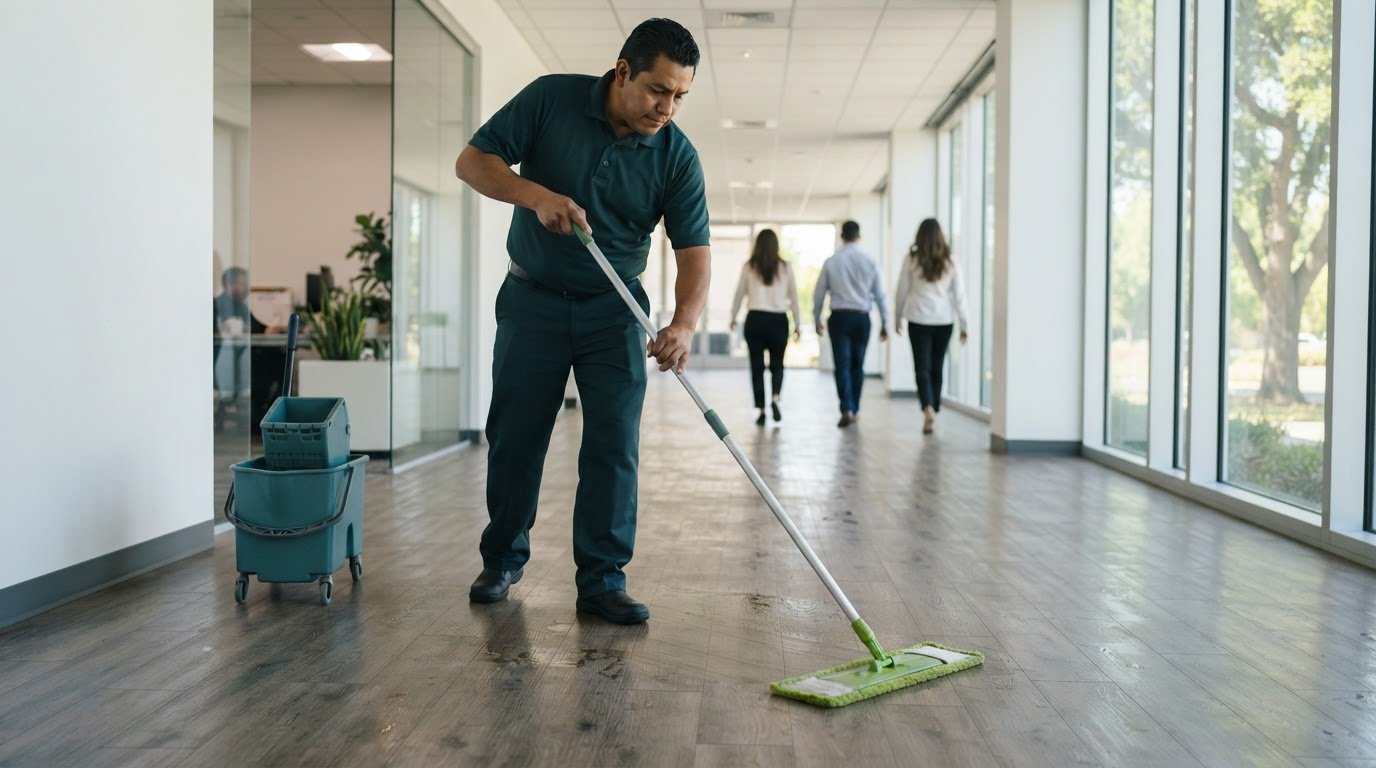
Slips and trips need particular attention during floor care. A freshly cleaned floor may look pristine but remain hazardous while wet. The plan should account for occupied routes, visible warnings, and safe access around the work area. When cleaning an entrance during rainy weather, for example, account for tracked-in moisture while keeping pedestrian movement in mind.
Cleaning products and tools also need careful handling. Keep supplies organized, follow product directions, and avoid leaving equipment where tenants or visitors could trip over it. A vacuum cord across a corridor, for example, creates an avoidable obstruction. A designated storage area and a routine for removing equipment after each task help keep shared spaces orderly.
COVID-19 cleaning protocols can be included when a workplace needs focused attention to sanitation. The plan should specify which areas receive the treatment and how the work fits the building’s normal operation. Shared desks, meeting-room surfaces, and frequently touched points are examples of areas that may be addressed. Specific methods should follow the applicable product directions and workplace procedures.
What are common risks and liability issues when hiring property cleaning services? Common concerns include slips during floor work, accidental damage, unauthorized access, and unclear responsibility for missed tasks. A written scope, incident records, and clear insurance arrangements help define how these issues are handled.
Property managers can make safety expectations easier to follow by documenting practical details before service begins. A useful site handoff can identify:
- Access: Which doors, rooms, and storage areas the cleaning team may use.
- Occupancy: Which spaces remain active during scheduled work.
- Equipment: Where tools can be placed without blocking routes.
- Reporting: How staff record damage, hazards, or tasks needing follow-up.
For example, if a cleaner notices a leaking fixture in a shared restroom, the reporting process should specify the location and notify the designated property contact. Cleaning staff can document the condition while property staff handle repairs. This distinction keeps responsibilities clear and prevents a maintenance issue from being mistaken for incomplete cleaning.
A safety review should reflect how the property is used. A clinic, office, and multi-unit building have different access patterns and equipment. Align the task scope with those conditions before service begins, then update instructions when room use or tenant activity changes. Clear procedures support careful work without suggesting that every hazard can be eliminated.
Recurring whole-building cleaning
A recurring plan connects routine cleaning with maintenance beyond busy shared spaces. Start with a building map, then assign each area a task, schedule, and completion record. For example, separate daily-use entrances from floors that need periodic carpet care. This keeps occasional deep-cleaning work from being overlooked amid routine priorities.
Use a calendar to distinguish regular service from planned maintenance. Weekly, bi-weekly, or monthly visits can provide a framework, while task frequency should reflect building use and condition. Monthly air duct and carpet maintenance can be included on a whole-building checklist. Pair each task with a location, such as a carpeted meeting area or a specific duct system, so the scope is clear.
Recurring cleaning works best when responsibilities are visible throughout the property. A building schedule can group work into three practical categories:
- Routine care: Record the recurring tasks assigned to occupied areas.
- Periodic maintenance: Schedule carpet and air duct tasks as monthly checklist items.
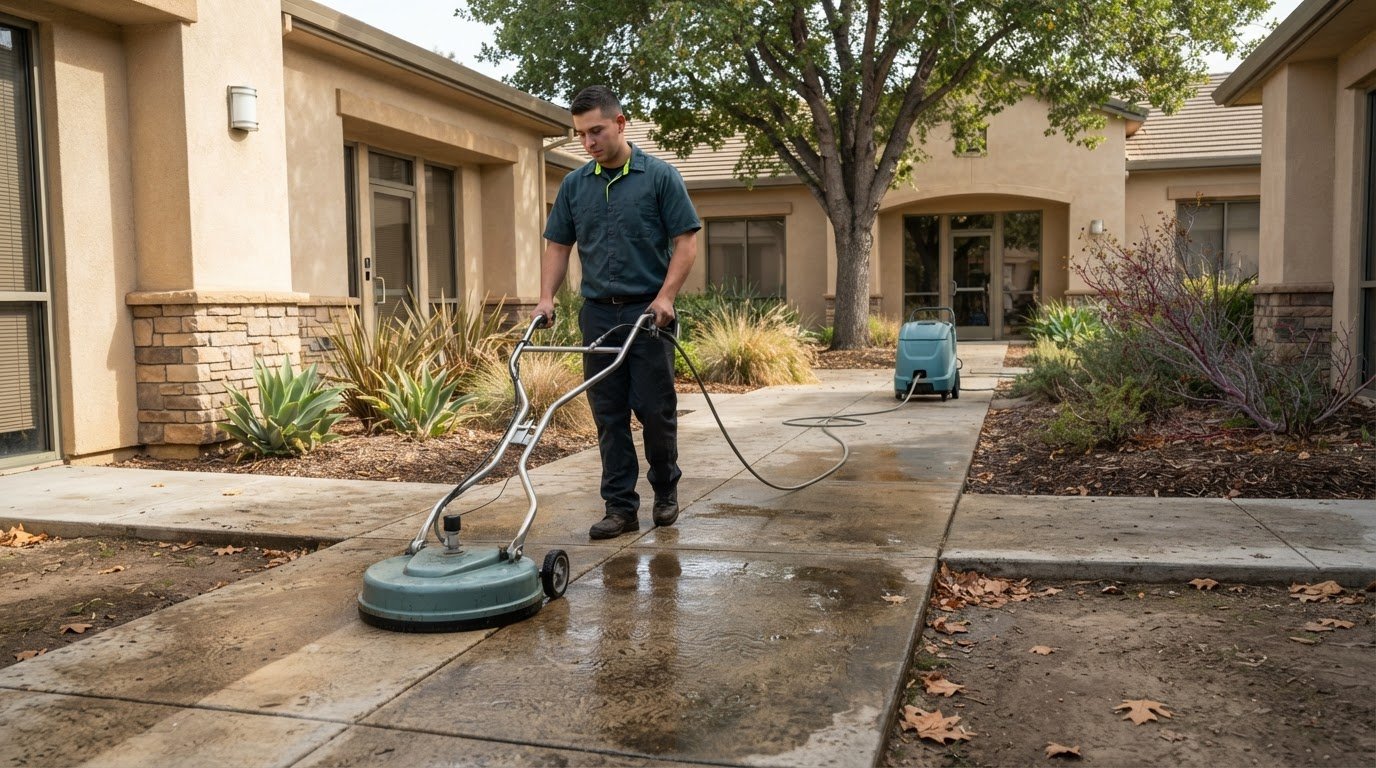
- Seasonal work: Plan exterior cleaning, gutter care, or façade washing when appropriate.
This structure shows how each service fits into the larger plan. A carpeted corridor, for instance, can receive routine floor care while deeper carpet maintenance remains a separately scheduled task. Record exterior work independently, so it is easy to track tasks that do not belong on every visit.
Consistent delivery depends on clear instructions and a repeatable record. A trained cleaning team needs access details, the defined work areas, and a way to report incomplete tasks or changing conditions. If a room becomes occupied or a building area closes temporarily, the schedule can reflect that change. Inspection notes can then show what was completed and what needs follow-up.
Review the plan against the property’s actual condition. If carpet in a high-use area shows soil sooner than other sections, record the location and adjust the task plan. Keep the existing schedule elsewhere when it remains suitable. Targeted changes help managers address specific needs without revising every recurring task.
Whole-building coordination also clarifies how specialized work fits daily operations. For office properties, a recurring plan can connect daily cleaning services with separately scheduled maintenance. This gives property teams a clearer view of routine coverage and periodic work across the site.
To organize recurring care around the building’s layout, task schedule, and maintenance priorities, discuss a whole-building cleaning plan.
Property managers should also ask whether a cleaning vendor offers day porter services for active buildings. This question can be part of the vendor review, alongside confirming the defined work areas, access details, and completion records used in the recurring plan. Keeping the service within the same planning framework makes its responsibilities visible without blurring it with periodic maintenance.
Document where the service fits and how staff should report changing conditions. The schedule can reflect the building’s use and condition, while inspection notes provide a consistent reference for reviewing completed work and identifying follow-up needs.
Cleanit Maintenance Systems
Cleanit Maintenance Systems helps property managers coordinate dependable cleaning for shared spaces and working properties in the Greater Sacramento area. Its commercial janitorial and office cleaning services support consistent routines across offices, entrances, and common areas. Daily cleaning and day porter services can also suit properties where activity changes throughout the day.
Share the building’s layout, priority areas, and recurring tasks to shape a plan around its actual use. This helps property managers align routine care with the needs of tenants, staff, and visitors, while keeping service expectations clear.
Contact Cleanit Maintenance Systems to discuss cleaning support for your property.
Set a Clear Standard for Your Property
Turn your building’s priorities into a clear service scope. Decide which spaces need consistent attention, which tasks matter most to tenants and staff, and how completed work should be communicated. A well-defined starting point aligns property management cleaning solutions with the way the building operates and leaves room to adjust as needs change.
Cleanit Maintenance Systems provides commercial janitorial, office cleaning, and daily cleaning services for shared and working properties. Start by identifying the support your building needs and the routine that fits its use. Clear expectations help property managers and cleaning teams work from the same understanding.
For a practical conversation about cleaning support for your property, contact Cleanit Maintenance Systems. A considered plan can make shared spaces easier to manage and help your team move forward with confidence.
Frequently Asked Questions
What cleaning services do property management companies typically need?
Property managers typically need recurring care for shared areas, office spaces, and building surfaces. At a Sacramento office property, that may mean routine lobby and workspace cleaning, with carpet or window maintenance scheduled separately. Multi-unit properties may also need cleaning when a rental unit becomes vacant. Scope turnover work separately from shared-space service, and document access and completion expectations.
How often should rental properties and shared spaces be cleaned?
Set frequency according to occupancy, traffic, and how quickly each area becomes soiled. Entrances, hallways, and shared restrooms may need daily attention or service several times a week, while other tasks can follow a less frequent schedule. Plan rental-unit cleaning around vacancy and handover timing. If weather brings more tracked-in debris, for example, adjust the entrance-cleaning routine.
What cleaning products and practices are safest for tenants, pets, and the environment?
No single product suits every surface, occupant, or task. Choose products intended for the surface and use, then follow the label directions. Keep supplies secured away from tenants and pets, and communicate when an area is being cleaned. Property staff can direct foot traffic away from a damp floor until it is ready for use. Review product information rather than relying on broad environmental claims.