A distribution center’s cleaning schedule should fit its operations, not disrupt them. Cleaning services for distribution centers can be arranged daily, weekly, monthly, or around a facility’s specific needs. The right schedule accounts for work patterns, high-traffic areas, and the tasks that keep the space orderly.
A thoughtful cleaning plan supports steady operations by addressing floor care, dust and debris, employee areas, and sanitation. It also helps maintain good housekeeping practices. Cleaning supports workplace readiness, but it does not replace applicable safety requirements.
This guide explains how to tailor cleaning frequency to a distribution center, which areas and services a plan may cover, and how regular housekeeping can support OSHA readiness. It also outlines the factors that shape service needs and how commercial cleaning can help facilities in the Greater Sacramento area maintain cleaner, more dependable workplaces.
Key Takeaways
- Set cleaning frequency around facility activity, shift patterns, and the areas that need consistent attention.
- Plan floor care to remove spills and debris, and consider how sweeping, scrubbing, polishing, and degreasing fit the facility’s needs.
- Strong housekeeping supports inspection readiness through clear walkways, clean surfaces, and orderly storage areas.
- Include breakrooms, locker rooms, and restrooms in a sanitation plan that reflects how employees use each space.
- Coordinate high-level dusting and other deeper cleaning tasks with daily operations to keep the work practical and consistent.
Can warehouse cleaning help with OSHA compliance?
Yes. Regular floor care can help reduce hazards from spills and debris as part of warehouse housekeeping. According to the Occupational Safety and Health Administration, fulfillment centers are subject to federal safety and health regulations.
Warehouse Floor Sweeping and Scrubbing
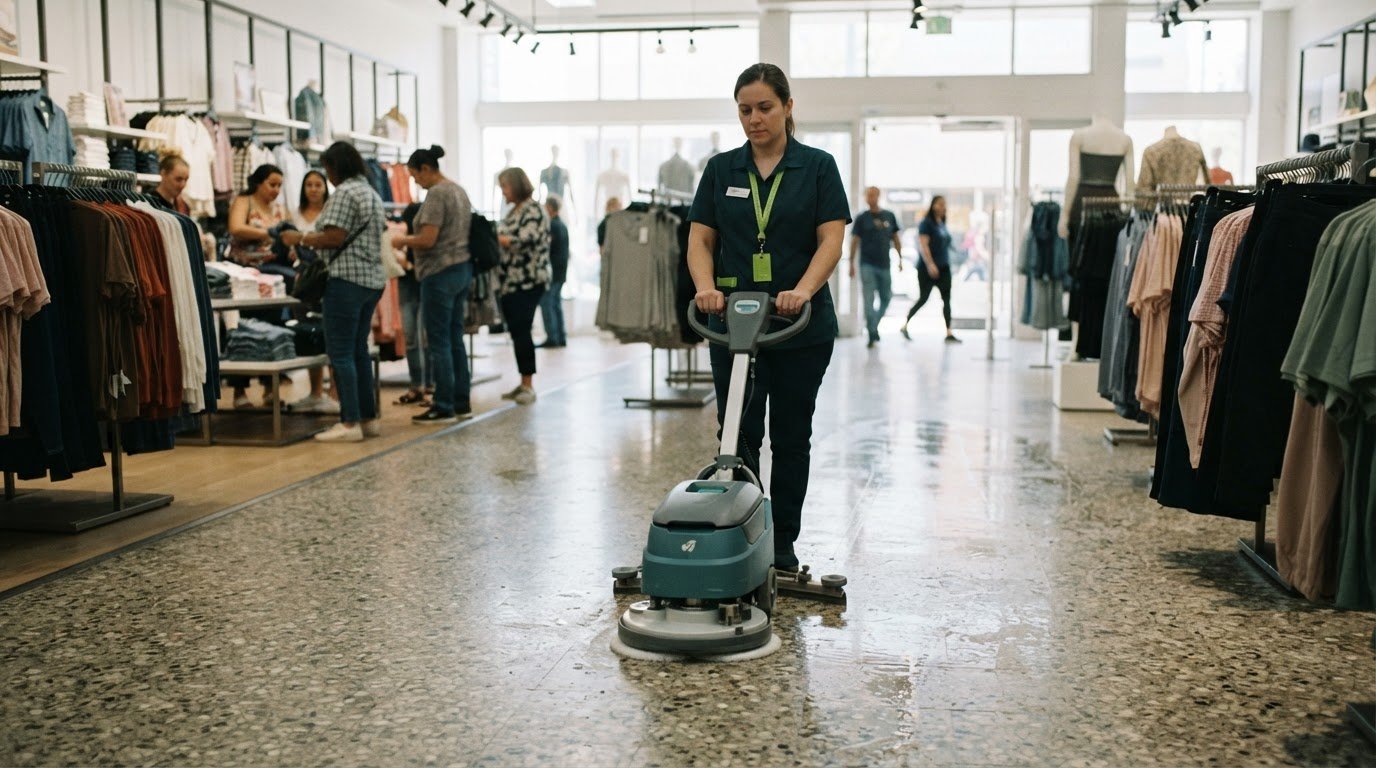
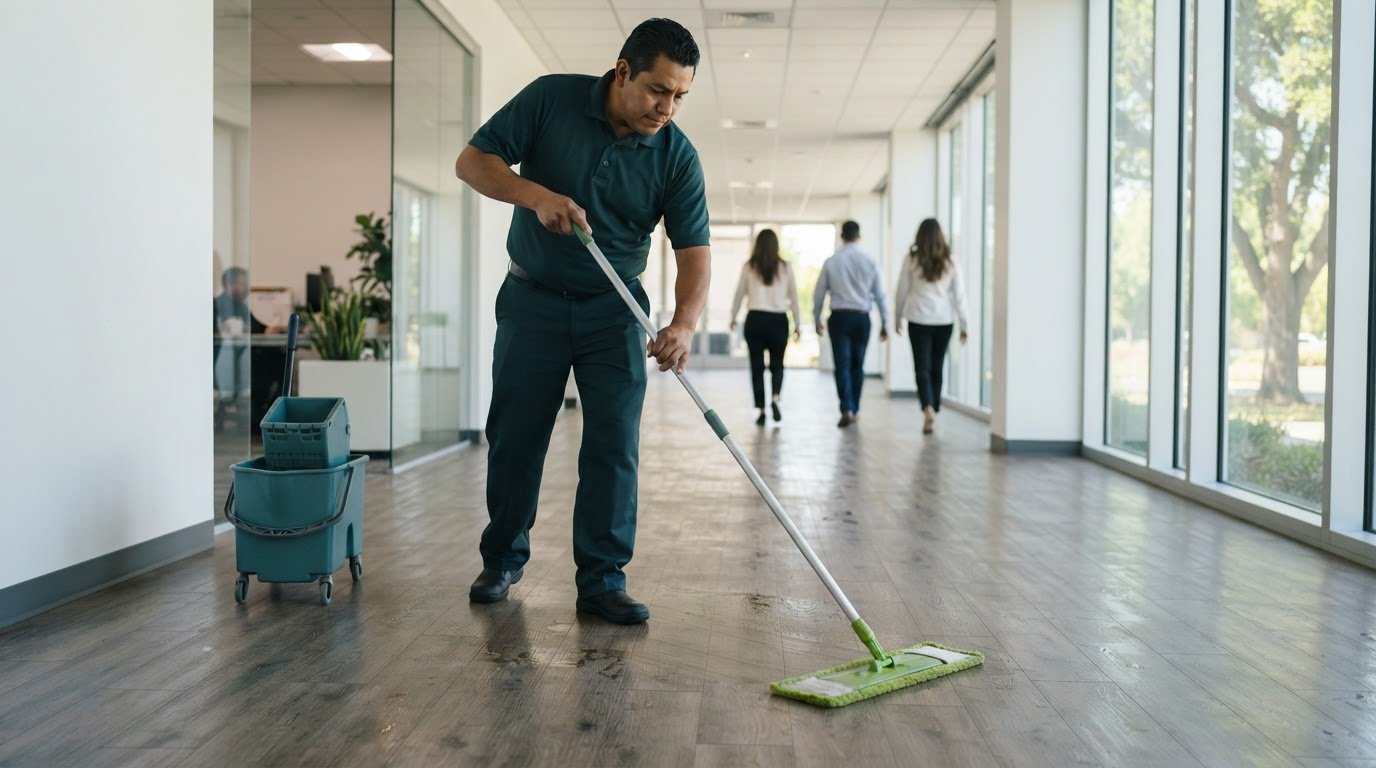
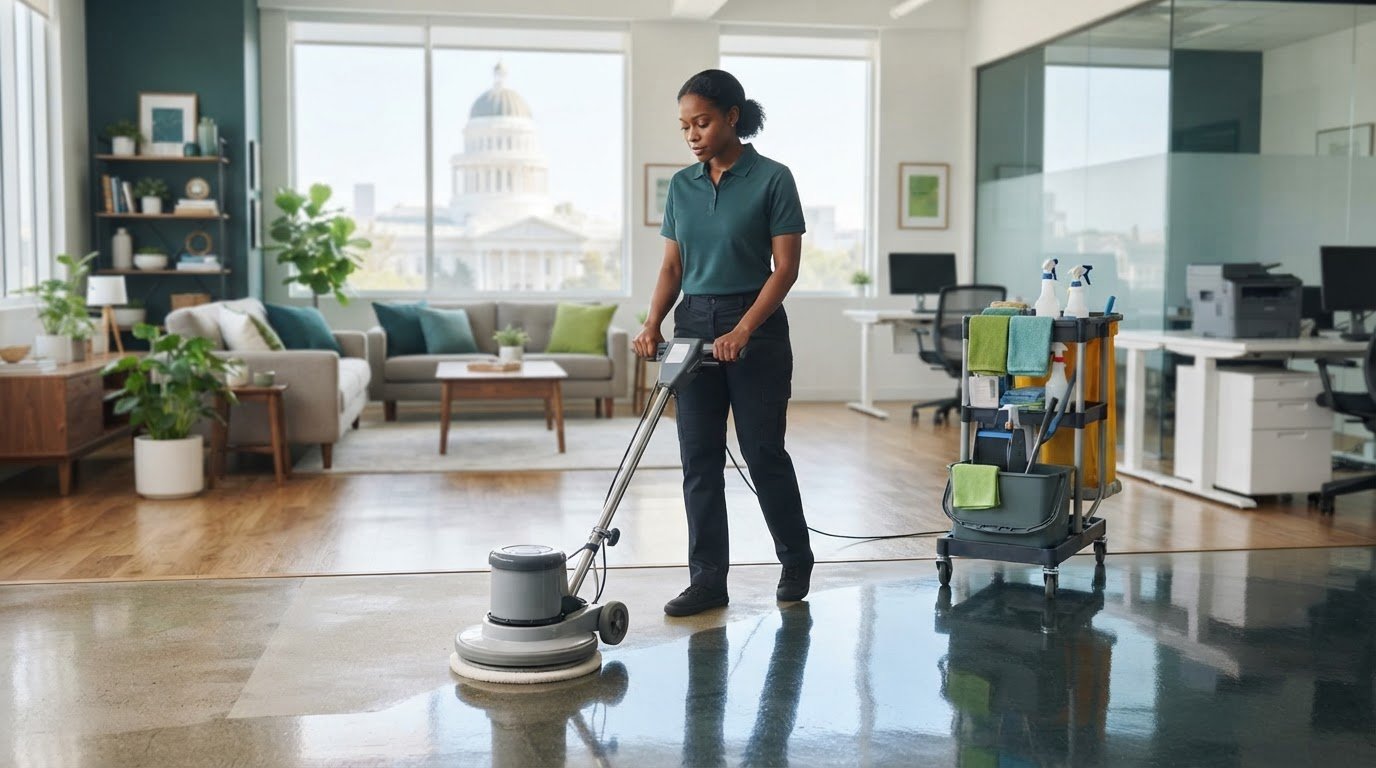
Sweeping collects loose dust, packaging fragments, and debris from concrete floors. Scrubbing can remove tracked-in soil or residue across larger areas. Degreasing may suit specific oily spots, while polishing depends on the floor’s surface and finish. A trained team considers the floor material, soil type, equipment traffic, and how the area is used before selecting a method.
A forklift aisle, for example, may need a different approach from a pedestrian route. Cleaning services for distribution centers should remove buildup without spreading residue or leaving active routes wet. A practical sequence clears loose debris, treats spots, scrubs the surface, and allows it to dry before normal traffic resumes.
Production Floor and Loading Dock Cleaning
Production floors can collect dust and residue around work areas, while loading docks gather dirt and packaging waste from shipments. Cleaning should account for these differences rather than treat every floor alike. Teams can clear debris, address visible spills, and scrub surfaces where soil remains. Dock edges and travel paths need attention because employees and equipment use them.
Coordinate tasks with facility operations to avoid obstructing production or deliveries. Marking the active cleaning area helps workers recognize wet floors and choose another route. These steps support housekeeping, but they do not replace the facility’s safety procedures.
How do you choose a commercial cleaning company for a distribution center? Look for a clear scope that covers floor types, production areas, loading docks, cleaning methods, and scheduling. Ask how the team is trained to recognize hazards and coordinate work around active operations.
What equipment and cleaning products are used for large distribution centers? Equipment depends on the floor and type of soil. Sweeping tools collect loose debris, scrubbers clean larger floor areas, and polishing equipment suits surfaces that need that treatment. Products should match the floor material and task.
What should a distribution center cleaning contract include? It should define covered areas, floor-care tasks, frequency, operational coordination, and how changes to the scope are handled. Clear terms help align recurring cleaning services for distribution centers with facility needs.
For recurring facility cleaning, daily cleaning services can be scheduled around operational priorities. A defined floor-care plan helps teams address debris, soil, and dock conditions consistently.
Warehouse safety, housekeeping, and OSHA inspection readiness
Warehouse cleaning supports good housekeeping by addressing dust, debris, blocked walkways, and employee areas. According to the Occupational Safety and Health Administration, fulfillment centers are subject to federal safety and health regulations.
Scheduling Around Warehouse Operations
A flexible plan matches cleaning tasks to the facility’s operating rhythm. For example, a team can schedule work in a staging area when that zone is less active, then move elsewhere as workflows shift. This helps limit disruption without leaving frequently used spaces out of the routine.
Useful planning starts by mapping active routes, receiving and shipping areas, and employee spaces. The schedule can distinguish recurring housekeeping from deeper tasks, then adjust when inventory movement or production needs change. Daily cleaning services can provide a structured option for facilities that need recurring attention.
Facility Cleaning Challenges
Warehouse cleaning involves different demands across high-traffic floors, storage zones, and elevated surfaces. Forklift routes may collect debris, while shelving and racks can gather dust above routine cleaning height. Fulfillment centers may also have busy loading and staging areas, so each task should be coordinated with operational activity.
High-level dusting should account for racks, beams, rafters, and ductwork. Dust and cobwebs in elevated areas can affect cleanliness and air quality. Accumulated dust may also contribute to fire hazards or mechanical issues. A cleaning plan should identify these locations and establish a safe way to address them.
Ceiling inspections can help identify visible buildup or damage that needs attention. Cleaning removes dust from accessible surfaces, while any required repairs should be recorded and handled through the facility’s maintenance process. This keeps cleaning and repair responsibilities clear.
In-House and Outsourced Cleaning Staff
In-house staff may already understand a warehouse’s routes, equipment, and daily priorities. Outsourced janitorial services can provide a defined cleaning scope and trained personnel for recurring tasks. Compare the approaches by considering coverage, task ownership, schedule coordination, and how consistently each can meet the facility’s cleaning needs.
Whichever arrangement a facility uses, the work plan should specify who handles floor debris, high-level dusting, employee areas, and visible housekeeping concerns. Clear assignments also help prevent gaps between cleaning and maintenance teams. For example, staff can document a blocked walkway or ceiling concern and direct it to the appropriate facility contact.
Inspection readiness is supported by practical housekeeping: clean floors, organized storage, dust-free surfaces, clear walkways, and sanitized employee areas. A recurring checklist can record completed tasks and flag issues for follow-up. These measures support orderly conditions, but cleaning alone does not establish OSHA compliance. Facility procedures and applicable requirements remain essential.
Breakroom, locker room, and restroom sanitation
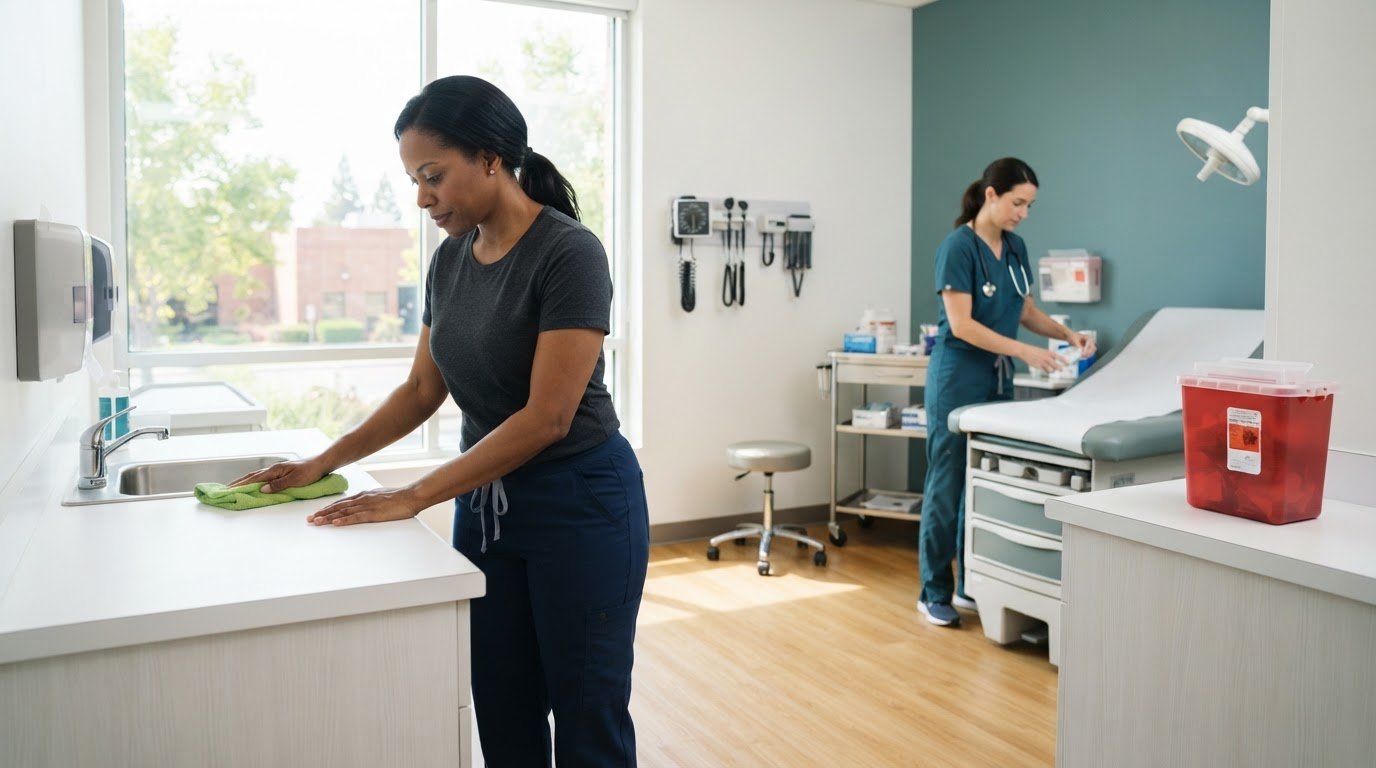
Employee areas need cleaning suited to their use, surfaces, and traffic. Breakrooms collect food crumbs, drink spills, and packaging around tables, counters, and sinks. Locker rooms see frequent contact with benches, handles, and storage surfaces. Restrooms need consistent attention to fixtures, floors, dispensers, and waste bins. Treating these spaces as separate zones helps match each task to the soil and surfaces present.
A practical routine starts by removing visible debris, then cleaning surfaces from higher points downward. In a breakroom, that can mean wiping tables and counters before addressing sinks and floors. In a locker room, benches and frequently touched handles need attention alongside floors and waste containers. Assigning supplies and cleaning tools to specific areas helps prevent debris from being carried between zones.
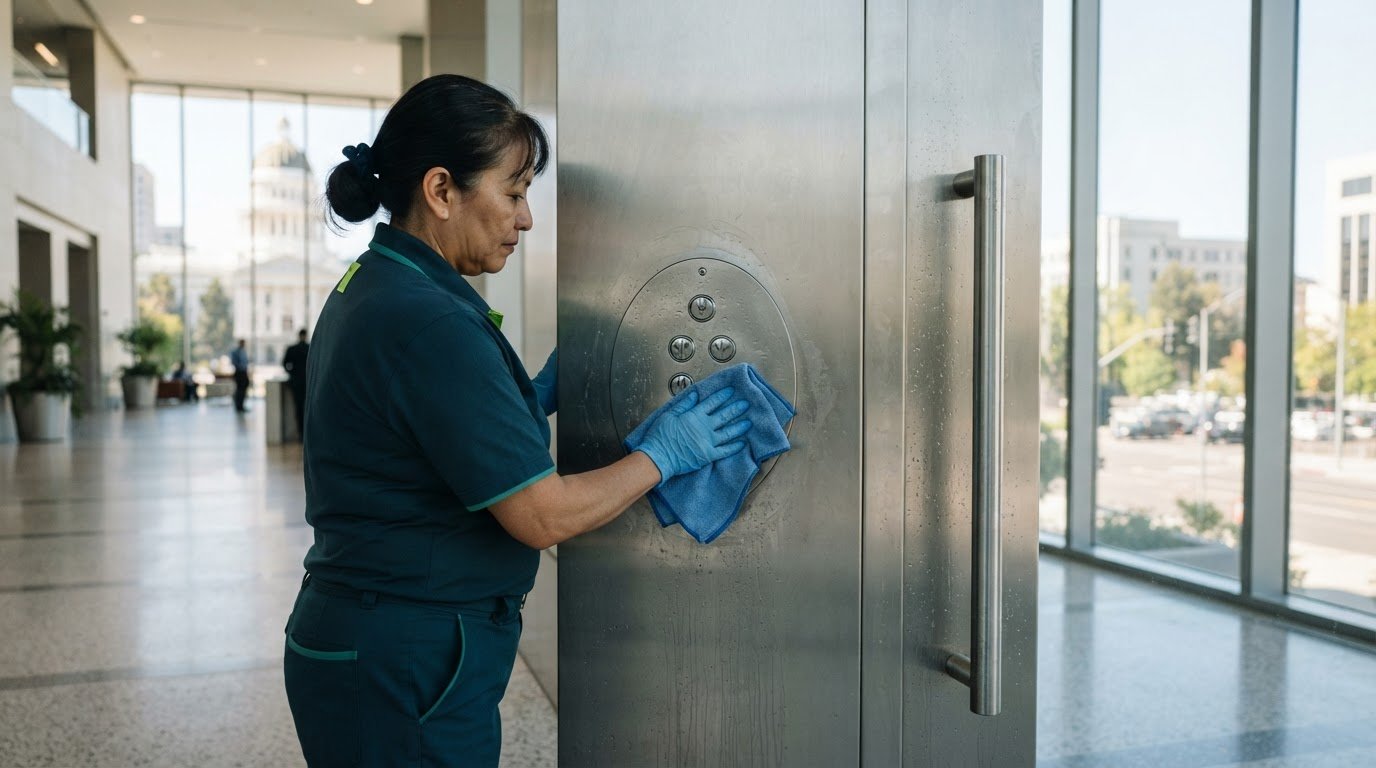
Restroom sanitation includes cleaning sinks, faucets, counters, toilets, partitions, and floors. Dispensers and waste bins also need attention because empty or overflowing units affect daily use. A consistent sequence helps prevent missed surfaces: remove waste, clean fixtures and touchpoints, replenish supplies, then finish with the floor. Address spills or wet patches promptly because they can create slip hazards for employees entering the room.
Safety protocols matter in restricted areas and during active operations. Before cleaning, the team should know which rooms require authorization, which surfaces or equipment must remain untouched, and how to report a hazard. For example, a spill near a locker-room entrance needs prompt attention, while items in a restricted cabinet should remain undisturbed. Clear boundaries protect employees and facility property.
- Separate cleaning tools by area to limit cross-contamination between restrooms, breakrooms, and locker rooms.
- Remove food waste and loose debris before wiping tables or cleaning floors.
- Address restroom spills and overflowing bins as soon as they’re identified.
- Follow posted access rules and report hazards or maintenance concerns through facility procedures.
Traffic patterns can guide how the work is organized. A breakroom used during staggered shifts may need attention around its busiest periods, while a restroom near a main employee entrance sees steady use throughout operations. Schedules should reflect these differences rather than apply identical tasks everywhere. A defined checklist can record completed work and note issues such as damaged dispensers, persistent spills, or surfaces needing specialized attention.
Sanitation works best when responsibilities are clear. Facility teams can identify restricted rooms and report access changes, while cleaning staff follow the agreed scope for each area. This coordination keeps breakrooms, locker rooms, and restrooms orderly without disturbing stored property or interrupting employees in nearby spaces.
Atlanta distribution center warehouse cleaning?
Cleaning schedules can be coordinated with shifts, loading activity, and facility priorities. For distribution centers in the Greater Sacramento area, schedules can be daily, weekly, monthly, or customized to operational needs.
Schedules Aligned With Shifts
Start planning with a map of shift changes, receiving periods, and production zones. Then assign cleaning tasks to windows when specific areas are less active. For example, a staging zone may be cleaned after outbound loading slows, while another area remains open for work. This makes the schedule responsive to facility operations rather than applying one fixed routine everywhere.
Record priority areas, access limits, and recurring spill locations. Clear task assignments help cleaning teams move through the facility without interrupting active workflows.
Cleaning for Round-the-Clock Operations
Facilities operating across continuous shifts can divide cleaning by zone and coordinate tasks with changing activity. Rather than wait for a facility-wide pause, teams can work in areas that are temporarily less busy. The schedule should identify routes that must stay open and areas where loading or production could make cleaning disruptive.
Supervisors can share changes in operational priorities to keep the cleaning sequence practical. For example, a shift handoff can note that a work zone is ready for service or that loading activity has moved elsewhere. A customized schedule can adapt as conditions change.
Service Availability in Your Area
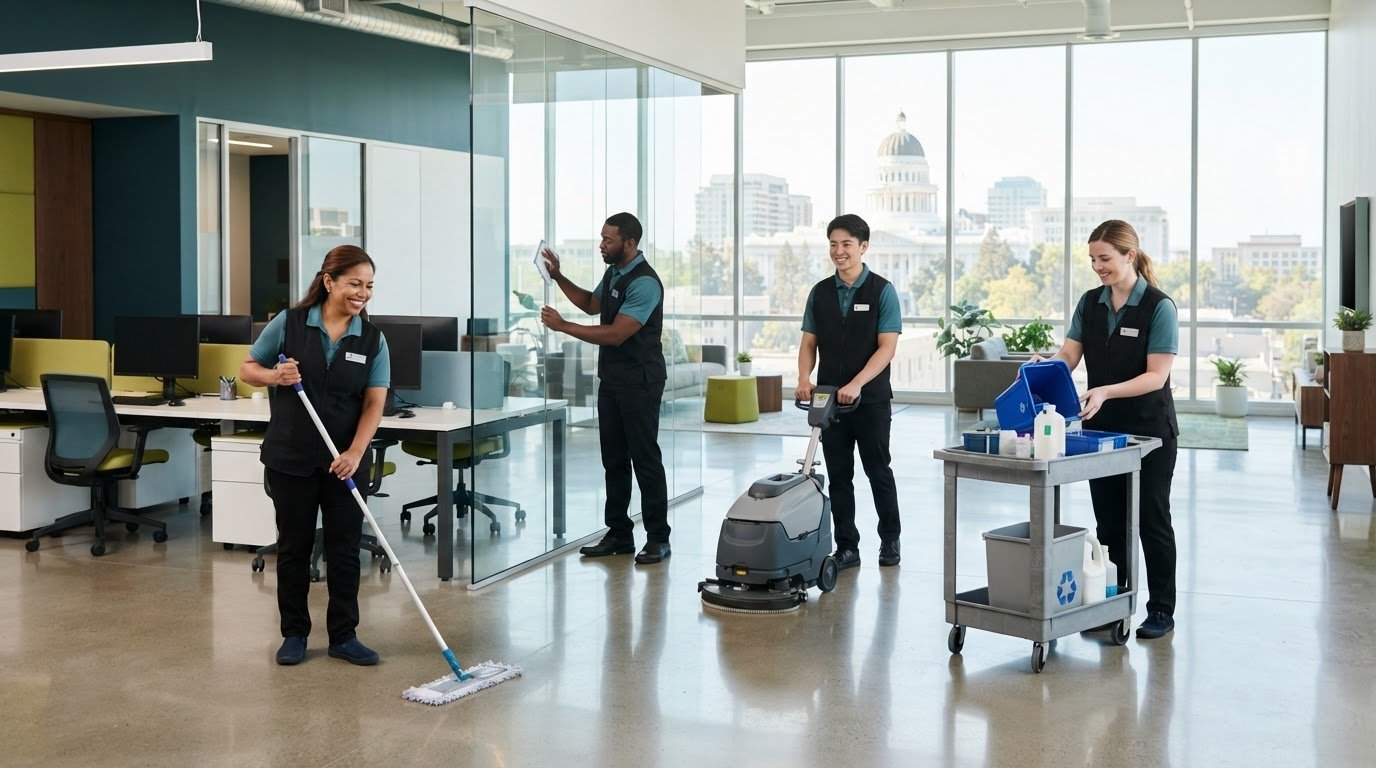
Cleanit Maintenance Systems serves the Greater Sacramento area with Commercial Janitorial and Daily Cleaning Services to support recurring workplace cleaning needs. The schedule and scope should reflect the facility’s operating patterns and the areas requiring routine attention.
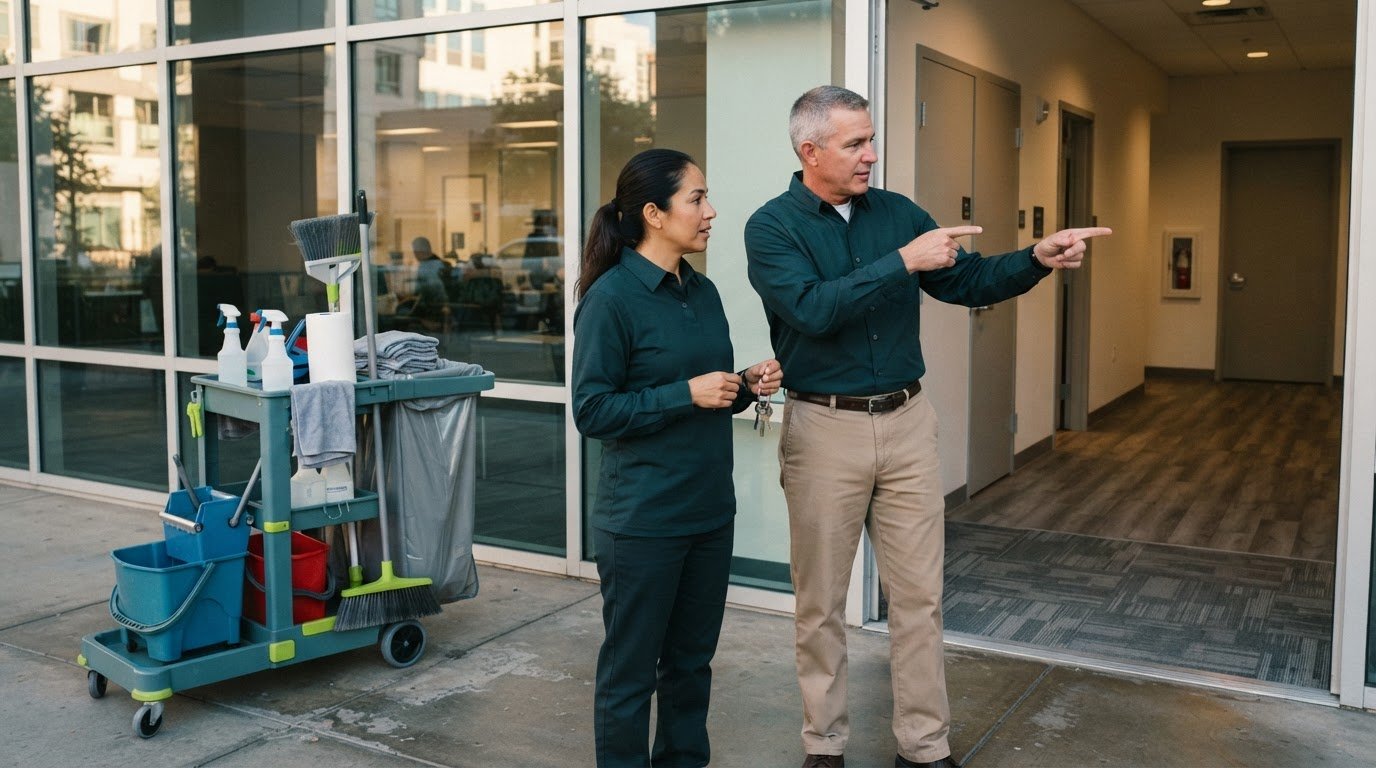
To shape a useful plan, identify busy loading periods, employee spaces, and areas where cleaning access is limited. Group tasks according to when each zone can be serviced with minimal disruption. This gives facility teams a practical basis for coordinating cleaning with daily operations.
Daily, weekly, monthly, or customized schedules can organize work around facility needs. Routine janitorial tasks may be planned separately from less frequent cleaning, with adjustments based on activity, facility condition, and service requirements. A clearly defined schedule also helps supervisors communicate operational changes that affect cleaning access.
For distribution centers in the Greater Sacramento area, start by outlining shift patterns, loading windows, and priority zones. These details help create a schedule that supports the facility’s workday and keeps cleaning responsibilities clear.
Can cleaning schedules be customized?
Yes. A cleaning program can match a facility’s activity, inventory, safety needs, and patterns of buildup. High-level dusting of racks, beams, rafters, and ductwork can be scheduled separately from routine floor care, giving elevated surfaces planned attention without treating every area alike.
Dust settles over time on warehouse structures, including shelving, light fixtures, and overhead beams. A practical plan identifies these surfaces by zone, notes visible buildup, and sets a suitable cleaning frequency. Dust and cobwebs in high areas can affect air quality and cleanliness, while accumulated dust may contribute to fire hazards or mechanical issues.
Sequence matters. Address elevated shelves, rafters, and fixtures before cleaning the floors beneath them so released dust and debris can be removed afterward. For example, a team can complete high dusting in one storage zone, then clean the affected surfaces below. This avoids cleaning the same floor area twice and keeps tasks organized by location.
The right frequency depends on facility size, activity, inventory type, and safety requirements. Monthly or quarterly deep-cleaning programs may suit some warehouses, while active storage areas or locations with visible dust buildup may need more frequent attention. A schedule should distinguish recurring surface care from deeper work, then adapt when operations or inventory conditions change.
Before high dusting begins, define which racks, beams, rafters, and ductwork are included. Also identify areas where stored goods, equipment, or active work limit access. Clear boundaries help prevent cleaning from disturbing inventory or interrupting warehouse activity. Record any observed damage or obstruction for the facility’s maintenance process.
Commercial cleaning programs work best when tasks and locations are specific. A zone-based plan can list the overhead surfaces, the expected work sequence, and how the floor below will be addressed afterward. This gives facility teams a clear record of completed tasks and helps identify recurring buildup. Industrial cleaning services may also distinguish high-level work from routine dusting of accessible shelves and surfaces.
Review the plan when facility conditions change. New inventory layouts, increased activity, or recurring dust on a particular rack can affect which areas need attention and how often. A focused adjustment is more practical than applying the same deep-cleaning cycle to every zone.
To discuss a cleaning plan shaped around your facility’s needs, contact the team.
Cleanit Maintenance Systems: Pressure Washing Service
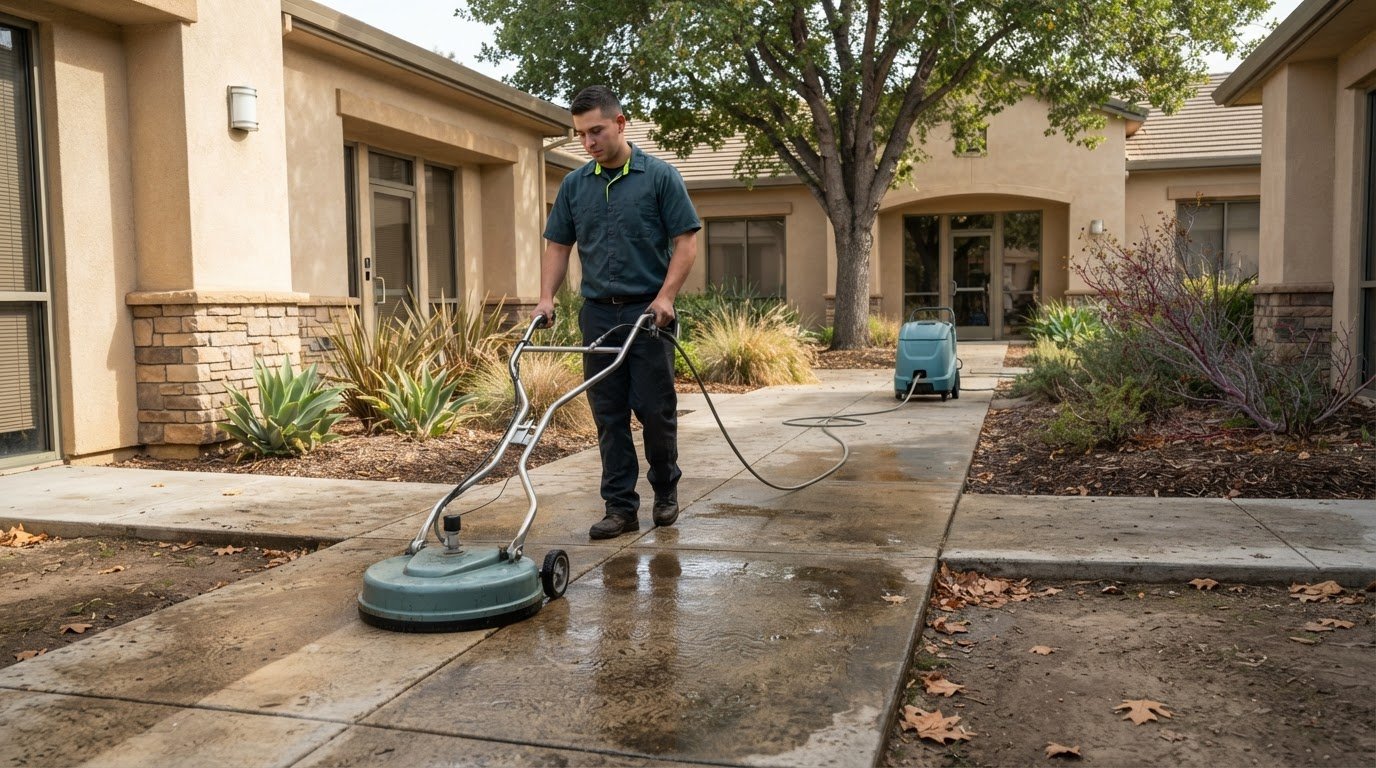
Cleanit Maintenance Systems helps maintain facility areas with Pressure Washing Service and commercial janitorial work. Pressure washing can suit exterior hard surfaces where weather and vehicle activity leave visible dirt or residue. Commercial Janitorial and Daily Cleaning Services address recurring interior cleaning needs, while Office Cleaning supports workplace areas within the facility.
Consider pressure washing when outdoor surfaces need focused cleaning as part of broader property maintenance. For ongoing indoor upkeep, a coordinated janitorial schedule can address shared spaces and routine cleaning tasks. Cleanit Maintenance Systems serves the Greater Sacramento area and provides cleaning support for local facilities.
Contact Cleanit Maintenance Systems to discuss your facility’s cleaning needs.
Build a Cleaning Plan That Can Keep Pace
A dependable plan for cleaning services for distribution centers should stay useful as operations change. Treat it as a working tool, not a fixed checklist. As inventory, traffic, and work patterns shift, review which areas need attention and whether cleaning still fits facility routines. This keeps the plan connected to the way the center operates.
Before setting priorities, consider which tasks compete with active work, which spaces need consistent care, and what operational changes could affect the schedule. These details shape a practical scope and help teams understand how cleaning fits into their daily routines.
Cleanit Maintenance Systems offers Commercial Janitorial, Office Cleaning, and Daily Cleaning Services to support workplace upkeep. The right service scope focuses on the spaces and tasks that matter to your operation without adding unnecessary complexity.
When you’re ready to discuss a cleaning plan for your facility, contact Cleanit Maintenance Systems. A clear conversation is a steady first step toward a cleaner, well-supported workplace.
Frequently Asked Questions
Do you offer recurring janitorial contracts?
Cleanit Maintenance Systems provides Daily Cleaning Services for recurring workplace cleaning needs. A useful janitorial agreement should spell out the areas covered, task frequency, access expectations, and how schedule changes are handled. For a distribution operation, define separate responsibilities for routine cleaning and facility maintenance. This gives supervisors and cleaning teams a shared understanding of the work without assuming every area needs the same treatment.
Do you offer warehouse janitorial services in Sacramento?
Cleanit Maintenance Systems serves the Greater Sacramento area and provides Commercial Janitorial services. Organize a distribution center’s scope around receiving activity, shift transitions, and employee-area use. Identify the spaces needing routine attention and how cleaning should fit facility operations. This creates a practical starting point for discussing janitorial needs at a Sacramento-area workplace.
Do you use eco friendly cleaning products?
“Eco-friendly” can refer to different product qualities, so the label alone does not explain a product’s ingredients or intended use. For a distribution facility, evaluate product information and environmental claims alongside the surface and task. A product suitable for an office counter may not suit a warehouse floor. Do not assume a product is certified or environmentally preferable without evidence supporting that specific claim.
What Makes Fulfillment Center Cleaning Complex?
Fulfillment centers combine storage, packing, employee spaces, and active movement of goods. A cleaning task in one zone can affect another if dust, debris, or equipment crosses the work area. Facilities can span large areas, so planning by zone helps define practical coverage. Inventory type, facility condition, ceiling height, operating activity, and service requirements also shape the cleaning plan.
What cleaning services do distribution centers typically need?
Common needs include floor care, dust and debris removal, restroom and breakroom sanitation, loading-area cleaning, and upkeep of shared spaces. A facility may also schedule high-level dusting for racks or overhead structures and periodic deeper cleaning. The right scope depends on where soil accumulates and how each area is used. For example, a packing zone may need different attention from an employee office.
How often should warehouse floors, restrooms, break rooms, and loading docks be cleaned?
Frequency depends on traffic, spills, facility condition, and how each area is used. A distribution center can set routine tasks daily, weekly, monthly, or through a customized schedule, then adjust for changing activity. Restrooms and breakrooms may need attention based on use, while loading docks may need extra focus after busy shipment periods. Monthly or quarterly deep-cleaning programs can address buildup beyond routine tasks.
What OSHA, EPA, and state regulations apply to distribution center cleaning?
According to the Occupational Safety and Health Administration, fulfillment centers are subject to federal safety and health regulations. The requirements relevant to cleaning depend on the facility’s activities and circumstances. Cleaning plans should support orderly housekeeping and safe work practices, while the facility addresses applicable rules for its operations, products, and waste. A cleaning schedule alone does not establish regulatory compliance.
What cleaning procedures reduce dust, pests, spills, and workplace accidents in warehouses?
Use a consistent sequence: remove loose debris, clean affected surfaces, and address spills promptly so they do not remain in travel paths. Keep food waste and packaging from accumulating in employee areas, and include storage zones in routine dust removal. Keep walkways clear and record recurring problem spots, such as a spill-prone loading area. Cleaning helps manage these conditions, while pest exclusion and facility repairs require separate attention.