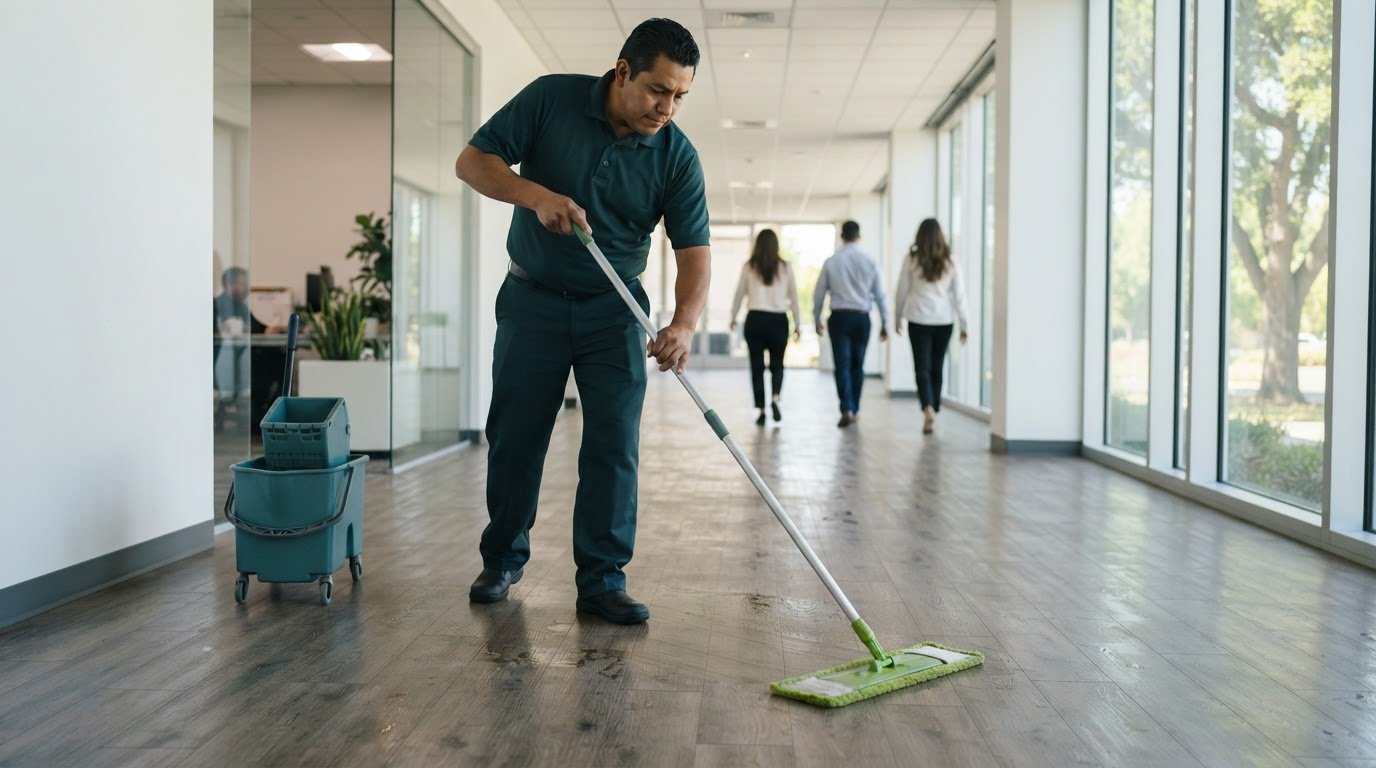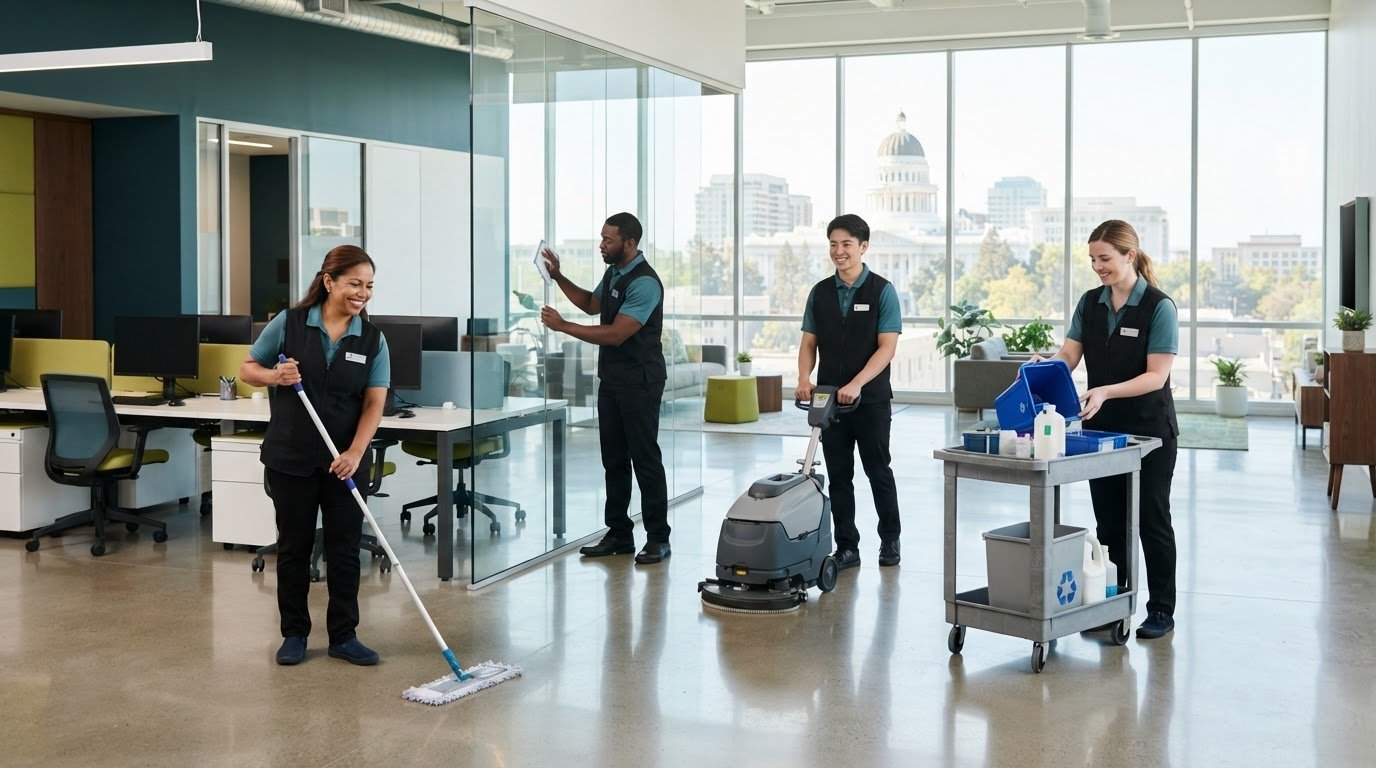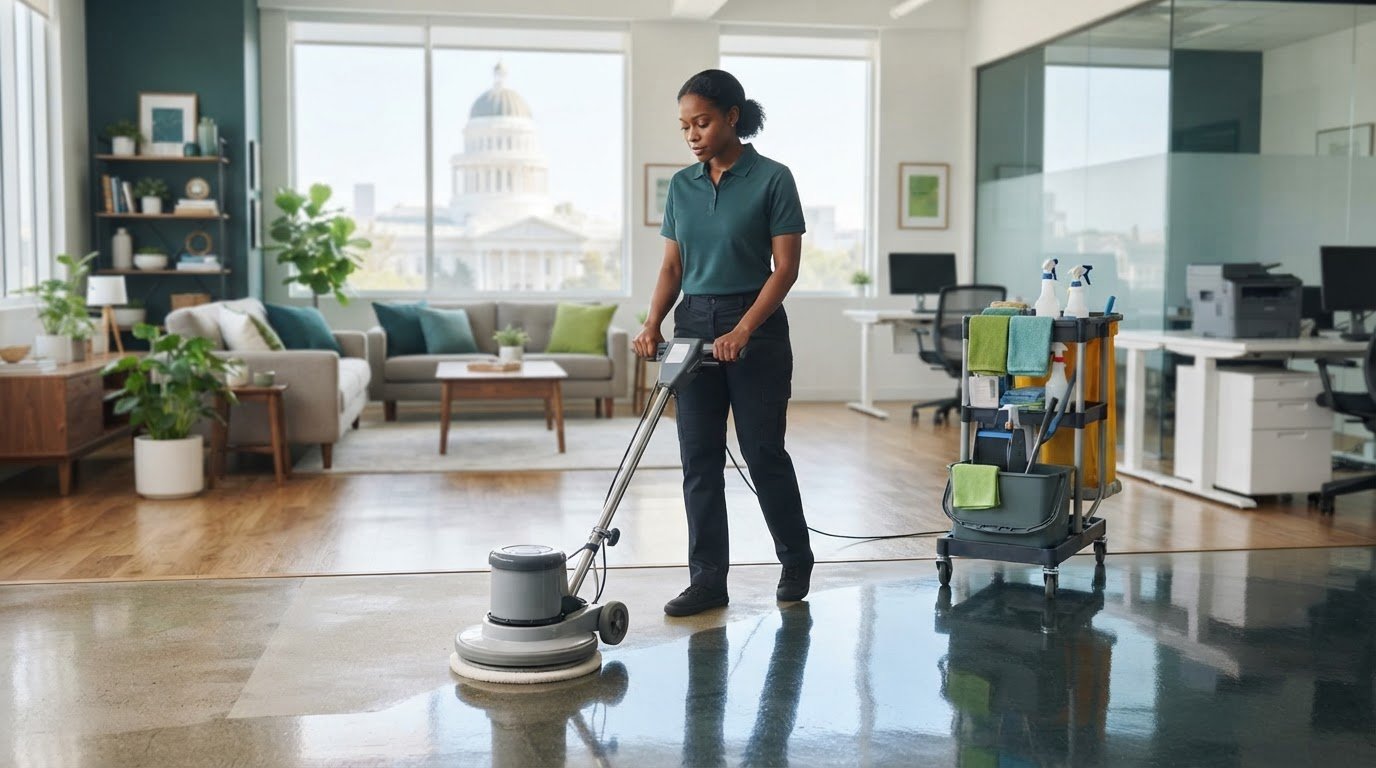
Shared surfaces need more than a quick pass during routine cleaning. Touchpoint disinfection services for offices in Sacramento combine regular cleaning with added attention to commonly handled areas, using EPA-registered disinfectants according to label directions. The U.S. Environmental Protection Agency says to follow the contact time specified on the label.
You can maintain a clean, orderly workplace without adding another task to your team’s day. A well-planned routine focuses on shared surfaces and fits the way your office is used.
This guide covers which touchpoints deserve attention, how routine cleaning and disinfection work together, and what to consider when setting a facility-specific plan. It also explains how product selection and contact time support consistent, careful cleaning.
Key Takeaways
- Build a disinfection plan around the surfaces people actually share and how often those areas are used.
- Choose a cleaning rhythm that fits office traffic; heavier use may call for more frequent attention than quieter spaces.
- Pair routine cleaning with added care for high-touch points, such as door knobs, keyboards, elevator buttons, and restroom fixtures.
- Use EPA-approved disinfectants as directed, including the product’s specified contact time.
- Consider commercial janitorial or office cleaning support when maintaining shared surfaces is adding work to your team’s day.
Customized disinfection plans for facility-specific touchpoints
A useful plan starts with how people move through a facility, not a one-size-fits-all checklist. Offices, schools, factories, and public venues have different shared surfaces and patterns of use.
When choosing office disinfection services in Sacramento, look for a plan that identifies priority touchpoints, explains the cleaning schedule, and reflects your facility’s daily use. Consider how it covers busy entrances, shared workstations, and restroom traffic.
Which Sacramento companies offer office touchpoint disinfection? Commercial janitorial providers may include touchpoint attention within broader office cleaning plans. Compare the specific surfaces and routines each plan covers rather than relying on a general service label.
Before a service visit, identify shared areas and frequently handled surfaces, such as reception counters and break-room handles. Clear access to these areas and share any changes in room use so the work reflects your facility’s actual layout.
Plans Based on Facility Use
Foot traffic helps determine where cleaning attention is most useful. A reception area with steady visitor flow may need a different routine from a lightly used meeting room. Consider which spaces employees, visitors, and delivery personnel share, then reflect those patterns in the service scope.
Smaller Sacramento offices with minimal foot traffic might choose bi-weekly or monthly cleaning. Many Sacramento businesses find weekly office cleaning balances maintenance with cost-effectiveness, while heavier use may call for daily attention. The right schedule depends on occupancy, shared-space use, and how quickly surfaces are used again.
Office and Facility Touchpoints
Start with surfaces used by several people: door knobs, keypads, railings, turnstiles, elevator buttons, garbage cans, drinking fountains, keyboards, and restroom fixtures. A facility walkthrough can distinguish shared equipment from personal items and reveal overlooked points along common routes.
Then group touchpoints by location, such as entrances, work areas, elevators, and restrooms. This makes the plan easier to follow and helps staff see which surfaces need routine attention. For ongoing office care, daily cleaning services can support a consistent schedule shaped around how the workplace is used.
Experience across facility types can inform careful planning, but the site’s own layout remains central. A school corridor, factory break room, and office reception area have different traffic patterns and shared equipment. The plan should reflect those differences rather than applying identical steps everywhere.
Use a simple planning sequence:
- Walk the facility and identify shared routes and rooms.
- Record frequently handled surfaces in each area.
- Set cleaning frequency according to traffic and room use.
- Review the scope when occupancy or shared-space patterns change.
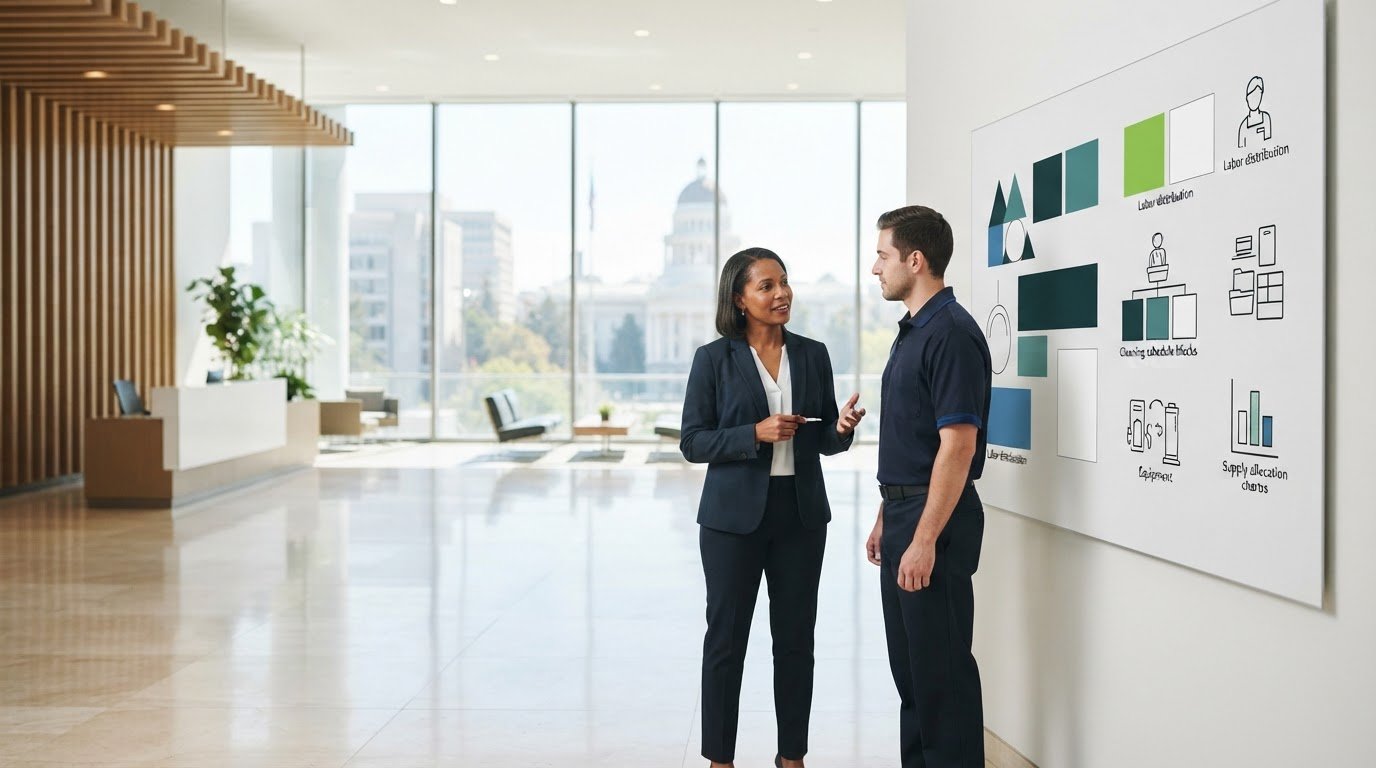
This process gives the schedule a practical basis. It also helps facilities teams describe the work clearly and assess whether the planned cleaning matches daily operations.
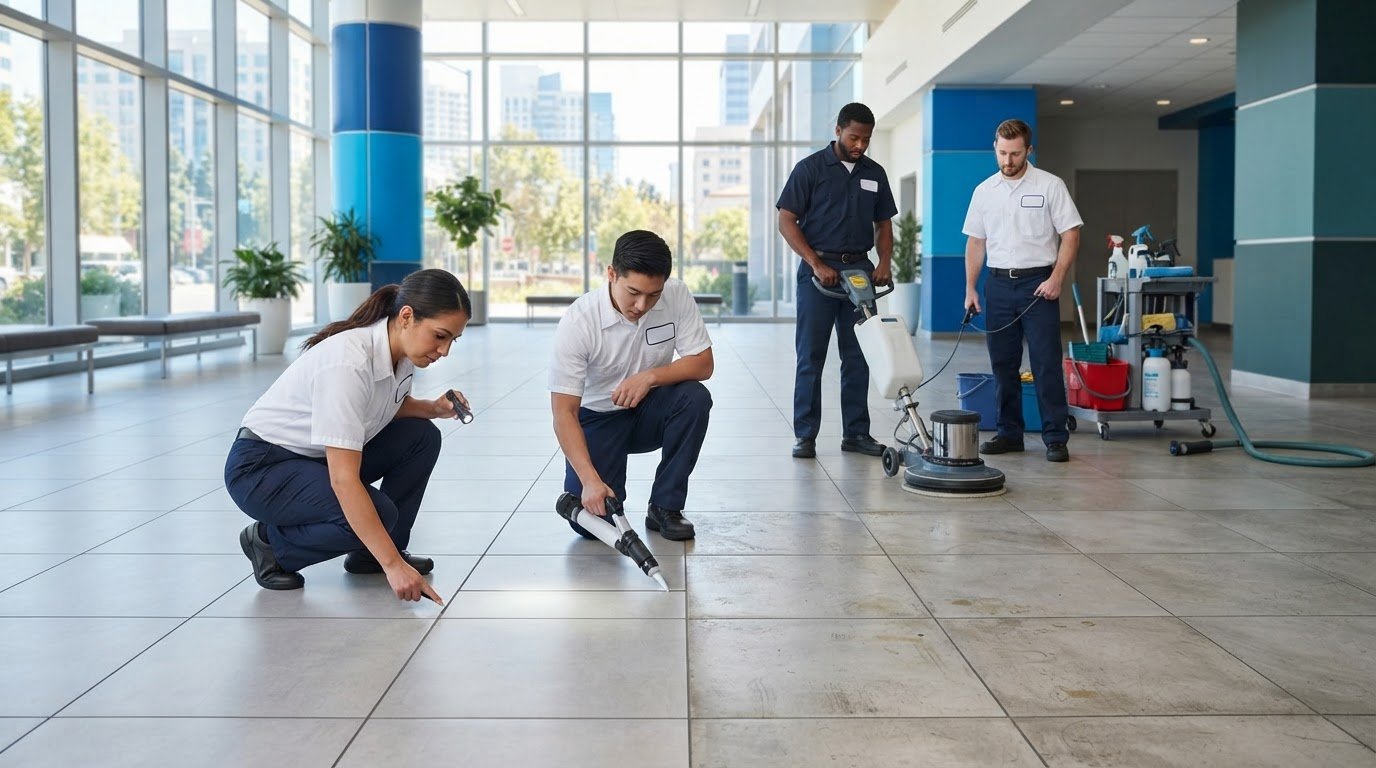
Professional touch point disinfection services may bring experience applying disinfection techniques in offices, schools, factories, and public venues. That experience can inform a facility-specific approach, while the plan should reflect the touchpoints and use patterns identified at the site. Discuss how the proposed techniques fit the facility’s shared spaces and daily routines.
Routine cleaning with additional high-touch-point cleaning
Routine cleaning addresses everyday soil across a workplace; added attention targets surfaces handled frequently. That distinction helps facilities organize cleaning without treating every desk, meeting room, and shared control as equally used. The Centers for Disease Control and Prevention says to clean high-touch surfaces regularly and after visitors have been in the space.
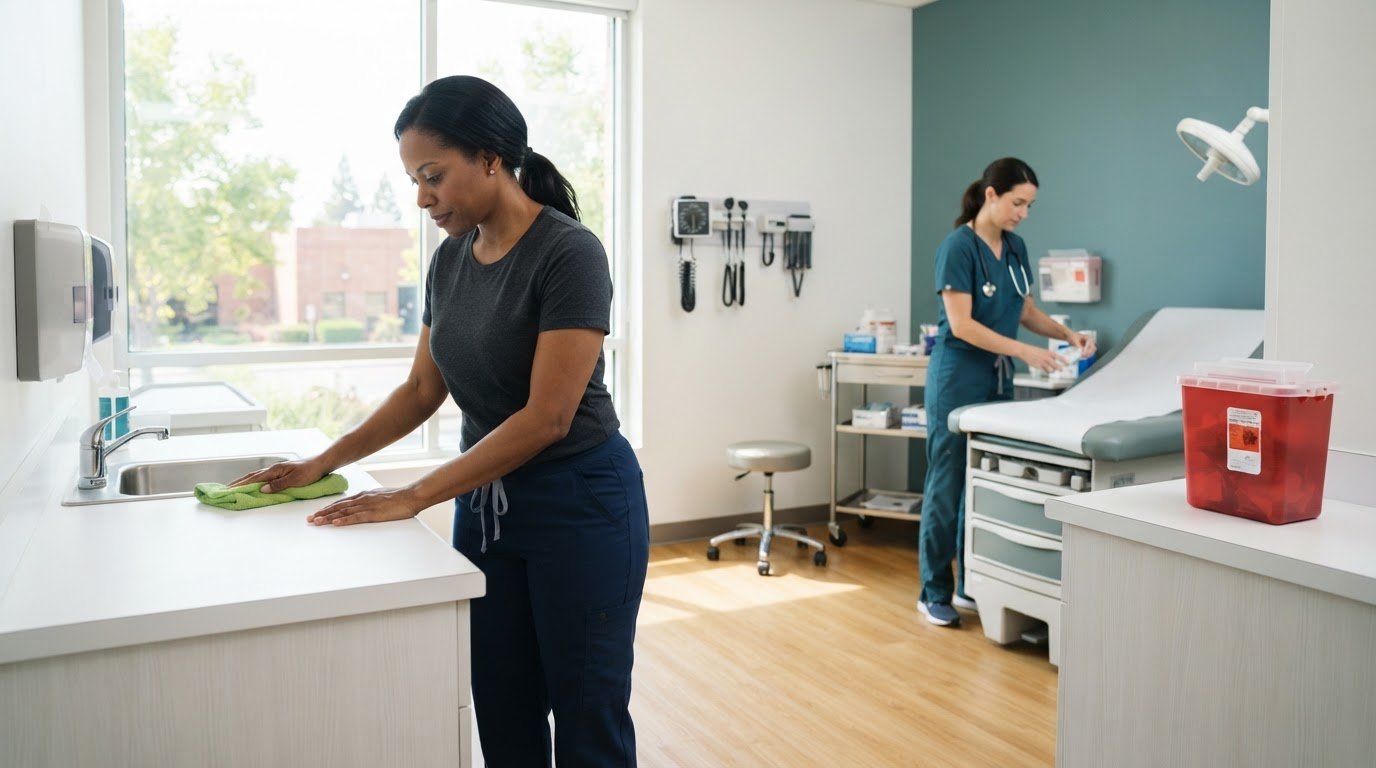
High-touch points include entrance hardware, shared keyboards, elevator buttons, and restroom fixtures. Because these surfaces are handled often, a plan can give them added attention alongside broader cleaning tasks. For example, a reception counter may need attention after visitor use, while a seldom-used storage room follows its regular schedule.
Match the routine to the workday
Separate scheduled cleaning from touchpoint tasks that respond to use. A morning routine might cover floors and waste bins, while shared controls receive attention at intervals suited to office traffic. In a busy workplace, day porter services can address needs as they arise, such as a frequently used conference table or restroom fixture.
Daily cleaning may suit Sacramento businesses with heavy office use or specific industry standards. A quieter office may need a less frequent schedule, with additional attention when occupancy rises or visitors use shared areas. Clearly divide responsibilities so routine tasks and high-touch cleaning both have a place.
Look for facility-specific experience
Commercial cleaning is most useful when its scope fits the facility. An office building, clinic, and manufacturing floor have different shared routes, equipment, and work patterns. A plan should identify the rooms and touchpoints in scope, distinguish routine tasks from added cleaning, and account for how employees and visitors move through the space.
For commercial facility cleaning, a location-based checklist makes the scope easier to follow. List areas such as reception, break rooms, conference spaces, and restrooms, then assign the relevant shared surfaces in each. This helps facilities teams spot omissions, such as a shared copier control outside the usual desk-cleaning routine.
Use records to keep tasks visible
A documented cleaning program makes completed work easier to review. For example, a log can organize tasks by room, surface, and completion time. Facilities teams can use it to see whether frequently used shared areas are included and identify schedule gaps when room use changes.
Keep records practical: name the area, describe the task, and note when it was completed. Review the scope when visitor traffic, occupancy, or shared-space use changes. When illness levels among facility occupants or in the community are high, increasing disinfection frequency can help the plan respond to changing conditions.
EPA-approved disinfectants
For Sacramento offices, choose an EPA-registered disinfectant and follow its product label. The U.S. Environmental Protection Agency says to observe the label’s contact time, the period the surface must remain wet as directed.
California-specific requirements should not be inferred from a product’s marketing description. A practical selection step is to read the label for its registered use and directions, then match those directions to the office surface and task. An EPA registration number appears on the product label, which gives facilities teams a way to identify the product.
What disinfection methods and products do office cleaning companies use? Plans may use EPA-approved disinfectants with cloth-based application or spray equipment, including electrostatic spraying where available. The method should fit the surface, room, and product label; a keyboard and a broad hard surface may need different handling.
For a COVID-19 outbreak, use an EPA List N disinfectant or one tested and approved for effectiveness against SARS-CoV-2. Find the registration number on the label, then search that number in EPA List N to see whether the product is included. Follow the listed product directions during use.
For disinfectants used in commercial offices, follow the EPA-registered product label, including its stated contact time. Product registration and label directions provide a practical reference for choosing and applying disinfectant in a Sacramento workplace.
What are the risks of chemical disinfectants for employees and office equipment? Exposure and surface contact are key considerations during application. Use proper chemical handling, personal protective equipment, and suitable disposal of cleaning materials; consider ventilation when selecting application equipment. For shared keyboards or controls, follow the label rather than applying product in a way its directions do not allow.
A clear product-use routine helps staff follow directions consistently. Before work begins, identify the disinfectant and intended surfaces, then follow these steps:
- Read the label and confirm the product’s intended use.
- Check its EPA registration number and search EPA List N when COVID-19 effectiveness is the concern.
- Apply it as directed, including the specified contact time.
- Handle and dispose of products and materials carefully, using appropriate protective equipment.
These steps connect product choice with everyday practice. A disinfectant selected for a shared conference table still needs to be applied as directed, including the specified contact time. Staff should also account for ventilation and the equipment involved, rather than assuming one method suits every office surface.
Consistent, label-based practice makes a disinfection plan easier to explain and repeat. Keep product directions accessible to the people doing the work, and match the selected method to the surfaces and tasks in each room.
Commonly touched surfaces in shared workspaces
In shared workspaces, employees and visitors touch the same surfaces throughout the day. Include door knobs, keypads, railings, turnstiles, and elevator buttons when mapping touchpoints. A location-based list helps facility teams see which shared areas receive cleaning attention and which surfaces need specific tasks.
Walk from the entrance to the work areas, then continue through common rooms and restrooms. At each stop, note the surfaces people handle while entering, working, or leaving. For example, include an elevator button on the route between reception and office floors, and a drinking fountain along a corridor used by staff.
- Entrances and circulation: door knobs, keypads, railings, turnstiles, and elevator buttons.
- Work areas: shared keyboards and controls employees use at common stations.
- Break areas: drinking fountains and garbage cans in shared rooms.
- Restrooms: fixtures used by multiple employees and visitors.
Grouping touchpoints by location turns a long inventory into a usable map. A facility manager can mark each location on a floor plan or checklist, then compare the list with actual traffic. If visitors use a side entrance, include its keypad and door hardware rather than relying only on the main reception route.
Shared keyboards need deliberate handling because users may touch the keys and nearby controls during regular work. Identify common equipment separately from personal devices, and make the distinction clear in the cleaning scope. For broad surfaces, professional providers may use microfiber products; the selected method should suit the surface and the disinfectant’s directions.
Restrooms and break areas also benefit from a surface-by-surface inventory. A restroom fixture, drinking fountain, and garbage can serve different purposes, but each is shared. Listing them individually helps avoid treating a whole room as one task and makes completed work easier to review.
The Centers for Disease Control and Prevention states that disinfecting high-touch points can help reduce the spread of germs, bacteria, and illness. Use that principle to prioritize shared items, not to assume every surface has the same use pattern. For instance, list a busy lobby keypad and a rarely used meeting-room control separately.
Keep the inventory current as office layouts change. When a team adds a shared workstation, moves a printer, or redirects visitors through another entrance, update the touchpoint map. This review keeps the plan aligned with the surfaces people actually use.
High-touch surface disinfection
For Sacramento offices, touchpoint disinfection services should reflect how employees and visitors use shared spaces. The Centers for Disease Control and Prevention advises cleaning high-touch surfaces regularly and after visitors have been in the space. Increase disinfection frequency when illness levels among occupants or in the community are high.
A practical schedule connects surface use with the cleaning routine, then adjusts when conditions change.
High-Touch Surface Coverage
Include surfaces handled throughout the day, such as door knobs, keypads, elevator buttons, railings, shared keyboards, and restroom fixtures. A single doorknob can infect half of an office in 2-3 hours, making entrance hardware a clear item for the task scope.
Organize coverage by location. List entry doors, elevator controls, shared workstations, and restroom fixtures separately. This makes it easier to check that the plan includes common routes and equipment, not just open surfaces, and gives staff a consistent, area-by-area sequence.
Disinfection Frequency for Sacramento Offices
Cleaning frequency depends on how heavily employees and visitors use shared areas. A quieter office may need a different schedule from a workplace with steady visitor traffic. Consider occupancy, shared-space use, and illness levels when deciding whether to increase attention to specific touchpoints.
Daily cleaning may benefit Sacramento businesses with heavy office use or specific industry standards. After visitors use a space, follow the CDC’s advice to clean high-touch surfaces. A Sacramento touchpoint disinfection plan should address busy entrances differently from rarely used meeting rooms.
Keep the schedule practical: identify busy areas, assign surfaces to a routine, and adjust that routine when visitor patterns or illness levels change. Reviewing these differences helps teams focus cleaning where contact is frequent.
Follow the disinfectant label’s directions, including its specified contact time, as advised by the U.S. Environmental Protection Agency. Use appropriate protective equipment, handle chemicals carefully, and dispose of cleaning materials properly. These safeguards support consistent work.
A clear task list can specify each surface, location, and cleaning frequency. List elevator buttons at each floor alongside entrance hardware, rather than grouping them under a vague “common areas” task. For offices refining touchpoint disinfection services, a specific scope helps make routine attention easier to manage. Discuss a touchpoint cleaning plan for your office.
Detailed scheduling ensures that teams see what is assigned and where additional support may be useful. Shared workspaces and common areas are touched by many people throughout the day, and standard janitorial services may not be enough to maintain employee and customer satisfaction. Professional touchpoint disinfection services from Cleanit Maintenance Systems may use electrostatic spray disinfection and specific types of microfiber cleaning products.
Professional touchpoint disinfection services should use safeguards that include proper chemical handling, disposal of cleaning materials, and use of personal protective equipment. Cleanit Maintenance Systems brings professional experience in dealing with exposure in the workplace and can apply specialized disinfection methods intended to help stop the spread of illnesses in Sacramento offices.
Cleanit Maintenance Systems: Commercial Janitorial
Cleanit Maintenance Systems provides commercial janitorial support for Sacramento workplaces that need dependable routines for shared areas. Its office cleaning and daily cleaning services support day-to-day workplace cleanliness, while day porter services address needs that arise during the workday.
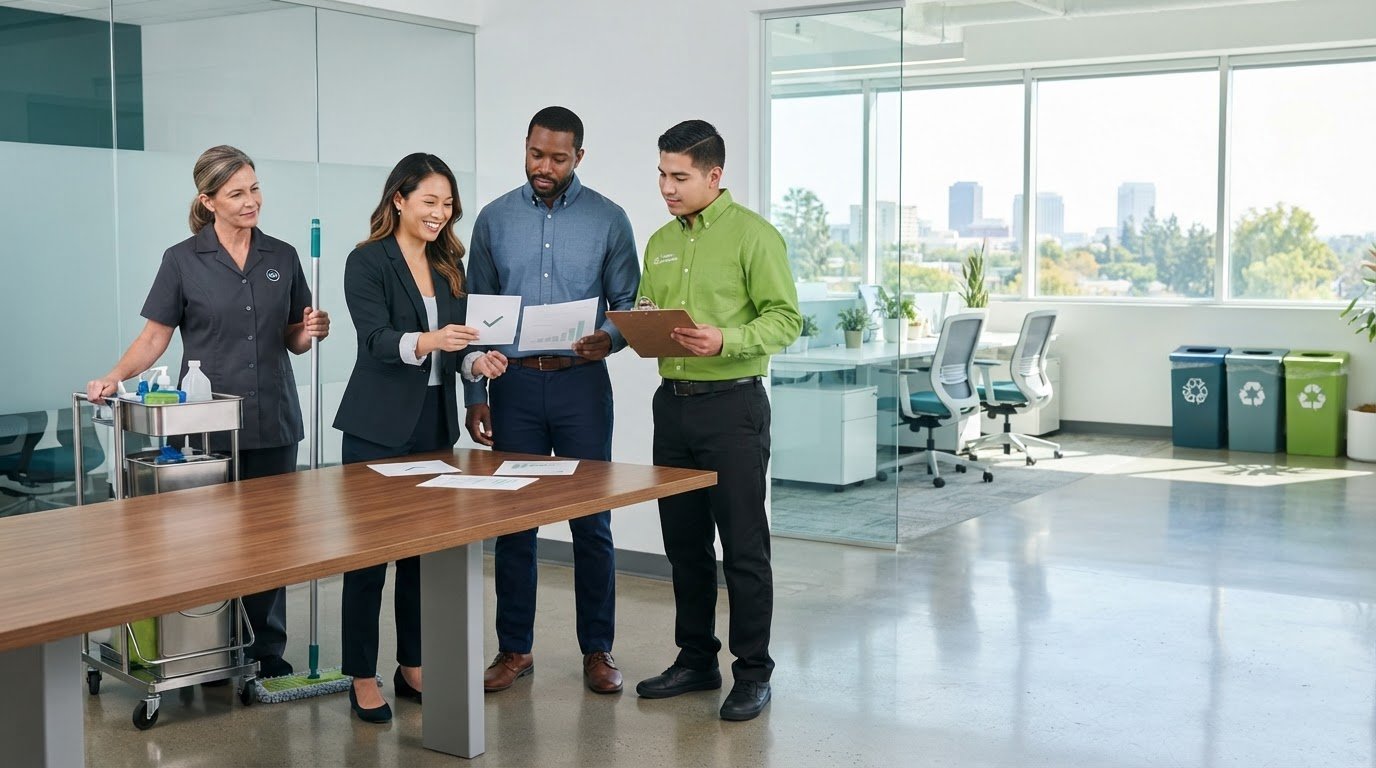
Consider this support when your team needs a consistent approach to routine cleaning and attention to frequently used office spaces. A clear scope can align cleaning tasks with how employees and visitors use your facility, from reception areas to shared workspaces.
For an ongoing office cleaning plan, explore office cleaning services as a next step. To discuss your workplace cleaning needs, visit Cleanit Maintenance Systems online.
Make a Practical Plan for Your Workplace
Turn the surfaces and schedules that matter most into a workable cleaning scope. A clearly defined plan helps your team coordinate daily operations and keep shared areas in view as workplace needs change. For touchpoint disinfection services in Sacramento, contact Cleanit Maintenance Systems to discuss commercial janitorial, office cleaning, and daily cleaning services for your workplace.
Consider which parts of your office need consistent attention and how cleaning can fit around their use. A focused discussion with Cleanit Maintenance Systems can connect your facility’s needs with an appropriate service approach, without adding planning tasks to your team’s day.
Contact Cleanit Maintenance Systems to discuss your office cleaning needs and take a steady next step toward a well-maintained workplace.
Frequently Asked Questions
What touchpoints are included in office disinfection services?
Office cleaning plans commonly cover shared controls and surfaces employees handle during the workday, with the scope shaped by each Sacramento facility. Consider a shared copier used by several departments: its buttons and surrounding touch areas may need attention alongside communal break-room equipment. Keep personal devices distinct from shared items, and note newly shared equipment when teams change rooms or workplace layouts shift.
Are office disinfectants EPA-registered and effective against common pathogens?
Use an EPA-registered disinfectant whose label identifies the intended organisms and surfaces; registration alone does not mean it works against every pathogen. For COVID-19, an EPA List N product or one tested and approved for effectiveness against SARS-CoV-2 is appropriate. Staff should follow the label’s directions, including contact time, and use the product only for its listed purpose. This helps match product choice to the concern.