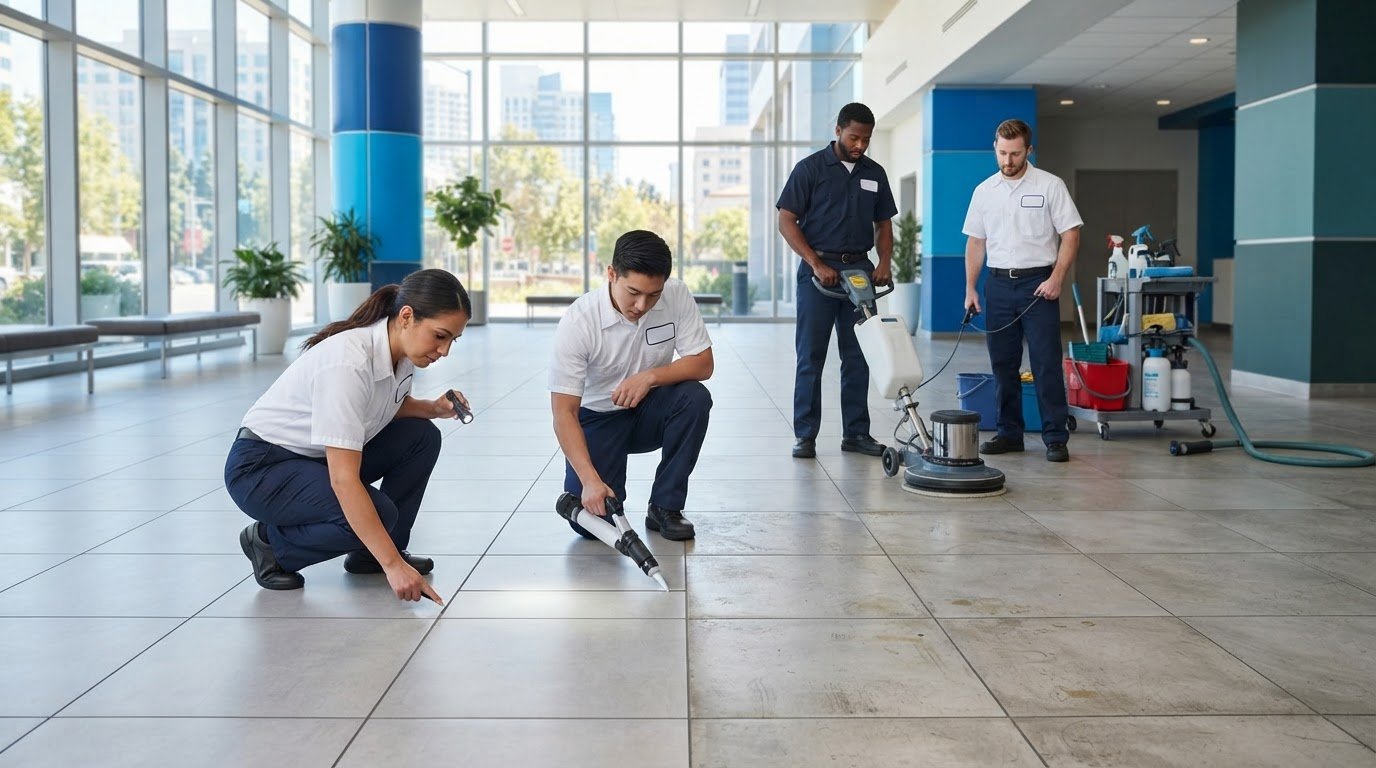


A floor can look ready before the finish is ready for regular use. Stripping and waxing is generally a two- or three-day job, and the work needs at least 24 hours for drying, waxing, curing, and buffing. When choosing a floor waxing service near me, allow time for the full process, not just the hands-on work.
It’s understandable to want a clear schedule and a finish suited to the floor beneath it. The right care depends on the surface: a method that works for one commercial floor may not suit another, and the floor’s condition determines the preparation needed.
This guide explains what affects the timeline, how care differs across common floor types, and which factors influence service costs. You’ll also learn what stripping and waxing involve, when routine maintenance may be a better fit, and how professional floor care can help keep a space clean and presentable.
Key Takeaways
- Match the cleaning method to the floor material and its condition to avoid using an unsuitable care approach.
- Plan stripping and waxing around the full work and drying process, not just the time spent on the floor.
- Understand how floor area, buildup, preparation, and finish requirements can shape the service scope and cost.
- Distinguish routine upkeep from restoration so you can identify the level of care your space needs.
- Learn how ongoing commercial cleaning can support clean, orderly floors between deeper maintenance work.
Cleaning and maintenance for residential and commercial floors
Floor cleaning ranges from routine sweeping and mopping to finish restoration. A professional cleaning plan may include sweeping, scrubbing, buffing, and mopping hard surfaces. Deeper work can involve stripping and waxing or cleaning tile and grout. Choose a method by identifying the surface, then assessing soil, finish condition, and foot traffic. Routine sweeping and mopping may take about an hour, while deeper cleaning may take several hours.
For hardwood, focus on traffic patterns rather than treating every area alike. Mop high-traffic areas one or two times per week and low-traffic areas at least once per month. Use a suitable hardwood method and avoid leaving standing moisture. A hallway used daily needs closer attention than a rarely used spare room. Regular deep cleaning, scrubbing, waxing, and sealing can help limit wear, stains, and damaging buildup.
Laminate needs a different approach: never use a wet mop. Excess moisture can make laminate bubble, swell, and buckle. Instead, use a lightly damp method and remove moisture promptly. This distinction matters in mixed-material spaces, such as a home with hardwood in the living room and laminate in the kitchen. A cleaning service should match its method to each surface rather than apply one routine across the entire floor.
Commercial floor waxing suits hard floors whose finish needs renewal, but it isn’t right for every material. First identify the flooring, remove loose soil, assess buildup, then choose cleaning, buffing, stripping, or waxing accordingly. For commercial floors in Sacramento, match the work to the floor type and maintenance goal. High-traffic entrances, for example, may need more frequent attention than quieter office areas.
For Sacramento homes and businesses, the right scope depends on the floor and its condition, not a rating from another city. Routine mopping differs from stripping and waxing, while tile and grout cleaning addresses a different surface and type of soil. Describe the rooms and floor materials clearly when reviewing local service options, so the proposed work can be compared with the actual maintenance need.
Licensing rules vary by location, while insurance and guarantees are separate considerations. A written scope should identify the work covered and explain any finish or warranty terms. Keep pets and children away from treated floors during application and drying. The U.S. Environmental Protection Agency says floor wax contains organic solvents, or VOCs, that may have short- and long-term adverse health effects. Some product safety sheets recommend local exhaust ventilation when general ventilation is inadequate, according to the National Institute for Occupational Safety and Health.
How long does it take to strip and wax a floor?
Stripping and waxing usually takes two or three days, from preparation through finishing. The actual schedule depends on the floor’s condition, the number of wax layers, and drying and curing time.
Stripping and Waxing Process
The process removes worn finish before a fresh coating is applied. Clear the work area, remove loose soil, strip the old finish, and prepare the surface for new wax. Most hard floors require 3-5 layers. Buffing follows the coating process to refine the finish and leave the floor polished.
Before work begins, move furniture, rugs, and movable equipment away from the floor. Keep the area clear so each stage, from stripping to buffing, can be completed without obstacles. Get the work sequence and access plan in writing, especially for a business coordinating staff, visitors, or deliveries.
Time Required for Floor Waxing
Stripping and waxing can take several hours of active work, but labor time is only part of the schedule. A room’s full process takes at least 24 hours before allowing for drying, waxing, curing, and buffing. The complete job is generally a two- or three-day process, so plan for limited floor access across that period.
Floor size and existing buildup affect how much preparation is needed. A lightly worn space may need less stripping than a floor with heavy, uneven finish buildup. Multiple rooms may also require a staged schedule, with work areas opened in sequence rather than all at once.
Drying Time After Waxing
Professional floor waxing has no universal drying time. Each coat needs to dry before the next layer, and curing and buffing add steps beyond surface drying. The full room schedule may extend across two or three days, so don’t treat a floor that feels dry as ready for normal traffic.
Keep people and equipment off the treated surface during drying and curing. For a business, plan temporary routes around the work zone; at home, keep pets and children away until the floor is ready for use. Follow the project’s work sequence and access timing.
Commercial floors typically need a full strip and wax once or twice a year, with regular buffing between cycles. Foot traffic and visible finish wear help determine when deeper restoration is due. Buffing between full cycles addresses surface dullness without automatically repeating the entire stripping process.
Commercial floor types and suitable care
Commercial floor care starts by identifying the material and existing finish. Hardwood, laminate, and tile respond differently to cleaning methods, so don’t treat a mixed-floor workplace as one uniform surface. Walk through the space, note transitions between materials, and match the care plan to each area. A reception with tile and a hardwood meeting room need separate routines.
For hardwood, remove loose grit before mopping, since trapped debris can scratch the finish. Use a suitable hardwood cleaner and avoid leaving standing moisture on the surface. A busy corridor may need more frequent attention than a seldom-used office. Deep cleaning should address buildup without assuming that stripping or waxing suits every hardwood finish.
Laminate needs careful moisture control. Never use a wet mop, because moisture can make laminate bubble, swell, and buckle. Use a lightly damp method and promptly dry any remaining moisture. In a break room with laminate, spot-clean spills rather than soaking the floor. Don’t apply wax as a default treatment: first identify the surface and its finish.
Tile and grout call for a different approach. Sweep or vacuum loose soil, then clean the tile with a method suited to its surface. Pay particular attention to grout lines, where embedded soil can remain after ordinary mopping. For example, an entryway with visible grout buildup may need focused grout cleaning rather than broad floor waxing. The surface and finish determine the appropriate next step.
Commercial spaces may include several materials within one work area. Create a simple floor map that labels each surface, its finish, and the cleaning method used. Mark transitions, such as laminate beside tile, so staff don’t carry the wrong mop or solution between zones. This map helps plan consistent cleaning, deep cleaning, and finish care across the site.
Choose care based on condition, not appearance alone. A glossy finish may still have worn patches, while a dull floor may need cleaning rather than refinishing. Inspect entrances, corridors, and work areas for soil, scratches, uneven sheen, and residue. Then choose routine cleaning, targeted scrubbing, buffing, or floor restoration based on what the inspection reveals.
For a Sacramento workplace, a practical maintenance plan records each floor type and its care routine in one place. Specify dry-soil removal, mopping methods, and areas that need closer inspection. Review the plan when a finish changes or new flooring is installed. This helps prevent a routine intended for tile from being applied to hardwood or laminate.
Factors affecting service cost
The price depends on the project and is provided after a quote request. Key factors include floor area, material, finish condition, soil buildup, preparation, and the work included. When comparing estimates, make sure each scope describes the same rooms and tasks.
Floor area affects the labor and materials involved. A small office and a large open lobby need different amounts of work, even when both require the same treatment. Room layout matters too: tight corners, partitions, and narrow corridors can take more attention than an open floor. A site plan helps define the area covered.
Floor material determines the method and preparation. Hardwood, concrete, tile, and resilient flooring don’t all take the same treatment. A finish suitable for one hard surface may not suit another. The quote should identify the floor type and proposed process, rather than describe the work only as “waxing.”
Existing condition affects the scope. A floor with light surface soil may need less preparation than one with residue, worn finish, scratches, or uneven sheen. The service may involve routine cleaning, focused scrubbing, stripping, buffing, or restoration. An inspection should map visible wear and determine whether the goal is maintenance or deeper renewal.
Preparation can also affect the project. Furniture, movable equipment, floor mats, and access restrictions all shape how a work area is cleared and treated. A furnished office may require items to be moved before floor work, while an empty room offers direct access. The quote should explain who handles preparation and which areas need to remain clear.
The work included in the estimate matters as much as the floor itself. Compare whether the scope covers soil removal, finish removal, application, buffing, and cleanup. If a proposal includes restoration as well as waxing, ask for those tasks to be described separately. Clear line items show what the client will receive and prevent different scopes from being compared as if they were the same.
For a useful comparison, note the surface, room area, current condition, access needs, and desired finish before requesting a quote. Use the same details for each estimate. If one scope includes stripping and another only surface cleaning, their totals describe different work. Match the scope first to make a sound comparison.
Floor care protects appearance and helps maintain a presentable space, but the right scope depends on the floor’s needs. A concrete lobby with a worn finish may call for a different restoration plan than hardwood in a quiet office. A detailed estimate should connect each proposed task to the floor, its condition, and the intended result.
Best-rated floor waxing companies nearby
A high rating can help shortlist a floor-care company, but it doesn’t explain what work the rating covers. In Sacramento, compare service scope, floor materials, and the project plan before treating a review score as decisive. Routine cleaning and worn-finish restoration are different services. The most useful comparison is between similar services for similar floors.
Start with the surface and the result you need. A tile lobby with residue may call for targeted scrubbing, while a worn finish may need restoration. Hardwood, laminate, and concrete each have different care considerations. A clear scope identifies the floor type, condition, and intended treatment, so you can judge the proposed work against the actual space.
Look for a defined work sequence rather than a broad promise of “floor waxing.” The scope should distinguish cleaning from finish removal, refinishing, and buffing. For example, a plan for a busy office entrance should state whether it addresses embedded soil and worn areas or only applies a new finish. That distinction clarifies what the completed work is intended to accomplish.
Scheduling matters in a working building. Floor treatment can restrict access while the surface is prepared and finished. A useful plan identifies affected rooms, access routes, and the work sequence. In an office with a reception area and adjoining corridors, dividing the space into work zones helps staff plan around areas that are temporarily unavailable.
Reviews are most useful when they describe specific details, such as communication, completed work, or management of the work area. A general star score cannot show whether a reviewer’s floor resembled yours. Read comments for relevant examples, then compare them with the service description and your Sacramento property’s needs. Don’t assume a high score alone establishes suitability.
Consistency after restoration is another practical consideration. A maintenance plan can note each floor type, its routine cleaning method, and areas needing closer attention. For example, an entry mat can reduce tracked-in soil, while regular dry-soil removal helps keep grit from being dragged across a finished surface. These everyday steps support the result without replacing periodic professional care.
Before deciding, write down the areas involved, visible floor issues, access constraints, and the finish you want. Use that same project description to compare scope and scheduling, not just ratings. For guidance on floor care for a Sacramento property, discuss your floor-care needs.
For Sacramento properties, shortlist local providers whose plans address your floor type, condition, treatment, and scheduling constraints. A strong rating is most useful when reviews describe work comparable to the service you need.
Cleanit Maintenance Systems: Commercial Janitorial
Cleanit Maintenance Systems supports Sacramento workplaces with commercial janitorial and office cleaning to keep spaces orderly and well maintained. For businesses needing consistent upkeep between deeper floor treatments, daily cleaning services address recurring needs, while day porter services help maintain shared areas during the workday.
These services suit offices and commercial environments where clean floors are part of a broader maintenance routine. Pairing regular cleaning with planned floor care helps keep entrances, corridors, and work areas presentable without treating every surface as if it needs waxing.
To discuss cleaning support for your workplace, visit Cleanit Maintenance Systems online.
Set a Clear Plan for Your Floors
Use the next maintenance cycle to make floor care a practical plan, not a last-minute task. Note which areas need attention, how often they’re used, and how cleaning routines can support their upkeep. A floor waxing service near me should suit the surface and the way your home or workplace operates, rather than rely on a one-size-fits-all approach.
For commercial spaces, Cleanit Maintenance Systems provides Commercial Janitorial, Office Cleaning, and Daily Cleaning Services. These services support consistent workplace care alongside a considered floor-maintenance routine. The next step is to describe the spaces you want to maintain and the cleaning support your team needs.
Contact Cleanit Maintenance Systems to discuss cleaning support for your workplace. A clear plan can make floor care easier to manage and help keep your space ready for the people who use it.
Frequently Asked Questions
How many layers of wax does my floor need?
Most hard floors require 3-5 layers of wax, with the finish and floor condition guiding the application plan. A reception area with worn patches may need different preparation from a lightly used meeting room. The number of layers alone doesn’t tell you whether stripping is needed. Consider the existing finish, surface condition, and the intended use of the space when planning the work.
Where can I find floor waxing services near me?
In Sacramento, Cleanit Maintenance Systems provides Floor Restoration & Protection for commercial spaces. A floor waxing service near me should match the proposed treatment to the floor material and finish condition. A busy office entry and a quiet conference room, for example, may need different maintenance plans. Residential floor care is separate from commercial facility maintenance.
What is the floor waxing cost per square foot near me?
Floor waxing costs depend on the project and are provided after a quote request. Floor area, material, existing finish, soil buildup, and preparation all affect the scope. A room needing finish removal, for example, requires different work from one needing routine cleaning. Compare estimates by matching the rooms and tasks covered, rather than relying on a per-square-foot figure alone.
Which floor types can be waxed or refinished?
Waxing or refinishing depends on the floor material and its finish, so treatments aren’t interchangeable across surfaces. Hardwood, laminate, tile, and concrete each need a suitable care method. Laminate, for example, shouldn’t be wet-mopped, while tile may need grout-focused cleaning. Identify each material before choosing a finish treatment, especially in mixed-floor spaces such as offices with tiled entries and other flooring nearby.
What do floor waxing service types include?
Floor care may include sweeping, scrubbing, buffing, mopping, stripping and waxing, or tile and grout cleaning. These tasks address different needs: removing loose soil isn’t the same as removing an old finish, and grout cleaning targets the joints between tiles. In a shared office area, the service scope should distinguish routine cleaning from finish restoration so the planned work suits the floor’s condition.
How should I compare floor waxing service quotes?
Compare quotes by aligning the floor areas, materials, preparation, and tasks included. One estimate might cover routine cleaning, while another includes stripping, fresh finish application, and buffing. Those scopes aren’t equivalent. For a Sacramento workplace with several floor types, compare how each estimate treats every area and what access or preparation is included. A clearly itemized scope makes the differences easier to assess.
How often should floors be professionally waxed?
Commercial floors typically need a full strip and wax once or twice a year, with regular buffing between cycles. Maintenance planning should account for foot traffic, tracked-in soil, and visible wear. A busy entrance may show finish deterioration sooner than a restricted office area. Tracking these changes helps distinguish routine upkeep from the point when deeper floor restoration is appropriate.
floor waxing company licensing insurance and guarantees
Licensing rules vary by location, while insurance and guarantees are separate considerations. A written scope should identify the work covered and explain any finish or warranty terms.