Credentials are more than a box to tick: they help clarify who is responsible if a cleaning job goes wrong. Among the most important questions to ask a janitorial service provider are whether they carry general liability and workers’ compensation coverage and can provide proof. Ask which certifications apply to your facility and what experience informs their cleaning practices.
It’s reasonable to want clear answers before giving a cleaning team access to your workplace. The right questions help you understand how staff are screened and trained, which products and methods they use, how sanitation standards are set, and how supervisors check the work. This guide covers those topics, along with communication and service problems, so you can compare practical details and choose a fit for your facility.
Key Takeaways
- Ask which cleaning products and equipment are used, and how the approach fits your facility’s needs.
- Find out how employees are screened, trained, and prepared to follow facility-specific sanitation practices.
- Review the provider’s insurance documentation and ask how its business practices meet applicable requirements.
- Use a facility walkthrough to clarify cleaning priorities, schedules, and the maintenance plan.
- Before hiring, understand how inspections are handled and who to contact when service needs attention.
1. Question 5: What Cleaning Products and Methods Do You Use?
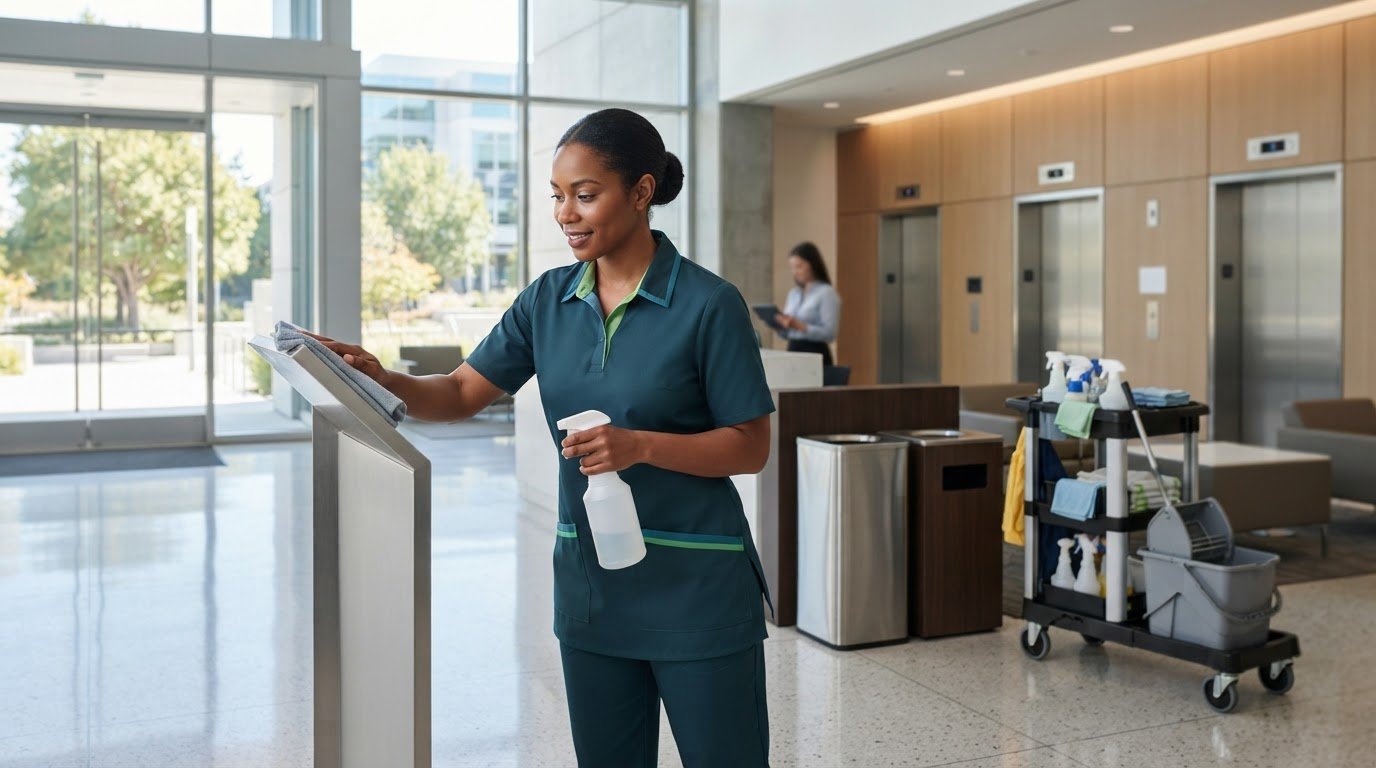
Ask for the names of the cleaning products, the equipment used, and the surfaces each product is intended to treat. Safe use depends on following product directions, choosing products for their intended purpose, and handling and storing them properly. Ask how staff manage dilution, contact time, ventilation, protective equipment, and storage.
Request a written product list for your facility, not broad labels such as “disinfectant” or “green cleaner.” Ask whether each product meets relevant industry standards and what directions staff follow. A product suitable for a restroom, for example, may not suit a finished desk or sensitive flooring. A clear list helps you compare products with your facility’s needs and flag surfaces that require special handling.
For environmentally preferable options, ask whether products carry EPA Safer Choice or Green Seal certification. Green cleaning products may benefit the environment and indoor air quality, but the label alone doesn’t explain a product’s intended use or application method. Ask for the product name, the surfaces it treats, and the directions staff follow. In shared spaces, discuss the disinfection protocol for high-traffic touchpoints such as meeting-room tables and door handles.
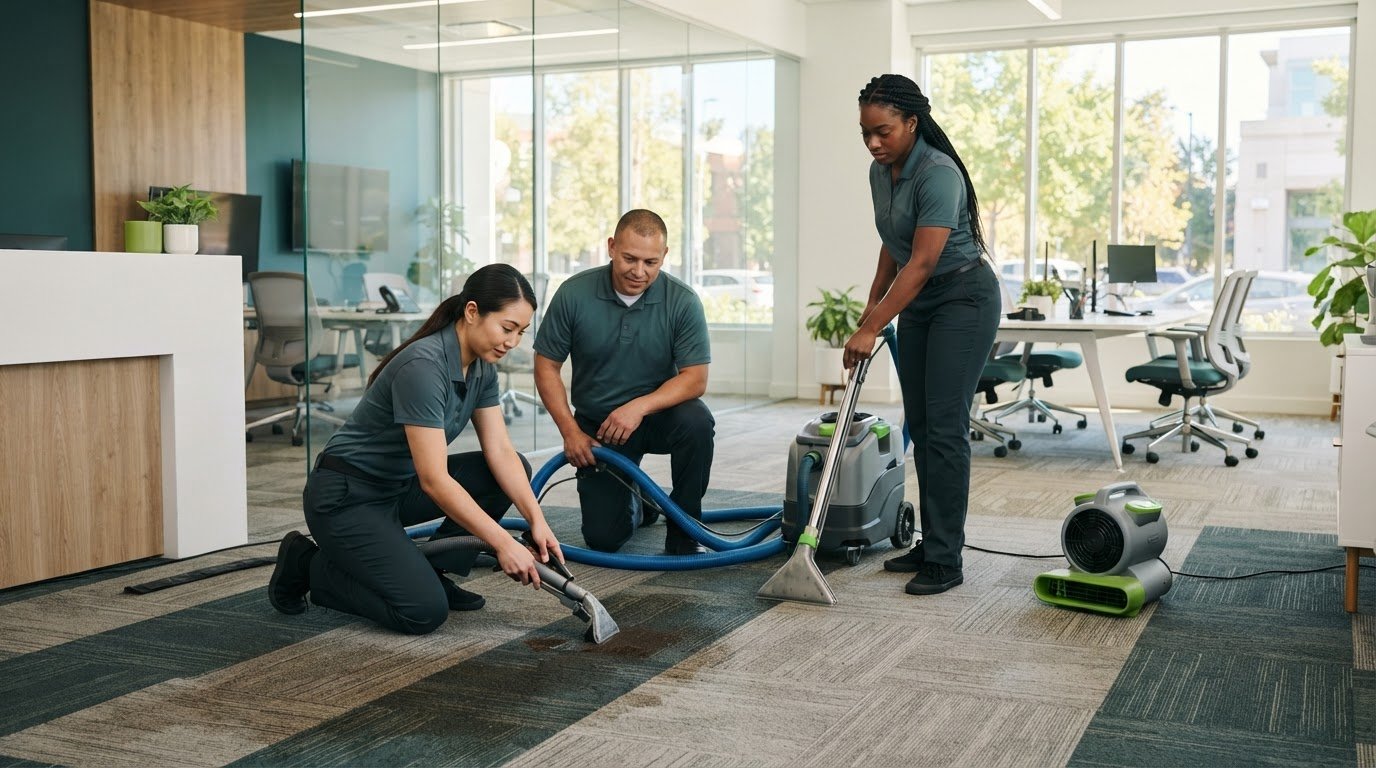
Equipment matters as much as products. Ask whether the cleaning plan uses HEPA-filter vacuums, microfiber cloths and mops, or electrostatic sprayers, and which tasks each supports. Microfiber systems, for example, can be used for detailed surface cleaning. HEPA-filter vacuums and filters are recommended for better air quality in healthcare cleaning, and OSHA recommends microfiber mops and cloths to trap pathogens in healthcare settings. Equipment should suit the facility, surface, and task.
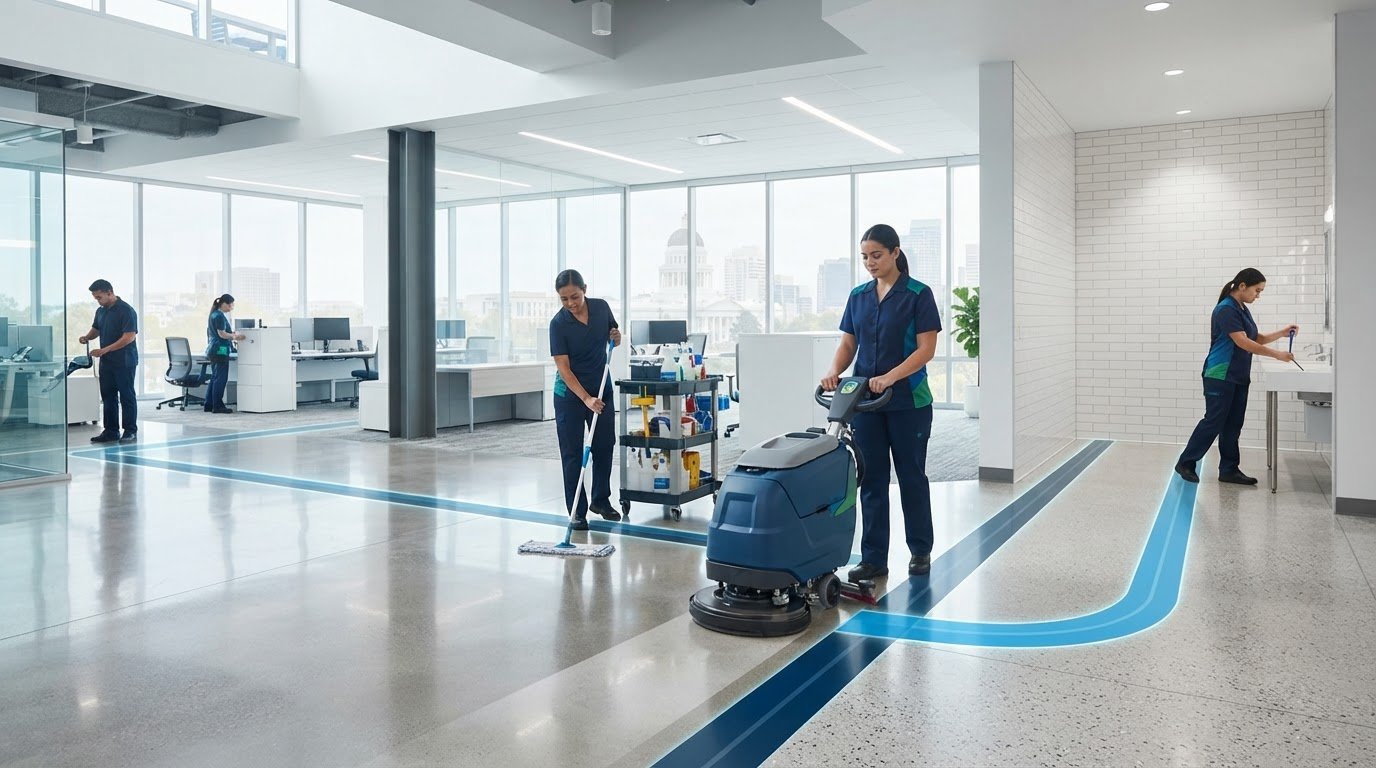
A customized plan starts with a building walkthrough. Identify floor types, shared spaces, sensitive equipment, high-traffic areas, and operating hours. Then ask how those details shape the schedule and methods. An office with frequent meetings may need regular attention to conference tables and shared touchpoints, while a facility with finished floors needs products suited to those surfaces. The walkthrough should lead to a clear scope of routine tasks and special requests.
Ask how the plan can adapt when occupancy or priorities change. A provider may tailor service with after-hours cleaning, eco-friendly products, or weekly rather than daily cleaning. Ask which changes affect product selection, equipment, and the task schedule. A written scope helps staff use consistent methods across rooms and shifts, and gives your team a reference when reviewing whether the products and methods suit the building.
2. Employee training
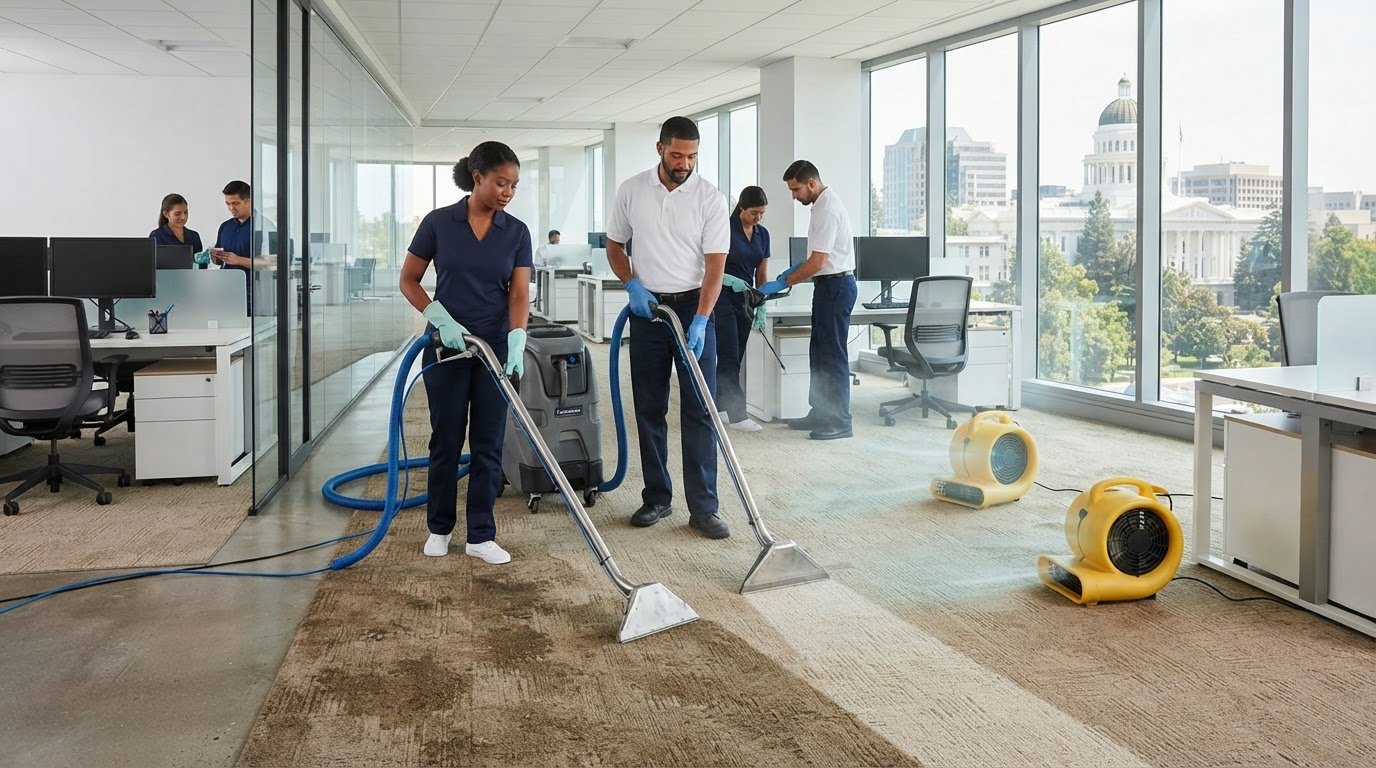
Ask who performs the cleaning: the provider’s employees or subcontractors. Find out how hiring, screening, and onboarding work before staff enter your facility. Screening can include background checks, drug testing, and structured onboarding. Clarify who supervises assigned workers and how staff changes are handled. These details make responsibility for consistent work across shifts clearer.
Training should cover cleaning techniques, safety protocols, equipment handling, and customer service. Ask what new employees learn before working independently and how supervisors assess their readiness. A trained employee should know which cloth or tool belongs in each area, how to follow product instructions, and how to protect occupants while cleaning. Ask how ongoing education covers new equipment, updated procedures, or recurring issues found during inspections.
Healthcare facilities need role-specific preparation. According to the U.S. Department of Health and Human Services, the Health Insurance Portability and Accountability Act is identified as the Health Insurance Portability and Accountability Act of 1996 (HIPAA), and healthcare cleaning companies’ sanitation standards should align with it. Ask how staff learn to protect confidential information, follow room-specific procedures, and avoid disturbing clinical materials. Training should also address protective equipment, such as gloves and masks, and when additional protection is needed.
Retention matters because familiar, trained employees can learn a facility’s routines and access expectations. Ask how the provider supports staff through training, benefits, or career development. Find out how absences are covered, including whether cross-trained employees can take over scheduled tasks. For recurring office cleaning, consistent staffing helps workers understand room priorities, access procedures, and the difference between routine duties and special requests.
Ask how training connects to inspections and quality reports. Supervisors can record missed tasks, explain corrections to employees, and track whether an issue recurs. Find out what reports include, who reviews them, and how coaching addresses repeated problems. A clear process links training to observable work instead of relying on a general claim that employees are trained.
Review contract scope, task frequency, billable extras, cancellation terms, and the process for price increases. Ask how increases are calculated, when notice is provided, and whether changes require approval; a janitorial contract cure period is typically 5 to 15 days.
3. Question 2: Are You Licensed, Insured, and Certified?
Ask for current proof of general liability insurance and workers’ compensation coverage. These policies help protect clients from liability related to property damage or workplace injuries. Check that the documents identify the contracting business and remain valid throughout the service period. If the business details differ from those in the contract, request a corrected copy before signing.
Clarify the company’s business registration and which licenses or certifications apply to your facility and location. A janitorial certificate is not the same as insurance or a government-issued license. Ask what each credential covers, who issued it, and whether it applies to the work being performed. For industrial cleaning, ask whether the provider understands OSHA 29 CFR 1910 general industry standards. Credentials should match the actual setting and tasks, not simply appear on a capability sheet.
Discuss labor practices as part of the provider’s operating standards. Ask whether employees are hired directly or work through subcontractors, and who is responsible for supervision, payroll records, and required coverage. Request a clear explanation of how the company handles labor-law compliance and staff-assignment concerns. A written answer can clarify responsibility for employees and subcontracted work.
Ask how often supervisors inspect the site and what they document. A documented janitorial site inspection at least once per month is described as best practice. Find out whether records identify missed tasks, corrective steps, and follow-up. For example, a restroom inspection might note a supply issue, assign a correction, and show whether it was resolved on the next visit. Consistent records make quality discussions specific.
Complaint handling deserves the same clarity. Ask who receives concerns, how they are escalated, and what information you’ll receive after a resolution. A commercial cleaning company’s complaint response-time commitment is usually within 24 hours. Confirm what counts as a response and how unresolved issues move to a supervisor. Ask what service remedies are written into the agreement rather than relying on a broad promise or informal guarantee.
References can help you assess whether a provider’s systems work in facilities like yours. Request three references from similar facilities and ask about inspection follow-through, communication, and problem resolution. An office, retail space, and industrial site can have different access and cleaning needs, so comparable experience matters. Ask what relevant work the provider has handled and how its procedures fit your facility’s operating conditions. Consider the answers alongside insurance documents, registration details, and contract terms.
4. How did you develop your sanitation standards?
Ask the provider to explain how its sanitation plan was developed for your facility, rather than copied from a generic checklist. A building walkthrough should take place before a quote is presented. Identify room use, floor and surface types, shared spaces, sensitive equipment, and operating patterns during the visit. Ask how each observation changes the cleaning scope. A busy reception area, for example, may need different routine attention than a storage room with limited use. The walkthrough gives both sides a shared basis for the plan.
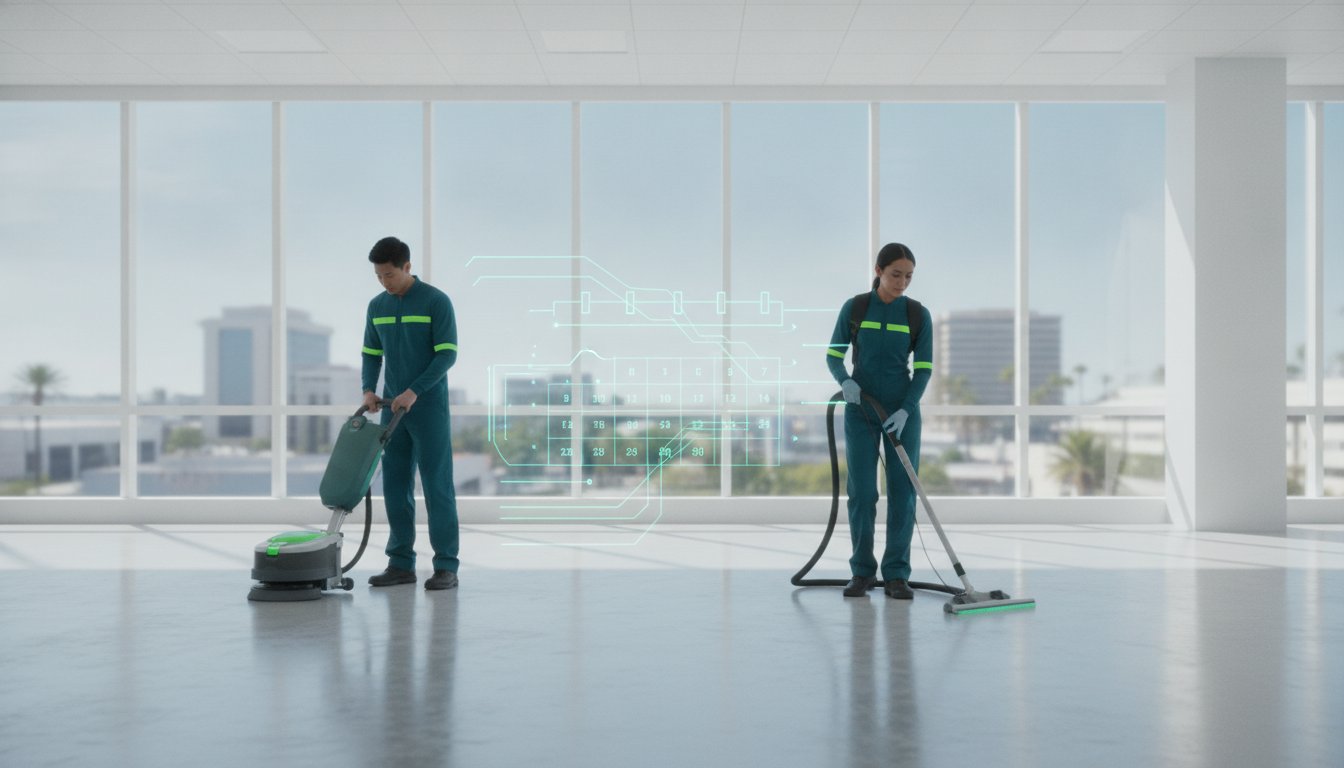
Turn the walkthrough into a written maintenance schedule. It should name the areas to be cleaned, assigned tasks, their frequency, and any services treated as extra or billable. Ask how the provider decides what needs routine cleaning and how often. A conference room used throughout the week may need regular attention to tables and touchpoints, while a rarely used room may have different priorities. A clear schedule creates accountability and prevents assumptions about what is included.
Facility type also shapes sanitation standards. Ask about experience with settings like yours and how it informs the plan. Healthcare cleaning, for example, requires procedures suited to the facility’s specific work. Environmental cleaning policies should align with recommendations from the Association of periOperative Registered Nurses and the Centers for Disease Control and Prevention. A surgical center may need a higher degree of sanitization and disinfection than a dental office. Ask how procedures are adapted to the facility rather than relying on one general approach.
Access security belongs in the planning conversation, too. Ask how employees assigned to your building are screened and how access to restricted rooms is managed. Background checks and drug screenings are part of an employee screening process. Clarify who can enter secure areas, how staff learn site-specific access rules, and whom to notify if an assignment changes. For example, someone cleaning a records room needs clear instructions about authorized areas and materials that must remain undisturbed. Defined procedures reduce confusion and clarify responsibility.
Ask how the plan changes when a facility’s use, schedule, or needs shift. A cleaning company can develop an ongoing maintenance program and revise its task schedule as priorities change. Request a named point of contact for updates and a written record of approved changes. If a new shared space opens, the plan should specify its cleaning tasks and frequency. This connects the initial walkthrough to ongoing service and makes sanitation standards practical, facility-specific, and easier to review.
5. Quality control and handling service problems
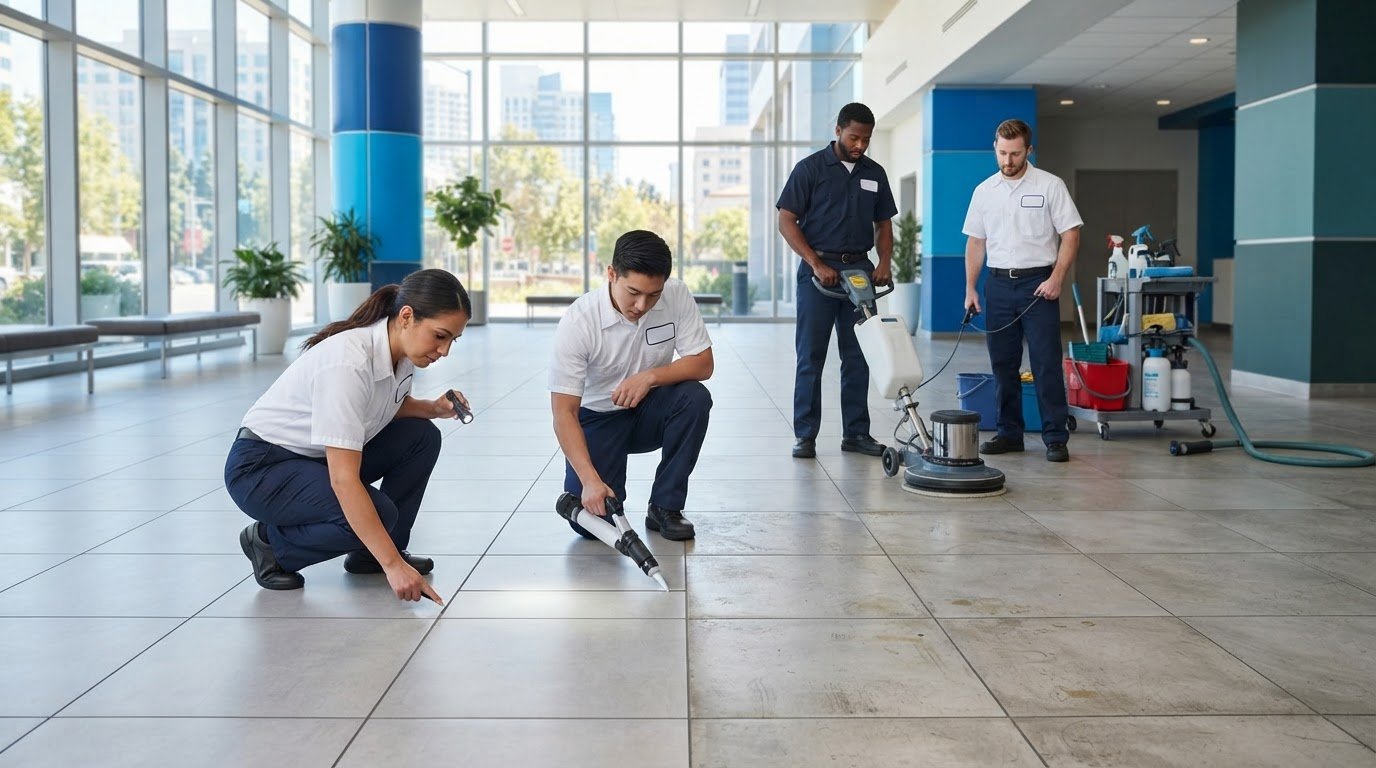
Ask how supervisors verify that scheduled cleaning tasks are completed, not merely assigned. A useful inspection checks actual conditions against the written scope, such as whether entry glass is clear, waste bins are emptied, and shared surfaces are clean. Find out how supervisors record missed tasks and distinguish an isolated oversight from a recurring pattern. That distinction helps determine whether the response should be a correction, additional staff guidance, or a change to the service plan.
Ask what quality audits cover and how results are shared with you. A practical report can identify the inspected area, the task reviewed, the finding, and the follow-up action. If a break room repeatedly misses a cleaning step, for example, the record should show the issue and the correction. Ask who reviews reports and how you can raise a concern about a finding. Clear documentation gives both sides a shared account of service performance.
Feedback works best when it reaches someone responsible for acting on it. Ask for a direct point of contact and a clear route for escalating an unresolved concern. Clarify what details to provide, such as the location, task, and date. If a restroom needs attention, a specific report helps the supervisor direct staff to the right area rather than investigate a general complaint. The process should explain how the response and resolution are communicated.
Also ask how the provider measures satisfaction and uses client feedback. Useful discussions focus on observable service details, such as missed tasks, recurring supply concerns, or access issues. Agree on how updates are shared and how changes to priorities are recorded. If employees report that a conference room was overlooked after a schedule change, the provider can review the assigned tasks and adjust instructions. That turns feedback into a practical improvement step.
Before signing, clarify what happens when service problems continue. Ask how corrective actions are documented, who follows up, and how unresolved concerns are escalated to management. A cleaning service should have both a quality-control process and a clear complaint route. Discuss how non-routine requests are handled and how changes to the scope are recorded. Don’t rely on an informal assurance: the agreement should describe responsibilities, communication methods, and how service gaps are addressed.
Use the first review meeting to compare reports with your facility’s priorities. Bring examples, such as a missed entryway task or a repeated issue in a shared kitchen, and agree on the next action. Set a consistent way to share observations, then review whether the correction addressed the problem. This keeps the discussion focused on service quality and satisfaction, rather than assumptions. For dependable results, ask how the provider will communicate if an unexpected staffing or scheduling problem affects planned work.
Cleanit Maintenance Systems: Commercial Janitorial
Cleanit Maintenance Systems provides commercial janitorial services for workplaces that need dependable, organized cleaning support. If your review has clarified the tasks, schedule, and communication standards your facility needs, this is a practical point to discuss those priorities with a local provider.
Its services include office cleaning, daily cleaning, and day porter services. These options support routine upkeep, scheduled cleaning, and attention to shared areas during the workday. Clear expectations help align the service plan with your facility’s operations and your team’s priorities.
For commercial cleaning support in the Greater Sacramento area, contact Cleanit Maintenance Systems to discuss your facility’s needs.
Make Your Next Cleaning Decision with Confidence
Choosing a cleaning partner is also an opportunity to set clear expectations for how your workplace should be cared for. Use these questions to ask a janitorial service provider to start a practical conversation about your priorities, routines, and the support your team needs. A focused discussion can turn general expectations into a service plan that fits how your facility operates.
Cleanit Maintenance Systems provides commercial janitorial services, office cleaning, and daily cleaning services for businesses seeking ongoing workplace care. Share what matters most to your team and discuss a suitable approach without pressure to make a quick decision.
Contact Cleanit Maintenance Systems to discuss your facility’s cleaning needs and take the next step toward a dependable working partnership.
Frequently Asked Questions
Question 2: Are You Licensed, Insured, and Certified?
Ask for current insurance documents and a clear explanation of credentials relevant to your facility. Compare the business name on the documents with the entity named in the service agreement, and note any differences before signing. In Sacramento, requirements can depend on the work and location, so distinguish insurance coverage from licenses or voluntary certifications. Ask what each credential covers and how it relates to the cleaning tasks you need.
Question 5: What Cleaning Products and Methods Do You Use?
Request a product list that identifies where each cleaner or disinfectant will be used. For a Sacramento office with shared desks, ask which products are intended for work surfaces and which are reserved for restrooms. Clarify how staff follow product directions and what they do if a surface or occupant has a special sensitivity. This makes the discussion specific to your building instead of relying on general claims about cleaning products.
Question 7: What Happens When Something Goes Wrong?
Ask for a simple process your staff can follow if a task is missed or an area needs attention. Find out who receives the report, what details help locate the issue, and how the provider communicates the next step. If a spill occurs in a Sacramento office lobby, for example, your team should know whom to notify and how to describe the location. Agreeing on that route before service begins prevents confusion during a busy workday.
Can I Speak With Current Clients?
Yes, ask for references from facilities with similar operations and cleaning needs. Include questions about how the team handles situations relevant to your workplace, such as a schedule change or recurring concern. Ask whether communication is clear and service matches the agreed scope. A Sacramento office manager can also ask how the provider adapted to a facility’s routines, beyond a general endorsement.
Can You Customize Your Services to Fit My Needs?
Yes, a cleaning plan can reflect the facility’s layout, use, and priorities. Explain which areas matter most, where staff or visitors gather, and which tasks need special attention. If a Sacramento office adds a shared workspace, for example, review whether the existing scope still fits. Ask how requested changes are documented so your team and cleaning staff share the same expectations.
Can your company work around my schedule?
Discuss when cleaning can happen, which spaces must remain accessible, and when staff or visitors use the building. Cleaning can be scheduled after hours or weekly rather than daily. For a Sacramento workplace with meetings that run late, identify rooms that need to stay available and agree on how schedule changes are communicated. This aligns service timing with operations and helps avoid disruption.
How did you develop your sanitation standards?
Ask how the facility’s purpose and daily activities shape its cleaning procedures. A general office and a medical setting have different workflows, so the plan should reflect the rooms, surfaces, and tasks involved. Other questions to ask a janitorial service provider include how healthcare procedures align with applicable facility guidance, including recommendations from the Centers for Disease Control and Prevention and the Association of periOperative Registered Nurses.
How often should a janitorial vendor conduct formal site inspections?
A documented janitorial site inspection at least once per month is described as best practice. Ask what the inspection record covers and how findings lead to follow-up. A manager might compare inspection notes with staff observations about an area that sees heavy daily use. The schedule and report format should make it practical to review conditions, identify recurring concerns, and keep communication about the facility’s cleaning service organized.