

What if the lowest cleaning quote leaves the most important parts of your facility uncovered? When schedules, spaces, and task lists differ, evaluating commercial cleaning quotes by headline price alone can make a poor fit look like a bargain.
A useful proposal makes the work behind the price clear: which areas are included, how often they’ll be cleaned, and whether the service suits the people who use your building. Compare the scope, schedule, and responsibilities before comparing totals. That helps you separate recurring janitorial work from periodic or specialized care and see what your facility needs on a regular basis.
This guide explains how to assess scope, schedules, service fit, and the details that support dependable cleaning. You’ll also see where daily office cleaning, day porter services, and specialized work such as carpet cleaning or floor care may fit. Cleanit Maintenance Systems provides commercial janitorial services in the Greater Sacramento area, including daily office cleaning, day porter services, and specialized facility maintenance. Use the steps below to compare proposals against your facility’s needs.
Key Takeaways
- Document your facility’s spaces, priorities, and cleaning needs before comparing proposals.
- Use a side-by-side table to align tasks, frequency, included areas, and exclusions across quotes.
- Separate routine janitorial work from periodic or specialized services so you can compare like with like.
- When evaluating commercial cleaning quotes, weigh service fit and accountability alongside the total price.
- Consider how a local partner’s service capabilities can support your facility’s day-to-day operations.
Evaluating Commercial Cleaning Quotes Starts With a Clear Scope
A commercial cleaning quote describes a proposed service arrangement: the work to be done, the spaces covered, the schedule, and the assumptions behind the plan. Before comparing totals, check whether each proposal addresses the same needs. A lower figure may reflect fewer tasks, less frequent service, or areas left outside the scope rather than better value.
Start by describing how the building is used. Note which spaces are open to employees, visitors, or patients; when they’re occupied; and where foot traffic is concentrated. An office with quiet private rooms has different priorities from one with busy shared spaces. These details give you a consistent basis for evaluating commercial cleaning quotes . A general Commercial Cleaning Overview can also help frame the range of work that may fall under commercial cleaning.
What should a commercial cleaning quote make clear?
Look for an understandable description of the areas included, such as offices, restrooms, break areas, and shared corridors. Recurring janitorial tasks should be distinguishable from periodic or specialized work, such as carpet cleaning or window washing. The proposal should also state the service frequency and any assumptions about occupancy or access that affect the plan. If a space or task isn’t clearly addressed, you can’t reliably compare it with another proposal.
Why facility type and use change the comparison
A medical office and a general office building may use their rooms in different ways, so a common template won’t necessarily reflect each facility’s needs. A medical office may have patient-facing areas and exam rooms; an office may see heavier use in meeting rooms and break areas. Traffic and room use help determine where cleaning attention matters most. Explore office cleaning services for typical workplace needs, or consider how medical office cleaning fits a healthcare setting.
Consider two proposals for the same office. Proposal A covers restroom cleaning on every visit and includes the shared corridor. Proposal B has a lower total but lists restroom service less often and excludes the corridor. Those totals describe different service arrangements. Record the frequency and coverage for each space before judging the price so you can see exactly what differs.
A practical scope review starts with a room-by-room inventory. For each area, note its use, typical activity, and cleaning priorities. Then compare each proposal against that inventory, marking what’s included, how often it’s scheduled, and what’s excluded or treated separately. This keeps assumptions visible and makes it easier to identify a genuine service fit. The goal isn’t to add work indiscriminately; it’s to align the scope with how your facility operates.
Compare Cleaning Quote Line Items, Schedules, and Exclusions
Once you know what your facility needs, put each proposal into the same comparison format. Create a grid with spaces and tasks in the rows and each proposal in its own column. Record what’s included, how often it’s scheduled, and any stated exclusions or assumptions. This turns a broad review into a practical check of whether each quote describes the same service.
Build an apples-to-apples scope comparison
List individual areas and tasks rather than relying on broad labels such as “general cleaning.” For example, give restroom cleaning, break-area cleaning, and corridor care separate rows. Mark each item as included, excluded, or unclear. Silence isn’t the same as inclusion, so preserve that distinction instead of making assumptions.
Keep routine janitorial work separate from periodic or specialized services. Daily cleaning may cover recurring tasks, while carpet cleaning, window washing, or floor restoration may be scheduled separately. The ISSA Definition of Commercial Cleaning offers broader industry context, but your comparison should stay grounded in the specific work described in each proposal.
- Spaces: List each area, from offices and restrooms to shared corridors.
- Tasks: Name the work assigned to each area instead of grouping it under a general heading.
- Frequency: Record the schedule for each task, including any periodic service.
- Exclusions: Note anything explicitly excluded and flag anything left unclear.
Spot assumptions that can change the service
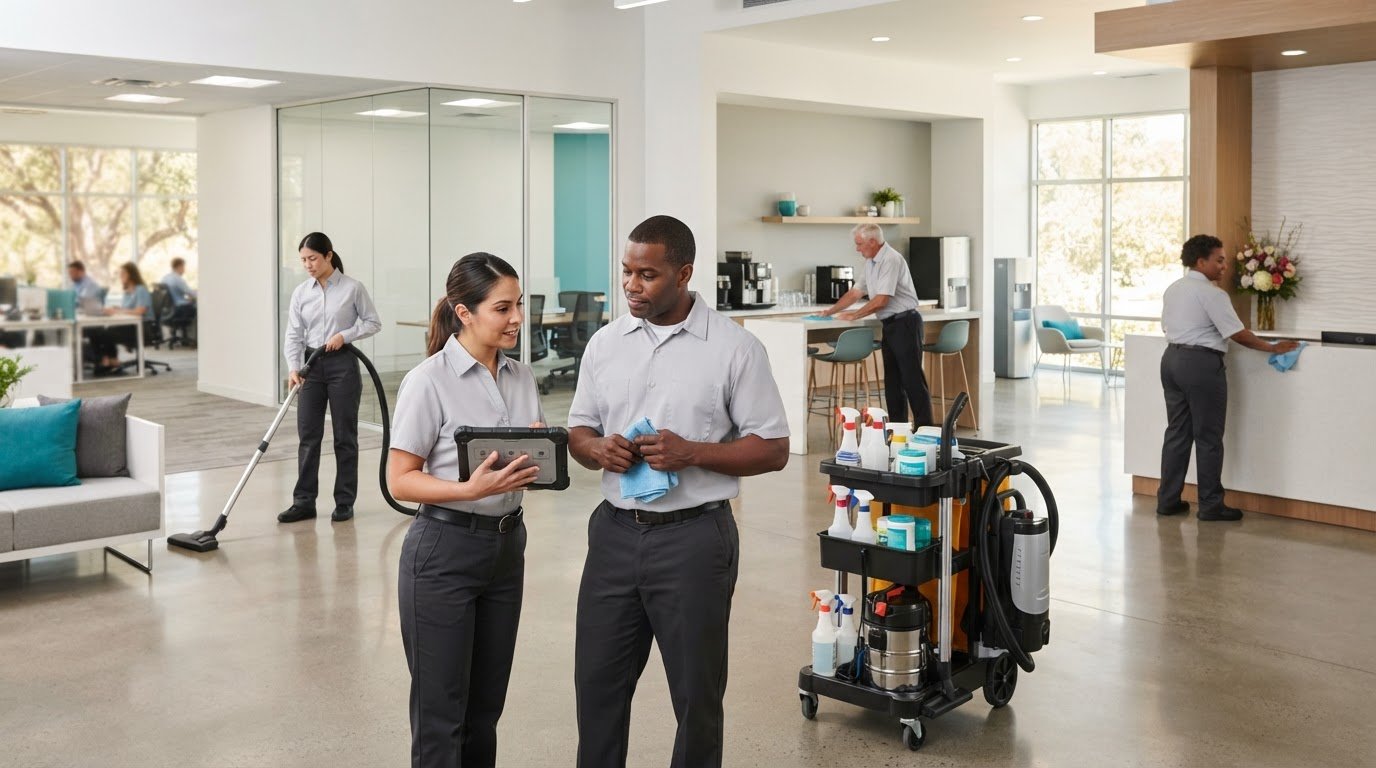
Schedules and responsibilities matter as much as the task list. Compare proposed service days and frequency, along with any stated assumptions about access, occupied areas, or changes in facility use. Note whether cleaning supplies and equipment are included or assigned to the facility. These details can affect what the arrangement requires from your team as well as what the provider performs.
If your operation needs regular attention across the workweek, compare that need with the proposed cadence. Daily cleaning services can suit facilities where consistent upkeep is part of normal operations, while periodic care may suit work that doesn’t need to happen on every visit.
Keep the comparison neutral: record what each proposal says, not what you expect it to mean. If one lists a task without a frequency and another specifies it for each visit, mark that difference clearly. This is especially useful when a quote uses bundled terms that make individual duties hard to identify. When evaluating commercial cleaning quotes , compare the same work before comparing totals. That helps reveal whether a price difference reflects a different schedule, omitted work, or a different service arrangement.
Once your comparison is organized, you can describe your priorities in a focused conversation. Sacramento-area facilities can review Cleanit Maintenance Systems’ commercial cleaning services against their needs.
Look Beyond the Total: Service Fit, Consistency, and Accountability
A low total can be appealing, but it doesn’t tell you whether a proposal fits the way your facility operates. One plan may include fewer visits, limited attention to shared spaces, or no provision for busy periods. Another may cover more of the work your building needs. Compare what each proposal is designed to deliver, then consider whether its service model can support a consistent standard over time.
Value is the fit between a clearly documented scope and dependable delivery that supports the facility’s daily needs. As you continue evaluating commercial cleaning quotes, look for clarity about how the service will be overseen and how communication will work if conditions change. A proposal should explain not just which tasks are planned, but how the arrangement can stay aligned with your operations.
Assess operational fit before choosing a proposal
Match the proposed schedule to opening hours, tenant activity, and the way people move through the building. A patient-facing site, for example, may need a different service rhythm from a workplace with predictable occupancy. Identify which areas are active during the day and which can be cleaned during scheduled periods when they’re less occupied. Choose a plan that fits the facility rather than making the facility work around a mismatched schedule.
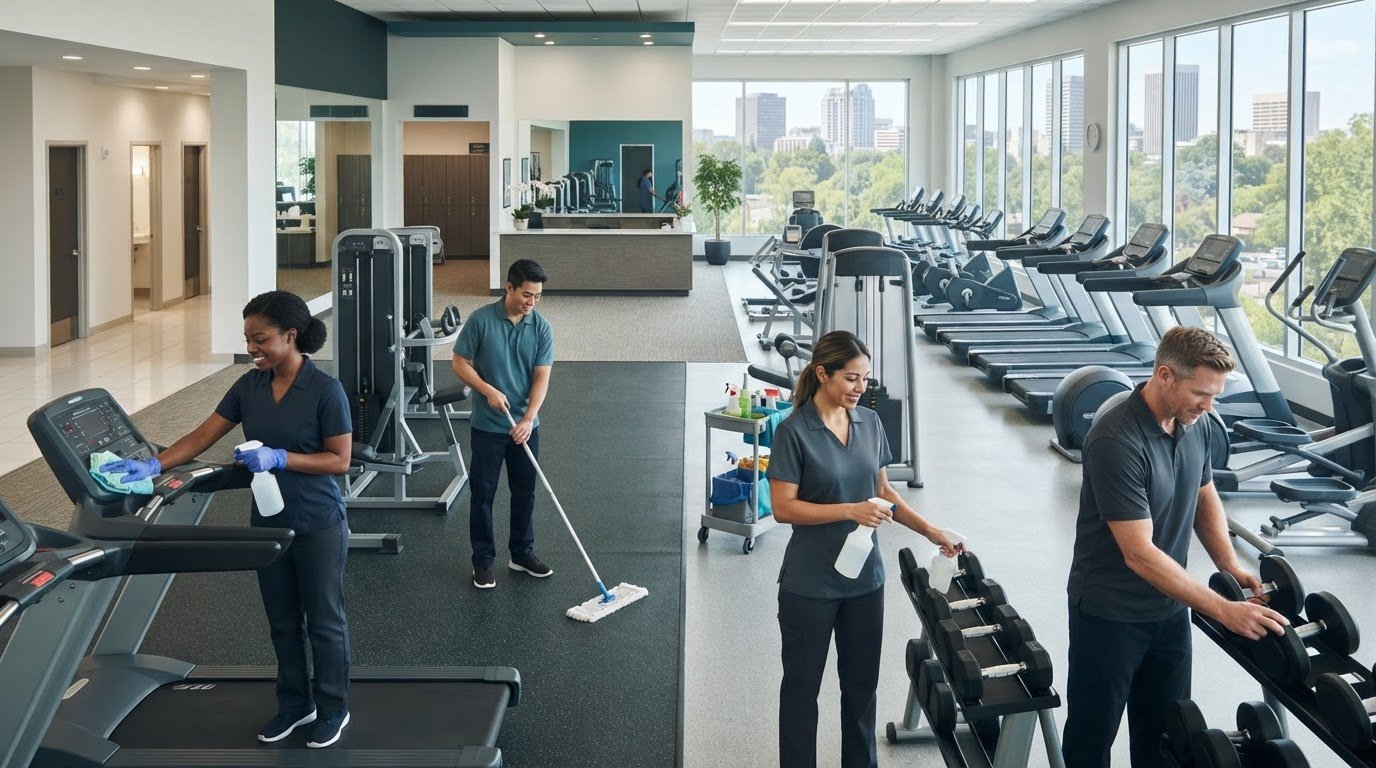
For active spaces, consider whether routine cleaning alone addresses the need for ongoing attention. Day porter services may suit facilities where high-traffic common areas need support during operating hours. Evaluate this as a distinct service model, with its own role and schedule, rather than assuming it’s part of a recurring janitorial plan.
Review specialized work and service boundaries
Carpet cleaning, floor restoration, and exterior maintenance should be distinguishable from routine janitorial work. Review how each proposal treats these tasks: are they part of the regular arrangement, scheduled periodically, or described as separate work? Clear boundaries help prevent important upkeep from being overlooked and make it easier to plan around the building’s needs.
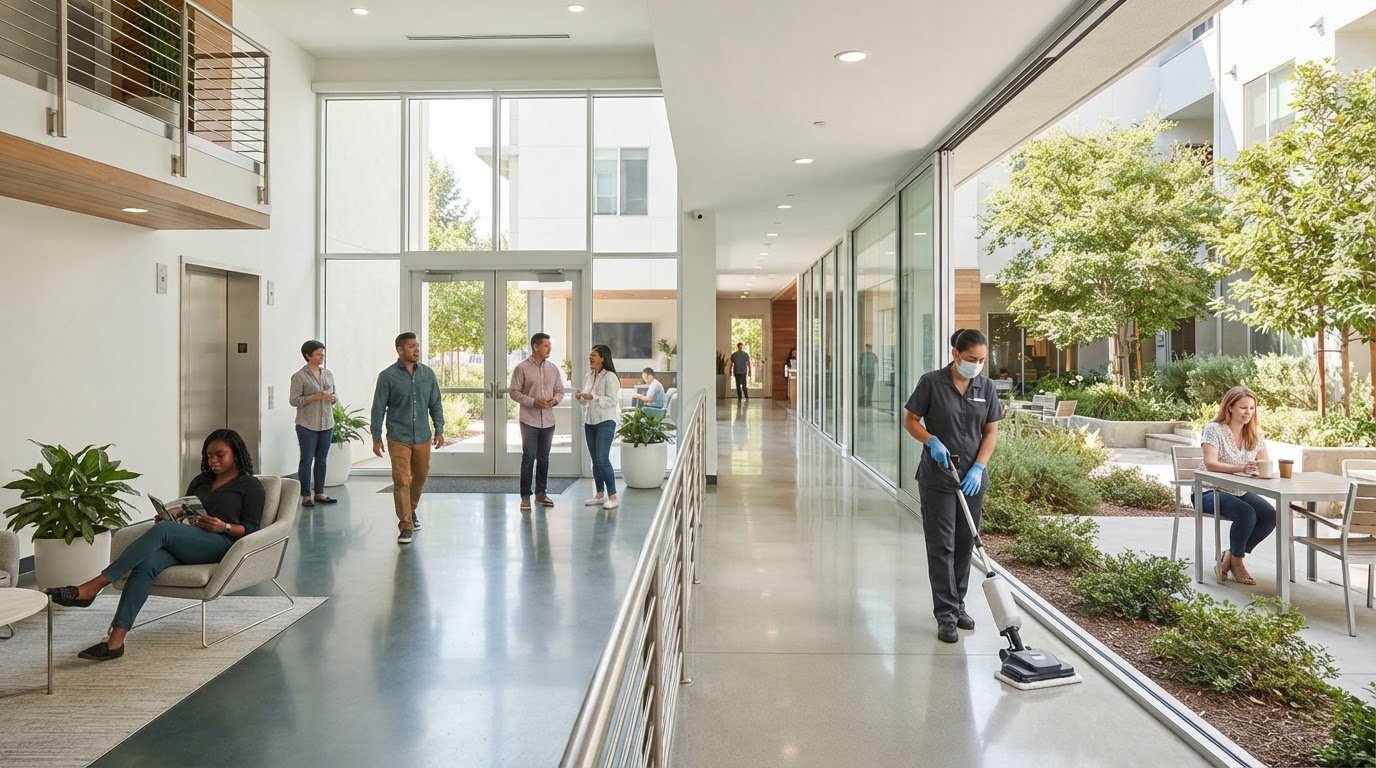
Multi-tenant properties call for particular care. Separate responsibilities for shared corridors, lobbies, restrooms, and tenant-facing areas so the proposal reflects who uses each space and how it supports the property. For office buildings and complexes, consider both common areas and the people who work in or visit the building.
Accountability is part of service fit, too. Look for a clear point of contact, a practical way to communicate concerns, and an explanation of how changing needs can be discussed. These details matter if occupancy shifts, a shared area becomes busier, or a space takes on a new use. You’re assessing whether the working relationship has enough clarity to respond thoughtfully, not expecting every future circumstance to be predicted in advance.
- Timing: Does the schedule suit operating hours and occupancy?
- Coverage: Are common areas and specialized tasks clearly assigned?
- Consistency: Is service oversight and communication described?
A strong proposal makes its service boundaries understandable and connects them to the facility’s day-to-day realities. That’s a more reliable basis for comparison than a total viewed on its own.
Use a Practical Checklist to Evaluate Commercial Cleaning Quotes
A consistent review process helps turn several proposals into a clear decision. Before scoring anything, write down the facility’s priorities in plain language: which areas matter most, where use is heaviest, what service frequency is needed, and whether specialized work is part of the plan. This keeps a polished presentation or low total from overshadowing the requirements your team has identified.
A five-step quote review for facility managers
Use the same sequence for each proposal. Record your needs first, then compare the documented service against them. This makes it easier to distinguish a strong operational match from a proposal that simply appears straightforward on the page.
- Define needs. List facility areas, how they’re used, busy periods, and your highest cleaning priorities.
- Normalize scope. Put each proposal’s tasks and frequencies into one comparison table. Mark items included, excluded, or unclear.
- Assess fit. Consider whether the service schedule and model suit opening hours, occupancy, and the workday.
- Identify gaps. Note missing spaces, vague task descriptions, unaddressed specialized work, or communication expectations that need attention.
- Decide. Select the proposal that best aligns with your documented needs and offers a clear, workable service arrangement.
For a balanced review, use a simple scorecard. Rate each area consistently, such as strong, adequate, or needs clarification, and add a short note explaining each assessment. Don’t let one high score compensate for a significant gap in a priority area.
- Scope clarity: Are spaces, tasks, and exclusions understandable?
- Schedule fit: Does the service cadence work for facility operations?
- Specialized needs: Are periodic or focused services accounted for appropriately?
- Communication expectations: Is it clear how operational needs or concerns can be discussed?
When a quote needs a closer look
Pause before deciding if a proposal uses broad phrases without describing the work, leaves frequency unclear, or doesn’t address a space your team considers important. A closer review is also useful when occupancy, room use, or service expectations have changed since the facility’s needs were first documented. Reassess your priorities before judging whether the proposals still fit.
Keep the scorecard practical. A short note such as “shared meeting rooms need attention on high-use days” gives your team a reason for its rating and prevents the review from becoming a contest of impressions. If two proposals appear close, return to the needs you recorded at the start and see which one addresses them more clearly.
That discipline is central to evaluating commercial cleaning quotes : the strongest choice fits the facility’s real priorities and makes service expectations understandable. Sacramento-area businesses can review their facility’s cleaning needs with Cleanit while considering an approach to ongoing care.
Choose a Sacramento Cleaning Partner That Fits the Facility
A proposal is useful only if the provider’s services can support the way your facility operates. Once you’ve compared scope, schedule, and service expectations, consider the experience and range of capabilities behind the plan. A local partner can align recurring janitorial work with the building’s daily use and keep specialized needs distinct from routine tasks.
Cleanit Maintenance Systems is a privately owned commercial cleaning provider serving the Greater Sacramento area, with more than 30 years of local experience. Its commercial janitorial and office cleaning services support workplaces, while daily cleaning and day porter services address different needs for regular upkeep and daytime attention.
How Cleanit serves different commercial facilities
The right service model depends on the spaces, their use, and the level of ongoing attention they need. Commercial janitorial and office cleaning support routine care in workplaces. Day porter services suit active facilities where daytime cleaning support can help address the needs of busy, shared spaces. Cleanit also provides medical office cleaning for healthcare environments.
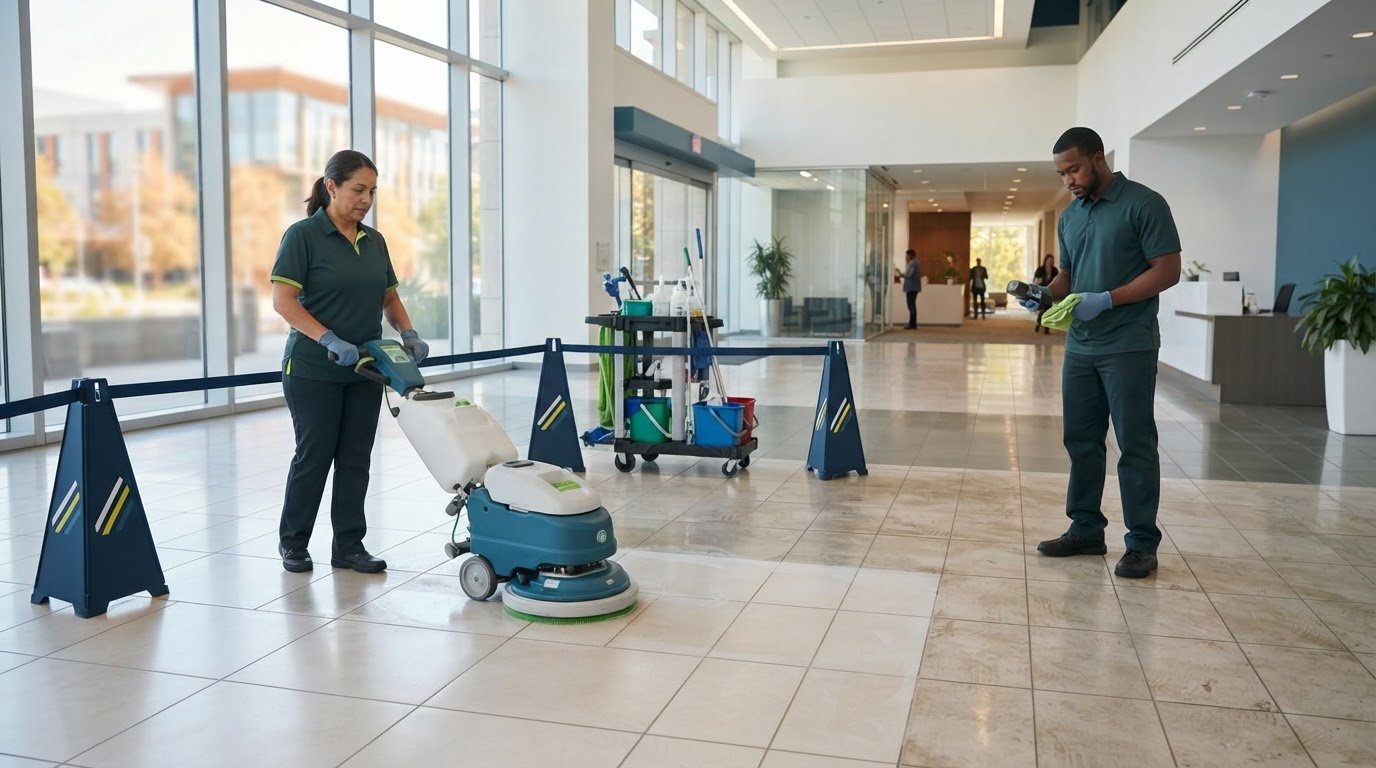
Some facility needs extend beyond recurring cleaning. Carpet cleaning, window washing, pressure washing, and floor restoration and protection address specific surfaces or areas as part of a broader maintenance plan. Consider how these services relate to your building’s priorities, and keep them distinct from the regular janitorial scope so expectations remain clear.
This range can matter for facilities whose needs vary by area. For example, an office may need consistent care in shared spaces alongside periodic carpet or floor work. A site with active common areas may benefit from considering day porter support separately from its scheduled cleaning. The useful question is whether the proposed mix reflects how your building is used, not whether every possible service appears in the plan.
Make the next step clear and low-pressure
A focused discussion starts with practical information about your facility. Bring a list of the spaces that need service, your preferred schedule, how each area is used, and the priorities that matter most to your team. Include any specialized cleaning or floor-care needs you’ve identified. These details keep the conversation centered on service fit and the operational realities of your building.
For Sacramento-area businesses, choosing a local partner can bring continuity to an essential part of facility operations. Cleanit’s commercial cleaning capabilities provide a starting point for discussing the work your building requires. If you’re evaluating commercial cleaning quotes, contact Cleanit to discuss your facility.
Turn a Clear Choice Into a Strong Working Partnership
The value of evaluating commercial cleaning quotes carries beyond the decision itself. Once you’ve selected a partner, keep your facility priorities accessible and use them as a reference as operations evolve. A space may take on a new purpose, occupancy may shift, or certain areas may become busier. Paying attention to those changes can help keep expectations aligned with the building’s actual needs.
A dependable cleaning arrangement grows from clear communication and a shared understanding of what matters most to your facility. You don’t need to anticipate every future change today. Start with an open conversation about your current spaces, service priorities, and the kind of support that would make day-to-day operations easier. From there, you can take the next step with greater confidence.
Discuss your commercial cleaning needs with Cleanit and start a conversation about a service approach suited to your facility. A thoughtful choice can help support a cleaner, more comfortable environment for the people who rely on it.
Frequently Asked Questions
How do you compare commercial cleaning quotes fairly?
Compare proposals fairly by translating them into the same set of facility needs before weighing their totals. A side-by-side table shows whether each covers the same rooms and duties at comparable frequencies, then helps you assess timing and specialized work. For example, note whether a proposal accounts for an occasionally used training room. While evaluating commercial cleaning quotes, judge each plan against how your facility actually operates, not just its summary price.
What should be included in a commercial cleaning quote?
A useful quote describes the areas and recurring tasks it covers, how often service is planned, and any assumptions or exclusions that shape the arrangement. Specialized work, such as carpet or floor care, should be distinguishable from routine janitorial cleaning. The purpose is clarity: a reader should be able to tell what work the proposal describes and compare that scope with another proposal without guessing.
Is the lowest commercial cleaning quote always the best value?
Not necessarily, though a lower quote isn’t automatically a poor choice. The total may reflect a different schedule or set of included tasks, so compare equivalent work first. Then consider fit: a plan that doesn’t account for a busy reception area may not serve your operation as well as one that does. Value comes from the relationship between the documented service and your facility’s needs, not from the total in isolation.
Why do commercial cleaning quotes differ for similar-sized buildings?
Square footage alone doesn’t show how a building is used. A small office may have shared meeting rooms and frequent visitors, while a medical office of similar size may include patient-facing rooms and different cleaning priorities. Layout, occupancy, traffic, restrooms, service frequency, and specialized needs all shape the work involved. For a fair comparison, look at the proposed tasks and schedule for each facility rather than treating similar size as proof of similar scope.
Should carpet cleaning and floor care be included in a janitorial quote?
Carpet cleaning and floor care may be scheduled separately from routine janitorial work, depending on the facility’s needs and the proposal’s scope. Make their status clear in your review: included, excluded, or described as separate service. For instance, a recurring plan may address everyday floor upkeep while restoration is planned independently. Cleanit provides carpet cleaning and floor restoration and protection for commercial facilities in the Sacramento area.
How often should a commercial facility receive cleaning services?
There isn’t one schedule that suits every commercial facility. Frequency depends on how people use the building, occupancy, foot traffic, operating hours, and the needs of individual areas. A shared break room may need a different service rhythm from a lightly used conference room. Compare the proposed frequency with actual daily patterns, then revisit it if occupancy, room use, or operational priorities change.