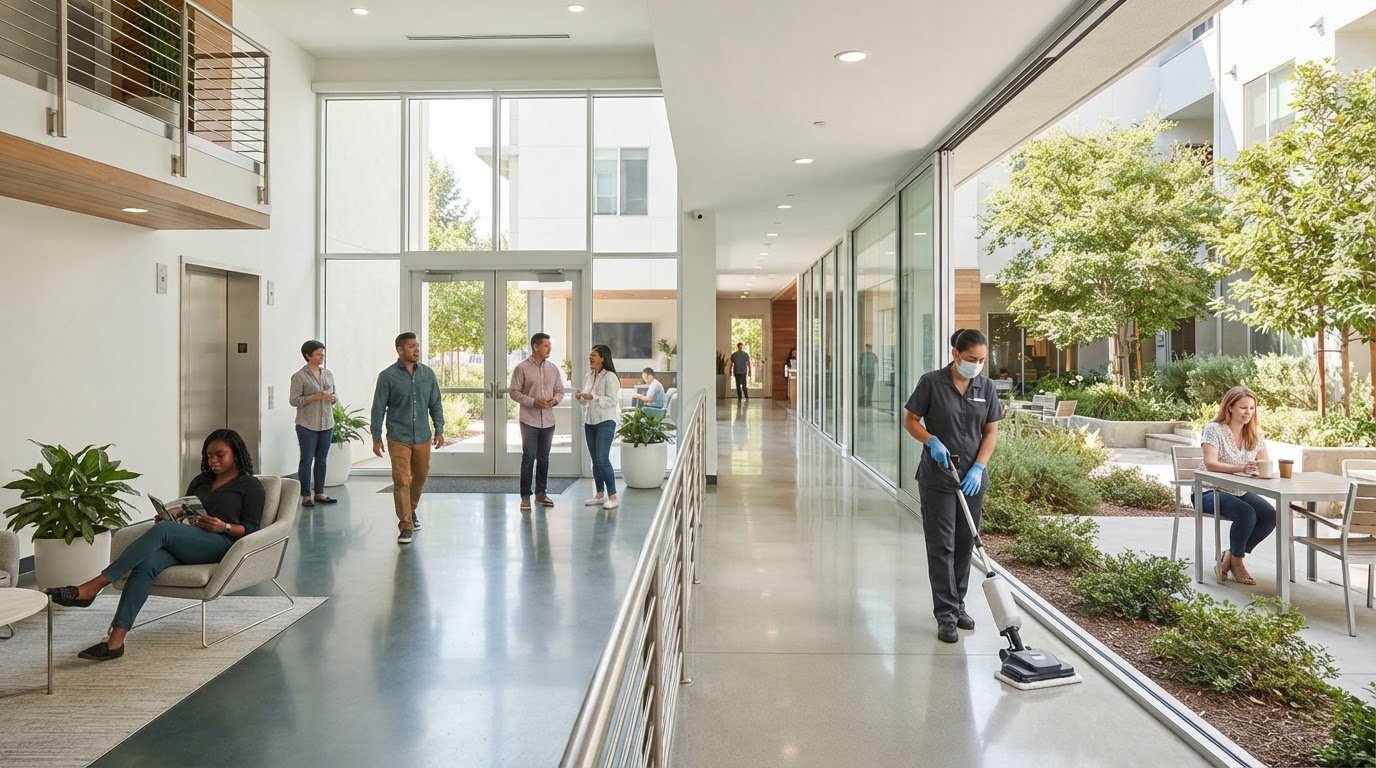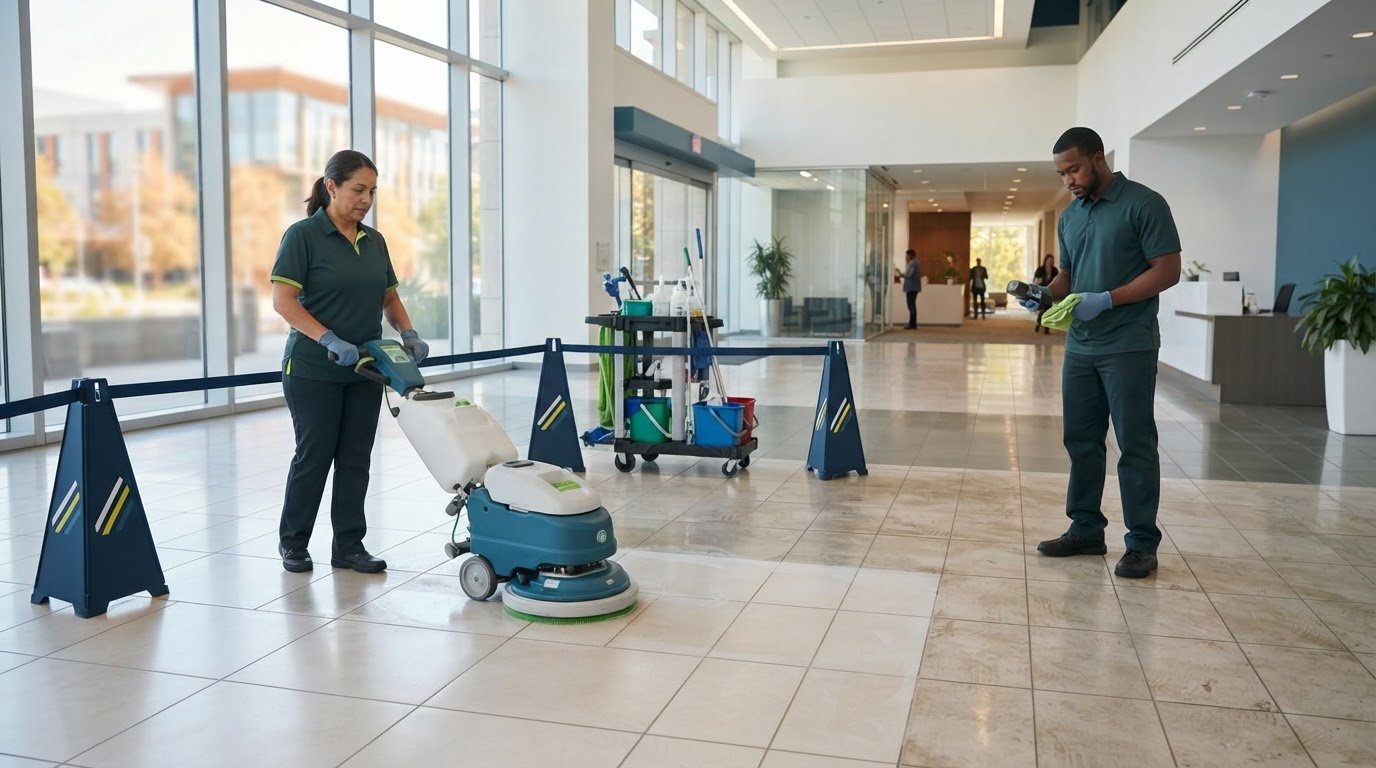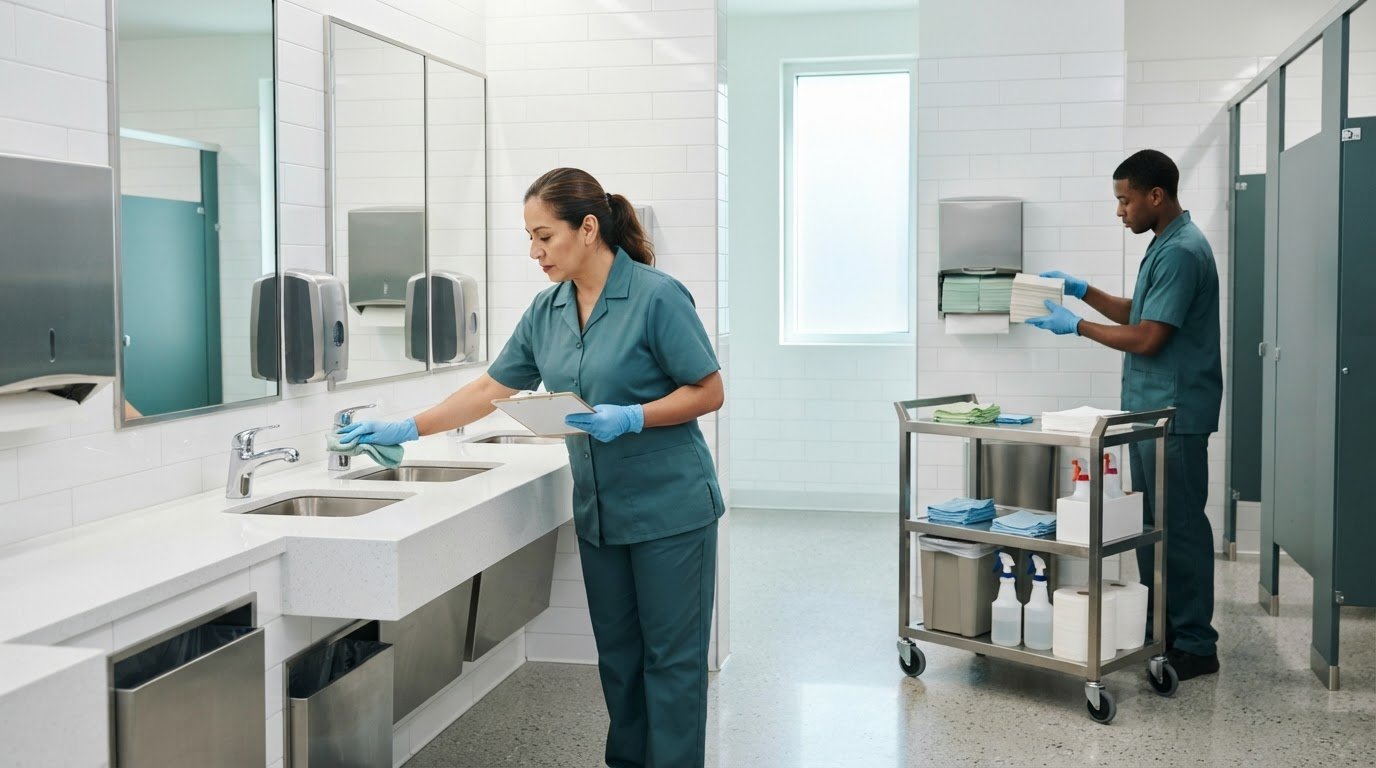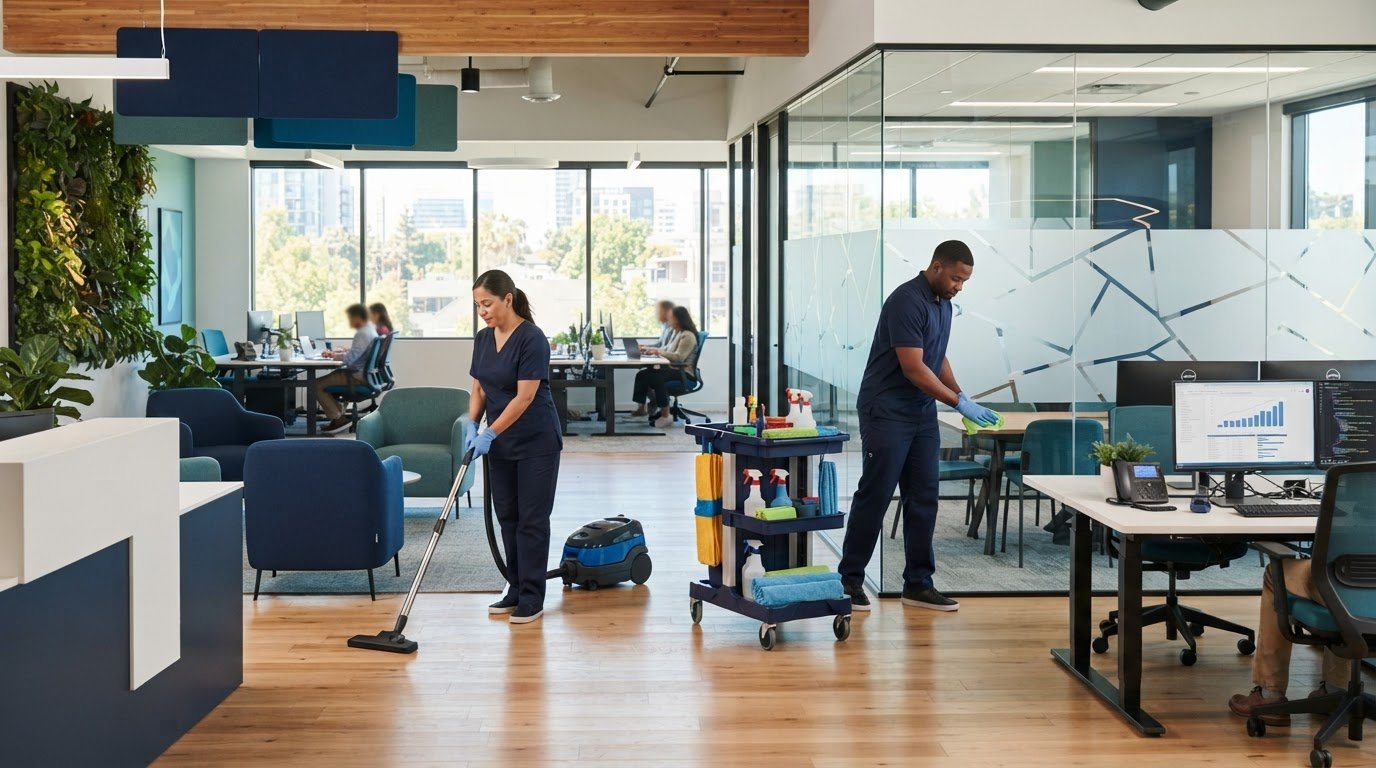
Recurring cleanliness complaints are rarely just about one missed wipe. When employees keep flagging the restroom, shared kitchen, desks, or floors, the concern may signal that the cleaning routine no longer matches how the office is used. Avoiding employee complaints about office cleanliness starts with identifying the pattern rather than guessing at a fix.
It’s reasonable to expect a clean workplace, and it can be frustrating to know whether a problem was a one-time miss or a persistent service gap. A clear system gives employees a dependable way to raise concerns and managers a practical way to respond. This guide explains how to spot recurring trouble areas, set straightforward cleaning standards, and review results consistently. You’ll also learn how to adjust service to fit actual office use and communicate changes so employees know their feedback has been heard.
Key Takeaways
- Repeated cleanliness concerns can point to unclear standards, inconsistent routines, or areas that need more attention.
- Make feedback actionable by recording where and when issues occur, assigning an owner, and following up with employees.
- Match the response to the pattern: target a specific problem, adjust recurring cleaning, or consider daytime support.
- To support avoiding employee complaints about office cleanliness, review priority areas and new reports on a set schedule before making further changes.
- A dependable Sacramento office-cleaning plan can align service coverage with documented workplace needs and employee feedback.
Why office cleanliness complaints happen, and what they reveal
Repeated concerns about cleanliness can affect more than how an office looks. Employees may feel less comfortable using a shared kitchen, meeting visitors in a dusty room, or starting the day in a space that seems neglected. Cleanliness also carries a social meaning: it can affect whether people feel their surroundings and shared needs are respected. The overview of the importance of cleanliness helps explain why these concerns can touch both hygiene and everyday confidence at work.
A complaint is useful information, not proof of blame. It may point to standards that were never made clear, a routine that varies from day to day, or a high-use area that needs attention between scheduled visits. For managers focused on avoiding employee complaints about office cleanliness, the goal is a fair process: listen, document, and assess what the report shows. No system can promise a complaint-free workplace, but a consistent response makes concerns easier to understand and address.
Which office areas commonly prompt employee concerns?
Shared kitchens, restrooms, meeting rooms, entryways, and frequently touched surfaces are all worth including in a review. That doesn’t mean every office has the same trouble spots. A small team may use one kitchen heavily, while a larger workplace may see more traffic through conference rooms or entrances. Base attention on how people use your specific space, not on assumptions about which area is always a problem.
When someone raises a concern, record details that can be checked rather than relying on a general impression:
- Area: Identify the room, fixture, or surface as precisely as possible.
- Issue: Note what was observed, such as a full waste bin or a marked counter.
- Timing: Record the approximate date and time, along with relevant context such as a busy meeting day.
This simple record helps distinguish a specific, actionable report from “the office feels unclean.” Both deserve a respectful response, but the first provides a clearer starting point for review.
When does a complaint point to a recurring service gap?
Look for similar reports across dates, shifts, departments, and locations. If employees in different teams repeatedly describe the same restroom issue, or the same meeting room is reported after recurring gatherings, a pattern may be emerging. One spill or an unexpected event, by contrast, may be isolated. Compare observations before changing the routine. A single report can identify something to address without proving the scheduled service is inadequate.
Use observable details rather than labels such as “careless” or “overly sensitive.” For example, record that soap was empty during a morning visit, or that crumbs remained on a counter after lunch. Neutral notes keep the discussion focused on conditions and timing, not assumptions about employees or cleaning staff. They also help managers explain what will be reviewed and why.
Clear office-cleaning expectations make this review more useful. The office cleaning approach should reflect the areas and routines that matter in the workplace. Once an issue is documented, compare it with the agreed cleaning standard and actual office use. That gives the next step a practical basis, whether the concern calls for a one-time correction or a closer review of the recurring routine.
How to turn employee feedback into a clear cleaning standard
Feedback becomes useful when everyone knows how to raise a concern, who will review it, and what happens next. A straightforward process also helps managers distinguish an individual request from a pattern that may call for a change in cleaning priorities. For avoiding employee complaints about office cleanliness, the aim isn’t to promise that no issue will ever arise. It’s to set fair expectations and respond consistently when something needs attention.
Use the same sequence each time a concern comes in:
- Invite reports: Provide one accessible route, such as a shared facilities inbox or workplace reporting form.
- Document specifics: Capture the location, issue, time, recurrence, and any immediate effect on work or access.
- Assess patterns: Compare the report with other observations and the agreed cleaning routine.
- Assign action: Name the person responsible for review and the appropriate next step.
- Follow up: Acknowledge the report and tell the employee what will happen, without promising an outcome before the issue is assessed.
Give the process a named owner, such as a facilities or office manager, and explain when employees can expect an acknowledgment. A clear point of contact prevents concerns from disappearing between teams and makes follow-through part of the routine.
What should an office cleanliness reporting process capture?
Keep reporting simple enough to use during a busy day. Ask employees for the specific area, what they observed, when it occurred, whether it has happened before, and whether it affected access or normal work. Let them raise concerns privately if they prefer; reporting shouldn’t require an employee to make an uncomfortable public announcement. The owner can acknowledge the report, record the next step, and share an update when appropriate.
How can managers make cleaning expectations measurable?
Replace vague words such as “spotless” with visible conditions people can assess consistently. Agree on priority areas and when they’ll be reviewed. For example, a restroom standard might specify that dispensers are stocked and sinks and counters are free of visible debris at agreed review times. Set expectations that suit your workplace and the way each space is used.
- Restrooms: Identify visible checks, such as stocked supplies and clear sinks.
- Shared kitchens: Specify how counters, tables, and waste areas should look after routine cleaning.
- Meeting rooms: Describe the condition expected before or after scheduled use.
Some sanitation matters also have established workplace requirements. Managers can consult OSHA sanitation standards when setting expectations for facilities covered by the standard.
Review the process when occupancy, work schedules, or room use changes, and periodically check that the standards remain practical. If shared spaces need regular attention as office use shifts through the day, daily office cleaning services can be part of the plan. A documented standard also gives managers a useful basis for discussing coverage with a cleaning service. To align office cleaning with your workplace priorities, share your cleaning needs.
Compare cleaning responses before changing the office schedule
A concern doesn’t always call for a broader cleaning schedule. A marked countertop in one room may need a focused correction, while repeated reports across shared spaces could indicate that routine upkeep needs review. Daytime needs may call for a different response. To support avoiding employee complaints about office cleanliness, match the change to the evidence and review the result before expanding the plan.
Use documented reports and observations to compare the scope of the issue. A single, unverified impression is a reason to look closer, not enough on its own to redesign the entire schedule. Keep the standard consistent: assess the same location and visible condition before and after the change.
| Approach | Suitable situation | Limitation |
|---|---|---|
| Targeted corrective cleaning | A report identifies a specific area or task that needs attention. | May not address a pattern affecting multiple locations or days. |
| Adjusted recurring routine | Similar concerns appear regularly across the workweek or shared spaces. | Changing the routine without evidence can shift effort away from other priorities. |
| Daytime support | Needs arise while the office is occupied and routine visits don’t align with when they occur. | Doesn’t replace the need for clearly defined recurring cleaning tasks. |
When is a focused cleaning adjustment the sensible first step?
Start with a focused adjustment when feedback points to a particular surface, room, or task. For example, if reports consistently identify one shared counter, address that area rather than immediately adding work across the whole office. Then review it using the same observable standard, such as whether visible debris remains at the agreed review point. If the concern returns, record when and under what conditions before broadening the response.
When might recurring office cleaning or daytime support fit better?
Recurring service may be a better fit when reports relate to routine upkeep across several days or shared areas, rather than one isolated task. Day porter support can address cleaning needs that arise during occupied business hours, such as maintaining shared spaces as their use changes throughout the day. These approaches can work together, but the service scope should reflect the facility, its patterns of use, and its documented priorities.
For a broader review of recurring coverage, consider office cleaning services in relation to the issues employees report and the standards the workplace has set. Avoid changing several parts of the plan at once if you can’t tell which adjustment made a difference. A measured response keeps expectations clear, helps managers review what’s working, and gives employees a practical reason to trust that their feedback is being considered.
How to check whether your complaint-prevention plan is working
A cleaning adjustment needs a clear review, not just a hopeful assumption that things have improved. Set a review date when you make the change, then compare reports and observations from that point with the original location, issue, and timing patterns. This gives managers a fair way to judge progress and decide whether the plan needs refinement.
Use the same short checklist or walkthrough notes each time. For a priority restroom, for example, record whether the agreed visible conditions are met during normal office use. Keep the review focused on the issue the change was meant to address, while noting other concerns separately. That distinction helps show whether one action worked without allowing unrelated problems to obscure the result.
Which signs show that a cleaning change is helping?
Look for fewer repeated reports about the same specific issue over a defined review period, alongside evidence that the agreed standard is being met. Ask employees who raised the concern whether the particular condition has improved. Silence alone isn’t proof: people may stop reporting because they’re unsure their feedback matters, or because the issue hasn’t come up recently. A brief, respectful follow-up provides better context.
- Compare like with like: Review the same location, condition, and approximate usage period as before the change.
- Track the original concern: Note whether reports about that issue continue, decrease, or shift in timing.
- Separate new issues: Log unrelated concerns on their own so progress remains visible.
For avoiding employee complaints about office cleanliness, success means a more reliable way to identify and respond to concerns, not a promise that no complaint will recur.
How should managers respond when complaints continue?
A continuing report deserves a clear acknowledgment. Tell the employee what has been reviewed and what the next action is, then revisit whether the cleaning scope, timing, or task ownership matches actual occupancy. A restroom that is in good condition during a morning walkthrough may face heavier use later; the relevant question is whether the review and service plan account for that pattern.
Check the records for recurring locations, times, or teams. Confirm that the task is assigned clearly, that the standard is understood, and that communication reaches the people responsible for follow-through. If several facilities or different types of spaces are involved, a broader office-cleaning approach can help managers consider needs together rather than treating every report as an isolated event.
Document the revised action and set another review date. This creates a steady cycle: observe, respond, and assess. It also gives employees a concrete update instead of leaving them to guess whether anyone addressed the concern. For Sacramento-area offices reviewing cleaning coverage, connect with Cleanit Maintenance Systems to discuss workplace needs and service options.
Build a dependable Sacramento office-cleaning partnership
A dependable cleaning plan starts with the workplace, not a one-size-fits-all schedule. Bring together documented concerns, the areas that need regular attention, and the employee feedback process already in place. This gives managers and a cleaning service a shared picture of the work to be covered and how concerns will be communicated and reviewed.
Cleanit Maintenance Systems provides commercial janitorial services in the Greater Sacramento area and has operated locally for over 30 years. Daily office cleaning and day porter services are practical options when setting coverage: recurring cleaning supports planned upkeep, while daytime support can address needs that arise as the office is being used. The right scope depends on the facility’s layout, occupancy, and operational requirements.
What should a useful office-cleaning service plan address?
Keep the plan specific enough to guide consistent service and review, but adaptable to the way your workplace operates. Identify priority spaces and recurring tasks, agree on visible standards, and establish a clear route for reporting concerns. Set review expectations so managers can compare feedback with what the plan covers and discuss any gaps constructively.
- Priority spaces: Note which shared areas and rooms need routine attention, based on actual use.
- Recurring tasks: Describe the work expected in each area and how it fits the established routine.
- Communication: Identify who receives feedback and how concerns are shared and followed up.
Tailoring matters. A medical office may have different cleaning needs from a general office. Cleanit Maintenance Systems provides medical office cleaning, with service planning shaped around the facility’s needs.
How can Sacramento businesses take the next step?
Before discussing service coverage, gather a few practical details: examples of recurring concerns, the locations affected, when problems tend to appear, and preferred service windows. Include the standards you want reviewed and how employees currently share feedback. These details keep the conversation grounded in observed needs rather than broad impressions or unsupported promises.
For managers, a well-defined service plan can make cleaning needs easier to organize and discuss, without turning every report into a new operational burden. It also provides a stable basis for revisiting coverage as occupancy or office use changes. When avoiding employee complaints about office cleanliness, consistent communication and a plan tied to real conditions are more useful than assuming a single adjustment will suit every workplace.
If recurring concerns are prompting a review of your current approach, describe your facility and the issues you’ve documented to Cleanit Maintenance Systems. A practical conversation can help clarify how office cleaning or daytime support can align with your priorities.
Make cleanliness part of how your workplace evolves
As teams, schedules, and shared spaces change, the cleaning plan may need to change with them. Treat cleanliness as an ongoing part of workplace planning, not a task to revisit only after frustration builds. A brief check-in during routine facilities reviews can help keep service expectations aligned with how employees use the office and make it easier to address small concerns before they become established patterns.
Start with one practical next step: identify the recurring issue that matters most to your team and the outcome you want to see. A focused conversation can help clarify how office cleaning and daytime support might fit your facility’s needs. For avoiding employee complaints about office cleanliness, steady communication and a considered plan can give managers more confidence in how concerns are handled. Discuss your office cleaning needs with Cleanit Maintenance Systems to take a constructive step toward a workplace your team can feel comfortable sharing.
Frequently Asked Questions
How do I respond to an employee complaint about office cleanliness?
Respond calmly, thank the employee for raising the concern, and ask for details that will help you understand it. For example, find out whether a restroom supply was missing at a particular time or whether the issue affects more than one area. Explain how you’ll review the concern and provide an update. A respectful, consistent response supports avoiding employee complaints about office cleanliness by showing employees their feedback is taken seriously.
How often should an office be cleaned to prevent complaints?
Set cleaning frequency according to how the office is used, rather than relying on a schedule that may no longer fit. Consider occupancy, shared-space traffic, meeting patterns, and which areas need attention during the workday. A Sacramento office with busy common areas may have different needs from a workplace used by a smaller team. Review the schedule when work patterns change, then check whether the established routine still meets expectations.
Can a day porter help reduce complaints about office cleanliness?
Yes. Day porter services can support cleaning needs that arise while employees are using the office, complementing planned routine cleaning. This may suit workplaces where shared areas see changing use during the day or where managers notice issues between scheduled cleaning visits. The role and coverage should reflect the facility’s needs. Cleanit Maintenance Systems provides day porter services for commercial workplaces in the Greater Sacramento area.
What should be included in an office cleaning checklist?
Include tasks people can verify, along with a way to record when each check is completed. A useful checklist might cover replenishing restroom supplies, clearing visible debris from kitchen counters, emptying waste bins, and checking that meeting rooms are ready for their next use. Add a notes field for exceptions, such as a room being occupied during a walkthrough. Keep the checklist limited to agreed priorities so it remains practical to use.
How can managers collect honest feedback about office cleanliness?
Offer a simple, private way to share feedback, such as a facilities email address or a brief form that doesn’t require employees to raise concerns in a group setting. Ask for specific observations rather than a general satisfaction rating: which space, what condition, and when it occurred. Explain who reviews submissions and how employees will hear about next steps. That clarity can make it easier to report concerns candidly.
What if employees keep complaining after the cleaning schedule changes?
Don’t assume the schedule change has addressed the underlying issue. Compare new reports with the original concern, then check whether the relevant area, timing, or task was included in the adjustment. A room may be cleaned as planned but become heavily used afterward. Ask affected employees what they’re noticing now, record any new conditions separately, and decide whether the next step is a different task, timing, or service scope.
Should office cleaning happen during or after business hours?
Choose timing based on the work being done, room access, employee activity, and the effect cleaning may have on normal operations. Some routine tasks may fit more naturally when rooms are less occupied, while needs that develop during the workday may call for daytime attention. Map cleaning tasks to how your Sacramento workplace operates, including meeting schedules and shared-space use, then review whether the timing works for employees and facility operations.