A restroom can be clean at opening and out of supplies before the busiest part of the day. Maintaining clean commercial restrooms takes more than a scheduled cleaning visit: it depends on a dependable routine that connects cleaning, restocking, and regular checks. If your team is wondering how to keep shared facilities ready between scheduled cleanings, start with clear ownership and tasks that match how the space is used.
Even a well-intended routine can fall short when staff aren’t sure what to check, how often to do it, or where to report recurring problems. This guide explains how to organize daily, between-use, and periodic restroom tasks, assign responsibility, and monitor supplies and facility conditions. It also covers how to adjust checks for traffic and spot trouble before it becomes a persistent issue. For commercial facilities in Greater Sacramento, recurring janitorial and day porter support can help maintain standards between scheduled tasks and reduce the coordination burden on your team.
Key Takeaways
- Maintaining clean commercial restrooms means coordinating cleaning, inspections, restocking, and issue reporting, not relying on a daily wipe-down alone.
- A consistent cleaning sequence helps staff work methodically while following the directions for the products they use.
- Set check and cleaning frequency according to restroom traffic, operating hours, facility size, and usage patterns.
- Use a simple checklist and completion log to track cleanliness, supplies, fixtures, floors, odors, and visible damage.
- Recurring commercial janitorial and day porter support can help Greater Sacramento businesses maintain restroom standards and ease the coordination load on facility teams.
Why Maintaining Clean Commercial Restrooms Takes More Than a Daily Wipe-Down
A restroom may look tidy after its scheduled cleaning and still need attention hours later. A wet floor, empty soap dispenser, overflowing bin, or lingering odor can quickly affect the experience of employees and visitors. Maintaining clean commercial restrooms is a coordinated routine, not a single wipe-down performed at a set time.
Commercial restroom maintenance is the coordinated work of cleaning, inspecting, restocking, and reporting issues so a shared facility remains orderly and ready for use. Each part supports the others: cleaning addresses visible soil, inspection catches changing conditions, restocking keeps essentials available, and reporting sends repair needs or recurring problems to the right person.
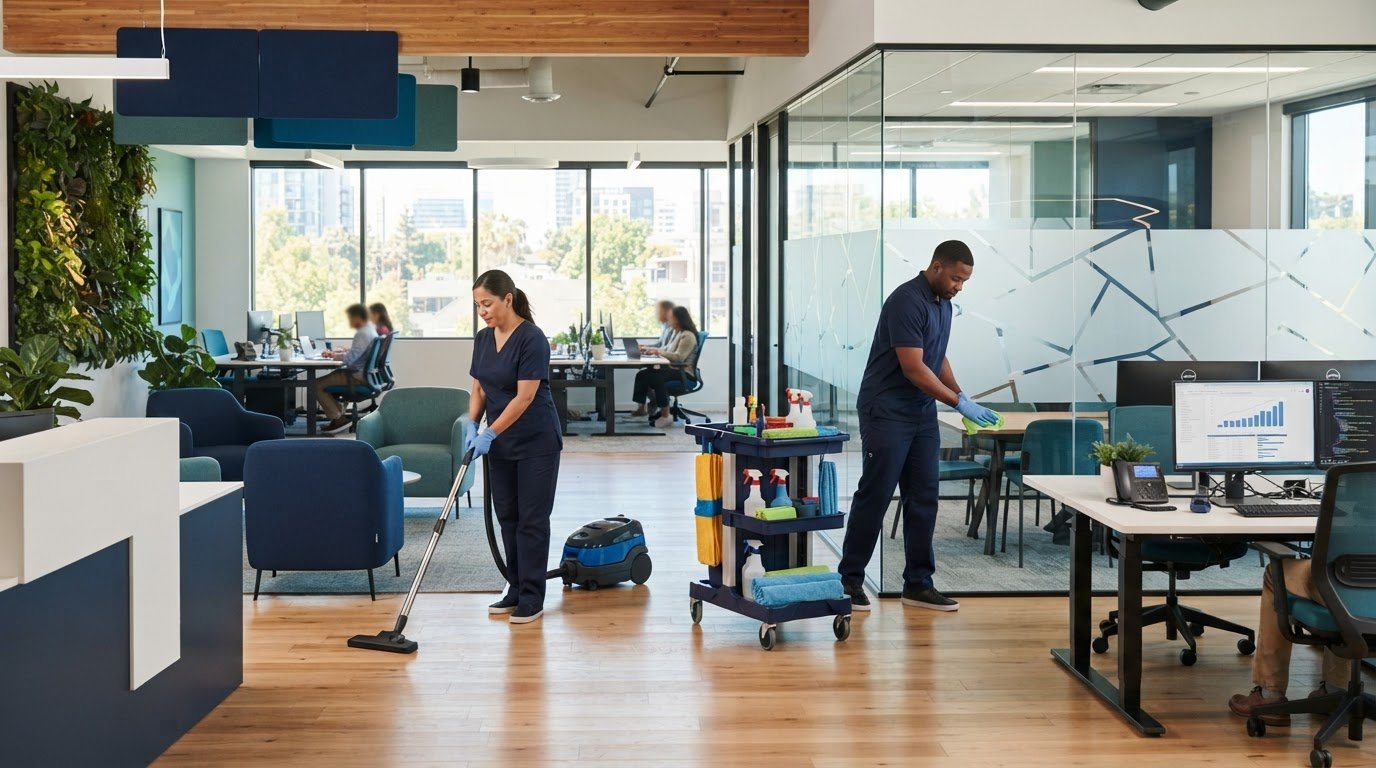
Routine upkeep handles conditions that change during the workday, such as scattered debris or a depleted paper towel dispenser. Periodic deep cleaning addresses buildup and areas that routine passes may not fully reach. These tasks serve different purposes, so neither should be treated as a substitute for the other. A dependable coordinated office cleaning plan can clarify responsibilities across the facility.
Which signs show that a restroom needs attention?
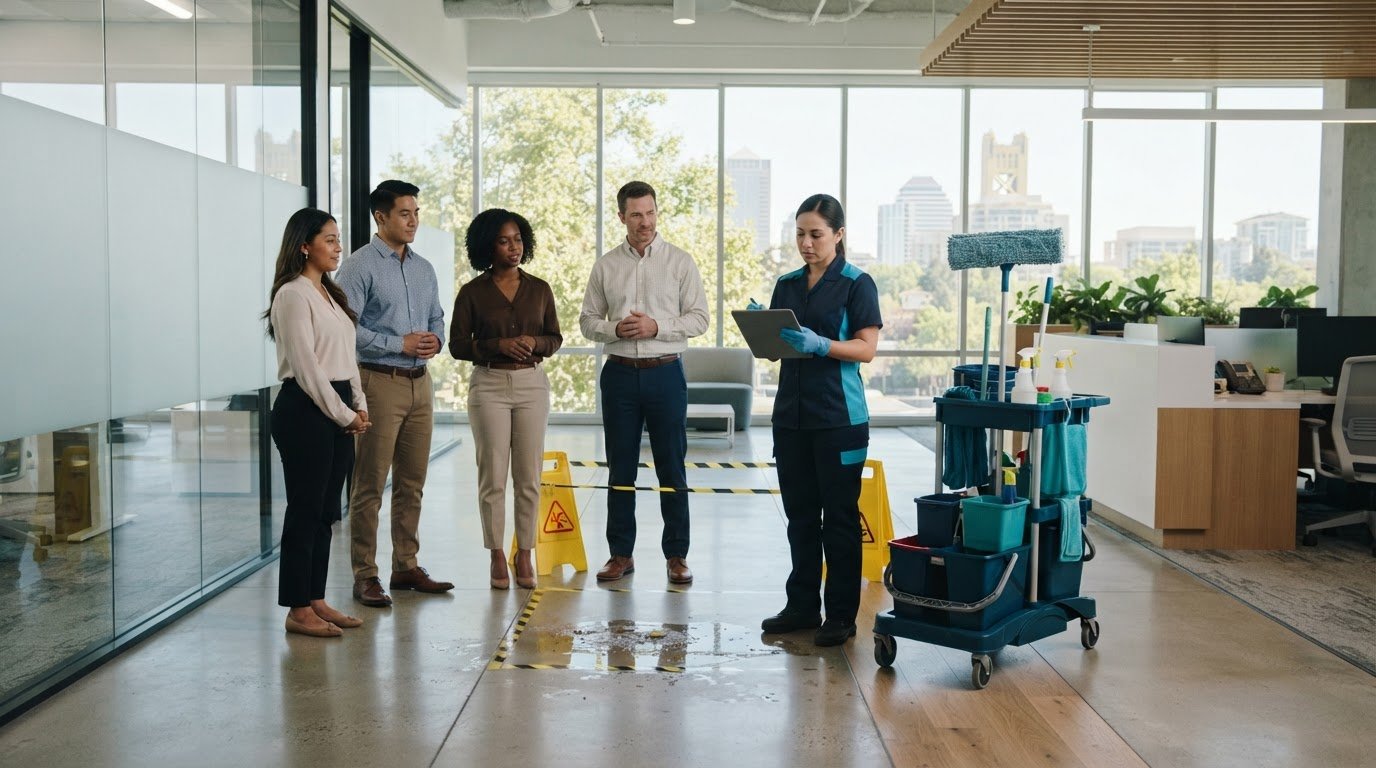
Use a short visual scan to spot service needs: look for soil on counters or fixtures, wet or dirty floors, full waste bins, and empty soap or paper dispensers. These are cues to act, not items to leave for the next scheduled clean. A spill or overflowing waste needs prompt attention; routine buildup may belong on the periodic cleaning plan.
Persistent odor also deserves investigation rather than simply being covered with fragrance. Check for an overflowing bin, residue, a drain issue, or another visible source, then report concerns that routine cleaning can’t resolve. Recording repeat problems helps the responsible team recognize patterns and follow up.
Who should own restroom upkeep during the workday?
Clear ownership prevents a common gap: everyone assumes someone else checked. A facility manager can set the routine and assign responsibility; designated staff can complete agreed checks and report concerns; and cleaning teams can handle scheduled cleaning and assigned upkeep. Name one accountable role to ensure checks happen, supplies are replenished, and issues reach the right person.
Keep the handoff straightforward. A simple log can capture the time of a check, the condition observed, supplies replenished, and issues reported. If coverage changes during the day, the record helps the next person see what has already been handled. This gives the facility team a practical way to maintain consistent standards without relying on memory alone.
A Reliable Commercial Restroom Cleaning Sequence, Step by Step
A consistent task order helps staff avoid missed surfaces and keeps cleaning tools from moving carelessly between areas. Before starting, follow the facility’s procedures for putting the restroom out of use or signaling that cleaning is underway. Gather the needed supplies, review product directions, and use any protective equipment the label or safety data sheet specifies. OSHA’s sanitation standards for restrooms provide a reference for workplace sanitation expectations, including restroom provisions.
- Prepare the area. Set out supplies, check that products are prepared as directed, and place any required safety signs. Keep cleaning materials organized and avoid blocking access.
- Remove waste. Empty receptacles and replace liners as needed. Handle waste carefully, and note any overflow or damage that needs follow-up.
- Clean surfaces. Work from cleaner areas toward more soiled ones. Wipe counters, sinks, dispensers, partitions, and door hardware using an appropriate cloth and product.
- Address fixtures. Clean toilet and urinal exteriors and other fixtures with supplies designated for those tasks. Replace cloths when they become soiled or when moving to a different cleaning area.
- Finish the floors. Remove loose debris, then clean the floor, including corners and areas around fixtures. Leave the floor in a condition that allows it to dry safely before regular use.
- Inspect the room. Check the work, replenish supplies included in the task, and report damage, persistent odor, or other concerns that cleaning alone won’t resolve.
Cleaning before disinfection matters because surface soil can interfere with the disinfection process. Follow the specific product label to determine whether pre-cleaning is required and how to apply the product. Label directions also govern how long a treated surface must remain visibly wet and the required contact time. Don’t assume one product’s instructions apply to another.
How should staff clean restroom surfaces and fixtures?
Move methodically from counters and sinks to partitions, touchpoints, and toilet or urinal exteriors, using separate supplies where appropriate. Replace a cloth that has picked up visible soil rather than carrying it on to a cleaner surface. Prepare products as directed, and use a fresh cloth when it’s soiled or the task calls for one. In clinical settings, facility procedures may differ from those used in general offices, so teams should follow the applicable cleaning protocols.
How can teams handle products and tools responsibly?
Use product labels and safety data sheets for instructions on dilution, application, storage, and protective equipment. Never mix products unless their instructions explicitly direct it. Keep restroom tools separate from those used elsewhere in the facility, and store them in their designated location after use. These habits support an orderly process and reduce the chance that staff will use the wrong product or tool for a task.
For commercial facilities in Greater Sacramento, recurring janitorial support can help keep this sequence consistent alongside the facility’s own checks and reporting routine.
How Often Should Commercial Restrooms Be Checked and Cleaned?
There isn’t one schedule that suits every commercial restroom. A facility with steady employee use may have different needs from a site that receives visitor surges or operates across extended hours. A useful plan separates three kinds of attention: scheduled cleaning for planned tasks, periodic checks to spot changing conditions, and responsive service when an immediate issue appears.
Rather than guessing at intervals, record what staff find during checks. Note when dispensers run low, floors become visibly soiled, odors recur, or maintenance concerns are reported. These observations show whether the current routine fits actual use. For maintaining clean commercial restrooms , adjust the schedule according to documented conditions instead of copying another facility’s routine.
| Usage pattern | What to consider |
|---|---|
| Predictable employee use | Compare conditions at opening, during the workday, and after the busiest periods. |
| Visitor or customer peaks | Pay attention to supply depletion and visible soil around high-use periods. |
| Extended operating hours | Plan coverage across the hours the restroom is in use, not only around opening or closing. |
| Multiple restrooms or uneven use | Track each location separately; one busy restroom may need different attention from a lightly used one. |
What factors change a restroom maintenance schedule?
Consider when employees and visitors use the facility, how concentrated the busiest periods are, and how many restrooms are available. Then look for patterns in the check log: repeated empty dispensers, recurring visible soil, or maintenance concerns may signal that coverage needs adjustment. Try a revised routine for a defined period, keep recording observations, and compare results before settling on a new schedule.
Operating hours matter, too. If staff only inspect at the start of the day, they may miss conditions that build during busy periods. Likewise, several restrooms in one building shouldn’t automatically be treated as equally used. A short, location-specific record helps facility managers direct attention where it’s needed and refine the plan based on actual conditions.
When are scheduled cleaning and day porter checks different?
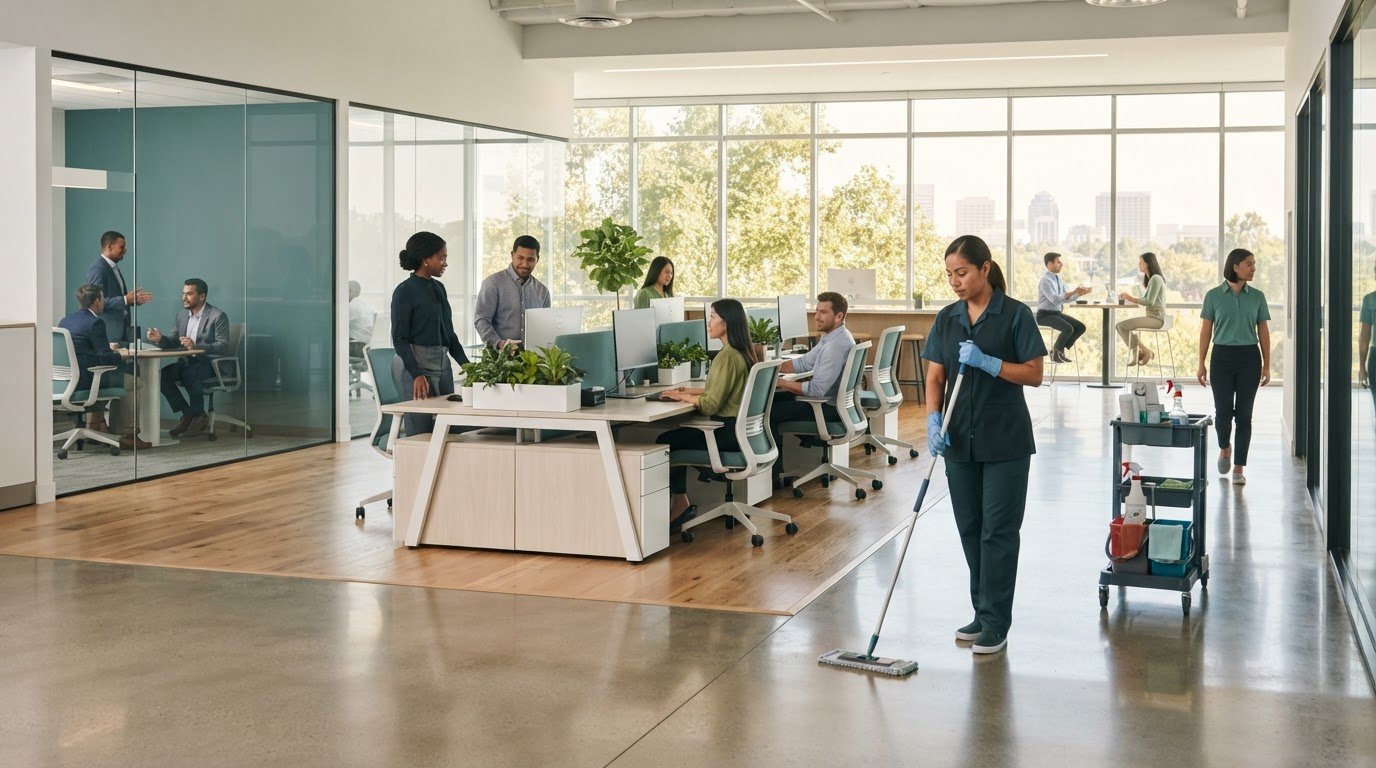
Scheduled cleaning covers planned tasks at agreed service times; day porter checks respond to conditions that change during occupancy, such as depleted supplies or a spill. Daytime attention can help keep restrooms and shared areas presentable between scheduled cleaning tasks. Daily cleaning services can support facilities that need recurring upkeep built around a predictable schedule.
These roles work best when their responsibilities connect. A check can flag an issue for immediate attention or record a pattern for the cleaning plan to address. For commercial facilities in Greater Sacramento, recurring janitorial and day porter support can complement internal checks and reduce the coordination burden on facility teams.
A Practical Restroom Inspection and Restocking Checklist
A checklist turns restroom upkeep into a repeatable handoff instead of a task that depends on memory. Keep it where assigned staff can use it, and make each item easy to mark as complete, needs attention, or reported. The checklist can support a broader office cleaning routine, while clarifying which checks belong to facility staff and which are part of scheduled cleaning.
During each check, staff can review:
- Cleanliness: Look at sinks, counters, partitions, and visible fixture surfaces for soil or residue.
- Floors: Check for wet areas, debris, or other conditions that need prompt attention.
- Fixtures and visible damage: Note leaks, loose or damaged fixtures, and dispensers that aren’t working as expected.
- Odor: Record persistent or unusual odors so the underlying source can be investigated.
- Supplies and waste: Check tissue, towels, soap, waste liners, and any facility-selected hygiene supplies; note full bins or low stock.
Assign an accountable role to complete and record the checks. If a leak, damaged fixture, recurring odor, or shortage can’t be resolved during routine upkeep, the assigned person should report it through the facility’s established maintenance or supply process. Clear escalation steps prevent an observation from sitting unaddressed in a log.
Which supplies should teams monitor and replenish?
Track toilet tissue, hand towels, soap, waste liners, and any hygiene supplies selected for the facility. Store replenishment stock in a consistent, designated location, and agree on a simple way to flag low inventory, such as a note on the checklist or a message to the person responsible for supplies. Set stock levels based on observed use, since a fixed quantity won’t suit every restroom or usage pattern.
Review the check records for recurring shortages. If a dispenser repeatedly runs empty between checks, note when it happens and pass that pattern to the person responsible for adjusting restocking or coverage. This creates a more useful response than repeatedly recording the same shortage without follow-up.
How can teams make restroom checks accountable?
Use a dated log with the restroom location, the name or role of the person checking, completion time, and space for exceptions. Keep instructions concise and visible so employees covering different shifts can follow the same process. Review repeat notes for patterns that may point to timing, equipment, or maintenance needs, then assign someone to follow up and record the outcome.
For Greater Sacramento facilities, a consistent checklist can also help align internal oversight with recurring commercial janitorial and day porter support. Use the log to identify where your team needs a clearer handoff or more dependable coverage, then arrange support that fits your facility’s routine.
When Sacramento Businesses Benefit from Professional Restroom Maintenance Support
Internal coverage can become difficult to sustain when restroom checks compete with other facility responsibilities. A schedule may look complete on paper, yet gaps emerge when staff are pulled into other work, shifts change, or daytime use quickly undoes the last cleaning. If supply issues and cleanliness concerns keep recurring, professional support can help bring consistency to the routine.
Cleanit Maintenance Systems provides commercial janitorial support in Greater Sacramento and has operated locally for over 30 years. Recurring cleaning can take planned restroom tasks off a facility team’s workload, while day porter support can help address changing conditions during the workday. The aim is to complement your inspection routine, with clear responsibility for each next step.
What can a professional cleaning partner take off a facility team’s plate?
Restrooms are part of a larger commercial facility, so their upkeep often needs to fit alongside office cleaning and other janitorial responsibilities. A coordinated plan can clarify which tasks are covered during scheduled cleaning and which observations remain with your team. That separation helps reduce duplicate effort and missed handoffs while keeping responsibilities visible.
Day porter support can provide attention to conditions that change during occupancy, such as a newly depleted dispenser or a shared area that needs attention. Your staff can continue to report concerns through the established process, while recurring janitorial support helps maintain standards between periodic tasks.
- Recurring coverage: Planned cleaning tasks are handled as part of an ongoing facility routine.
- Daytime attention: A porter can help respond to conditions that arise while the building is in use.
- Clearer coordination: Defined responsibilities help facility staff focus on oversight and reporting rather than trying to cover every cleaning task themselves.
For businesses maintaining clean commercial restrooms as part of a broader workplace program, office cleaning services can connect restroom upkeep with the needs of the wider office. The right arrangement depends on how your commercial facility operates and where internal coverage is falling short.
How can Sacramento facilities take the next step?
Start with what your team has observed: the type of facility, its operating pattern, how restroom use changes throughout the day, and the challenges that keep returning. Notes from existing checks can show whether the main gap is scheduled task coverage, attention during occupied hours, or coordination between staff and cleaning teams. That context makes it easier to discuss support around real needs.
Cleanit Maintenance Systems works with commercial facilities across Greater Sacramento. If recurring restroom upkeep is stretching your team, contact Cleanit Maintenance Systems to discuss your facility’s cleaning needs and a practical way to support its routine.
Build a Routine Your Team Can Sustain
A restroom maintenance plan should work with the way your facility actually runs. Use your check records to identify where coverage feels stretched, then decide which responsibilities your team can manage consistently and where recurring support would make the routine more dependable. A clear division of work can help keep maintaining clean commercial restrooms from becoming one more task competing for staff attention.
Cleanit Maintenance Systems serves the Greater Sacramento area with commercial janitorial, daily office cleaning, and day porter services. Start with a practical discussion about your facility type, operating pattern, and current challenges, so the support fits the needs you’ve observed.
Discuss commercial restroom maintenance for your facility and take a confident step toward a routine your team can rely on.
Frequently Asked Questions
How often should a commercial restroom be cleaned?
A commercial restroom should be cleaned and checked at a frequency matched to its actual use, rather than on a universal timetable. Start with the facility’s existing schedule, then compare conditions at opening, busy periods, and closing. If bins fill or supplies run low before the next visit, record when it happens and adjust coverage. Sacramento facilities with variable visitor traffic should assess restrooms separately by location.
What should be included in a commercial restroom cleaning checklist?
A useful checklist should cover both condition and action: what was observed, whether it was corrected, and who received any unresolved issue. For example, a note that a dispenser is empty is more actionable if it also records whether it was refilled or passed to the supply owner. Keep separate versions for distinct restrooms only when their fixtures or responsibilities differ, so staff aren’t sorting through irrelevant items.
How do you keep a commercial restroom clean between scheduled cleanings?
Give employees a clear way to flag an immediate mess or an empty dispenser and identify who responds. A spill should be handled promptly under facility procedures, rather than left for the next cleaning round. For maintaining clean commercial restrooms, assign someone to review reports during the day and close the loop when an issue is resolved. That follow-through helps ensure recurring concerns aren’t overlooked.
Which supplies should be checked in a commercial restroom?
Check toilet tissue, hand towels, soap, waste liners, and any hygiene items selected for the building. Also make sure dispensers are functioning and backup stock is accessible to assigned staff. Rather than setting the same reserve for every restroom, compare how quickly each location uses supplies. A quieter staff restroom and a public-facing lobby restroom may have different replenishment needs, so track them separately.
What is the correct order for cleaning and disinfecting a restroom?
A practical order is to prepare the area, remove waste, clean surfaces, address toilet and urinal exteriors with designated tools, then clean floors and inspect. If disinfection is part of the task, clean as the product directions require before applying disinfectant according to its label. The label determines the application method and contact time. Products can have different instructions, so don’t assume one set of directions applies to another.
How can restroom odors be prevented in a commercial building?
Prevent recurring odors by removing waste, cleaning visible residue, and checking for a source rather than masking the smell. Look for an overflowing bin, damp areas, or residue around fixtures, then note whether the odor returns after cleaning. If it persists, report it for follow-up because the cause may need attention beyond routine cleaning. Tracking where and when it occurs can help facility staff investigate patterns.
When should a business consider day porter services for restroom upkeep?
Consider day porter support when restrooms change noticeably between scheduled cleaning visits or facility staff can’t consistently manage daytime checks alongside their other duties. A porter can help address changing conditions during building use, while a recurring janitorial routine covers planned cleaning. Cleanit Maintenance Systems provides day porter services for commercial facilities in the Greater Sacramento area, helping facility teams coordinate ongoing upkeep with their existing inspection process.