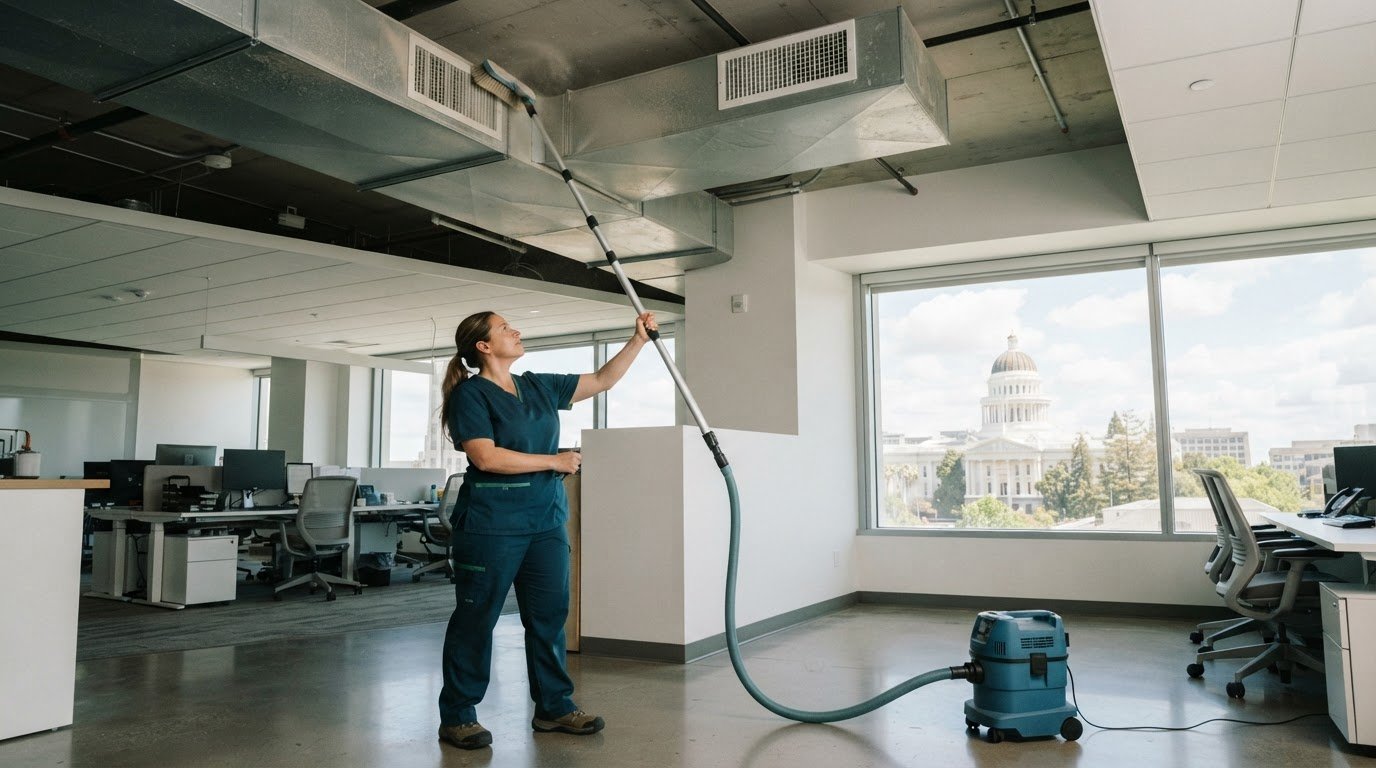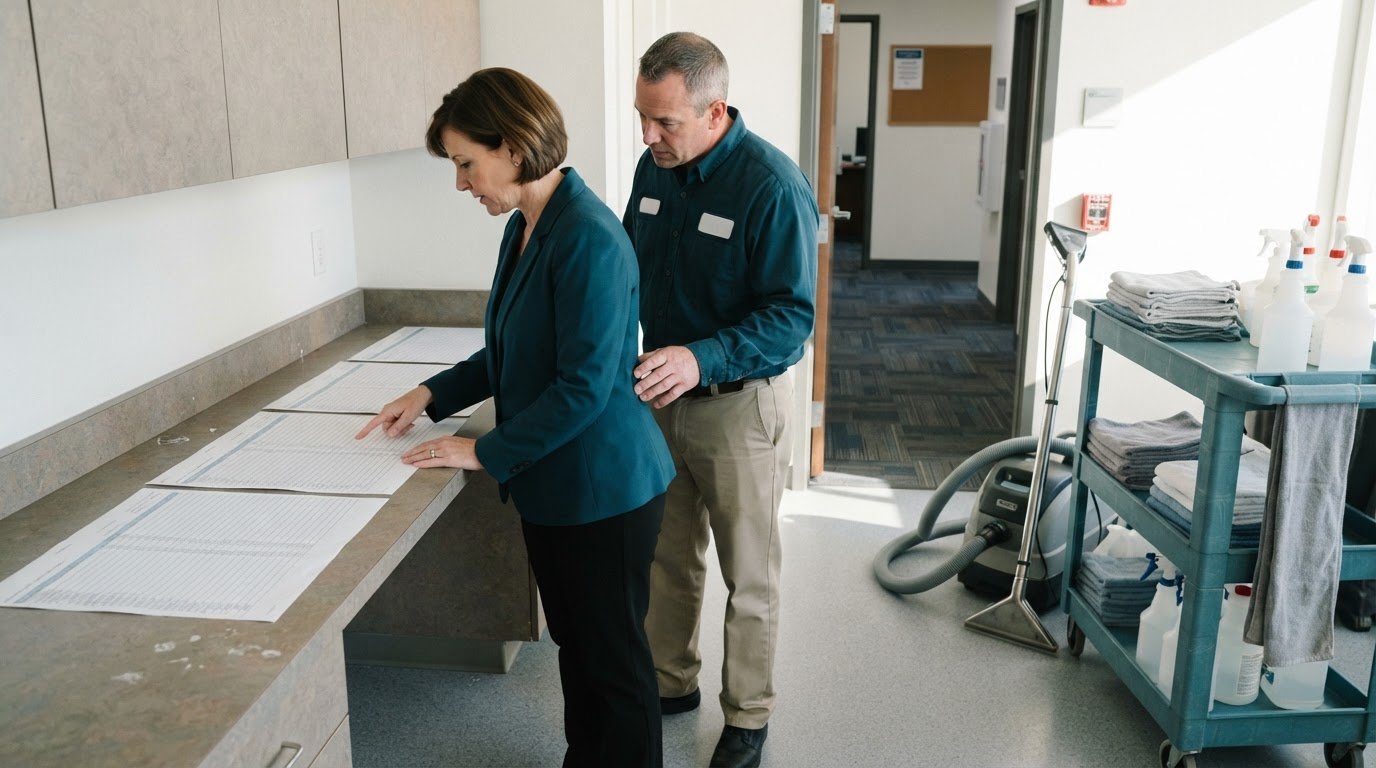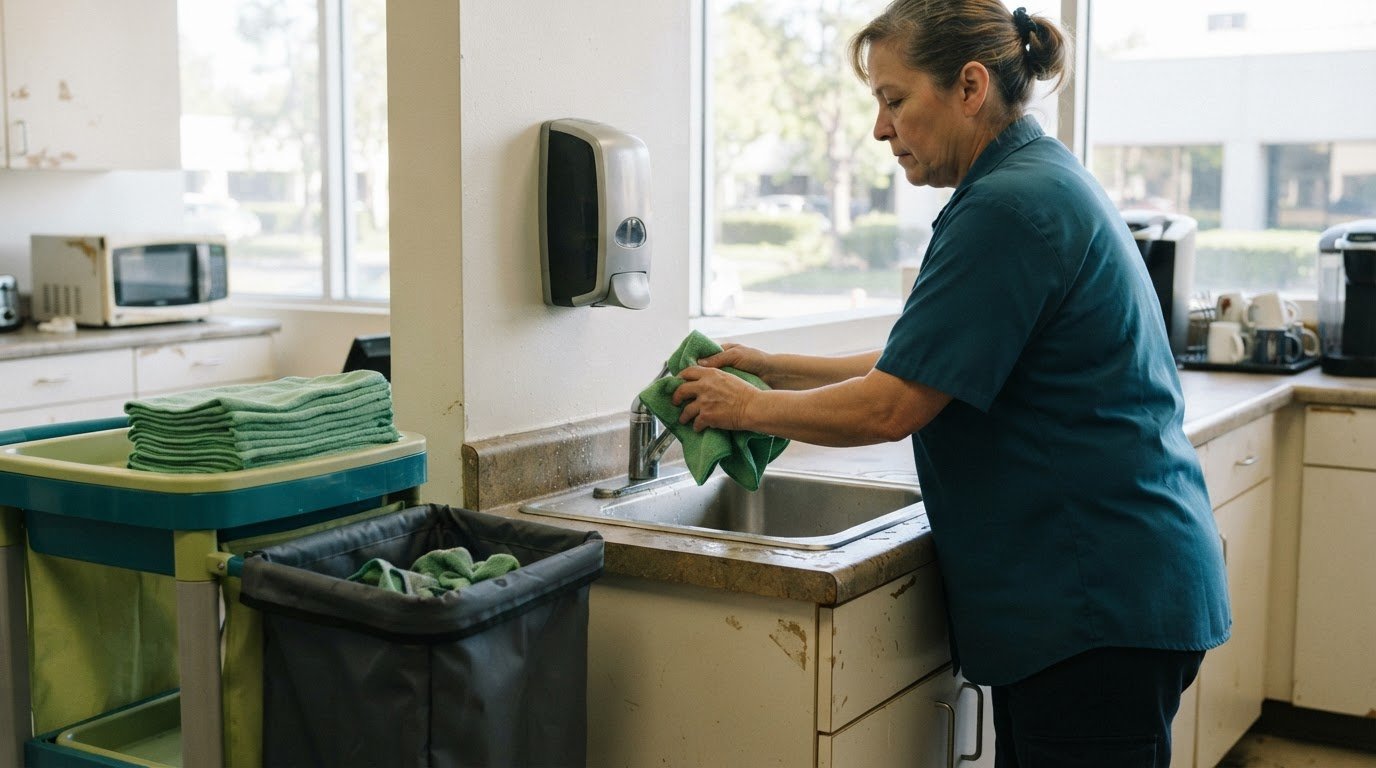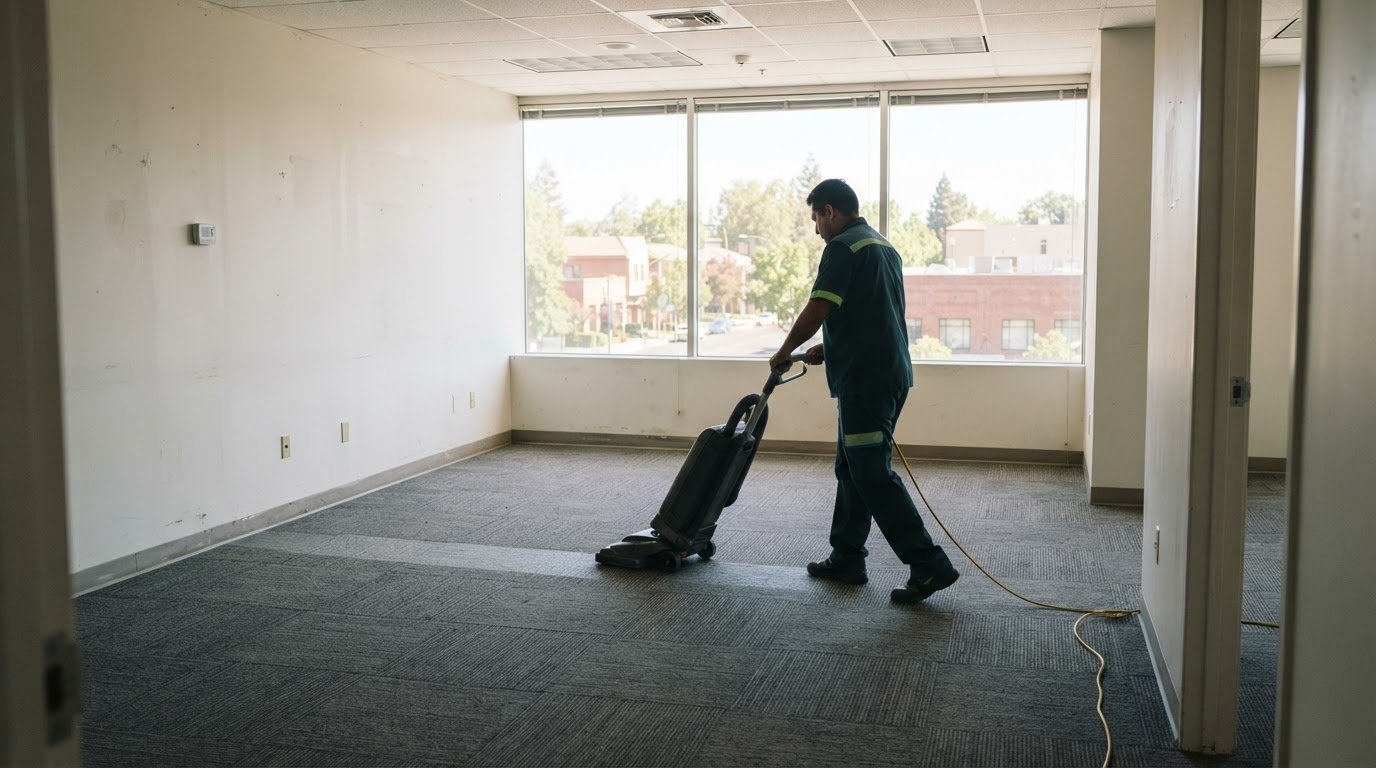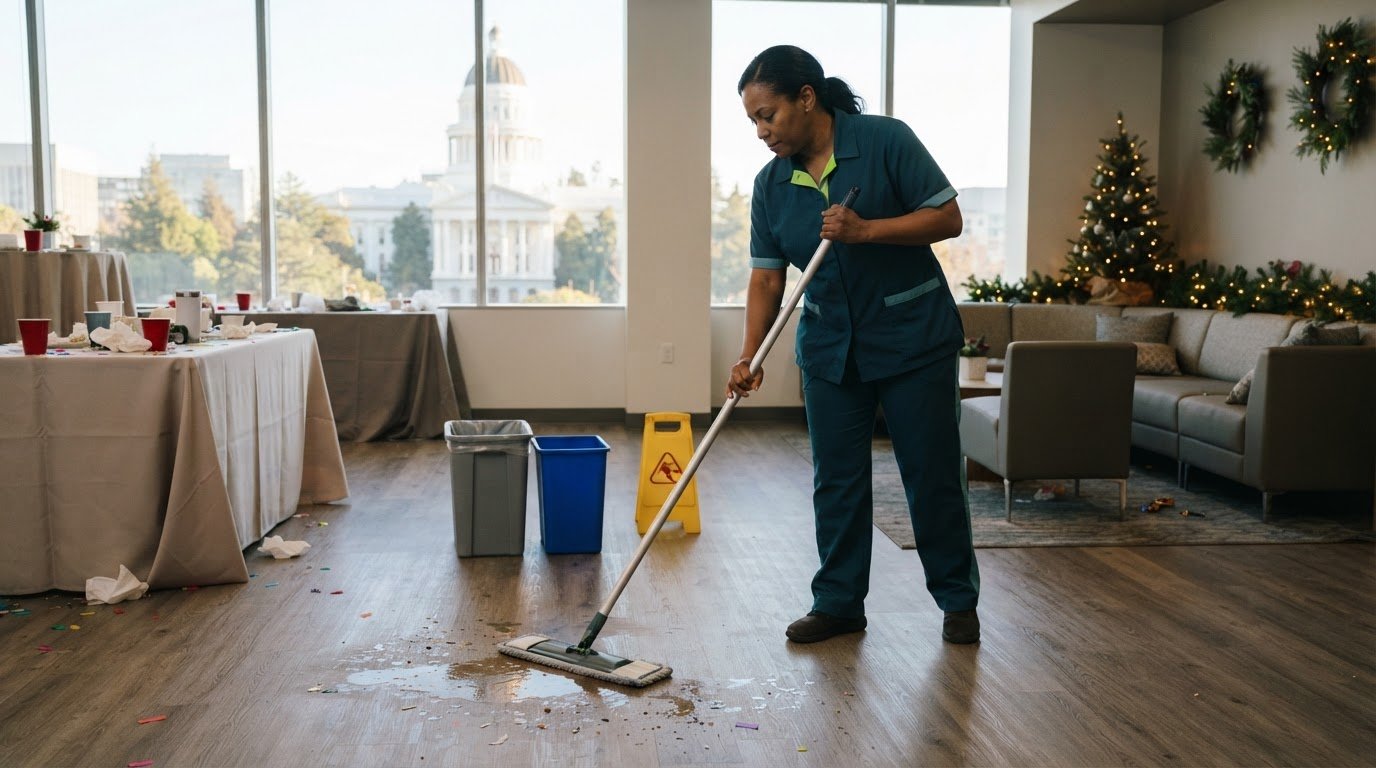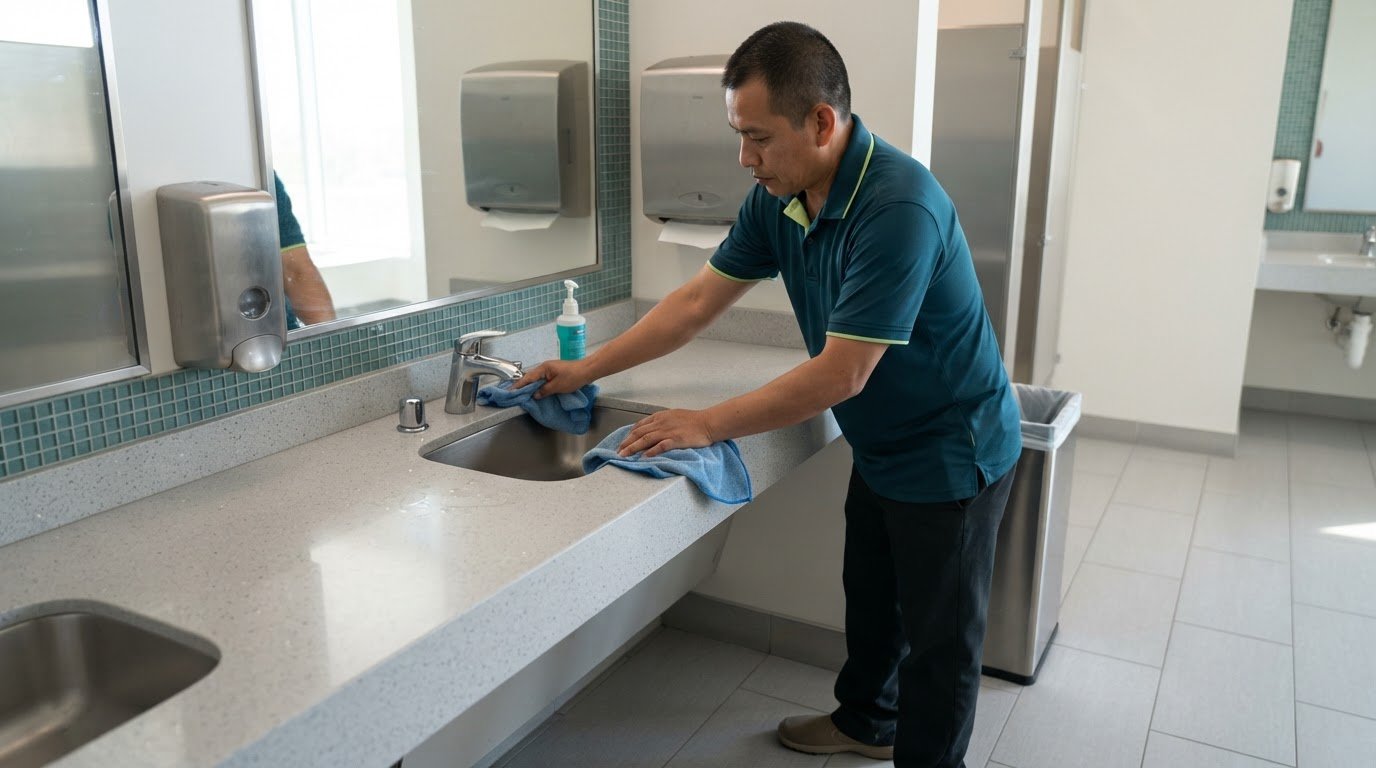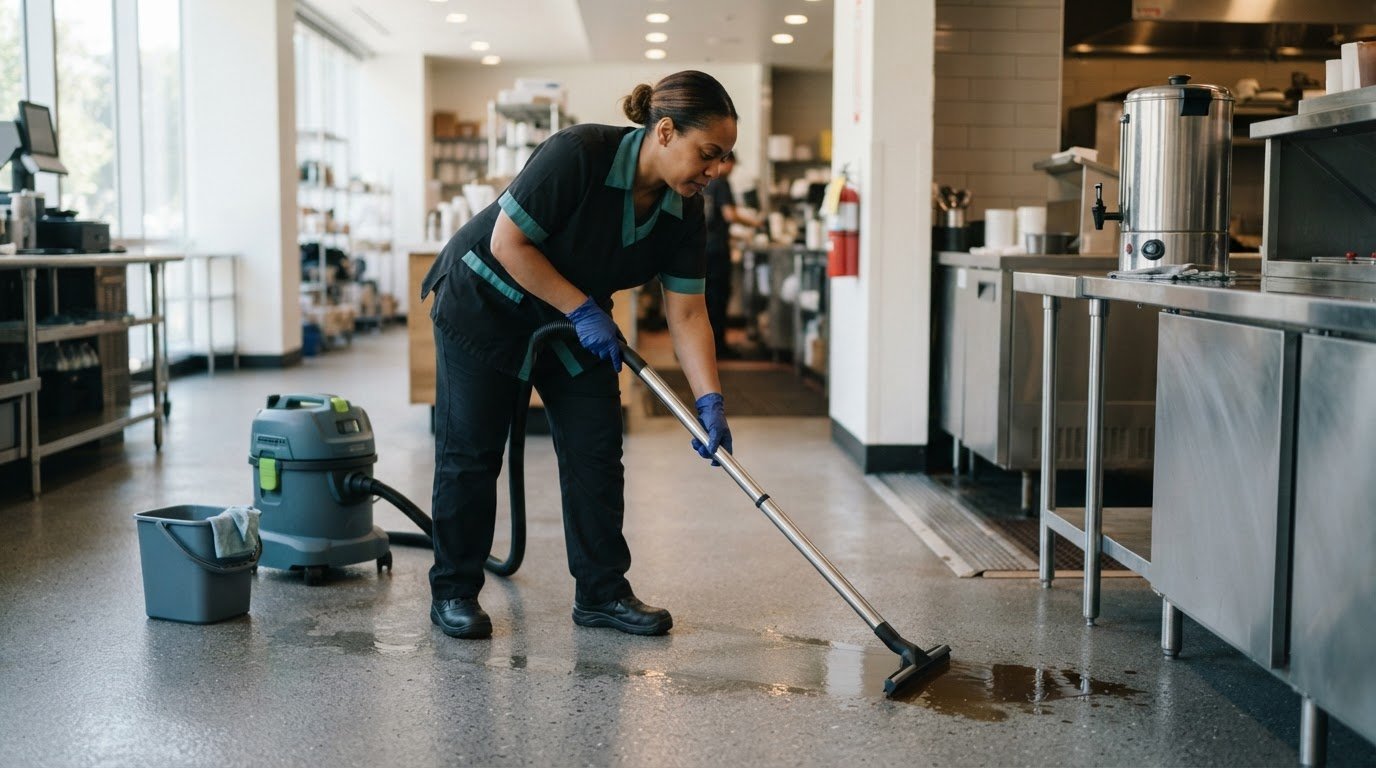


A clean ESD floor helps manage static as well as maintain a tidy workspace. Anti-static floor cleaning services should remove soil without compromising the floor’s ability to dissipate static energy, using products suited to the installed surface.
Hard floors may seem simple to clean, but ESD surfaces need more care than a routine mop and general-purpose cleaner. Electrostatic discharge is a sudden flow of electricity between charged objects or surfaces. Anti-static flooring is designed to help manage that discharge and reduce the risk of damage to electronic devices.
This guide explains how to care for hard-surface ESD floors: remove loose soil first, damp mop with a pH-neutral cleaner made for ESD flooring, and avoid harsh products that could harm the surface. It also covers what inspections can reveal about wear and damage, how cleaning fits into ongoing floor care, and when professional floor restoration and protection can help maintain a clean, orderly workplace.
Key Takeaways
- Understand how electrostatic discharge occurs and how anti-static flooring helps manage static energy around electronic equipment.
- Recognize that ESD floors can use different materials, so cleaning products and methods need to suit the specific surface.
- Learn which signs, including scuffs, fading, and lifting edges, can point to wear that needs attention.
- See how floor type and cleaning method affect product coverage, and why coverage information should be interpreted for the specific surface.
- Find out how routine maintenance and suitable floor restoration can support a clean, well-maintained workplace.
Electrostatic discharge and anti-static flooring
Electrostatic discharge, or ESD, is a sudden flow of electricity when a charged object contacts another surface. Though brief, this transfer can damage sensitive electronic devices. An anti-static floor is designed to help manage how electrical charge moves across the floor and between locations, reducing the risk of discharge.
ESD flooring is not a single material or electrical category. It may be static dissipative or conductive, with either type intended to help control static energy. Conductive flooring provides a path for charge to move away; static-dissipative flooring manages that movement more gradually. The right approach depends on the workspace and the installed floor system.
The material matters, too. ESD floors can be made from carpet, rubber, or vinyl, and each surface responds differently to soil, moisture, and cleaning products. Vinyl, for example, may need a different care method from carpeted ESD flooring. Choosing products suited to the material helps protect the floor’s intended performance.
Data centers need attention to the surrounding environment as well as the flooring. Operators should aim to keep relative humidity around 50 percent to help reduce excess static. Routine maintenance also helps limit dust, which can contribute to static discharges. A consistent schedule can include floor cleaning and inspections; daily facility cleaning can help keep these tasks organized.
Inspections offer a practical way to spot changes before they become larger problems. Look for scuff marks, fading, and lifting edges, which may indicate wear or damage that needs attention. Regular checks can help catch small issues early. Follow the flooring manufacturer’s instructions when repairs are needed.
Floor selection matters as well. The National Institute of Standards and Technology (NIST) says flooring should be suitable for wet cleaning and that an electrically conductive floor is preferred to prevent static charge. This guidance links floor design with maintenance: the surface must support both its electrical purpose and a workable cleaning routine.
In practice, anti-static floor cleaning services must protect a floor’s function, not just improve its appearance. In facilities with electronics, a suitable floor, controlled environmental conditions, and consistent care work together. Reviewing the material, watching for wear, and maintaining a routine give facility teams a clearer basis for managing static-related risks.
Cleaning anti-static flooring
Cleaning ESD flooring means removing soil while protecting its intended electrical performance. The right routine depends on the floor material, cleaning product, and facility conditions.
Service Inclusions and Cleaning Steps
A careful cleaning service begins by identifying the floor type and selecting a cleaner made for that surface. Staff remove loose dirt before damp mopping, then follow the product directions for drying or rinsing. The work can include edges and corners, where soil collects. A clear service plan describes these steps and avoids harsh products.
The price per square foot depends on the case and is given after a quote request. Floor material, soil level, and the work required shape the scope.
Cleaning Frequency
ESD floors need routine maintenance to limit dust and soil. Give corners and edges particular attention during weekly cleaning, since dirt tends to collect there. Set the day-to-day schedule according to how quickly the floor gets dirty and how the space is used. Consistent care keeps buildup from becoming harder to remove.
Safety Standards for ESD Floor Care
For ESD floor care in the United States, NIST says flooring should be suitable for wet cleaning and that an electrically conductive floor is preferred to prevent static charge. Cleaning products should also suit the specific floor type. Follow the manufacturer’s instructions for repairs, and avoid products that may harm the floor’s conductive qualities.
Harsh or unsuitable ordinary cleaners can damage anti-static flooring or reduce its conductivity. Avoid strong acids, which can remove conductive qualities, and choose a product designed for the specific ESD surface. For deeper cleaning, use a pH-neutral cleaner made for ESD flooring.
After cleaning, professionals can assess electrical resistance and compare the results with the floor’s specified ESD performance. The test method and acceptable range depend on the flooring system. Visual inspection alone cannot establish electrical resistance, so assessment requires appropriate measurements.
To compare service plans, look for clear details on floor identification, product selection, soil removal, mopping, and attention to edges. The plan should also explain how the flooring manufacturer’s care instructions are followed. For a facility-specific cleaning plan, discuss your floor care needs.
Cleaning hard-surface ESD floors
Hard-surface ESD care follows a controlled sequence: remove grit, clean without damaging the finish, and leave the surface ready for use. Both the floor material and cleaning product matter.
Anti-static cleaning removes soil from the surface. ESD floor maintenance is broader: it also protects the floor’s electrical properties and includes routine inspections for wear or damage. Cleaning is one part of keeping the flooring in working condition.
For static-dissipative and conductive floors, choose a cleaner made for the specific ESD floor type. A pH-neutral cleaner designed for ESD flooring is suitable for deeper cleaning. Avoid harsh products, including strong acids, because they can damage the surface or remove conductive qualities.
Prepare hard-surface flooring before applying water. Sweep or vacuum first to remove loose dirt and grit that could be dragged across the finish. A microfiber mop can lift grime while helping prevent scratches. Use a damp mop rather than saturating the surface, and follow the cleaner’s directions.
- Remove loose soil by sweeping or vacuuming the floor.
- Apply an ESD-compatible cleaning solution with a damp mop.
- Give corners and edges attention, especially during weekly cleaning, because dirt collects there.
- Allow the cleaned surface to dry according to the product directions.
For daily-use ElectraClean solution, the stated procedure is to damp mop and let the floor dry without rinsing. Follow this no-rinse step only with the specified solution; other products may have different directions. Following the relevant instructions helps prevent residue or practices that could affect the floor.
Some sweeping compounds leave deposits. The U.S. Chemical Safety and Hazard Investigation Board advises against wax-containing sweeping compounds on conductive floors when the wax can reduce conductivity. A product that gathers dust may still leave material that interferes with the floor’s intended function.
After cleaning, inspect the surface for remaining soil, scuffs, fading, or lifting edges. These signs may indicate wear or damage rather than a simple cleaning issue. Follow the flooring manufacturer’s instructions for repairs. Regular maintenance supports the floor’s conductive qualities, while products suited to the installed material help keep routine care consistent.
Anti-static floor cleaners are designed to clean ESD mats and surfaces while minimizing static electricity buildup. This makes them relevant to routine soil removal, but the product must still suit the installed hard-surface floor. Keep the care sequence consistent: remove loose particles before damp mopping, use the cleaner as directed, and allow the surface to dry as instructed. An anti-static cleaner is one part of care, not a substitute for checking the floor’s condition. If cleaning reveals scuffs, fading, or lifted edges, follow the flooring manufacturer’s repair instructions rather than using stronger products or excess moisture. This measured approach helps distinguish routine cleaning from maintenance of the floor’s electrical properties.
Hard-surface floor coverage
Coverage estimates help facility teams plan cleaning solution for an ESD floor without confusing treated area with product volume. For hard surfaces, use the coverage rate and dilution instructions stated for the specific cleaner. A rate for another material is not a reliable substitute.
One available benchmark applies to carpet, not hard flooring: office-grade, thin-pile, glued-down ESD carpet typically covers approximately 150 square feet per gallon of diluted product. That figure should not be used to estimate solution for vinyl or rubber. Different surface materials and application methods can change how much product a job requires.
Start with the hard-surface product label, which provides the applicable coverage information and dilution directions. Measure the floor area to be treated and compare it with the stated rate. If coverage is given per gallon of diluted solution, use that unit in the calculation, not coverage per gallon of concentrate.
- Identify the surface material, such as vinyl or rubber.
- Measure the area included in the cleaning task.
- Find the cleaner’s stated coverage and dilution directions.
- Estimate diluted solution needed from the measured area and product rate.
For example, if a product label gives coverage per gallon of diluted solution, base the estimate on the measured floor area and that rate. Follow the listed dilution ratio when preparing the product. Changing the concentration does not make one product’s labeled coverage rate interchangeable with another’s.
Application equipment matters, too. A damp mop and an extraction machine apply solution differently, so a rate intended for one method may not suit the other. For ESD carpet extraction, follow the cleaning equipment manufacturer’s directions. On hard surfaces, use the cleaner’s instructions for the specified application method rather than applying carpet-extraction guidance.
Keep estimates tied to the actual cleaning scope. A room’s total floor area may include sections excluded from the job, while corners and edges still need attention. Record the surface, measured area, product, dilution, and application method. These details make later estimates easier to compare and give staff a consistent basis for repeat cleaning tasks.
Coverage is a planning guide, not a reason to overapply solution. Use the rate and method specified for the exact cleaner and floor type. If a facility is considering changes to its ESD surface or protective treatment, floor restoration and protection should account for the flooring material and its electrical function.
What do anti-static floor cleaning services include?
A sound cleaning plan begins by identifying the ESD floor material and work area. Vinyl, rubber, and carpet have different cleaning needs, so the surface type guides product selection and method. The scope should distinguish routine soil removal from deeper cleaning or repairs, which must follow the flooring manufacturer’s instructions.
For hard surfaces, the basic sequence is straightforward: remove loose soil, damp mop with a cleaner made for ESD flooring, then follow its directions for drying. A microfiber mop can lift dirt and grime while reducing the risk of scratches. Avoid strong acids and harsh cleaners because they may damage the surface or affect its conductive qualities.
Routine care should include areas where soil collects first. Weekly attention to corners and edges helps address buildup beyond the open floor area. In data centers, routine maintenance can help manage dust and static-discharge risks. Set the cleaning schedule according to how quickly the floor becomes soiled.
- Identify the floor material and the cleaning product suited to it.
- Remove loose dirt before damp mopping hard surfaces.
- Focus weekly cleaning on corners and edges.
- Inspect for scuffs, fading, and lifting edges.
Inspection gives cleaning teams a practical way to notice changes in the floor’s condition. Scuff marks, fading, or lifting edges can signal wear or damage. Small issues may become more serious if left unattended, so follow the manufacturer’s instructions for repairs. Cleaning and inspection work together, but neither replaces a needed repair.
Coverage planning depends on both the floor material and the product label. The approximate rate of 150 square feet per gallon of diluted product applies to office-grade, thin-pile, glued-down ESD carpet. It is not a rate for hard-surface flooring. For carpet extraction, the cleaning equipment manufacturer’s directions guide the process.
In short, anti-static floor cleaning services can include cleaning suited to the surface, attention to soil-prone areas, and checks for visible wear. The method depends on the installed surface and product directions. A clear scope identifies what gets cleaned, which areas need extra attention, and how damage is handled.
For a workplace with ESD flooring, discuss a floor-care plan that accounts for the surface material and routine maintenance needs.
A service scope can also include staff training on ESD floor care. That training can include workshops about why safe cleaning matters and which procedures to follow. The workshop content can address both the importance of safe cleaning and the procedures staff should follow when caring for ESD flooring. When discussing a floor-care plan, clarify whether staff training is included and whether it takes the form of workshops. This helps define the training component alongside the cleaning and inspection work, without treating training as a substitute for cleaning or repair.
Training can focus on why safe cleaning matters and which procedures to follow. Workshops can cover the rationale for safe cleaning and the procedures relevant to ESD floor care. Including training in the service scope clarifies how the plan addresses staff practices as well as the floor itself.
Cleanit Maintenance Systems: Pressure Washing Service
Cleanit Maintenance Systems helps Sacramento workplaces maintain clean, orderly facilities through commercial cleaning and floor care. Its Pressure Washing Service is suited to appropriate exterior surfaces, while ESD flooring requires the surface-specific cleaning methods described above. Pressure washing is not a method for cleaning indoor ESD floors.
For commercial floors showing wear, Floor Restoration & Protection may be a relevant next step. The right approach depends on the flooring material and surface condition, particularly when the floor has an electrical function. Commercial Janitorial and Office Cleaning can support broader workplace upkeep alongside appropriate floor care.
If you’re planning maintenance for a commercial space, contact Cleanit Maintenance Systems to discuss your cleaning needs.
Build ESD floor care into your facility plan
Make floor care a defined part of facility operations, with clear responsibility for routine cleaning, inspections, and responding to visible wear. A written process helps staff apply consistent, floor-specific practices as responsibilities shift. Keep it aligned with the flooring manufacturer’s instructions rather than relying on a general hard-floor checklist.
Anti-static floor cleaning services work best as part of a broader maintenance plan, while ESD care remains distinct from general cleaning tasks. Cleanit Maintenance Systems provides Commercial Janitorial, Office Cleaning, and Daily Cleaning Services to support workplace upkeep. The ESD floor’s material and care requirements should guide its cleaning routine.
For a considered next step, contact Cleanit Maintenance Systems to discuss your facility’s cleaning needs. A clear plan can help your team keep routine care consistent and make floor maintenance easier to manage.
Frequently Asked Questions
What is Anti-Static Floor Care and Do You Need It?
Anti-static floor care is a maintenance approach for flooring designed to manage static in spaces with sensitive electronics. It is relevant in Sacramento work areas where equipment is assembled, tested, repaired, or routinely handled. If your facility has ESD flooring, general-purpose products may not suit its surface or intended function. Match the cleaning routine to the floor material and the activity in the space.
How do I find and compare anti-static floor cleaning companies near me?
Compare service plans by looking for clear details on floor identification, product selection, soil removal, mopping, and attention to edges. Confirm that the plan follows the flooring manufacturer’s care instructions.