Routine handoffs can carry contaminants from one part of a workplace to another. A contaminated hand, tool, garment, or shared surface can transfer harmful bacteria to coworkers and places such as offices, restrooms, and break rooms. Avoiding cross-contamination in the workplace means interrupting those transfers through clear separation, consistent hygiene, and careful cleaning.
It’s easy to focus on visible dirt, but contamination can also spread through everyday contact with shared equipment, clothing, footwear, and personal items. A practical response is a consistent system: keep clean and contaminated items apart, wash hands at key moments, and use cleaning tools and methods that limit transfer between areas.
This article explains five ways cross-contamination occurs at work and how to reduce its effects on health and operations. You’ll learn how workplace layout, hand hygiene, cleaning practices, and employee routines can work together to keep shared spaces safer and consistently maintained.
Key Takeaways
- Trace how hands, clothing, shared tools, and surfaces can carry contaminants from one work area to another.
- Use clear separation between clean and contaminated zones, equipment, and supplies to limit transfer.
- Build handwashing and appropriate sanitizer use into everyday workplace routines.
- Follow a deliberate cleaning sequence, moving from cleaner areas toward dirtier ones and avoiding tool reuse between zones.
- Recognize how contamination can affect health, daily operations, and trust in a workplace’s hygiene practices.
1. How Does Cross Contamination Occur at Work?
Cross-contamination occurs when harmful bacteria move between people, objects, or places. A worker can carry contaminants on their hands, clothing, shoes, tools, or protective equipment. Touching a shared keyboard after handling contaminated equipment can transfer them to another surface. Coworkers may then carry them into offices, restrooms, or break rooms. Bacteria and viruses are not the only concern: work areas can also involve chemicals or biological materials.
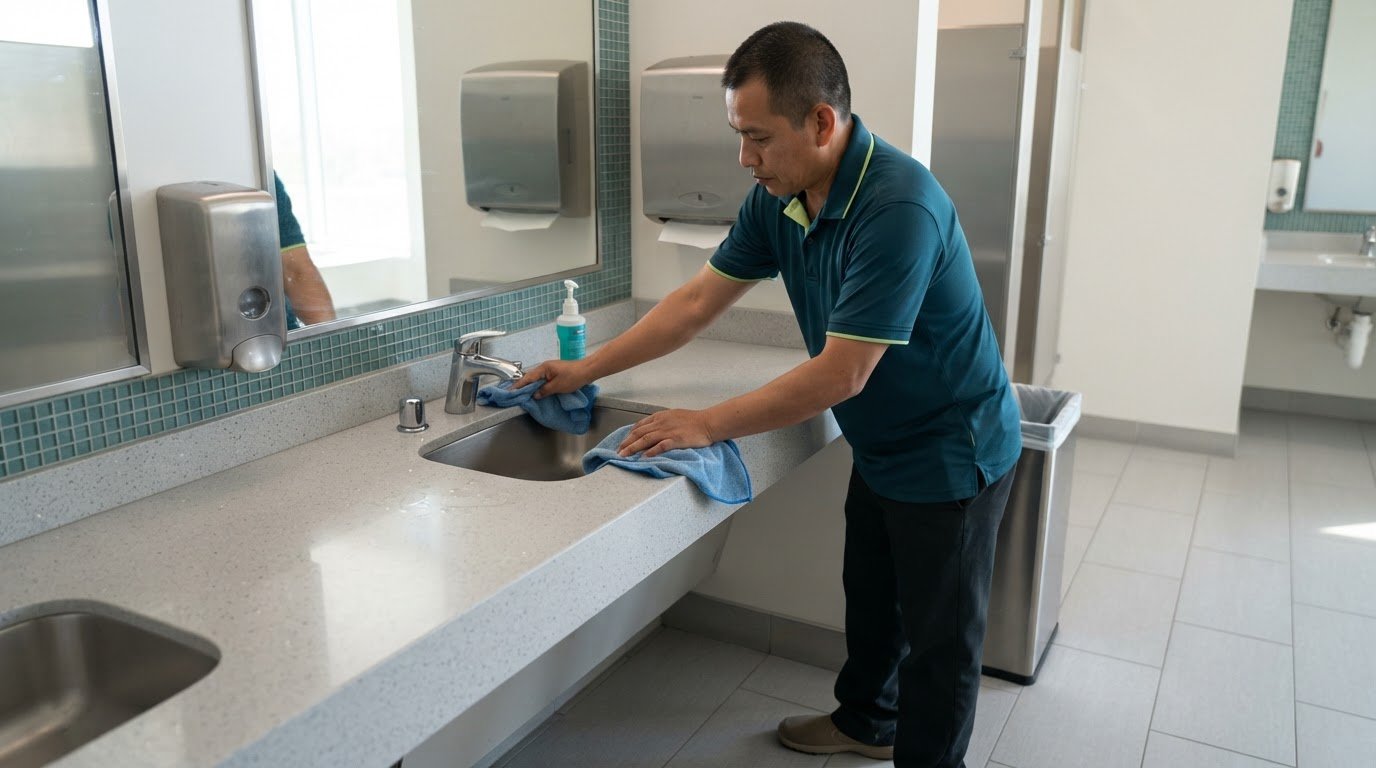
Cleaning order matters. Start with higher surfaces, such as shelves and desk edges, then move down to counters and floors. This prevents dust or debris from landing on areas already cleaned. Work from cleaner spaces toward dirtier ones; in a restroom, clean the sink before the toilet. Replace or discard cloths and mop heads after cleaning dirtier areas, and change gloves between zones. Color-coded cloths can help keep restroom tools separate from those used on desks.
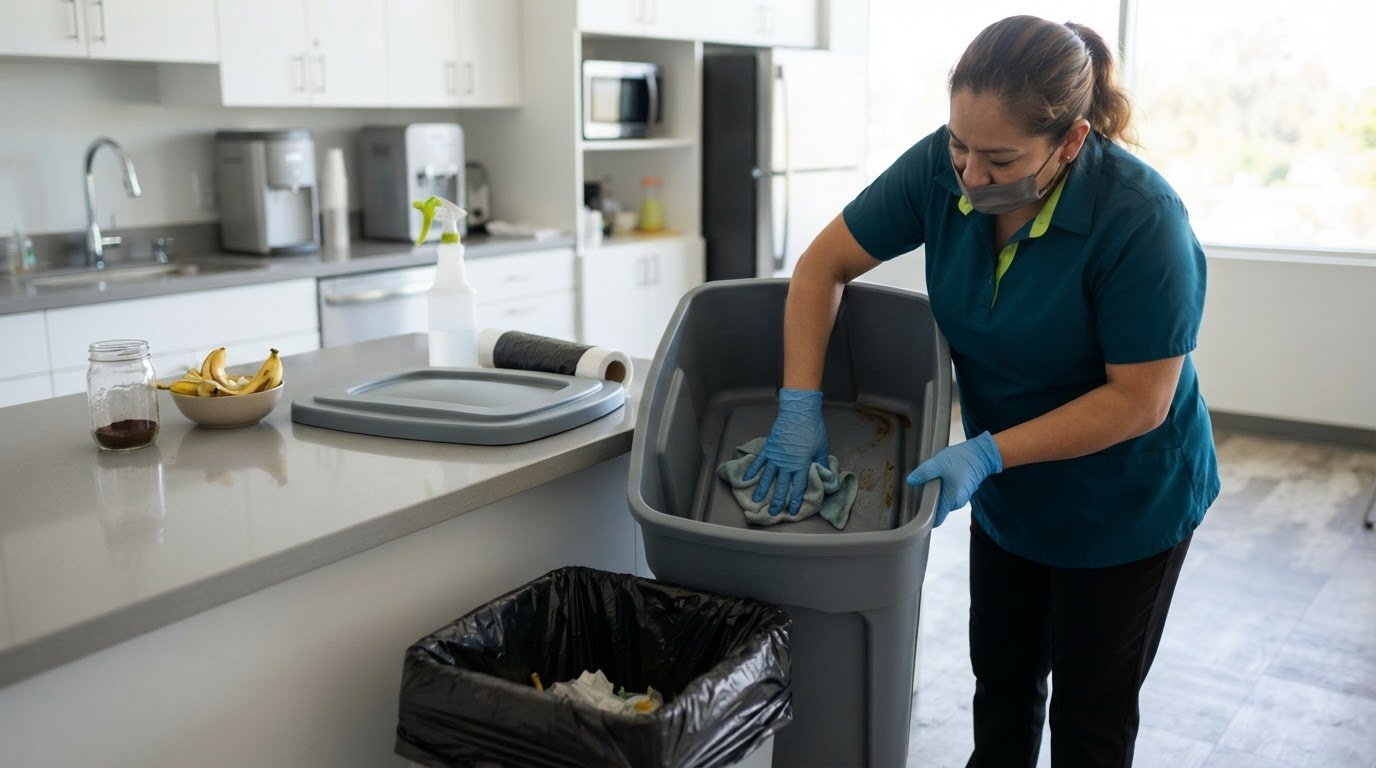
Shared electronics need a routine of their own. Clean and disinfect workplace keyboards, phones, and other shared electronics daily, following the device and product instructions. Apply disinfectant as directed, including its stated contact time, rather than wiping it away immediately. Training should show employees how germs transfer, which products suit each surface, and how to apply them safely. For example, a worker should know not to reuse a restroom cloth on a break-room table. Clear procedures make daily office cleaning routines more consistent.
To reduce transfer in shared work areas, keep clean and contaminated tools separate, clean from top to bottom and from cleaner to dirtier areas, and change tools between zones. Clean shared electronics regularly, and avoid sharing personal items such as pens or utensils. These practices reduce the chance that contaminants move from one surface to another.
For food, chemicals, or biological materials, keep contaminated work areas and equipment apart from clean areas, and clean equipment before removing it when required. After raw food contact, clean and, when needed, sanitize food-contact surfaces, utensils, and equipment. Separate boards for raw ingredients and ready-to-eat food help limit transfer that can contribute to foodborne illness. Train workers to follow the cleaning method appropriate to their work area.
How much do workplace cleaning and contamination-control supplies cost? The cost depends on product types, quantities, and workplace needs; service pricing is provided after a quote request. Professional commercial cleaning services can support consistent sequences, tool changes, and surface care, especially when shared areas need regular attention.
2. Facility layout and physical separation
A workplace layout can either interrupt contamination or give it an easy route. Set clear boundaries between clean spaces and areas where contaminants are present. Keep clean supplies away from used tools, and store contaminated materials separately until they can be handled appropriately. In a shared workroom, designate separate storage for clean equipment and tools returning from a task. This reduces accidental contact during busy shifts.
Physical separation works best when daily traffic follows it. Place handwashing supplies and protective equipment near work-zone entrances, and keep break areas outside contaminated zones. Gloves, safety glasses, respirators, coveralls, and boots can help reduce exposure to workplace chemicals and other contaminants. Workers should remove or decontaminate PPE before leaving a work zone, following established procedures. Avoid carrying contaminated equipment through clean rooms when it can be cleaned before removal.
Color-coded supplies make boundaries easier to recognize. Assign cloths or tools to specific zones and keep them within those areas. For example, red cloths can be reserved for restrooms and blue cloths for desks. A simple color key helps employees choose the right equipment without relying on memory. Clean or replace tools according to the area and task, rather than moving a used cloth from a restroom to a shared kitchen.
Food handling needs its own separation plan. At a grocery store, keep raw meat, poultry, and seafood apart from other foods in the cart and bags. In a workplace kitchen, store raw items below ready-to-eat foods so juices cannot drip onto them. Use separate boards for raw animal proteins and produce, bread, or other foods. The U.S. Department of Agriculture recommends one cutting board only for animal proteins and a separate board for fruits, vegetables, and bread. Never place cooked food on a plate or board that held raw food.
Apply the same separation in shared refrigerators and food preparation areas. Label shelves or containers by use, place sealed raw ingredients where they cannot leak onto ready-to-eat food, and clean surfaces between tasks. These boundaries reduce opportunities for contamination to spread during handling. They also help teams see where equipment belongs and which surfaces need cleaning before the next task.
When a facility’s zones or cleaning routines need a clearer structure, discuss a workplace cleaning plan suited to its shared spaces.
Where possible, use one cutting board for fresh produce and a separate board for raw meat, poultry, and seafood. Keep contaminated tools and equipment separate from clean equipment. Using the same knife for raw chicken and vegetables is one example of cross-contamination in food handling. At the grocery store, shoppers should keep raw meat, poultry, and seafood separate from other foods in the cart.
Food businesses should physically or temporarily separate raw and unprocessed food from processed food. If raw and ready-to-eat products share a refrigerator, store ready-to-eat food above raw food.
3. Handwashing and hand sanitizer
Hands can carry bacteria from a contaminated surface to a coworker, shared tool, or break-room table. A reliable hygiene routine interrupts that transfer at key moments: after using the restroom, before eating, after handling materials, and before leaving a work zone. Soap, running water, and an accessible place to wash make the routine practical during a busy shift.
Technique matters as much as timing. People handling food should scrub their hands with warm water and soap for 20 seconds before, during and after handling food, according to the Centers for Disease Control and Prevention. This helps support food safety when workers move between raw ingredients, utensils, and ready-to-eat food. Handwashing is especially important after touching raw food or contaminated equipment, and before returning to food preparation.
Make handwashing supplies easy to reach. Provide enough soap and paper towels in restrooms and break rooms, and post handwashing signs near sinks. Hand sanitizer stations at workplace entrances, exits, and common areas give employees another convenient option. Alcohol-based hand sanitizer can supplement washing when soap and water aren’t available, but it doesn’t replace handwashing when a procedure requires soap and water.
Work-zone procedures matter, too. Employees handling hazardous materials should wash their hands and exposed skin after contact and before eating, drinking, smoking, or leaving the area. Workers should remove or decontaminate PPE and wash their hands before exiting a work zone. If a changing facility is provided, use it to separate work clothing and equipment from clean items. These steps limit the chance of carrying contaminants into offices, vehicles, or shared spaces.
Training turns posted rules into consistent practices. Explain when employees must wash, how to scrub all hand surfaces, where supplies are located, and which procedures apply to food handling or specific work materials. A practical demonstration at a sink can show employees how to clean between fingers, around nails, and across the backs of their hands. Reinforce the routine with reminders near handwashing stations and by keeping soap and towels available.
Hand sanitizer placement should support the flow of work, not replace handwashing. Put dispensers where employees enter common areas or move between work zones, so they’re visible at transition points. In food preparation areas, maintain access to sinks for required washing. Pair those facilities with clear signage and established hygiene protocols, then reinforce expectations through training. Convenient access, clear instructions, and timely handwashing help prevent contaminated hands from spreading bacteria across shared workplace surfaces.
4. Health, productivity, legal, and reputational impacts
Cross-contamination can expose people through contact with soiled surfaces or contaminated food and drink. Harmful bacteria or chemicals may move from a work surface to hands, then to shared utensils, break-room tables, or personal items. In food settings, preventing transfer helps reduce the risk of foodborne illness. In other workplaces, contaminated materials can affect workers handling equipment, clothing, or surfaces during routine tasks.
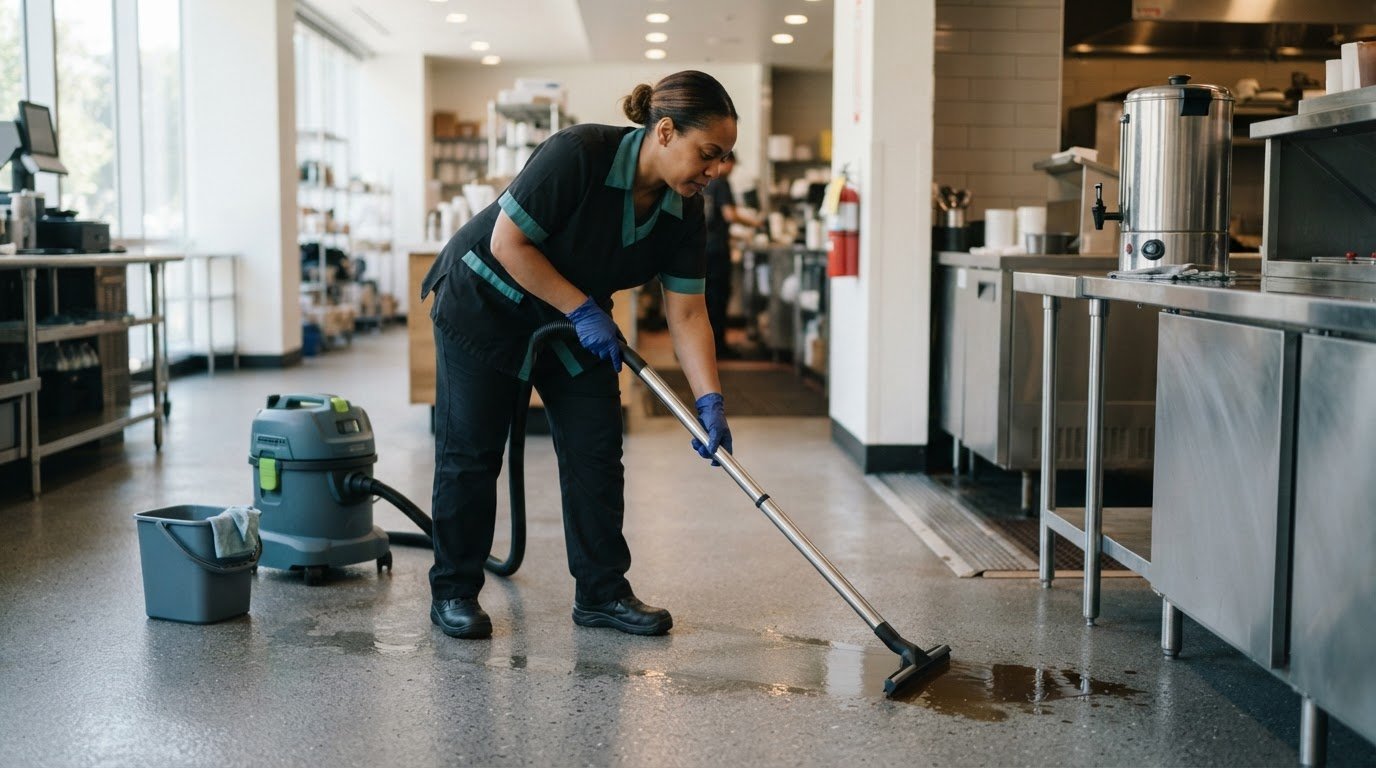
The effects can extend into daily operations. If a contaminated tool reaches a clean production step, work may need to pause while teams separate affected materials, clean equipment, and restore the work area. A clear sequence lowers this risk: handle raw or unprocessed materials first, then move to processed or ready-to-eat work after cleanup. When equipment is shared across tasks, schedule those tasks separately or clean and sanitize the equipment before changing its use.
Food preparation offers a practical example. Wash fresh fruits and vegetables under running tap water to remove visible dirt and grime. Clean cutting boards, dishes, and countertops with hot, soapy water after preparing each item and before handling the next. Keep raw ingredients apart from cooked food, and use a clean plate for serving. These steps help prevent juices or residue from reaching food that won’t be prepared further.
Legal responsibilities depend on the workplace, task, and materials involved, so OSHA and FDA rules are not interchangeable. In food businesses, food-contact surfaces, utensils, equipment, fixtures, and fittings need cleaning and, when necessary, sanitizing after contact with raw foods. Work involving chemicals or biological materials calls for procedures suited to those hazards, including separation of contaminated and clean areas. A written sequence can clarify who cleans equipment and when it can return to service.
Reputation also depends on visible, repeatable procedures. A customer who sees raw-food residue near cooked meals may question how food is handled; an employee who finds contaminated tools among clean supplies may lose confidence in workplace routines. Train staff to report spills, isolate affected materials, and follow the correct cleanup steps before work resumes. Consistent cleaning records can help managers identify missed steps and improve workflow without relying on memory.
In a shared kitchen, prepare fresh produce on a clean surface, then wash utensils and the counter before handling the next food item. In production, schedule tasks to prevent raw materials from crossing into finished-product areas. These practical controls protect people, reduce avoidable interruptions, and support trust in workplace hygiene practices.
5. Common causes of workplace cross-contamination
Contamination often spreads through ordinary handoffs, not a single unusual event. A worker handles a soiled item, then touches a phone, door handle, or shared tool. The next person touches that surface and carries contaminants elsewhere. These small transitions connect different parts of the work environment, even when everyone is focused on completing a task. Avoiding cross-contamination in the workplace starts with identifying where these routine handoffs happen.
Clothing and footwear create another route. A worker may carry residue from a work area into an office, break room, vehicle, or home on shoes or clothing. When tasks involve hazardous materials, follow established procedures for changing, cleaning, and storing workwear. Keep contaminated clothing separate from clean garments, and don’t bring contaminated PPE into living spaces. The right handling method depends on the material and workplace procedures.
Shared objects can spread contaminants between people and workstations. Pens, utensils, phones, keyboards, and equipment pass from hand to hand throughout a shift. If someone touches one after contact with a contaminated surface, the object can become a transfer point. Assigning tools to specific tasks and including shared electronics in cleaning routines helps interrupt that chain. A kitchen pen or shared utensil deserves the same attention as a desk phone.
Workflow can also create preventable contact. Moving a tool from a dirty task into clean production without cleaning it can carry residue forward. In food preparation, using the same surface for raw ingredients and ready-to-eat food can contribute to foodborne illness. Clear task boundaries, separate equipment, and cleanup between activities help prevent cross-contamination. Sanitizing is useful when a surface requires it, but it follows cleaning rather than replacing it.
People’s health and daily habits matter, too. An employee who feels unwell may touch shared surfaces, while contaminated hands can spread material to personal items. Employers can set clear procedures for reporting illness, communicating hygiene expectations, and keeping contaminated items out of shared spaces. Signage near a break-room entrance or a designated place for used PPE can make the next step clear.
Written procedures connect these causes to consistent action. They can identify which tools belong to each task, how workers handle contaminated clothing, and what happens after a spill. Regulations vary by workplace and hazard, so procedures should reflect the materials and work activities present. For teams seeking a more consistent cleaning routine, avoiding cross-contamination in the workplace also means giving shared spaces reliable attention. Contact the cleaning team to discuss the spaces and routines that need attention.
Cleanit Maintenance Systems
Cleanit Maintenance Systems helps workplaces maintain cleaner, more orderly shared environments through commercial janitorial, office cleaning, daily cleaning, and day porter services. These services support businesses that need consistent attention to frequently used areas, including work surfaces, common spaces, restrooms, and break rooms.
When workplace routines leave cleaning tasks uneven or shared areas need ongoing care, professional cleaning can complement employee hygiene procedures. Cleanit Maintenance Systems provides cleaning tailored to facility needs, supporting a consistent approach to cleaner spaces and reducing opportunities for contaminants to move between areas.
Contact Cleanit Maintenance Systems to discuss your workplace cleaning needs.
Make consistent workplace care part of the plan
Reducing contamination works best when prevention is built into everyday operations, rather than left to memory or treated as a one-time reset. Give each task a clear place in the workday, assign responsibility for shared spaces, and adjust routines as teams, traffic, and activities change. That steady approach makes avoiding cross-contamination in the workplace a practical part of maintaining a well-run facility.
Cleanit Maintenance Systems can help businesses put dependable cleaning routines into practice through services tailored to workplace needs. If shared areas require more consistent attention, or existing routines need support, a conversation can help identify a suitable next step without adding pressure to your decision.
Contact Cleanit Maintenance Systems to discuss your workplace cleaning needs and take a considered step toward cleaner, more orderly spaces.
Frequently Asked Questions
How Does Cross Contamination Occur at Work?
Cross-contamination occurs when contaminants move from a person, object, or area to another. A delivery worker might handle a package, then use a shared badge scanner; the next employee can carry residue from the scanner to a desk or personal item. The transfer chain can involve several people and touchpoints, even when no dirt is visible. Tracing how items pass between roles can reveal where controls are needed.
What is workplace cross-contamination, and what are common examples?
Workplace cross-contamination is the unintended transfer of harmful substances between people, surfaces, equipment, or work areas. For example, residue on a glove might reach a shared printer control, or a contaminated tool might be placed beside clean supplies. The source may be biological, chemical, or ordinary dirt, depending on the work environment. The defining feature is movement from one place or item to another.
What are the main health risks of cross-contamination at work?
Health risks depend on the contaminant and how a person encounters it. Harmful microorganisms may contribute to illness, while some workplace substances can irritate skin or create exposure concerns. Contact with a contaminated surface or accidental ingestion through food or drink are possible routes. In a shared workplace, a small transfer can affect people beyond the original task, so prompt reporting and appropriate cleanup matter.
How can employers identify cross-contamination risks in the workplace?
Employers can map how people, tools, materials, and waste move through each task. Observe a normal shift and note where clean supplies meet used equipment, where staff change activities, and which surfaces several roles touch. A simple workflow sketch can reveal overlooked handoffs, such as a shared control panel used by both receiving and preparation teams. Review reports of spills and near misses for recurring patterns.
How should employees wash and sanitize hands to prevent cross-contamination?
Wash with warm water and soap, scrubbing for 20 seconds before, during, and after handling food, according to the Centers for Disease Control and Prevention. At other work transitions, follow the site’s hygiene procedure, especially after contact with contaminated materials. Alcohol-based hand sanitizer can supplement handwashing when soap and water aren’t available. Keep supplies accessible so employees can clean their hands at the point of need.
What training and policies help employees avoid cross-contamination?
Useful training explains how contaminants transfer, which cleaning products apply to each task, and how to handle equipment or materials after use. Employers can reinforce training with written hygiene procedures, clear signs near relevant work areas, and a defined process for reporting spills or feeling unwell. Brief scenario reviews, such as tracing a shared tool through a shift, help employees apply policies to their actual work.