Reliable cleaning results depend on more than completing a task list. A janitorial quality assurance checklist should pair property-specific inspection items with a consistent 1-to-5 scoring scale, clear corrective action thresholds, and performance indicators that show whether standards are being met. Together, these practices make quality easier to assess and recurring issues easier to address.
It’s reasonable to expect cleaning standards to stay consistent across rooms, shifts, and changing building needs. The key is making inspections practical: assess observable conditions, record what needs attention, and follow through on corrections instead of relying on general impressions.
This guide explains what janitorial quality inspections cover, why they matter, how to tailor checklists to different properties, and how to set thresholds for corrective action. It also outlines useful performance indicators to help you assess whether a space meets its standard today and where the process may need adjustment over time.
Key Takeaways
- Organize inspection items by facility area so each space is assessed against observable, relevant standards.
- Set clear expectations for cleaning quality, document missed tasks, and use recurring findings to improve the process.
- Tailor checklists to the property’s needs, and update them as staff feedback and service conditions reveal gaps.
- Connect inspection scores to defined corrective actions so teams know when to adjust, review, or escalate an issue.
- Track performance indicators over time to spot patterns, support accountability, and recognize consistent results.
First: What are janitorial quality control inspections, and why do them?
Janitorial quality control inspections compare visible cleaning results with agreed standards. A scored inspection checklist identifies missed tasks, records where they occurred, and guides follow-up. The goal is practical: make cleaning quality observable and address problems before they become recurring patterns.
Safety and infection-control checks should cover chemical labels, storage, dilution, surface compatibility, protective equipment, and disinfectant dwell times. Inspectors can confirm that the product and method suit the task, then document any concerns for follow-up.
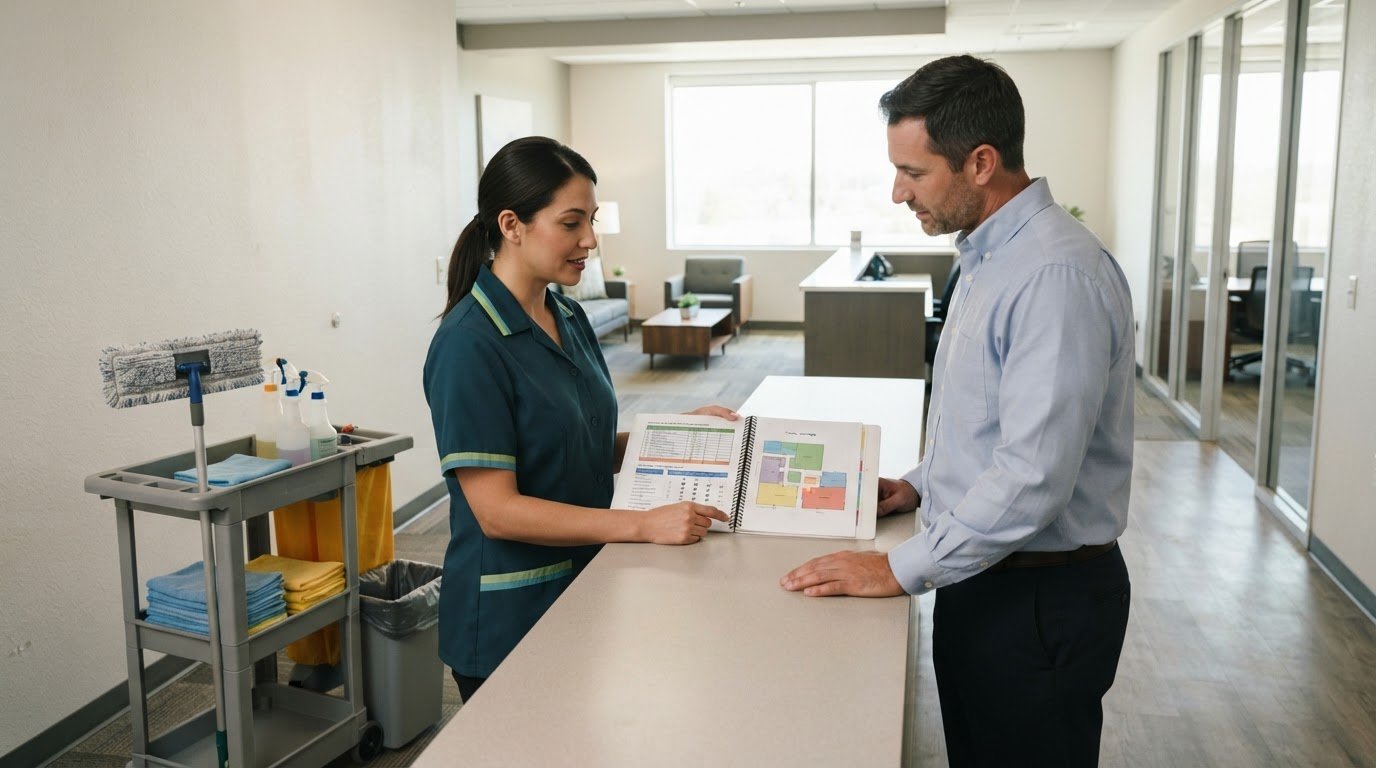
Build the checklist around facility areas rather than one broad impression of the building. List 5 to 10 observable items for each area, so different inspectors can assess the same conditions consistently. For offices, a section might cover desks and shared touchpoints, floors, waste bins, and visible dust.
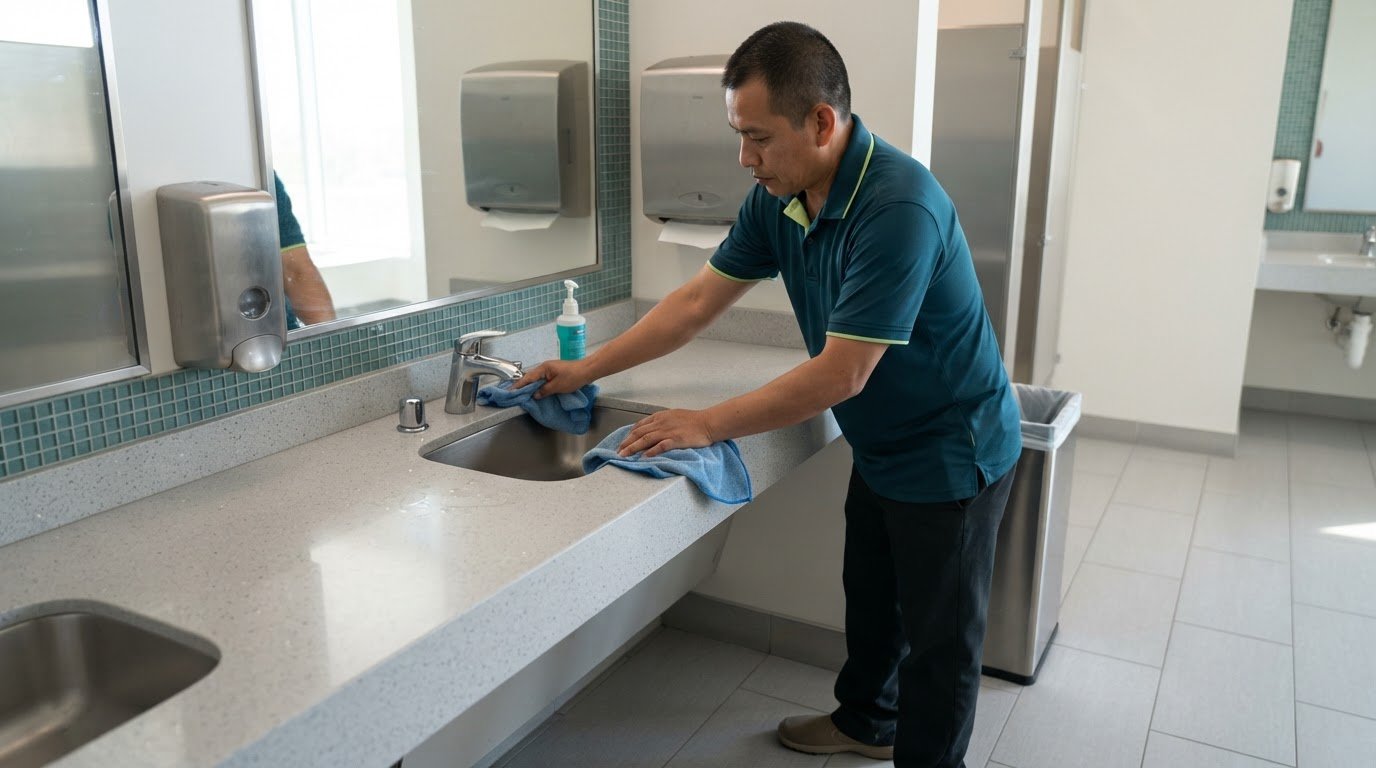
- Restrooms: Check fixtures, touchpoints, floor drying, and paper and soap supplies; these items affect cleanliness and usability.
- Common areas: Inspect entrances, lobbies, and shared surfaces; tracked-in soil and frequent contact can make conditions change quickly.
- Workspaces: Review floors, waste removal, dust, and shared equipment; clear criteria help distinguish completed tasks from missed details.
- Building issues: Record access problems or damaged equipment; these may explain why a cleaning task could not be completed.
Use a consistent scale across those areas. On a 1-to-5 scale, 1 means unacceptable, 2 needs major improvement, 3 meets the minimum standard, 4 is good, and 5 is excellent. A restroom score of 3.0 is the suggested pass score. Define each rating in plain language, so scores reflect observed conditions rather than personal preference.
Inspection frequency should reflect how each zone is used. The scorecard recommends commercial restroom inspections every 2 hours, and healthcare restroom inspections hourly. Office areas are inspected daily after business hours. Common areas are inspected daily, with a midday pass in high-traffic buildings.
Digital scoring can capture the area, rating, time, and notes in one record. Add time-stamped photos when they clarify a missed detail or document a correction. A facility-specific office building cleaning plan can help align inspection areas with the spaces being maintained. Together, defined criteria and clear records make follow-up more precise.
Importance of quality assurance in cleaning services
Quality assurance connects the cleaning scope to results clients can see. A written scope should name each area, the tasks expected there, and their service frequency. For example, an office plan can distinguish daily waste removal from periodic carpet care. Clear boundaries help prevent missed tasks and misunderstandings about what commercial cleaning includes.
Agree on standards and measurement criteria before service begins. Describe outcomes in observable terms, such as a clear walkway, an emptied waste bin, or a stocked dispenser. These examples give inspectors a shared reference point and help clients understand how cleaning quality is assessed.
A practical quality plan can track several distinct measures:
- Scope completion: Record whether each scheduled task was completed, so omissions remain visible.
- Inspection results: Compare scores by area over time to identify a recurring pattern.
- Correction follow-through: Log the issue, assigned action, and confirmation that the correction was completed.
- Client feedback: Record concerns by location and task, so feedback can inform targeted improvements.
- Training outcomes: Compare later inspection findings with earlier issues to assess whether coaching addressed them.
These measures work best together. A strong overall score can hide a recurring problem in one washroom or entrance. Review each area separately, then compare results with the agreed scope. If the same task is repeatedly missed, review the route, instructions, supply process, or staff training. A documented pattern points to a process adjustment, not just a one-time reminder.
Software can simplify reviews by storing inspection results and asset-checklist data over time. Digital records can group findings by site, area, or task, helping supervisors compare locations and shifts. Keep notes specific: “entry floor missed near reception” gives a clearer follow-up point than “cleaning issue.” Photos and service tickets can support the record when they clarify a finding.
Use scheduled audits to measure agreed standards, then add occasional unannounced checks to assess consistency. Assign clear responsibility for receiving a concern, notifying the crew, confirming the correction, and updating the client. Customer feedback adds context, while inspection records show whether a concern recurs across tasks or locations.
For a commercial cleaning scope that needs clearer expectations or more consistent follow-through, discuss your cleaning requirements.
Customized checklists for different property types
A checklist should reflect how each facility is used, not simply reuse one template. Start with shared standards, then add items for the building’s purpose, traffic patterns, and agreed cleaning scope. Offices, clinics, and manufacturing facilities can share basic expectations, but their inspection points should differ where daily operations do.
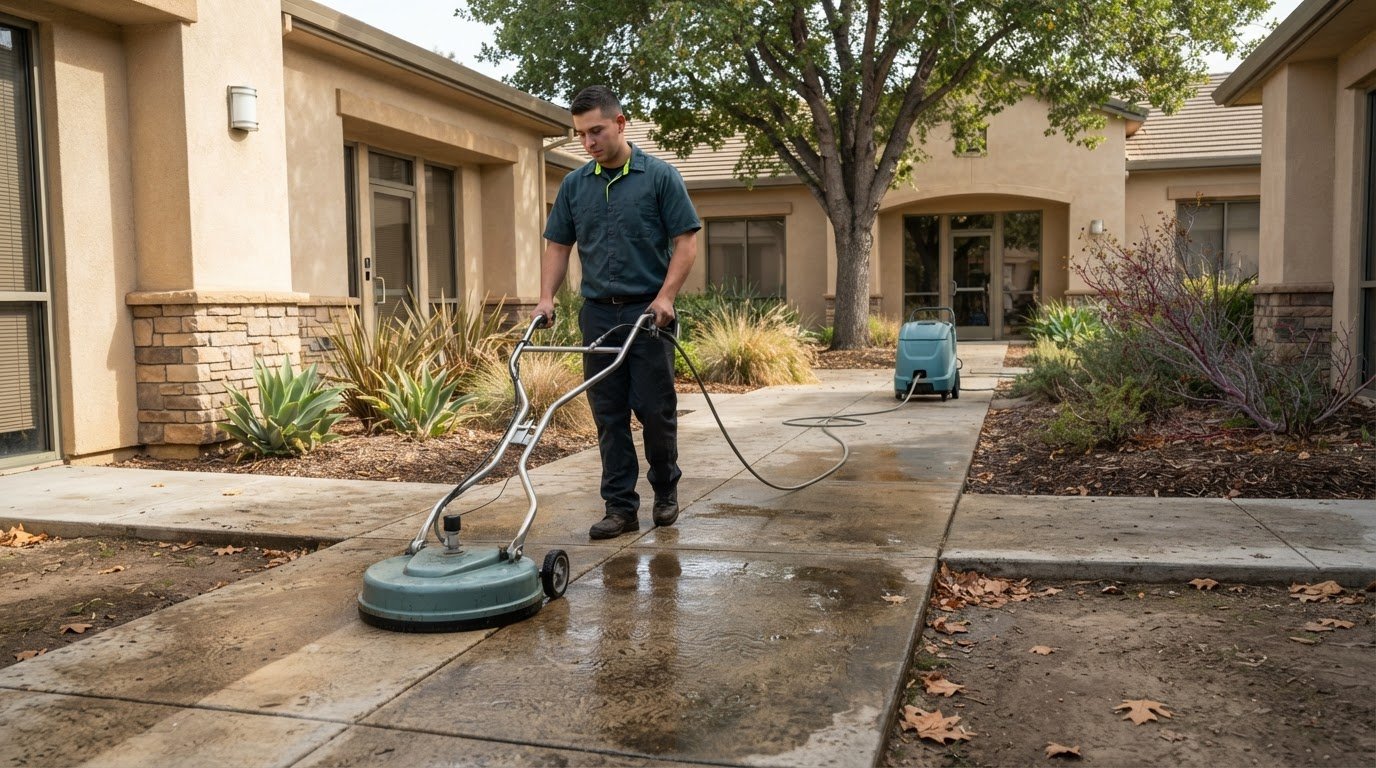
Build each facility checklist in three layers: common tasks, property-specific tasks, and job-specific details. Common items create a stable baseline across sites. Property-specific items address the rooms and surfaces in that building. Job-specific details capture work included for a particular visit, such as carpet care or pressure washing, without treating those tasks as part of every routine inspection.
- Offices: Include shared work areas, meeting rooms, entrances, and restrooms, because their use and cleaning needs vary.
- Laboratories and clinics: Create distinct inspection areas for reception, treatment spaces, and restrooms, so reports identify where attention is needed.
- Manufacturing facilities: Separate offices, shared spaces, and production-adjacent areas, so checklist items match the areas included in the cleaning scope.
- Outdoor approaches: Record entry conditions separately from interior floors, so tracked-in soil or weather-related debris has a clear location.
For laboratories and clinics, a facility-specific plan can distinguish public reception from treatment areas. That makes the inspection report more useful than a single building-wide rating. The checklist should assess only tasks included in the agreed scope; otherwise, a score can confuse an excluded task with missed work.
Keep each item observable and tied to a clear action. “Clean treatment-room surfaces” is broad; “listed surfaces are visibly free of residue” gives inspectors a direct condition to assess. Staff who perform the route can identify unclear wording, access limits, or steps that don’t match how a room is used. Their input makes checklist items more practical without lowering the standard.
Customer feedback can reveal gaps an inspection misses. If reports repeatedly mention a particular entrance or restroom, add a location-specific item or refine the existing description. Then review the next inspection results and feedback together. A checklist update is useful when it clarifies the work, improves consistency, or makes a recurring concern easier to track.
Review property-specific checklists whenever the facility layout, cleaning scope, or use of a space changes. A converted meeting room, newly opened area, or revised service schedule can make old items inaccurate. Keep the baseline stable across facilities, but revise relevant sections so each inspection reflects the actual site and job.
Corrective action and contractor notification thresholds
Inspection scores are useful when each result leads to a defined action. Set expectations before service begins, then connect score ranges to adjustments, supervisor review, or a corrective plan. Clear thresholds help teams respond consistently instead of treating similar findings differently across spaces.
Use these average-score thresholds to guide the response:
- 4.5 to 5.0 points: Maintain the current routine and continue regular inspections.
- 4.0 to 4.4 points: Make minor adjustments, such as clarifying a task or reinforcing a route detail.
- 3.5 to 3.9 points: Schedule supervisor review to identify what is affecting results.
- Below 3.5 points: Create an immediate corrective plan with specific responsibilities and follow-up.
Area-level triggers add detail that a building-wide average can hide. A commercial facility zone average below 2.5 triggers a mandatory contractor review within 48 hours. A lobby or entrance score below the 3.0 pass score calls for re-service within 2 hours and contractor notification the same day. A common-area score below the 2.5 pass score calls for re-service within 4 hours and contractor notification the same day.
Restroom findings also need a direct response. A restroom inspection item scored 1 requires immediate re-service, and the action must be documented. Record the affected space, the missed item, who received the issue, and how completion was confirmed. This detail creates a traceable record without relying on informal updates.
Use a consistent correction sequence for each failed item:
- Describe the finding: State the location and observable condition, such as residue on a shared surface.
- Assign responsibility: Identify who will notify the crew and coordinate the correction.
- Set the response: Apply the relevant zone threshold and communicate any required timing.
- Confirm completion: Record the follow-up inspection, service ticket, or other evidence.
- Update the client: Share the issue and its resolution through the agreed reporting process.
Recurrence calls for a process review, not just another isolated correction. Flag an issue when it occurs three times in one month. If scores decline for two consecutive months, revisit staffing, supervision frequency, and scope alignment. Repeated misses may also point to route design, training, or supply procedures that need adjustment.
Review corrective-action records alongside inspection scores. If the same task continues to fail after follow-up, revise the checklist detail or retrain the route. Clear ownership, documented action, and a confirmed result make expectations easier to maintain across shifts and spaces.
Janitorial quality KPIs
Key performance indicators turn inspection records into a view of cleaning performance over time. A janitorial quality assurance checklist is most useful when its results inform an operational decision. For example, a declining score can prompt a route review, while steady results across sites can support keeping current procedures in place.
Track a focused group of measures that answer different questions, rather than relying on one building-wide average:
- Inspection score trend: Compare results by area and service period to see where performance rises or declines.
- First-pass yield: Divide tasks meeting the agreed standard on initial inspection by all inspected tasks. This shows how often work passes without correction.
- Corrective-action closure: Track issues with documented follow-up and confirmation, keeping unresolved findings visible.
- Repeat-finding rate: Group recurring findings by location and task to expose process gaps, such as repeated dust in one conference room.
- Supply readiness: Record shortages of paper products, chemicals, or other consumables that may affect completed work.
Use consistent definitions across shifts and locations. If one supervisor counts a corrected item as a pass while another records a failure, comparisons become unreliable. Define what each KPI counts, which records provide its data, and how often managers review it. A janitorial quality assurance checklist supports this shared method when scoring descriptions and categories stay consistent across inspectors.
Software can organize inspection scores, photos, service tickets, supply reports, and follow-up logs in one tracking process. Filter results by facility, zone, task, or shift to distinguish a local concern from a broader operational issue. Repeated misses on one route may call for coaching, while similar findings across several locations may point to unclear instructions or a shared supply problem.
Pair outcome measures with client feedback. A strong inspection average may not explain repeated concerns about one entrance, while a complaint alone may not show whether the issue is widespread. Compare both records by location and task, then assign a practical next step, such as reviewing route coverage or clarifying a task description.
Review KPIs on a consistent schedule and record the decision each review produces. Recognize teams when results remain strong, and use recurring findings to target training or supervisor checks. A sound quality program treats each indicator as a prompt for action, not a score collected without follow-through. Discuss commercial janitorial quality tracking to align performance measures with your facility’s cleaning needs.
Cleanit Maintenance Systems: Commercial Janitorial
Cleanit Maintenance Systems provides commercial janitorial services for workplaces that need dependable cleaning aligned with their facility’s needs. Turn to the team when setting a cleaning scope, reviewing inspection expectations, or arranging ongoing office care. Office Cleaning and Daily Cleaning Services support routine upkeep, while Day Porter Services address needs that arise during the workday. Sharing which areas matter most, what tasks are included, and how you assess results helps establish clear expectations. The right service depends on your building’s spaces and operating needs, not a one-size-fits-all checklist.
For a straightforward next step, contact Cleanit Maintenance Systems to discuss your commercial janitorial needs.
Make Your Cleaning Standards Work Day After Day
A useful janitorial quality assurance checklist should support how your workplace operates, not sit unused after an inspection. The next step is to turn the standards that matter most into a shared working approach, with clear expectations for the spaces, service priorities, and communication that keep daily operations moving.
Start with the outcome you want to make more dependable. That might mean fewer repeated concerns, clearer responsibility for follow-up, or cleaning routines that better fit how employees and visitors use the building. A focused conversation can connect those priorities with a practical commercial cleaning plan, without adding unnecessary complexity for your staff.
Cleanit Maintenance Systems can help you consider how consistent cleaning support fits your workplace. If you’re ready to discuss a practical next step, contact Cleanit Maintenance Systems. A clear starting point can make it easier to build cleaning standards your team can rely on.
Frequently Asked Questions
What should I have on my inspection checklist?
Include the inspection date, facility area, item assessed, observed condition, and space for follow-up ownership. For example, a report might identify a conference room, note a missed task, and record who will address it. Separate observations from corrective actions so the record shows both what the inspector found and what happened next. This structure makes reports easier to review and helps prevent unclear notes from delaying follow-up.
What is the simplest inspection system that works for most facilities?
A short checklist organized by area, paired with one consistent scoring scale, is a practical starting point. Keep each item observable and add a brief note whenever it falls below the agreed standard. A quick walk-through at the end of a cleaning job can capture immediate issues, while a fuller review can reveal patterns across the facility. In Sacramento, the checklist should reflect each building’s actual spaces and service scope.
How do you score cleaning and track recurring issues over time?
Use one defined rating scale and record each result with its location and task, rather than keeping only a building-wide average. Group findings by the same location and task during review. For example, several reports about the same conference room can show whether a concern is isolated or recurring. Keep the original finding and follow-up record together, so the review can distinguish a corrected issue from one that remains unresolved.
Which KPIs matter most for janitorial quality and consistency?
Start with inspection score trends, first-pass yield, and corrective-action closure. Together, these show whether work meets expectations initially, whether results are changing, and whether identified problems receive follow-through. Add repeat findings when you need to locate patterns by area or task. Interpret the measures together: a strong average can mask repeated misses in one zone, while a lower score may reflect one localized issue rather than facility-wide performance.
How should monthly reviews be run so performance improves instead of drifting?
Use each review to turn records into assigned decisions. Compare inspection findings, repeated concerns, completed corrections, and client feedback by area. Identify one or more issues requiring action, then assign an owner and record the follow-up method. If scores decline for two consecutive months, review staffing, supervision frequency, and scope alignment. Close the meeting by checking prior actions, so unresolved items remain visible in the next review.
How can technology make inspections easier and more powerful?
Inspection software can keep scores, notes, photos, service tickets, and follow-up records together. Consistent labels for locations and tasks make it easier to filter findings and spot recurring issues. Time-stamped photos can clarify what an inspector observed, while supply reports can help explain whether missing materials affected the work. Technology is most useful when it supports a clear process, with someone responsible for reviewing results and acting on them.
How do I ensure consistent ratings across my team?
Give inspectors written descriptions for each rating and use observable examples to explain the difference between acceptable and unacceptable conditions. Train the team on the same checklist, then conduct joint inspections so inspectors can discuss how they interpret each item. If ratings differ, clarify the wording before the next review. Consistent criteria matter more than forcing agreement on every borderline observation, which should be documented for context.
How often should commercial cleaning be inspected?
Set frequency by zone and use. The scorecard recommends inspecting commercial restrooms every 2 hours, office areas daily after business hours, and common areas daily, with a midday pass in high-traffic buildings. It also suggests quick walk-throughs twice per week and full-building checklist reviews quarterly. During onboarding, inspect weekly during the first month, then at least monthly after performance stabilizes. Adjust checks to the facility’s traffic and cleaning scope.