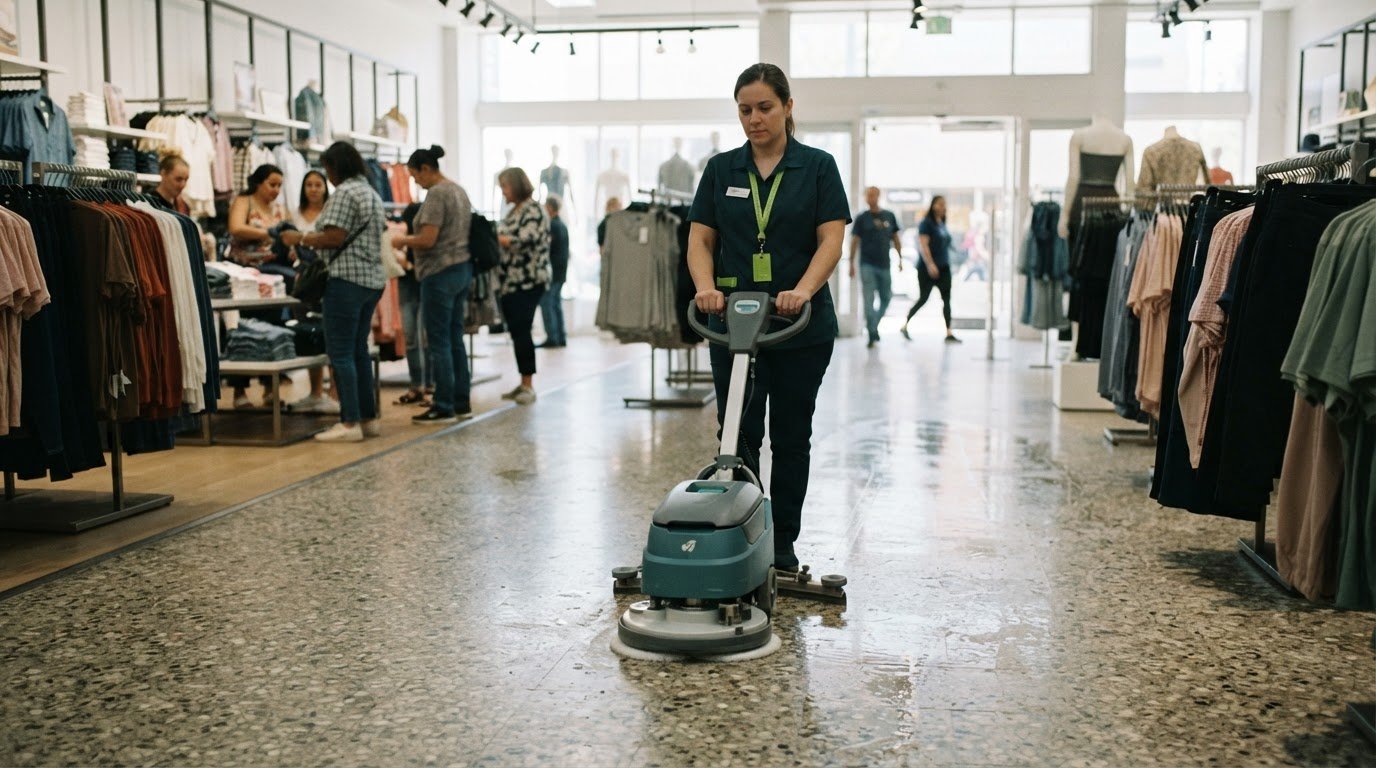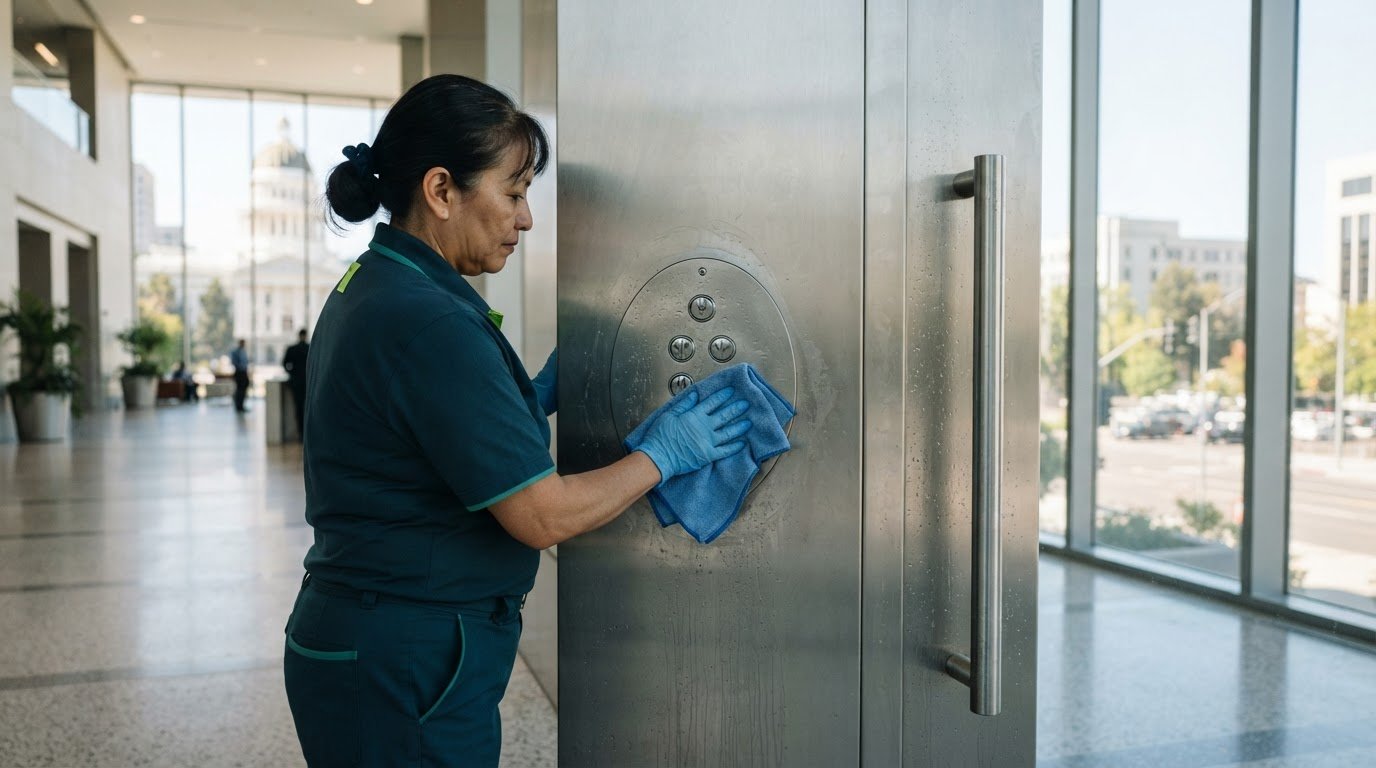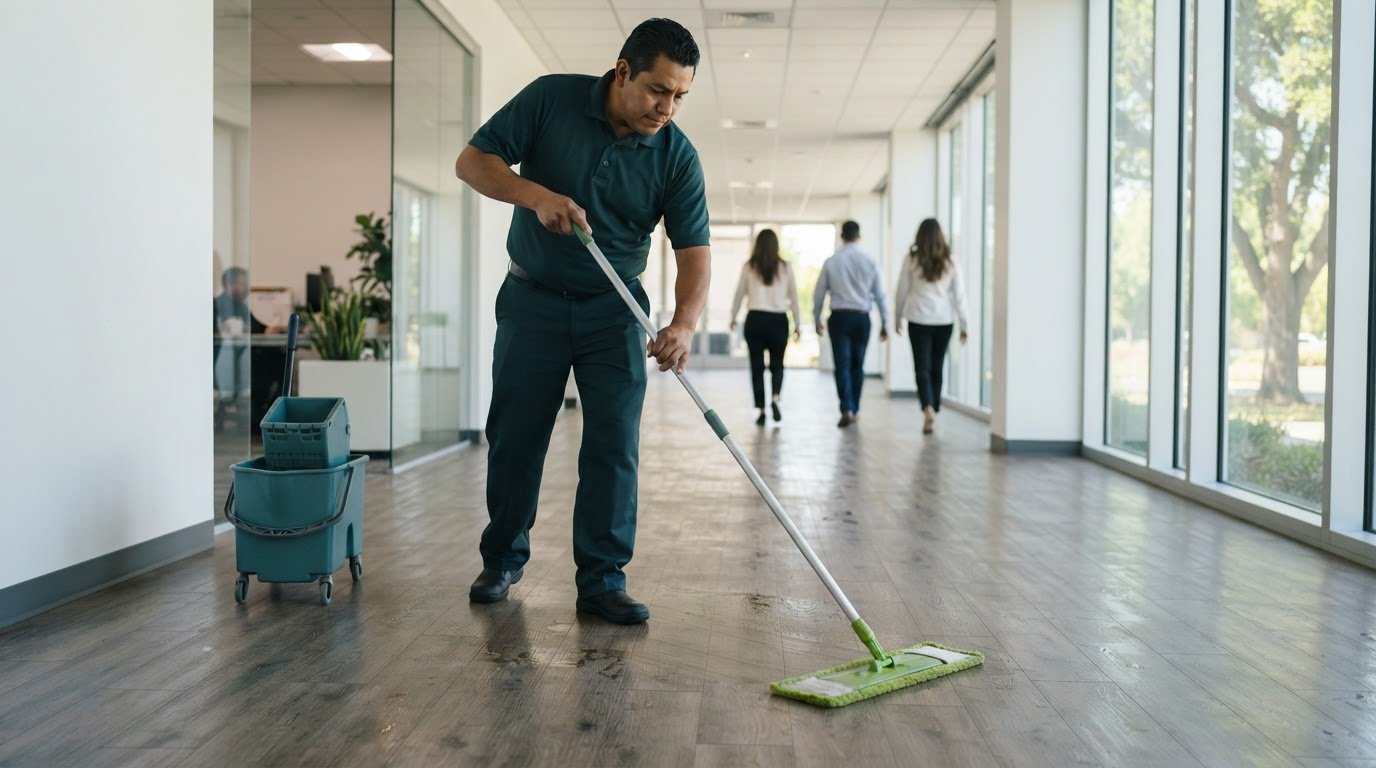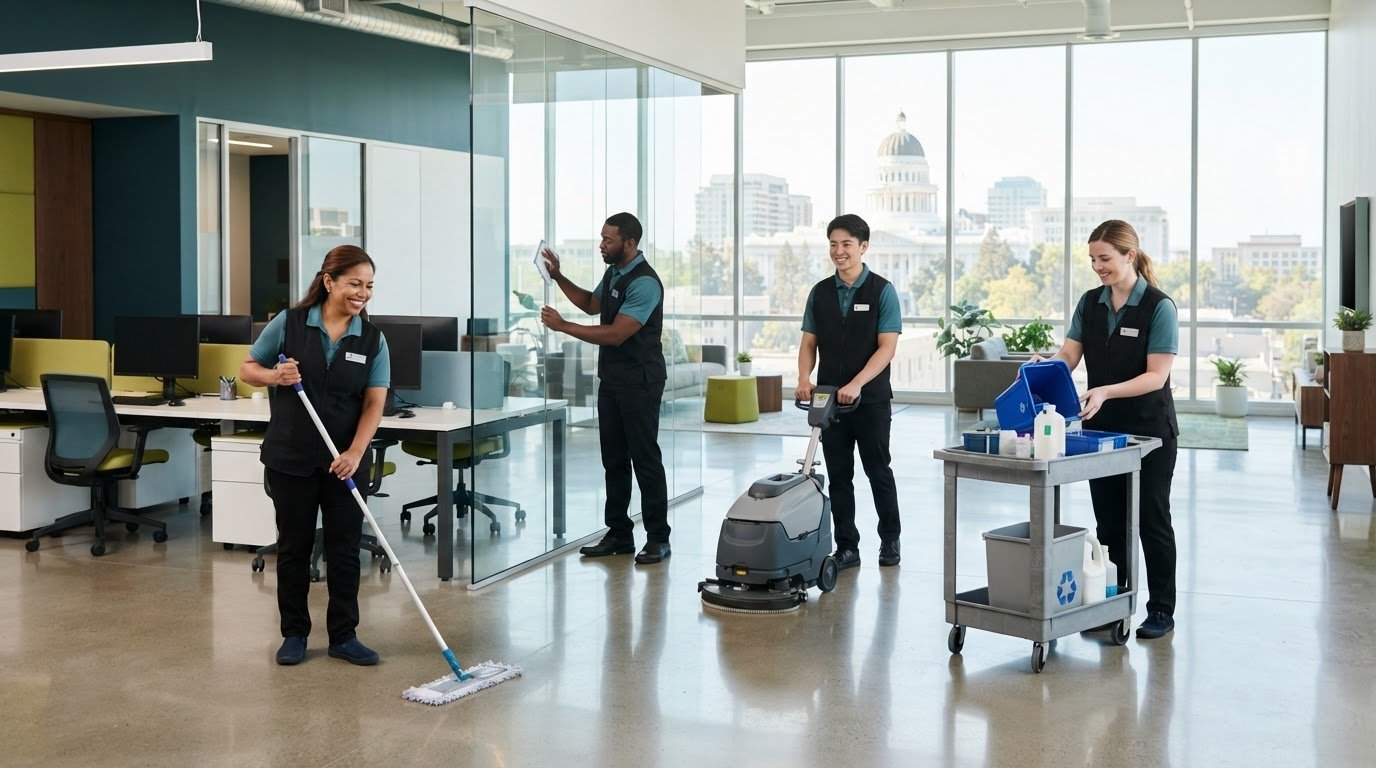
A dependable onboarding of a new janitorial company starts two weeks before the first cleaning visit. Use that time to walk through the facility, clarify assignments and access, and set an inspection schedule. Before specialized work begins, make sure the team understands the equipment, products, and site-specific procedures involved.
A clear handoff matters, but cleaning routines also need time to settle. Review the first visits closely and allow two to three weeks for routines to stabilize. This guide explains how to prepare the building, communicate locations and shifts, and train for specialized services and equipment. You’ll also learn what to inspect during week one, how to give specific feedback, and which patterns to track so adjustments are practical and consistent. A thoughtful start gives both sides a clearer picture of the work, standards, and communication needed for a reliable cleaning partnership.
Key Takeaways
- Gather cleaners’ contact details, availability, and experience so assignments and support needs can be planned before work begins.
- Inspect after each of the first three cleanings, and give the supervisor specific feedback within 24 hours.
- At the end of week one, review recurring issues, communication, supervisor presence, and supply consistency.
- Make the start date, assigned location, shift, and supervisor clear so each team member knows where to be and who to report to.
- Use demonstrations and hands-on guidance to prepare staff for specialized equipment, products, and site procedures.
What should happen before the first cleaning visit?
Begin onboarding two weeks before the first cleaning visit. Use that time to gather team details, document the building handoff, and agree on site-specific routines.
-
Gather Cleaner Contact Details and Availability
Before scheduling the first shift, collect each assigned cleaner’s preferred contact details, availability, and relevant experience. Match those details to the site’s operating hours and cleaning tasks. For example, experience with floor care can help identify training needs at a facility with specialty flooring. Keep payroll and sensitive employment records within the employer’s designated HR process.
For insurance, request current documentation showing the coverage carried, such as general liability and workers’ compensation where applicable. Coverage limits depend on the contract, facility risks, and client requirements, so no single limit fits every site.
-
Prepare the Building Handoff
Prepare a one-page handoff for the cleaning crew before its first visit. Include assigned areas, access instructions, operating hours, high-traffic zones, hygiene hotspots, and surfaces needing special care. Identify the site supervisor and the person to contact with questions. Keep instructions location-specific: an office handoff, for example, should explain that office’s access process.
Use the handoff to clarify the service scope, not to store payroll or sensitive employment records. Before hiring, request the written cleaning scope, business registration details, insurance documentation, and relevant experience. These documents help clarify responsibility for each task and how the work fits the site’s needs.
-
Tailor Preparation to the Cleaning Site
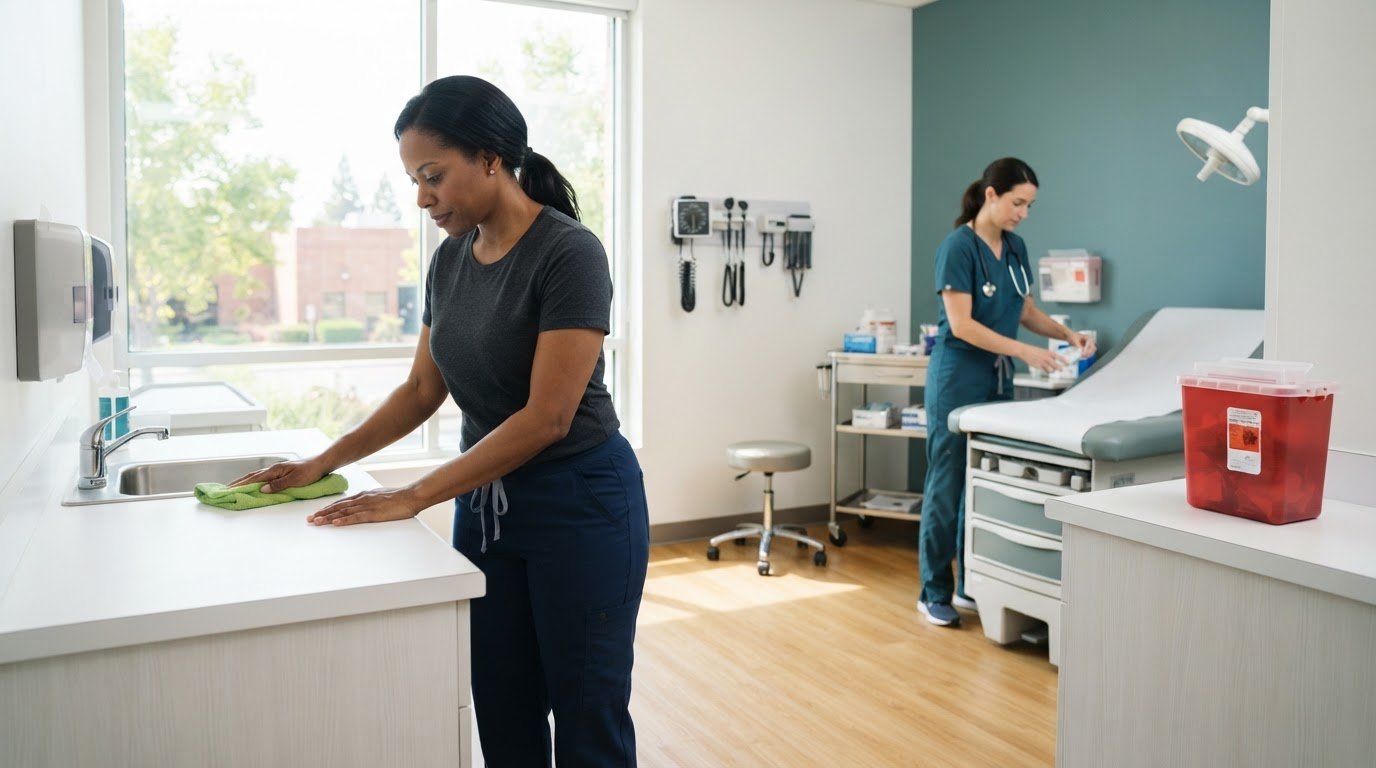
Walk through the facility with the supervisor and note traffic patterns, operating hours, sensitive workspaces, and special surfaces. A busy office may need different routines from a low-traffic workspace; a clinic or laboratory also has distinct areas and materials to discuss. Use these observations to tailor the commercial cleaning plan, supplies, and orientation.
In the United States, identify business registrations, permits, and licenses based on the company’s structure, work, and operating jurisdiction. Requirements vary by state and city, so assess Sacramento-area requirements separately from those elsewhere. Local labor and tax obligations also depend on the employer and location; include them in the company’s internal onboarding process.
-
Set Expectations for Routine Stabilization
Allow two to three weeks for cleaning routines to stabilize. During that time, compare completed work with the handoff and note where traffic, access, or surface needs change the task sequence. Set the inspection schedule before the first visit so early feedback reflects agreed expectations, not shifting standards.
Record outstanding training steps and who will arrange them. Before cleaners use equipment or chemicals, ensure they understand the relevant handling and emergency procedures. Assigning a clear follow-up owner keeps preparation moving and gives the supervisor a practical way to close gaps as routines settle.
Providing regular check-ins and feedback
Set cleaning standards in a task checklist, then inspect the first three cleanings against it. Record each missed task by location and date, give feedback to the supervisor within 24 hours, and confirm corrections on the next visit.
- Use a consistent checklist for every inspection. List the agreed tasks by area, including visible floors, restrooms, waste removal, and high-touch points. Mark whether each item meets the site’s standard, needs correction, or does not apply. Use the same checklist during the first three cleanings so observations are comparable. A dated record also helps distinguish a one-time oversight from a recurring issue.
- Schedule a brief morning check after each early visit. Set aside ten minutes to review the completed work and note specific examples, such as an overflowing bin or a missed break-room surface. Share the punch list directly with the supervisor within 24 hours. Describe the location and task clearly; “restroom sink near the east entrance needs attention” gives the team more useful direction than “restrooms were missed.”
- Follow up after the second cleaning. Confirm that corrections from the first visit were completed, then review supply levels and trash timing. Check whether the supervisor is resolving open items, rather than relying on an employee to pass along feedback. Record the result beside the original note. This keeps the checklist focused on verified corrections and prevents concerns from being repeated without an update.
- Assess consistency after the third cleaning. Compare results across several areas, paying particular attention to high-touch points and the team’s response to earlier feedback. Track repeated punch-list issues separately from isolated misses. If the organization uses employee background checks, keep screening within its designated personnel procedures and record completion status, not sensitive details, on the cleaning checklist.
- Keep one onboarding checklist for open items. Include inspection dates, location-specific findings, assigned follow-up, and outstanding training steps, with the person responsible for arranging them. Ask employees whether instructions or support are unclear, and note practical answers that affect the work. This creates a clear record for the supervisor and helps address gaps before they become routine.
What should be reviewed at the end of week one?
At the end of the first week, compare inspection results with the agreed scope. Review recurring issues, communication, supervisor presence, and supply consistency before setting follow-up priorities.
- Bring the week’s inspection records together. Review each dated entry and location, then separate isolated misses from repeated punch-list items. Compare completed tasks with the agreed cleaning scope, not newly added expectations. For example, a missed task in one area calls for a specific correction, while the same item appearing repeatedly needs tracked follow-up. Keep notes concise enough for the manager and supervisor to act on.
- Assess the service against measurable expectations. For each task, define what completion looks like, where it applies, and how the inspection records it. A standard might describe a clean, stocked restroom or specify that listed waste bins are emptied. Use the same criteria throughout the review period, and note exceptions related to site access or changing needs. Clear measures help both teams distinguish a missed task from a difference in interpretation.
- Review communication, supervision, and supplies together. Note whether the supervisor responded to reported issues and whether corrections were completed on the next visit. Compare supply levels with facility usage and check whether trash timing fits the building’s operating pattern. Record access or security concerns through the appropriate site process, without adding sensitive access details to a general performance log. Assign each open item to a responsible person.
- Set the next review dates at 30, 60, and 90 days. Use the 30-day review to assess whether week-one corrections held and routines became consistent. At 60 days, look for recurring patterns across locations and shifts, then agree on practical adjustments. At 90 days, assess whether the cleaning relationship is working against the scope, inspection record, responsiveness, and supply needs. A problem repeated three weeks in a row calls for escalation, not another untracked reminder.
At the end of week one, bring inspection findings, recurring punch-list items, communication responsiveness, supervisor presence, and supply consistency into one review. Consider how these factors relate without treating one observation as proof of a broader problem. Weigh recurring issues alongside the response they received; supply consistency and supervisor presence can help clarify appropriate follow-up. Keep the discussion tied to the agreed scope and recorded observations so it focuses on service, not assumptions.
Use the review to distinguish what is already being addressed from what still needs attention. For each unresolved concern, identify the supporting observation, the requested correction, and the person responsible for confirming the next step. Note satisfactory responses too, and make follow-up explicit for unresolved or repeated concerns. This gives the manager and supervisor a shared account of the week’s results and a practical basis for prioritizing the next review. Keep the outcome concise, specific, and consistent with the inspection criteria already in use.
Communicating start date, assigned location, shift, and supervisor
Put each assignment in writing before the cleaner’s first shift. A clear record connects the employee, facility, schedule, and supervisor, reducing confusion when someone arrives.
- Confirm the start date and first-shift details. State the date, expected arrival time, and whether the employee should report directly to the facility or meet a supervisor first. Include the building name and entrance to use. If an assignment changes, send revised details to the affected employee and supervisor before the shift begins. This gives everyone one current version to follow.
- Name the assigned location precisely. Identify the facility and the areas covered by the employee’s assignment. For a business with multiple buildings, include the specific building or suite rather than a general campus name. Match the location to the employee’s onboarding record so the supervisor can see which site the assignment concerns. Avoid sending details for several sites in one message unless each assignment is clearly separated.
- Write the shift and availability clearly. Record the assigned shift and compare it with the employee’s stated availability. Distinguish the scheduled work period from availability, since they may not be identical. If a schedule adjustment is needed, communicate the revised shift directly and update the assignment record. Clear timing helps the employee plan their arrival and gives the supervisor a reliable schedule to coordinate.
- Identify the supervisor and reporting contact. Include the supervisor’s name and appropriate contact method in the employee’s assignment details. Explain whom the employee should notify about a late arrival, access difficulty, or task question. For example, a cleaner assigned to an office should know whether to report to the site supervisor or another named lead. Avoid making “ask the manager” the only direction when several managers work at the site.
- Review the assignment with the employee before the start. Ask the employee to confirm the start date, location, shift, and supervisor, then resolve any mismatch before the first visit. Keep the confirmation with the onboarding record and note outstanding questions. If the employee raises a practical concern, such as a conflict between availability and the scheduled shift, record the agreed adjustment and share updated details with the supervisor.
Training for specialized services and equipment
Train for each specialized task before assigning it independently. Match instruction to the facility, surface, equipment, and cleaning products involved.
- Define the task and required skill. List specialized work separately from routine cleaning, then identify its surfaces, tools, products, and expected result. For example, pressure washing and carpet care require different equipment and techniques; guides such as carpetcleaninginstockport.co.uk illustrate how professional commercial floor treatments differ from standard routines. Use the facility’s needs to determine which employees need focused instruction during hiring and assignment planning. Don’t treat experience with one task as proof of readiness for another.
- Demonstrate equipment use and safety practices. Have an experienced team member show each employee how to use the assigned safety equipment and task-specific tools. Explain chemical properties and hazards, safe handling and storage, personal protective equipment, and emergency procedures before equipment or chemicals are used. Employees need to understand the steps for the actual task, not just receive a general equipment overview.
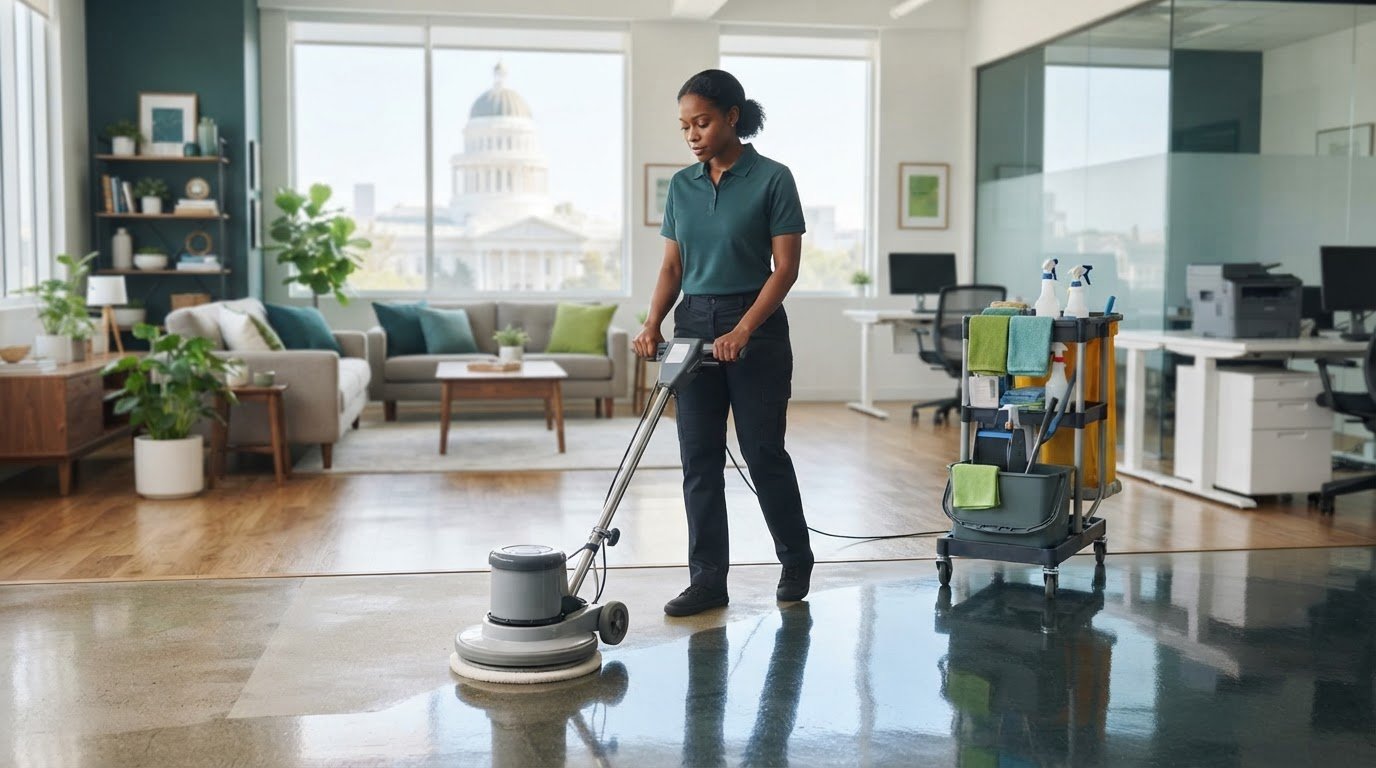
- Pair instruction with supervised practice. Assign a trained team member to shadow the employee and demonstrate the work on the relevant surface. Let the employee practise the task with guidance, then review the result together. For instance, a floor-care demonstration should address the floor material and equipment assigned to that facility. Move on to specialized work after basic cleaning tasks are mastered.
- Compare bids and agreements by scope, not headline price. Match each bid against the same task list, site schedule, supply responsibilities, and specialized services. A written agreement should describe scope, frequency, supplies, communication, and termination terms. Commercial cleaning contracts commonly require 30 to 90 days of written notice. OSHA and workplace safety requirements involve the hazards, chemicals, equipment, and procedures at the site; train staff in safe handling, protective equipment, and emergency steps.
- Document training and close gaps. Record which task each employee practised, who demonstrated it, and what instruction remains. Assign someone to arrange outstanding training rather than leaving the item open without follow-up. Revisit the record when equipment, products, or facility needs change. This training record helps supervisors see who is prepared for each assignment and where further coaching is needed.
Cleanit Maintenance Systems: Commercial Janitorial
Cleanit Maintenance Systems provides commercial janitorial services for businesses seeking consistent cleaning routines and clear communication. Turn to the team when your facility needs support coordinating regular janitorial work, office upkeep, or daytime cleaning. Office cleaning and daily cleaning services help maintain routine care, while day porter services address ongoing cleaning needs during the workday.
A defined scope, assigned areas, and agreed inspection process give a cleaning partnership a practical foundation. Share your facility’s priorities and cleaning needs to start a conversation about the right fit. Contact Cleanit Maintenance Systems to discuss janitorial service for your workplace.
Build a Strong Start for Your Cleaning Partnership
A well-planned onboarding of a new janitorial company creates a useful foundation, but the partnership should continue to evolve with your workplace. As operations change, revisit which spaces need attention, whether routines still fit, and how your team prefers to share feedback. This keeps the service aligned with daily needs instead of treating the original plan as permanent.
For Sacramento businesses, the next step is a conversation about your facility, priorities, and cleaning requirements. Cleanit Maintenance Systems provides commercial janitorial support for workplaces seeking dependable cleaning coordination. Share what matters most to your team and discuss a practical path forward.
Start a conversation with Cleanit Maintenance Systems, and take the next step toward a well-supported workplace.
Frequently Asked Questions
How should punch lists and quick corrections be handled?
Make each punch-list item specific, assign someone to follow up, and record its status. For example, note the room, affected surface, and correction needed rather than writing “cleaning missed.” Mark an item closed only after someone verifies the result. If a correction changes the agreed task sequence, update the working instructions so the issue doesn’t recur on another shift.
Can small offices follow the same process?
Yes. A small Sacramento office can use the same preparation and feedback principles, scaled to its rooms, traffic, and operating hours. One designated contact can coordinate observations instead of holding a larger review meeting. Limit the task list to relevant areas, such as reception, restrooms, and a shared kitchen. The process should fit the facility, not create extra administration.
How often should you inspect during week one?
Inspect after each of the first three cleanings during week one. This lets you spot changes across visits rather than judge performance from one result. Use the same areas and standards where possible, and note what has changed since the previous inspection. For example, check whether an earlier correction holds and whether another area now needs attention.
Is a kickoff meeting really necessary?
A formal meeting isn’t essential if the supervisor and facility contact already share a clear, current work plan. A short kickoff can still resolve questions written instructions leave open, such as which rooms take priority or how to report an access problem. Keep the discussion focused on decisions the crew needs before starting, then record agreed changes in the site instructions.
Should the facility manager attend every walkthrough?
No. A facility manager can assign routine walkthroughs to a site contact who understands the cleaning scope and can document observations consistently. The manager can then review those records, address patterns, and join when a decision affects priorities, access, or service expectations. This keeps oversight connected without requiring the manager to attend every inspection personally.
What if issues continue after corrections?
If the same miss occurs three weeks in a row, escalate it instead of treating each instance as an isolated correction. Bring the dated examples together and discuss what is driving the recurrence: unclear instructions, task order, training, or follow-through. Agree on a specific adjustment and record who will carry it out. Review the next result to see whether the change resolved the underlying issue.
What is a janitorial staff onboarding form?
A janitorial staff onboarding form collects assignment details that help prepare an employee for a specific site. It can record preferred contact details, start date, location, supervisor, shift, availability, and relevant experience. A useful form also gives employees space to raise questions or describe support needs. A supervisor section can track completed instruction and identify training items needing follow-up.
What steps are involved in onboarding a new janitorial company?
Onboarding a new janitorial company starts by aligning the service scope with site needs, preparing location-specific instructions, and sharing assignment details. Before specialized tasks begin, arrange relevant demonstrations and supervised practice. Once service starts, inspect early work, document findings, and communicate corrections through the agreed contact. Continue reviewing performance and adjust the plan when facility needs or operating patterns change.