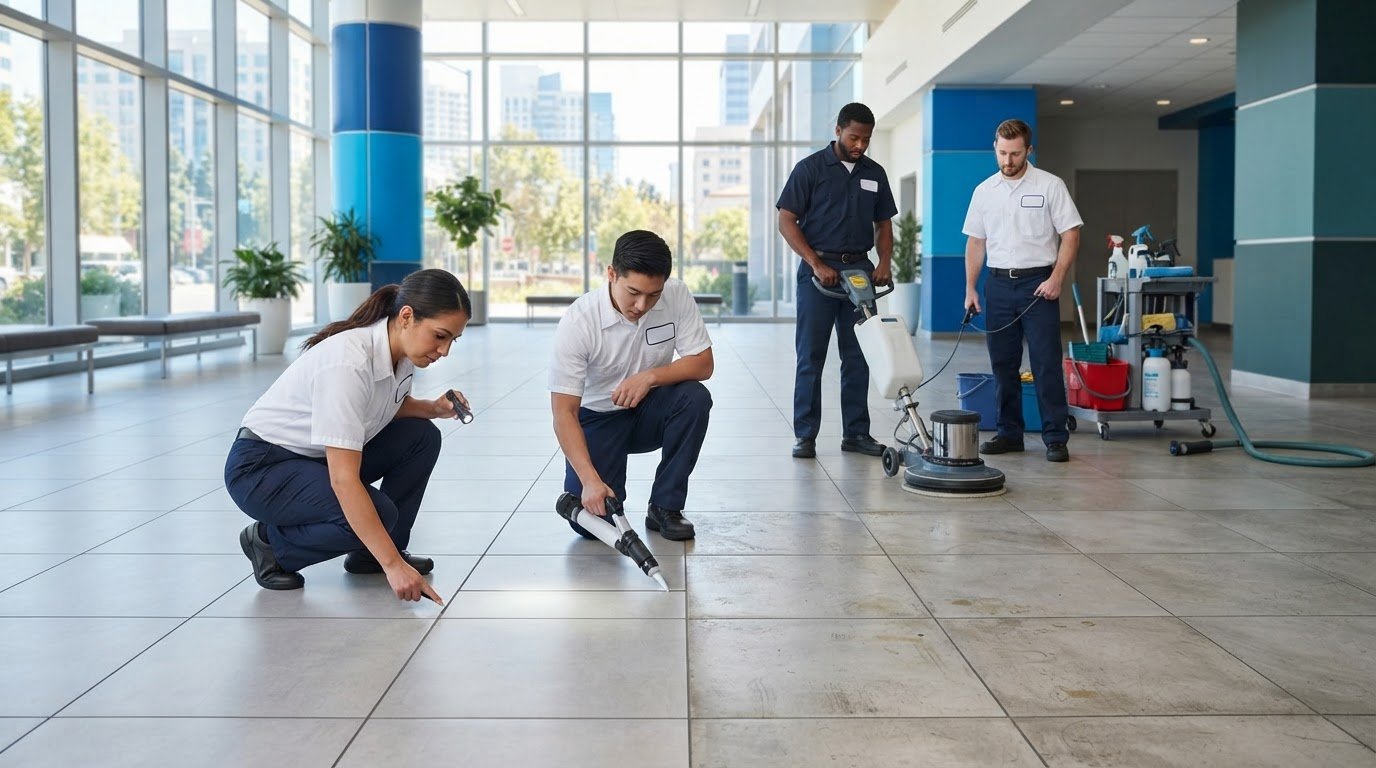
Cleaning crews maintain a clinic’s environment, but they do not perform every clinical task. Specialized biohazard waste removal requires licensed medical waste contractors, while clinical staff typically handle surgical instrument sterilization. Clear boundaries help protect patients and keep daily responsibilities organized.
It’s reasonable to expect clean exam rooms, disinfected reception areas, and clear responsibility for waste and sharps. The right schedule depends on how each space is used, patient traffic, and which surfaces are touched most. A single nightly visit may not meet the needs of every patient-facing area.
This article explains what professional cleaning teams like Cleanit Maintenance Systems typically address, how clinic teams can set cleaning schedules for different spaces, and how to monitor quality. It also clarifies responsibilities for clinical waste, helping Greater Sacramento practices plan environmental cleaning without blurring roles.
Key Takeaways
- Cleaning crews focus on environmental surfaces; medical waste and sharps follow a separate handling pathway.
- Exam-room cleaning between procedures should address surfaces that patients and staff touch, while allowing disinfectants their required contact time.
- Cleaning frequency varies by area and use, so patient-facing rooms, waiting areas, and administrative spaces may need different schedules.
- Consistent checklists help make cleaning tasks and quality monitoring clearer across clinic spaces.
- Commercial janitorial, office cleaning, daily cleaning, and day porter services can support routine upkeep across Greater Sacramento medical offices.
Do cleaning crews handle medical waste or sharps?
In Sacramento clinics, cleaning crews care for environmental surfaces, while licensed medical waste contractors handle biohazard waste removal. Sharps belong in the clinic’s designated medical-waste process, not routine room cleaning. Clinical staff typically manage surgical instrument sterilization. Keeping these tasks separate helps prevent confusion between routine cleaning, clinical handling, and regulated waste removal.
For environmental cleaning and disinfection, the CDC Guideline for Disinfection and Sterilization in Healthcare Facilities is a federal reference. Sacramento clinics can define cleaning roles separately from clinical and waste-handling responsibilities. A cleaning checklist can specify surfaces for the crew, while clinic procedures assign sharps, instruments, and biohazard materials to the appropriate personnel or contractor.
Between procedures, clean and disinfect examination-room surfaces before the next patient. In outpatient consultation and examination areas, surfaces should be cleaned and disinfected before and after each procedure. Remove visible soil first, then apply a suitable disinfectant to the intended surface. A daily terminal clean supports room turnover but does not replace cleaning between procedures.
Choose an EPA-registered disinfectant labeled for the surface and healthcare use. The EPA is responsible for antimicrobial pesticide registration and efficacy. Follow the product label for dilution, and keep the surface wet for the stated contact time before wiping. Medical clinic cleaning protocols in Sacramento should make product use clear to staff, including which surfaces it covers and how its dwell time is observed.
Cleaning removes soil, disinfection treats surfaces with an appropriate antimicrobial product, and sterilization applies to instruments. These are distinct tasks. Hypochlorite solutions are recommended for C. difficile and other spores. Use products according to their labels and the clinic’s infection-control procedures, rather than assuming every product suits every organism or material.
For blood or body-fluid spills in patient or non-patient areas, clean and disinfect the affected area immediately, as soon as possible. Staff should use task-appropriate PPE and receive instruction on exposure prevention, spill response, product handling, and waste separation. Core competencies in the initial healthcare cleaning training program are 40-80 hours, and bloodborne-pathogen training renewal is annual.
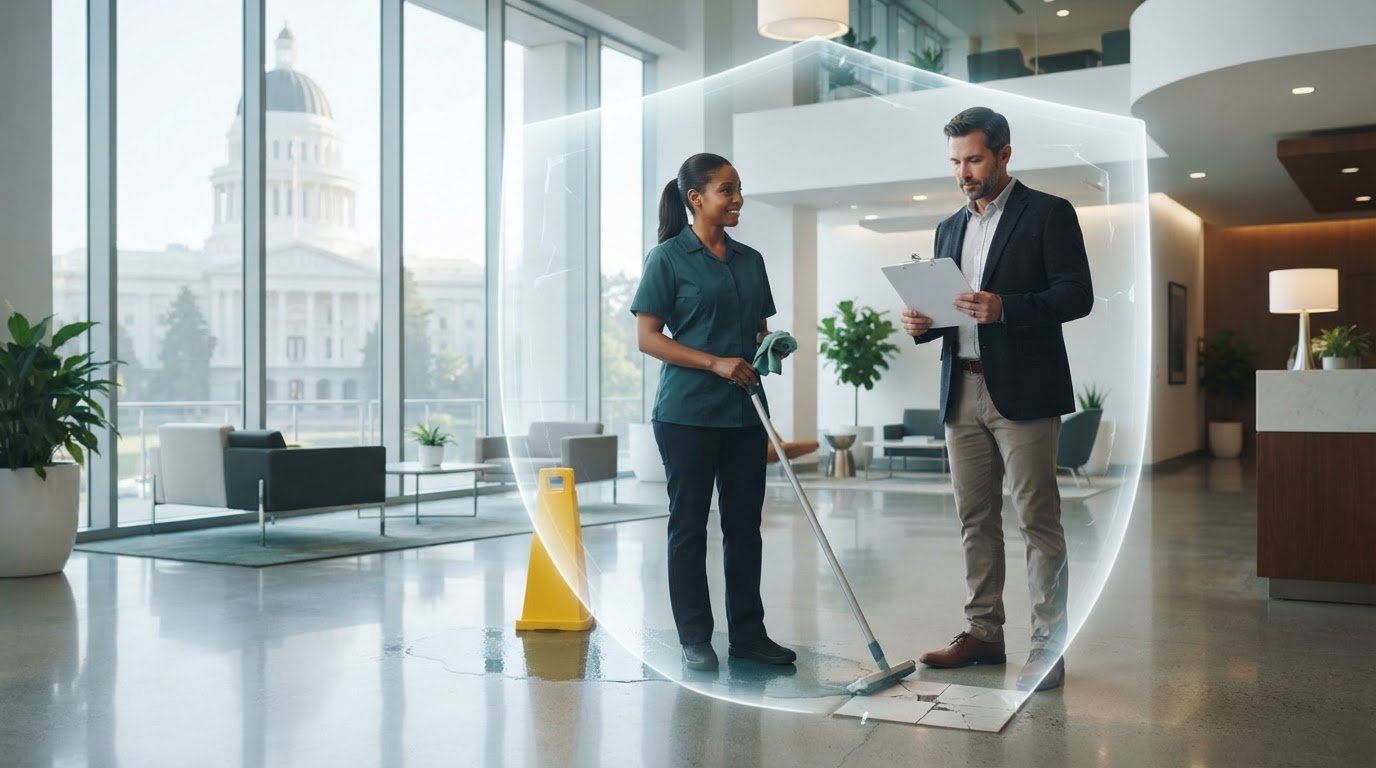
Medical clinic cleaning protocols in Sacramento work best when each task has a defined owner: environmental surface care for cleaning staff, instrument sterilization for clinical staff, and biohazard waste removal for licensed medical waste contractors. This separation gives teams a clear process for routine room care and a distinct response for sharps or contaminated waste.
Does a medical office need to be cleaned every night?
Patient-facing medical spaces should be cleaned and disinfected nightly after patient hours, while other areas follow schedules based on use. In outpatient settings, exam areas, waiting spaces, and restrooms each have distinct cleaning frequencies.
Cleaning Patient Rooms and High-Touch Surfaces
Occupied-room cleaning focuses on frequently touched surfaces without disrupting patient care. Bed rails, call buttons, door handles, and nearby counters need attention because patients and staff use them repeatedly. High-touch surfaces in occupied patient rooms should be cleaned and disinfected every 2-4 hours. The schedule can also account for visible soil and room activity, keeping routine work distinct from a full room clean.
Patient movement affects timing. Coordinate room access with clinic staff so cleaning doesn’t interrupt care or obstruct a patient’s transfer to another area. Once a room is available, work through the intended surfaces and floors, then leave the space ready for its next use. Staff should follow privacy conduct standards and avoid reading, moving, or photographing patient information.
Exam Room Turnover and Equipment Cleaning
Exam-room turnover is the cleaning and disinfection performed between patients. In outpatient consultation and examination areas, surfaces should be cleaned and disinfected before and after each procedure. This makes the between-patient reset a separate task from nightly cleaning. The care team can identify which surfaces and shared equipment were used, helping cleaning staff focus on the room’s actual use.
Shared noncritical patient-care equipment should be cleaned and disinfected before and after each use. This includes reusable equipment shared between rooms, following the clinic’s assigned workflow and the product’s directions. Cleaning removes soil; disinfection treats surfaces with an appropriate product. Distinguishing these steps helps prevent a quick visual tidy from replacing the required surface care.
Cleaning Frequency Across Clinic Areas
Frequency depends on the area. According to the Centers for Disease Control and Prevention, outpatient consultation and examination areas should have high-touch surfaces and floors cleaned at least twice daily. Outpatient waiting and admission areas should be cleaned at least once daily, while shared patient-area toilets should be cleaned and disinfected at least twice daily. Private patient-area toilets should receive cleaning and disinfection at least once daily, after routine cleaning of the care area.
These schedules show why nightly service alone may not cover every patient-facing need. A clinic can align daily room cleaning with patient hours, then plan additional attention for shared toilets, equipment, and frequently touched surfaces. Administrative areas can follow a lighter schedule than exam and waiting areas. Room use and availability also affect when staff can safely enter, so turnover should fit the care team’s workflow.
High-touch surfaces in healthcare settings
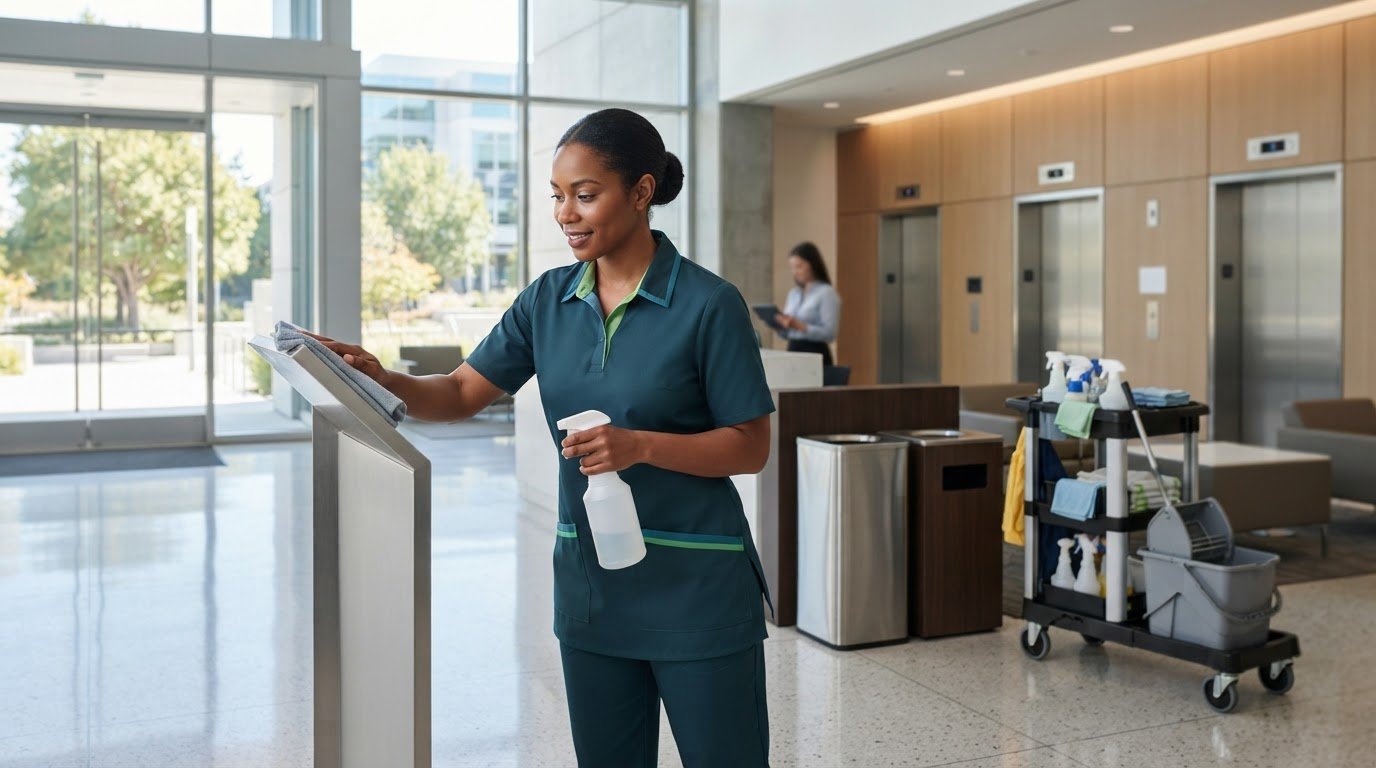
High-touch surfaces are frequently handled during care, including door handles, rails, reception counters, seating arms, and fixtures. When comparing healthcare cleaning companies in Sacramento, review whether their written scope names these surface groups, explains cleaning methods, and includes area-specific checklists. Ask how completed tasks are documented and missed items reported. These details offer a clearer basis for comparison than a general promise to clean thoroughly.
Cleaning frequency depends on the care setting. In intensive care units, high-touch surfaces should be cleaned and disinfected twice daily and as needed. Routine inpatient ward high-touch surfaces and floors should be cleaned at least once daily. Cleaning frequency in contact and droplet precaution wards should reflect the needs of the area. These schedules show why one building-wide routine may not suit every clinical area.
List the objects people actually touch. A reception counter, chair arm, and door handle should appear as separate checklist items, not as implied parts of “general dusting.” Include rails and fixtures where patients or staff use them. A clear sequence helps staff cover the full surface, not just its visible center, and keeps the task consistent across rooms.
During an outbreak response, cleaning frequency may increase to hourly in some healthcare settings. Focus the adjustment on the surfaces and spaces affected by the response, rather than treating every clinic area identically. Materials matter too: cleaning teams should use products suited to each surface and follow label directions. This helps prevent damage while keeping product use appropriate.
ATP surface verification testing uses a swab and reader to check for remaining adenosine triphosphate after cleaning. It can support process monitoring, but it does not identify a specific pathogen. Use ATP results alongside visual inspection and the area’s cleaning checklist. For example, a result can prompt a review of the cleaning step, the sampled surface, and whether staff covered the full contact area.
To assess a cleaning company’s approach, review its written scope, area checklists, staff training records, and process for documenting corrections. Ask how it tracks high-touch tasks across ICU, inpatient, and precaution areas. A clear monitoring process helps show whether the planned frequency fits each setting and whether recurring gaps receive follow-up.
The schedule should also cover surfaces above routine reach. High surfaces in inpatient wards, including cupboard tops and vents, should be cleaned weekly. Naming these items separately in the scope clarifies their inclusion and distinguishes routine environmental upkeep from the specialized mechanical care handled by commercial climate contractors like Ultra Air Heating and Cooling.
Sacramento County EMS documents provide standardized guidance intended to support safe, consistent, high-quality care. For healthcare cleaning products, the page recommends following manufacturer-specified dilution ratios. A written process can make this guidance clear to cleaning staff and help reviewers assess whether products are prepared according to their directions. Area checklists and task records further clarify what is covered and how the approach is applied in different spaces.
Cleaning quality assurance and monitoring
For a Sacramento clinic, a practical inspection record identifies the area, cleaning tasks, completion, and any needed correction. Use a documented checklist for each area, then review it against the clinic’s environmental cleaning schedule. This is a method for monitoring routine work, not a separate Sacramento inspection rule.
Each checklist should name specific spaces and surfaces rather than rely on a general “cleaned” entry. For example, an exam-room record can list the treatment surface, sink, door handle, and floor separately. A waiting-area checklist can name reception counters, seating arms, and shared fixtures. These details help a supervisor see what was covered and identify omissions during a walk-through.
Pair checklist reviews with direct visual inspection. A supervisor can compare recorded tasks with visible conditions, then note a missed surface or incomplete floor cleaning. Next, assign a correction and record its completion. This closed loop makes monitoring actionable by linking an observed gap to follow-up rather than leaving it as an untracked comment.
Environmental cultures aren’t recommended for routine cleaning assessment and may take more than 48 hours to produce results. They also don’t provide a practical record of whether a particular checklist item was completed during a shift. Use routine inspection methods to assess cleaning performance, and reserve any sampling decision for the appropriate clinical context.
Tools such as ATP surface testing can provide another monitoring signal when a clinic uses them. Interpret a result alongside the sampled surface, cleaning record, and visual findings, rather than treating one reading as a complete assessment. A high reading can prompt a review of the cleaning sequence; it does not identify a pathogen or explain why material remains.
For audit readiness, keep records legible and specific. Include the area, date, completed tasks, missed items, corrective action, and reviewer where the clinic’s process calls for them. For example, “exam room counter re-cleaned” is more useful than “room checked.” Consistent records also help clinic teams compare recurring issues across rooms and shifts.
California and Sacramento clinic teams should distinguish local operational records from claims about regulatory inspection requirements. A documented checklist supports traceable environmental cleaning, but does not establish a separate city or state inspection rule. Clinics can align their logs with applicable policies and inspection processes, keeping routine cleaning records easy to locate.
Medical office coverage across Greater Sacramento
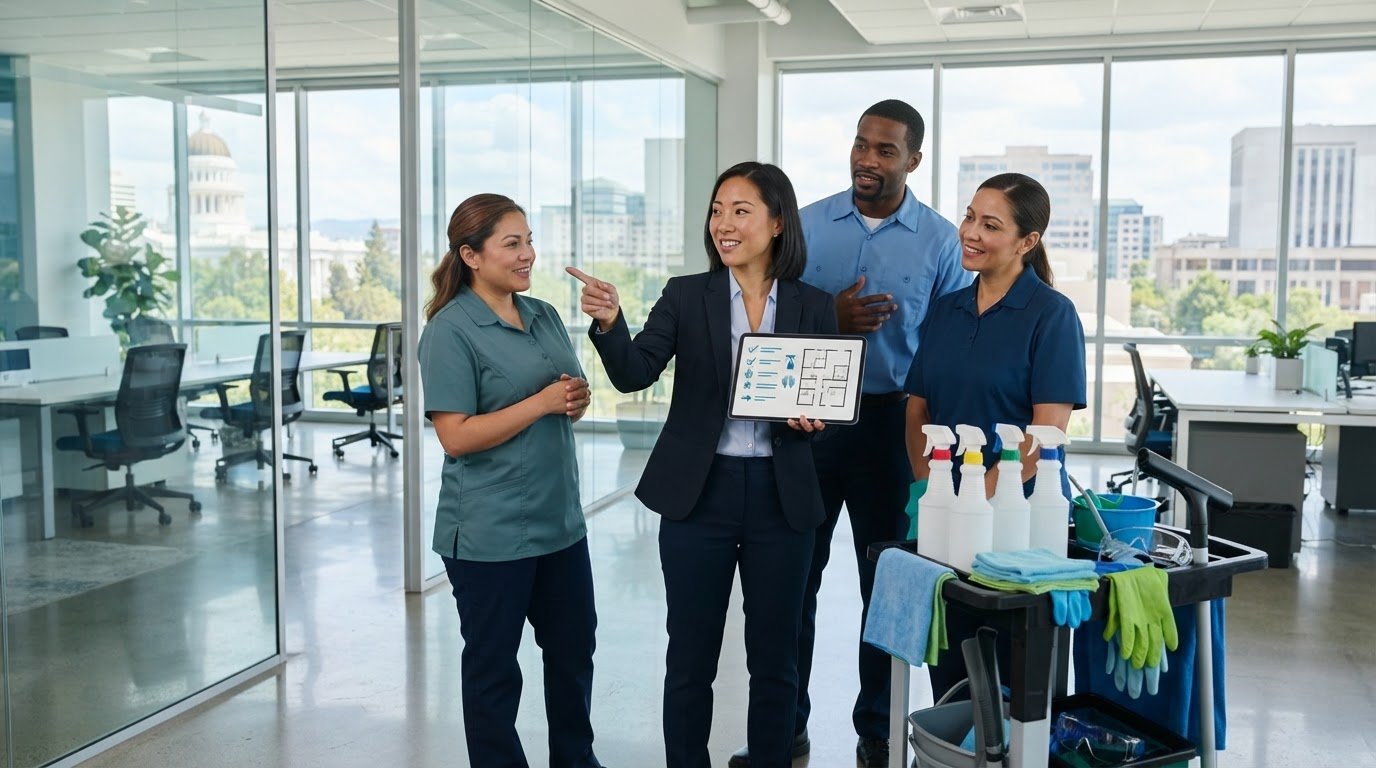
Across Greater Sacramento, divide clinic coverage by function rather than treating the facility as one uniform space. An outpatient exam room, reception area, and administrative office have different patterns of use. Map each space, identify patient and staff traffic, then assign tasks to the areas that need them. This gives clinics a practical basis for scheduling work across one site or several locations.
Start with patient-facing zones: examination rooms, waiting and admission areas, shared toilets, and public counters. Then map support spaces, including staff work areas and storage rooms. A room-by-room scope makes differences visible. For example, a waiting room’s seating arms and check-in counter need attention distinct from a low-traffic office desk. Give each zone its own task list and review process.
Routine plans also need a cycle beyond daily surface care. Medical office cleaning programs should include weekly detail dusting, interior glass cleaning, and full floor care beyond traffic lanes. Account for corners and less-traveled edges, not just patient walkways. Weekly planning can also cover glass panels and ledges that daily room resets may miss.
Some maintenance requires a longer interval. Schedule high dusting, machine floor work, deep restroom scrubbing, and waiting-area upholstery attention monthly to quarterly. Facility use and condition help determine the timing. For instance, a heavily used waiting area may need more frequent upholstery attention than a staff-only office. Similarly, broader facility protection—such as periodic pest management from specialists like Pestrol —can be scheduled on a recurring basis to safeguard clinical environments. Recording each task by area helps keep periodic work from being lost behind daily priorities.
For clinics with multiple suites or sites, use one coverage map and tailor each site’s checklist. Include these practical details:
- Area: identify the room or shared zone, such as reception or an exam suite.
- Task: record routine surface care separately from weekly or periodic floor and detail work.
- Timing: align the schedule with patient flow and the room’s purpose.
- Review: note completed tasks and any correction needed for that facility.
This approach keeps Greater Sacramento coverage consistent without assuming every clinic operates alike. A facility with frequent patient turnover may prioritize room resets and shared touchpoints; an administrative-only area can follow a lighter routine. Build coverage around each site’s rooms, traffic, and task cycle, then review the map as facility use changes to ensure compliance with medical clinic cleaning protocols Sacramento facilities require.
Partnering with Cleanit Maintenance Systems ensures proper alignment with each site’s needs. Sacramento County emergency medical services policies, procedures, and protocols define countywide EMS delivery. Sacramento County EMS materials are intended to help coordinate care and align it across the emergency medical services system.
Cleanit Maintenance Systems: Commercial Janitorial
Cleanit Maintenance Systems provides commercial janitorial and office cleaning for workplaces across Greater Sacramento. For medical offices, these services support routine care of shared spaces, floors, and general office areas, while the clinic maintains its own procedures for patient-care surfaces, sharps, and regulated waste.
Daily Cleaning Services can support a consistent routine, while Day Porter Services help maintain spaces during the workday. The right arrangement depends on your facility’s spaces, traffic, and cleaning schedule. These services can be a practical option when managing office cleaning alongside patient care adds to your team’s workload.
To discuss office cleaning for your facility, visit Cleanit Maintenance Systems online.
Make Your Cleaning Plan Work for Your Clinic
A dependable cleaning plan should fit your clinic’s operations without disrupting patient care. Use your medical clinic cleaning protocols in Sacramento to shape a clear working plan: identify the spaces that need attention, define how tasks are recorded, and coordinate cleaning around patient flow. Clear responsibilities also help staff understand where environmental cleaning ends and clinical duties begin.
As your facility’s routines change, revisit the plan with the people who use each space. A new room setup or change in patient traffic may affect how cleaning tasks fit into the day. Clear expectations help your team organize responsibilities and maintain a consistent approach.
Cleanit Maintenance Systems provides commercial janitorial, office cleaning, and daily cleaning services. If you’re ready to discuss a cleaning plan for your workplace, contact Cleanit Maintenance Systems. A thoughtful next step can help your team approach clinic upkeep with greater clarity and confidence.
Frequently Asked Questions
What are CDC guidelines for cleaning outpatient healthcare facilities?
The Centers for Disease Control and Prevention recommends cleaning high-touch surfaces and floors in outpatient consultation and examination areas at least twice daily. Assign tasks to specific rooms and surfaces rather than relying on one general checklist. For example, an exam-area schedule can distinguish a patient-care floor from a reception zone. Emergency department low-acuity exam areas also need attention after each case, as needed.
What disinfectants are approved for medical clinic surfaces, and what contact times are required?
Choose an EPA-registered disinfectant labeled for the intended surface and healthcare use, then follow its instructions. The EPA is responsible for antimicrobial pesticide registration and efficacy. Contact time varies by product, so follow the manufacturer’s stated dwell time rather than assuming all products work alike. Keep the surface wet for the full labeled interval before wiping, and follow label directions for dilution and safe use.
How should medical waste and sharps be handled during clinic cleaning?
Keep sharps and biohazard waste within the clinic’s separate medical-waste process, not routine surface cleaning. Licensed medical waste contractors handle biohazard waste removal. Cleaning crews care for environmental surfaces, while clinical staff typically manage surgical instrument sterilization. If blood or body fluid spills, clean and disinfect the affected area immediately, as soon as possible. Separate roles help direct each task to the appropriate workflow.
What infection-control steps are needed between patients in Sacramento clinics?
Before the next patient enters an outpatient exam room, clean and disinfect the surfaces used during the procedure. Shared noncritical patient-care equipment also needs cleaning and disinfection before and after each use. Follow the product’s labeled contact time and include surfaces touched during care. These steps give room turnover a clear infection-control purpose, while the clinic’s patient flow determines when staff can access the space.