A freshly cleaned carpet isn’t always ready for foot traffic as soon as the work is done. Drying time depends on the cleaning method, how much moisture remains in the fibers, airflow, humidity, and the carpet itself, so there isn’t one timeframe that fits every space. For businesses considering IICRC-certified carpet cleaners in Sacramento, understanding the method and the drying process can help with planning.
If you’re looking for IICRC certified carpet cleaners Sacramento, it helps to understand what the credential means and what a commercial carpet-cleaning visit involves. This guide covers the cleaning process, drying considerations, and how to plan service around your workplace.
You’ll also learn where service is available and how regular carpet maintenance can fit into a broader cleaning plan. The aim is a clear picture of what to expect, from the cleaning process to the steps that help keep a workplace orderly and welcoming.
Key Takeaways
- Learn how dry-soil removal and water-rinse extraction serve different roles in a professional carpet-cleaning process.
- Understand what IICRC certification says about a cleaner’s training and how it relates to carpet and upholstery work.
- See how the cleaning method, carpet, and site conditions affect drying time and help shape scheduling.
- Explore how planned carpet care can support a cleaner, more orderly commercial space.
- Find out how carpet cleaning can fit alongside janitorial and office cleaning for Sacramento-area workplaces.
Dry-soil removal and water-rinse extraction
Professional carpet cleaning often combines dry-soil removal with water-rinse extraction. The technician first inspects the carpet, traffic lanes, visible stains, and affected areas. This helps identify spots that may need focused treatment before the main cleaning begins. Removing dry soil, such as tracked-in grit, before adding moisture helps keep loose particles from mixing with water and settling deeper into the pile.
After soil removal, the technician chooses an approach suited to the carpet’s material and condition. With water-rinse extraction, cleaning solution loosens embedded soil, then extraction equipment lifts moisture and suspended residue from the fibers. Work is completed in manageable sections, with attention to entrances, hallways, and areas beneath desks. The technician can then review the cleaned sections and identify marks or areas that need further attention.
Do Sacramento carpet cleaners charge extra for stain removal, pet odor, or furniture moving? Pricing depends on the work involved and is provided after a quote request. Factors can include the stain type, odor treatment, furniture weight, and access. Clarifying these details helps define the scope before work begins.
Pet stains need a targeted inspection because the visible mark may not show the full affected area. A technician can assess the carpet fibers and surrounding surface, then select an appropriate treatment and extraction approach. Pet odor treatment focuses on the affected area rather than simply covering the smell. For upholstery, the material and location of the odor also affect the approach, since fabrics can respond differently to moisture and cleaning agents.
Specialty spot-removal training helps professionals assess stains before choosing a treatment. Coffee, ink, and oily marks require different approaches. The technician considers the stain, carpet fiber, previous treatments, and color stability. Rubbing or applying an unsuitable product can spread a mark or affect the material. Careful spot treatment starts by identifying the stain and surface, followed by controlled treatment and inspection.
What is included in a professional carpet cleaning service in Sacramento? A typical service includes inspection, dry-soil removal, targeted treatment of agreed stains, water-rinse extraction, and a final review. The exact work depends on the carpet’s condition and the agreed scope. Clarify furniture handling as part of that scope, since it affects which sections are accessible.
For commercial spaces, the cleaning sequence can account for busy corridors, office entrances, and carpeted meeting rooms. An inspection helps distinguish routine soil from stains that may need specialized attention before extraction. The resulting plan focuses on carpet condition, necessary treatment, and keeping essential spaces accessible.
IICRC certification in carpet and upholstery cleaning
The IICRC is an internationally recognized nonprofit organization made up of industry leaders. Its role is relevant to discussions of cleaning and restoration standards. For a carpet-cleaning customer, certification is a useful credential to discuss, but it doesn’t describe every service a cleaner performs. Ask which training applies to the material and treatment planned for your space.
Carpet, upholstery, rugs, tile, and luxury vinyl plank (LVP) have different surfaces and cleaning needs. A method appropriate for one material may not suit another. For example, a woven rug and an LVP floor respond differently to moisture and agitation. A useful assessment identifies the material, soil, stains, and previous treatments before selecting a process. For upholstery, the technician should consider the fabric and construction, not just the visible surface.
How can you compare carpet-cleaning quotes and avoid bait-and-switch pricing? Compare the written scope, including areas covered, stain treatment, furniture handling, and stated exclusions. An initial price is difficult to evaluate unless it is clear what work it includes.
Upholstery and mattress cleaning also depend on the item’s material and condition. A mattress has seams, quilting, and broad exposed surfaces; a sofa may combine several fabrics and cushions. The technician should explain the planned approach for the specific item. Leather upholstery has a different surface and finish from woven fabric, so identifying the material before treatment matters.
Tile cleaning presents a different challenge. Grout collects soil differently from the tile surface, while LVP has its own finish and construction. That is why a broad claim such as “all surfaces included” needs a clear definition. A deep clean should specify the material, work area, and treatment rather than rely on a general label.
What questions should you ask before hiring a carpet cleaner? Ask what certification or training applies to the requested work, which surfaces are included, how stains are handled, and what the quote excludes. Request a clear explanation of the process for carpet, upholstery, tile, rugs, or LVP, depending on your project.
For an office with carpeted rooms and upholstered seating, a written scope can help coordinate the work across both areas. Discuss a carpet-cleaning scope that identifies the surfaces and priorities involved.
Sacramento-area service coverage
Sacramento is California’s capital, and the local service focus centers strictly on the city itself. For commercial carpet cleaning, the service area is Sacramento proper. That city description helps businesses begin planning, but it doesn’t mean every address or border outside city limits is included. A facility’s exact location within Sacramento, access arrangements, and the work requested all shape practical scheduling.
Workplaces across Sacramento range from downtown offices to larger commercial properties within city limits. Planning starts with the site itself: its Sacramento address, carpeted rooms, access points, and operating schedule. A downtown Sacramento office may need focused attention in reception and corridors, while a facility in another Sacramento neighborhood may have different entry arrangements or larger carpeted sections. These details help define the work area.
Geography is only one part of coverage. The type of space matters, too. A carpeted office suite, a shared building corridor, and a multi-room workplace each present different access and traffic patterns. For office buildings and complexes within Sacramento, planning can account for common areas as well as individual workspaces. Clear room-by-room scope helps align the cleaning plan with the property.
To make a service request useful, organize the location details around the work:
- Identify the Sacramento street address and the specific building or suite.
- Describe carpeted areas, such as entryways, meeting rooms, or hallways.
- Note furniture, controlled entrances, and spaces that need continued access.
- Explain whether the work concerns one area or multiple parts of the property.
These details distinguish a focused job from a broader site plan. Cleaning a reception area alone, for example, differs from coordinating carpeted rooms across an office building. The Sacramento location gives geographic context, while the site details establish the actual scope. An address within the city and an outline of the work areas are more useful than a broad regional name alone.
Customer reviews can provide context about a service experience, but they do not define a service boundary. A review mentioning a Sacramento office describes that customer’s location and work, not out-of-town locations. Read location references alongside the facility and service described. This keeps feedback useful without treating an individual account as a coverage map.
For businesses located in Sacramento, connect the local address with the space that needs attention. A workplace with carpeted entrances, hallways, and furnished rooms benefits from a clear description of each area. That shared picture supports a focused scope and helps coordinate service around the facility’s daily use with professional IICRC certified carpet cleaners Sacramento.
Carpet drying time
Carpet drying time depends on the cleaning method, moisture left in the fibers, carpet construction, airflow, and room humidity. There is no single duration for every Sacramento workplace. A low-pile carpet in a ventilated room dries differently from dense carpet cleaned across a large, enclosed area. Extraction also matters: removing more moisture during cleaning leaves less water to evaporate afterward.
Three factors help explain the difference:
- Carpet construction: Dense or thick fibers can retain more moisture than a low-pile surface.
- Room conditions: Air movement and humidity affect how quickly moisture evaporates.
- Cleaning scope: Heavily soiled sections or targeted pet-stain treatment may involve additional moisture.
These factors work together. A carpeted meeting room with limited airflow may dry differently from an open office corridor, even after similar cleaning. A thorough service balances soil removal with careful moisture extraction, leaving as little moisture as the method allows.
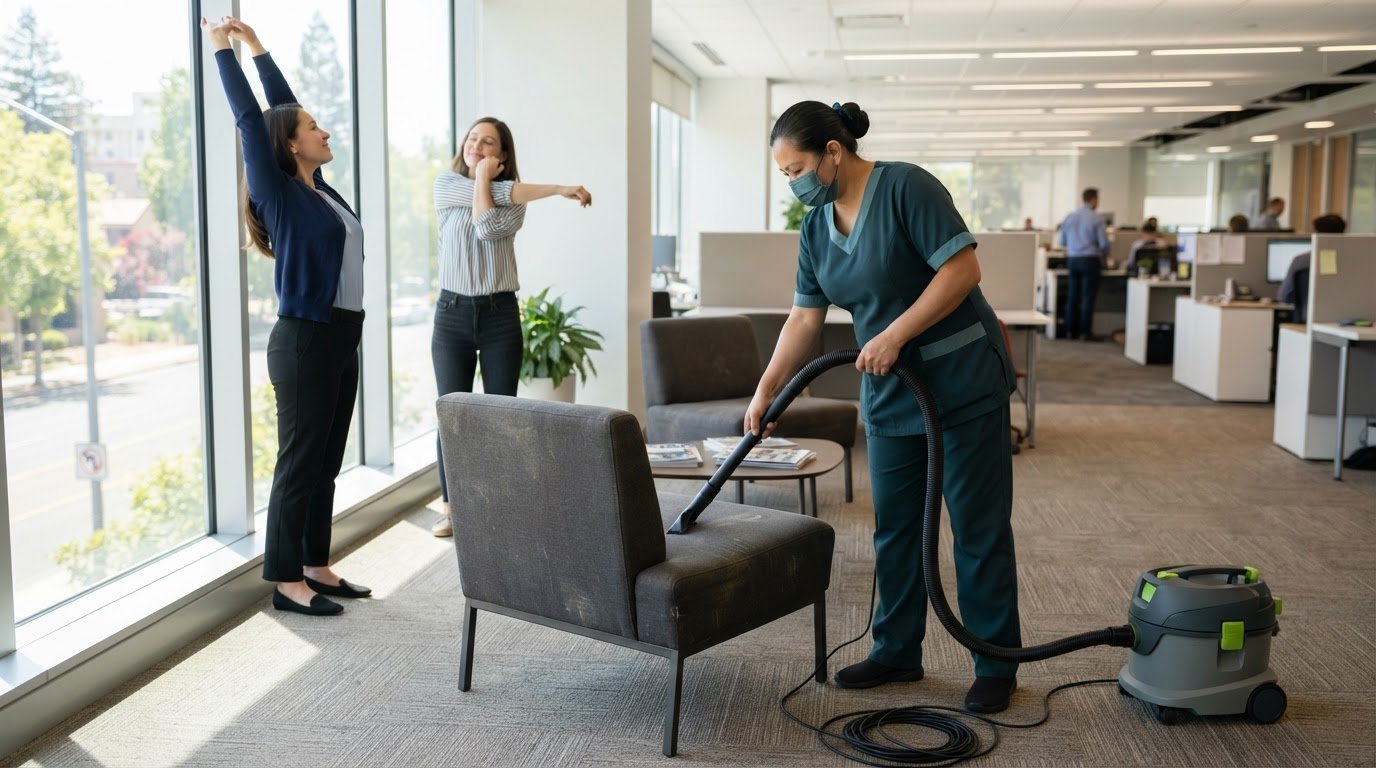
Plan cleaning around how the space will be used afterward. A workplace with steady foot traffic may need cleaned areas kept clear while they dry. In an office, the sequence could start with a meeting room, followed by corridors or shared areas. This lets staff plan around the work instead of crossing damp carpet immediately.
Pet stains can affect both treatment and scheduling. A technician may focus on a particular area rather than treat the entire room in the same way. The location and extent of the affected carpet shape the work, while moisture extraction and airflow influence drying. Discussing these areas during the initial inspection helps set a practical plan for the rooms involved.
To coordinate a cleaning schedule, identify the rooms, traffic patterns, and times when each area can remain unused. A busy reception area needs different planning from a private office with limited entry. In larger workplaces, dividing the job into sections can preserve access to essential routes while other carpeted areas are being cleaned.
After cleaning, keep foot traffic off damp carpet and follow the technician’s instructions for the space. Furniture placement can affect airflow near the carpet, so account for chairs, tables, and other items in the work plan. If part of a room still feels damp, do not treat it as ready for normal use. A room-by-room schedule makes access easier to manage and helps return areas to service in order.
Commercial carpet maintenance
Commercial carpet stays in better condition when routine care removes soil before it settles deep. In a Sacramento office, entrances collect grit from shoes, while corridors take repeated foot traffic. A maintenance plan combines daily attention with periodic professional cleaning, directing effort according to how each area is used.
Start by mapping the building’s carpeted areas. Mark entrances, reception, hallways, meeting rooms, and spaces beneath desks, then note where soil or visible wear appears most often. This simple site map helps focus attention where it is needed instead of applying the same effort to quiet offices and busy shared routes.
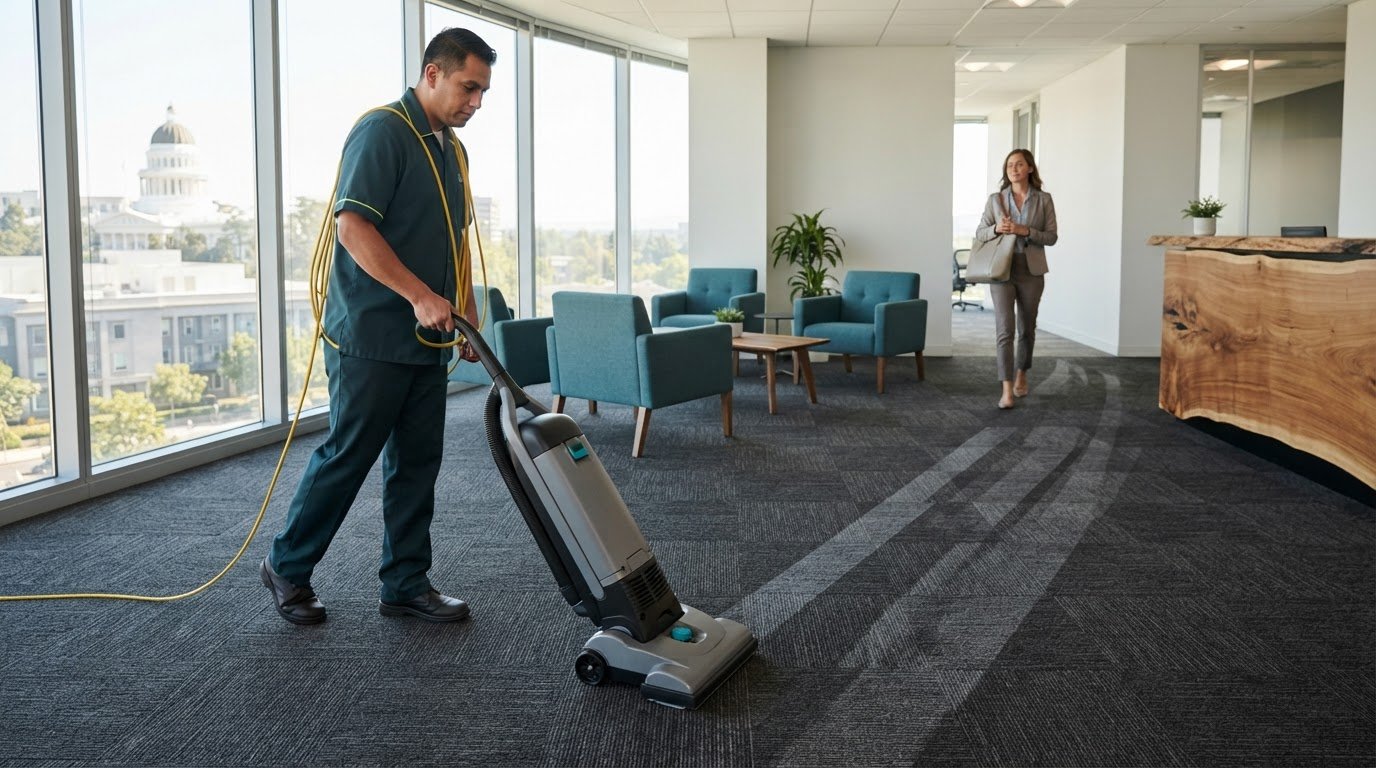
Routine vacuuming removes loose soil before it gets worked into carpet fibers. Set the schedule according to actual use: an entrance used throughout the workday needs more attention than a rarely occupied conference room. Address spills promptly through the established cleaning process. Staff should report the location and material involved so the maintenance team can choose an appropriate approach.
Professional carpet cleaning can remove embedded soil that routine vacuuming leaves behind. Planning by zones helps limit disruption. A facility might prioritize reception and corridors separately from offices, then coordinate each area around its normal use. Office cleaning can also fit into a broader upkeep plan, with carpet care considered alongside shared work areas.
A useful maintenance plan records practical details, not just cleaning dates. Track treated locations, recurring stains, high-traffic areas, and changes in how rooms are used. If a meeting room becomes a daily collaboration space, its carpet may need closer attention. These observations help refine future schedules without guesswork or a one-size-fits-all routine.
For commercial properties in California, effective care matches the building’s real conditions: carpet type, entrances, furniture placement, and business activity. It also coordinates cleaning so staff can use other areas while one section is being serviced. A clear plan makes responsibilities easier to follow and supports consistent maintenance across the property.
Regular care helps maintain a clean-looking workplace by addressing visible soil and keeping shared spaces presentable. It complements, but does not replace, other workplace cleaning needs. Review the plan when traffic patterns change, after renovations, or when soil repeatedly appears in a particular area. These checkpoints keep the routine relevant as the workplace evolves.
For a practical next step, outline the carpeted zones and note which areas see the most daily use. Discuss a commercial carpet maintenance plan that fits your facility’s layout and operating needs.
Cleanit Maintenance Systems: Carpet Cleaning
Cleanit Maintenance Systems provides commercial carpet cleaning in Greater Sacramento. Choose professional service when office carpets need attention, whether the concern is recurring soil in busy areas or planned maintenance. Carpet cleaning can also complement commercial janitorial, office cleaning, and daily cleaning services.
Before service, identify the rooms and carpeted areas that need attention, along with any access or scheduling considerations. A clear scope helps align the work with your facility’s daily operations and cleaning priorities.
Contact Cleanit Maintenance Systems to discuss carpet cleaning for your commercial space.
Plan the Next Step for Your Workplace
If you’re looking for IICRC certified carpet cleaners Sacramento, connect carpet care with the way your workplace operates. Identify the areas needing attention, how staff use them, and whether cleaning should fit into a broader facility plan. This gives the service discussion a practical starting point based on your space.
Cleanit Maintenance Systems provides carpet cleaning alongside commercial janitorial, office cleaning, and daily cleaning services. These services help businesses coordinate floor care with regular workplace needs. Outline your facility and priorities to discuss a suitable scope.
Contact Cleanit Maintenance Systems to discuss carpet cleaning for your workplace and take a considered next step toward ongoing care.
Frequently Asked Questions
How long does it take for carpets to dry?
Drying time varies with the carpet and room conditions, so plan around the specific space rather than a fixed duration. In a commercial building, arrange another route or room for access while the cleaned area dries. Carpet may feel dry on the surface before deeper layers release moisture. Follow the technician’s guidance on returning furniture and foot traffic, especially in enclosed rooms or busy corridors.
Can you remove tough stains like wine or pet urine?
Professional treatment can target wine marks, pet urine, and other difficult stains. The technician assesses the stain, carpet material, and previous treatments before choosing an approach. A set-in mark may respond differently from a recent spill. Pet urine can also leave odor in affected areas, so treatment should address the source area rather than simply mask the smell.
How Do Dirty Carpets Affect Indoor Air Quality?
Carpet can collect tracked-in soil, dust, and other particles carried into a workplace on shoes or equipment. Foot traffic may disturb some of this material, while routine vacuuming and professional cleaning help remove accumulated soil. An entrance near a parking area, for example, may collect different debris from a private office. Carpet care supports general cleanliness but does not replace other measures for managing indoor air.
How Should I Prepare for a Professional Carpet Cleaning Appointment?
Help the cleaning team plan by identifying the rooms, access points, and areas needing attention. For example, note whether a conference room contains equipment that must stay in place or whether a corridor needs to remain accessible. Share known spills or previous treatments, since they can affect the work plan. IICRC-certified carpet cleaners in Sacramento can use those details to understand the site and requested scope.
How Do Professionals Clean High-Traffic Carpet Areas?
Professional carpet care focuses on areas with repeated use, such as entrances, reception paths, and corridors between workstations. The technician assesses visible wear and embedded soil, then selects treatment based on the carpet and its condition. In a Sacramento office, traffic may follow a route from the entrance to shared rooms. Keeping those patterns in mind directs care to the busiest carpeted sections.
Is your cleaning process safe for pets and children?
Keep pets and children out of active work areas during cleaning and until the carpet is ready for normal use. Share occupancy or access concerns before service, particularly in a workplace where visitors may bring children or animals. The cleaning team can explain product instructions and site precautions for the planned work. Follow the directions provided for the specific process and space.
What Is the IICRC?
The IICRC is an internationally recognized nonprofit organization that develops standards for cleaning and restoration work. In carpet care, its name is relevant when discussing professional training and credentials. The organization is not the cleaner performing work at a Sacramento site. For a commercial project, clarify which training applies to the requested service and material.
Where can I find IICRC-certified carpet cleaners in Sacramento, CA?
Cleanit Maintenance Systems provides commercial carpet cleaning in Greater Sacramento. IICRC certification relates to professional training, while the cleaning method depends on the carpet and job scope. Businesses can outline the rooms and priorities needing attention, then discuss how carpet care can fit their facility’s operations.