Most facility managers view exterior cleaning as a simple cosmetic touch-up, but professional commercial pressure washing Sacramento CA properties depend on is actually an essential asset preservation and regulatory risk mitigation program. When stubborn oil slicks, ground-in gum, and heavy tire marks accumulate across parking stalls and walkways, they do more than undermine curb appeal. They create genuine slip hazards, accelerate surface erosion, and can trigger substantial municipal fines under local runoff regulations if handled improperly.
Keeping high-traffic flatwork clean while avoiding surface etching and protecting nearby storm drains shouldn't feel like an operational gamble. In this guide, you'll discover how commercial pressure washing protects Sacramento properties, satisfies California environmental standards, and enhances exterior curb appeal. We will examine critical wastewater recovery rules, proper pressure thresholds, and the operational standards required to select a dependable local partner who keeps your business spotless and fully compliant.
Key Takeaways
- Understand how Central Valley dust, agricultural particulate, and vehicle exhaust accelerate exterior wear across commercial concrete and building envelopes.
- Distinguish between high-pressure surface cleaning and low-pressure chemical soft washing to effectively remove contaminants without causing costly structural etching.
- Discover how professional commercial pressure washing Sacramento CA facilities rely on ensures strict compliance with regional stormwater discharge rules and wastewater recovery mandates.
- Identify the vital licensing, liability coverage, and operational vetting criteria necessary to protect your commercial property from contractor negligence.
- Explore the efficiency of integrating exterior power washing with ongoing commercial janitorial programs to streamline facility maintenance under one proven team.
Why Commercial Pressure Washing Matters for Sacramento Properties
First impressions dictate how prospective corporate tenants, visiting executives, and clients evaluate your commercial facilities. When managed properties display grime-streaked walkways or oil-stained parking aprons, they unintentionally project operational neglect. Professional pressure washing does far more than restore visual aesthetics. It acts as an active risk-mitigation strategy that protects physical infrastructure, eliminates pedestrian slip-and-fall hazards, and upholds corporate asset values across Greater Sacramento.
Sacramento Environmental Factors Accelerating Exterior Wear
The Sacramento Valley climate introduces specific environmental challenges rarely seen in coastal markets. Triple-digit summer heat acts like an industrial oven, baking motor oil, coolant drips, and hydraulic fluids directly into porous parking lot asphalt and concrete. Simultaneously, agricultural particulate drifting from the Central Valley combines with urban traffic exhaust along the I-5 and Business 80 corridors, settling as a persistent abrasive layer across building facades.
When winter rain cycles arrive, these settled particulates mix with organic pollen to form slick, invisible films across entry plazas. Without regular intervention, concrete surfaces steadily degrade under acidic vehicle residues and chemical oxidation—a process worsened by uncontrolled roof runoff, which exterior maintenance resources like Snugs Services recommend addressing through properly positioned downspouts and drainage pathways.
Protecting Physical Assets and Commercial Curb Appeal
Routine exterior decontamination directly extends the lifespan of expensive site assets. Left unaddressed, chewing gum and grease eat into concrete sealers, requiring costly flatwork replacement years ahead of schedule. Investing in scheduled commercial pressure washing Sacramento CA property managers rely on provides critical advantages:
- Extended flatwork longevity: Deep extraction lifts petroleum distillates before they penetrate and weaken the structural concrete slab.
- Enhanced tenant retention: Clean entryways at prominent office buildings and complexes reassure high-value corporate tenants that property management is actively maintaining building standards.
- Pest mitigation: Sanitizing dumpster enclosures and compactor pads washes away decaying sugars, cooking fats, and beverage syrups that otherwise attract rodent infestations.
- Liability reduction: Pressure-cleaning grease-coated restaurant sidewalks and parking stalls keeps common pathways slip-resistant during rainy months.
Commercial Pressure Washing vs. Soft Washing: Selecting the Right Technique
Selecting the proper exterior cleaning method requires understanding the vital distinction between mechanical water pressure, measured in pounds per square inch (PSI), and water volume, measured in gallons per minute (GPM). Inexperienced operators often rely on blunt pressure to blast away grime, which can cause permanent structural etching and costly property damage. Professional guidelines established by organizations like the Power Washers of North America (PWNA) emphasize matching water temperature, chemical action, and mechanical force directly to the exterior material being treated.
High-Pressure and Hot-Water Surface Washing Applications
Durable, porous flatwork such as loading docks, parking ramps, and fuel islands requires high thermal energy rather than raw, uncalibrated force. Standard cold water only smears settled petroleum deposits across concrete. Heated pressure systems elevate water temperatures above 180 degrees Fahrenheit to liquefy deep oil drips, diesel exhaust soot, and industrial residues, allowing them to release cleanly from concrete pores.
Industrial rotary surface scrubbers pair this thermal cleaning with balanced water volume. Moving large volumes of water across wide surfaces lifts detached particulate evenly, avoiding the zebra striping, wand gouging, and surface spalling frequently seen in commercial spaces and heavy manufacturing facilities.
Low-Pressure Soft Washing for Delicately Finished Surfaces
Delicate vertical substrates require a chemical-first process known as soft washing. Architectural coatings, exterior insulation and finish systems (EIFS), and historic masonry cannot withstand high-pressure blasting. Excessive pressure strips exterior paint, gouges historic Sacramento brick, shatters aged mortar, and forces moisture past window seals directly into interior wall cavities.
Soft washing relies on dedicated low-pressure delivery systems operating below 500 PSI. Crews apply specialized, biodegradable cleaning agents that dwell on surfaces to dissolve dirt, break down biological mold spores, and neutralize airborne agricultural residue. This low-impact approach safely restores exterior substrates without risking structural compromise:
- Stucco and EIFS facades: Rinses clean without puncturing moisture barriers or degrading thermal cladding.
- Commercial fabrics: Safely clears algae from canvas entry awnings without tearing stitched seams.
- Architectural signage: Cleans acrylic and vinyl lettering without compromising adhesives or protective UV clear coats.
Balancing these distinct techniques across a complex property is the foundation of comprehensive commercial pressure washing Sacramento CA business owners depend on. If your building features multiple substrates requiring specialized cleaning, you can reach out to discuss customized exterior care with an experienced site specialist.
Sacramento Stormwater Compliance and Water Reclamation Standards
Exterior surface cleaning in Northern California carries serious legal responsibilities. Wash water generated from commercial flatwork isn't just dirty water; it contains motor oils, suspended heavy metals, brake dust, and chemical degreasers. Under Sacramento County Code Chapter 15.12, allowing this untreated effluent to enter the municipal storm drain system is strictly prohibited. Because storm drains flow directly into the American and Sacramento Rivers without treatment, regional environmental regulators hold property managers and service contractors jointly accountable for unauthorized runoff.
Understanding California Regional Water Quality Control Regulations
Regional water quality control boards enforce zero-tolerance policies for illicit surface discharges. Local enforcement protocols follow the "Preventing Stormwater Pollution: Best Management Practices (BMPs) For Pressure Washing And Surface Cleaning In The Greater Sacramento Area" booklet, which establishes strict containment guidelines under the federal Clean Water Act. Many facility managers assume an outside vendor assumes all legal exposure. In reality, municipal enforcement officers can issue substantial administrative fines directly to the property owner if an unvetted contractor lets contaminated wash water escape into street gutters.
Professional Wastewater Containment and Reclamation Procedures
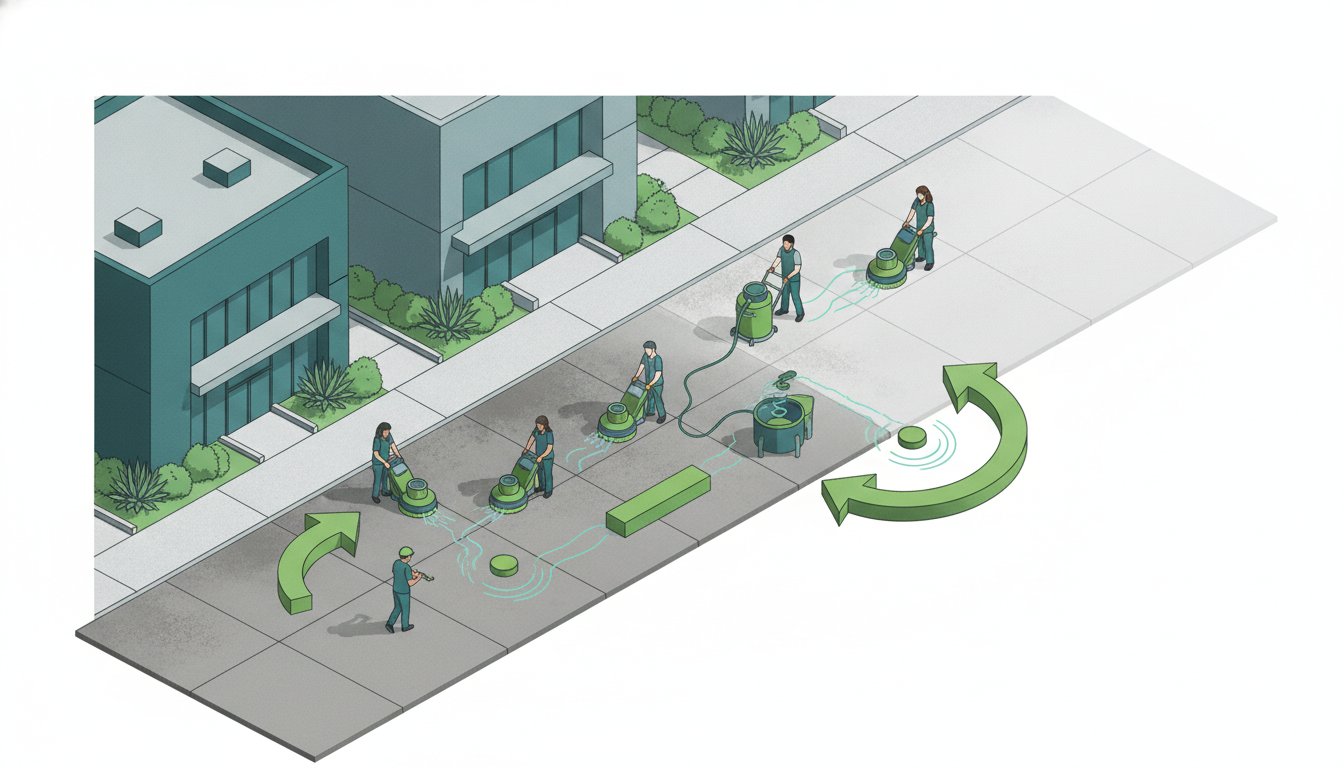
Compliant commercial pressure washing Sacramento CA properties require involves specialized containment equipment long before cleaning begins. A disciplined exterior team implements a multi-step reclamation sequence on every job site:
- Drain isolation: Technicians map the site gradient and block surrounding storm drains and catch basins using weighted polyurethane berms, magnetic rubber mats, and absorbent containment snakes.
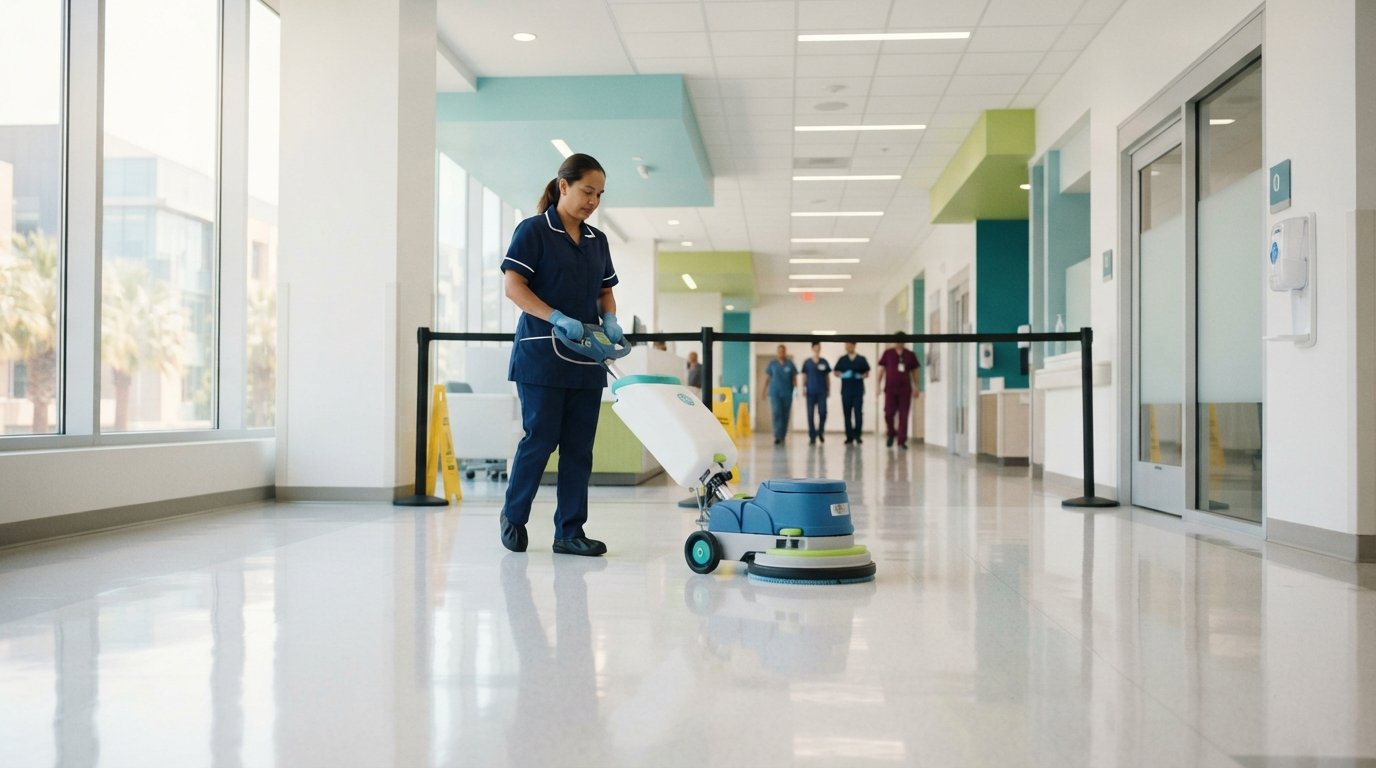
- Vacuum recovery: Industrial, trailer-mounted vacuum systems extract wash water directly at the cleaning head or berm pooling points, routing the slurry into holding tanks for mechanical filtration.
- Authorized disposal: Captured water is legally discharged into an approved sanitary sewer clean-out, utility sink, or designated oil-water separator with the facility owner's permission, keeping untreated toxins out of local river basins.
Executing this thorough reclamation cycle eliminates regulatory vulnerability for commercial business parks, industrial warehouses, and sensitive sites like laboratories and clinics across Sacramento.
How to Choose a Commercial Pressure Washing Partner in Sacramento
Selecting an exterior maintenance vendor requires looking far beyond standard consumer review websites. Residential pressure washers often claim to serve corporate facilities, yet they frequently lack the high-capacity machinery, insurance limits, and safety protocols necessary for active commercial properties. Partnering with a vetted team ensures your grounds reflect executive standards while safeguarding your organization from operational liabilities.
Verifying Insurance, Safety Records, and Regulatory Compliance
Industrial washing systems generate immense hydraulic force and thermal energy. If an unlicensed or underinsured operator damages your exterior facade, cracks decorative pavers, or injures a pedestrian, your enterprise could absorb the financial fallout. In California, contractors performing exterior blasting and surface washing should hold proper specialty licensing, such as the C-61/D-38 classification from the Contractors State License Board.
Protect your facility by requiring comprehensive documentation before any equipment enters your parking deck:
- Commercial insurance limits: Request a current certificate of insurance demonstrating substantial commercial general liability and comprehensive workers' compensation policies covering high-pressure industrial equipment.
- Documented wastewater controls: Confirm the contractor provides written plans detailing how they capture, filter, and divert wash water away from storm catch basins.
- Pedestrian protection protocols: Require clearly outlined safety boundaries, including bright physical barriers, directional signage, and perimeter spotters to isolate active work zones from foot traffic.
Equipment Capability and Off-Hours Operational Flexibility
True commercial capacity requires serious machinery. Light-duty consumer carts bought at local home improvement centers simply cannot lift stubborn hydrocarbons across 50,000 square feet of flatwork. Commercial contractors utilize truck- or trailer-mounted units equipped with diesel-fired water heaters, high-volume pumps, and dedicated water transport tanks so they do not drain your municipal connections.
Equally critical is operational flexibility. Cleaning heavily trafficked entryways, parking lots, and loading docks during regular business hours frustrates tenants, creates parking bottlenecks, and exposes customers to overspray. Vetted partners routinely schedule high-decibel operations during evenings or weekend windows. This ensures corporate facilities, medical centers, and multi-tenant office buildings and complexes remain fully functional and spotless by Monday morning.
Consolidating these exterior demands with a proven partner eliminates the administrative headache of juggling separate vendors. If you need a dependable evaluation of your property's exterior maintenance schedule, contact our local facility team today to review your site requirements and confirm the standard of commercial pressure washing Sacramento CA facilities deserve.
Integrated Commercial Exterior Solutions with Cleanit Maintenance Systems
Managing multiple specialty contractors for window washing, flatwork pressure cleaning, and indoor custodial care strains administrative bandwidth and leads to fragmented property oversight. Cleanit Maintenance Systems brings over 30 years of trusted commercial building stewardship to Greater Sacramento facilities since 1994. By providing unified exterior and interior maintenance programs, we eliminate vendor coordination friction while holding every square foot of your property to rigorous, professional standards.
Comprehensive Facility Care Under One Trusted Local Partner
Exterior walkways act as the primary filter for your interior flooring. When asphalt grit, vehicle grease, and pollen settle outside your entrance, foot traffic immediately tracks those contaminants through lobbies and corridors. Pairing exterior wash schedules with ongoing daily cleaning services creates a cohesive defensive barrier that preserves high-traffic flooring.
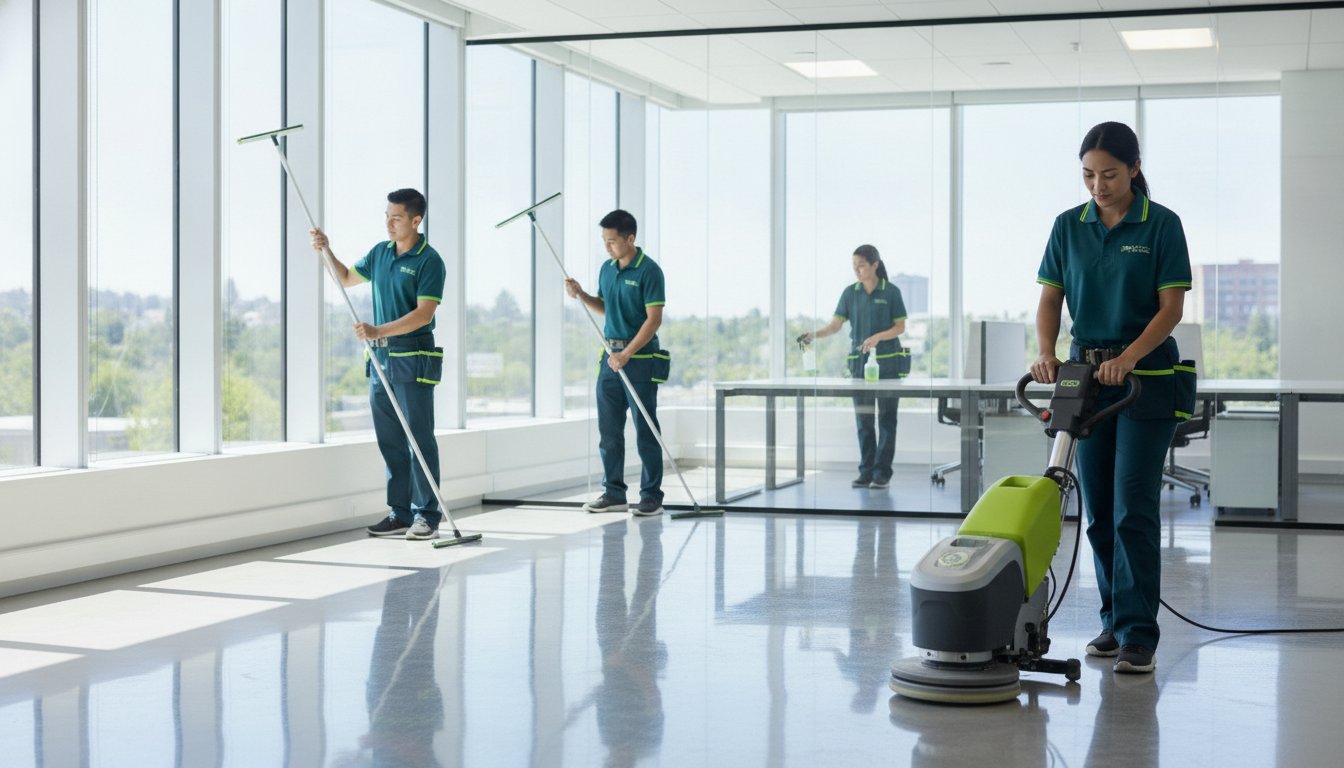
Our cross-trained crews coordinate site services so tasks support one another logically:
- Flooring preservation: Maintaining spotless entry aprons significantly reduces soil abrasion on interior vestibules and extends intervals between deep carpet cleaning cycles.
- Synchronized window care: Scheduling facade washing alongside exterior window washing prevents hard-water spray from leaving chalky mineral deposits on freshly polished glass.
- Unified accountability: A single point of operational contact oversees your facility, ensuring consistent execution across corporate offices, industrial hubs, and retail plazas.
Every technician representing our team is thoroughly vetted, fully licensed, and rigorously trained in California environmental compliance. That disciplined background gives commercial property owners genuine peace of mind, knowing work is executed safely and without disruption to daily business hours.
Schedule Your Sacramento Facility Exterior Assessment
Every commercial property presents distinct operational challenges, from differing architectural substrates and heavy grease loading zones to complex stormwater drainage configurations. Rather than applying generic cleaning templates, our leadership team performs detailed on-site assessments to map your property's specific physical contours and drainage pathways.
During our walk-through, we identify delicate surfaces requiring soft-wash chemistry, isolate storm drain basins requiring mechanical containment, and evaluate optimal off-hours timing windows. You receive a clear, customized exterior care plan engineered around the exact needs of your site. Partnering with Cleanit Maintenance Systems delivers reliable, compliant commercial pressure washing Sacramento CA enterprises trust to maintain impeccable curb appeal and complete environmental safety year after year.
Elevating Your Commercial Facility Standards with Confidence
Maintaining clean commercial flatwork is fundamentally about long-term asset preservation and proactive risk management. Balancing hot-water thermal extraction across high-traffic concrete with gentle soft washing on sensitive facades protects structural integrity while eliminating pedestrian trip and slip hazards. When paired with disciplined stormwater containment, scheduled washing ensures your operations satisfy regional environmental mandates without unexpected municipal fines.
For over 30 years since 1994, Cleanit Maintenance Systems has provided trusted commercial building care across the Sacramento region. Our fully insured, background-checked technicians integrate exterior surface washing with comprehensive janitorial programs to remove operational friction and protect your bottom line. When you're ready to safeguard your grounds with dedicated commercial pressure washing Sacramento CA properties depend on, partner with Cleanit Maintenance Systems for reliable Sacramento exterior maintenance. Let's work together to ensure your property consistently projects excellence, safety, and welcoming professionalism every day.
Frequently Asked Questions
How often should a commercial property in Sacramento schedule pressure washing?
Most commercial facilities benefit from a quarterly exterior washing schedule, though specific frequencies depend heavily on site usage. High-traffic retail entryways, restaurant sidewalks, and dumpster pads often require monthly service to control grease and food waste. General office building walkways and parking structures typically maintain clean, slip-resistant conditions with semi-annual service, particularly following the pollen-heavy spring and the dusty Central Valley summer harvest.
What is the difference between commercial pressure washing and power washing?
The primary distinction lies in water temperature. Standard commercial pressure washing utilizes unheated water delivered under mechanical pressure to dislodge loose surface dust, dirt, and light environmental debris. Power washing introduces an industrial burner system to heat water above 180 degrees Fahrenheit. This elevated thermal energy melts stubborn engine oil slicks, diesel residue, and chewing gum from hard surfaces far more effectively than cold water alone.
How do professional cleaners keep wash water out of Sacramento storm drains?
Technicians deploy physical containment barriers, magnetic drain covers, and weighted berms around downhill catch basins before washing begins. Powerful vacuum reclamation units then capture the pooling effluent directly from the pavement. The recovered wastewater is routed through filtration tanks to extract heavy particulates before compliant discharge into an approved sanitary sewer clean-out or oil-water separator, fully honoring Sacramento County environmental mandates.
Can high-pressure washing damage commercial building facades or exterior stucco?
Yes, excessive pressure easily shears exterior paint, etches historic masonry, and tears through delicate stucco or exterior insulation finishing systems (EIFS). Professional contractors protect these vulnerable vertical surfaces by using a chemical-first soft washing method. This technique pairs specialized biodegradable cleaning agents with water pressure below 500 PSI, dissolving mold, mildew, and airborne dust without degrading structural moisture barriers or voiding facade warranties.
Is pressure washing conducted during regular commercial business hours?
Experienced commercial contractors rarely perform loud surface cleaning during standard operating hours. To prevent pedestrian overspray, safety hazards, and parking disruptions, washing is scheduled during evening, overnight, or weekend windows. Off-hours flexibility ensures that multi-tenant corporate centers, medical facilities, and retail plazas receive comprehensive commercial pressure washing Sacramento CA properties require without interrupting daily customer access or normal workflow.
Why is hot water essential for cleaning commercial loading docks and dumpster areas?
Industrial loading docks and trash enclosures accumulate concentrated petroleum hydrocarbons and hardened animal fats that adhere tenaciously to porous concrete. Cold water lacks the kinetic energy to liquefy these stubborn binders, merely spreading grease across a wider footprint. Sustained hot-water power washing breaks molecular bonds within heavy grease, emulsifying the buildup so vacuum recovery systems can extract it completely down to the clean slab.
What legal liabilities do Sacramento property owners face regarding wastewater runoff?
Sacramento property owners share direct joint liability with contractors under the federal Clean Water Act and Sacramento County Code Chapter 15.12. If an unvetted vendor discharges untreated wash water carrying oils, chemicals, or heavy metals into storm drains, regional enforcement officers can issue severe administrative fines directly to the facility. Hiring an established, compliant commercial pressure washing Sacramento CA partner ensures proper wastewater reclamation and eliminates regulatory exposure.