Pushing a damp mop across a tile floor doesn't sanitize a restroom; it often just redistributes contaminated water and pushes organic soils deeper into porous grout. If you oversee regional properties and are evaluating professional restroom sanitation services Sacramento businesses depend on, you know how frustrating chronic uric acid odors and dingy fixtures can be. Routine surface wiping simply cannot keep pace with high foot traffic or prevent cross-contamination from reaching shared workspaces.
True environmental protection requires clinical soil extraction and systematic biofilm removal, stopping bacterial reservoirs at their biological source. In this guide, you'll discover how specialized sanitation methods eliminate persistent restroom odors, maintain strict compliance under Cal/OSHA workplace standards, and elevate daily tenant satisfaction. We'll walk through the essential hygiene protocols, equipment standards, and proactive oversight strategies that protect your Sacramento facility from the ground up.
Key Takeaways
- Understand why clinical soil removal and true biological decontamination outperform basic custodial mopping every time.
- Explore the four-stage protocol necessary to dismantle resilient surface biofilms and neutralize microscopic pathogen reservoirs.
- Learn how professional restroom sanitation services Sacramento facilities rely on resolve chronic uric acid odors without relying on chemical masking agents.
- Discover the vital insurance, regulatory registration, and personnel screening criteria needed to vet local commercial providers safely.
- See how pairing deep sanitization with daily commercial janitorial and day porter care creates lasting peace of mind for facility managers.
Commercial Restroom Sanitation Services in Sacramento: Clinical Care vs. Basic Mopping
While standard custodial work focuses on superficial tidiness, true facility hygiene demands microbiological decontamination. Online searches often confuse commercial facility care with temporary portable toilet rentals, but permanent commercial buildings face far more complex environmental demands. Routine surface wiping simply rearranges surface dust. By contrast, specialized commercial restroom sanitation targets and eliminates invisible bacterial reservoirs across fixtures, partitions, hardware, and floor substrates. For property directors and operations teams, investing in technical restroom sanitation services Sacramento businesses trust directly protects indoor environmental quality, preserves tenant satisfaction, and safeguards physical asset values.
The Hazards of Traditional Mop-and-Bucket Methods
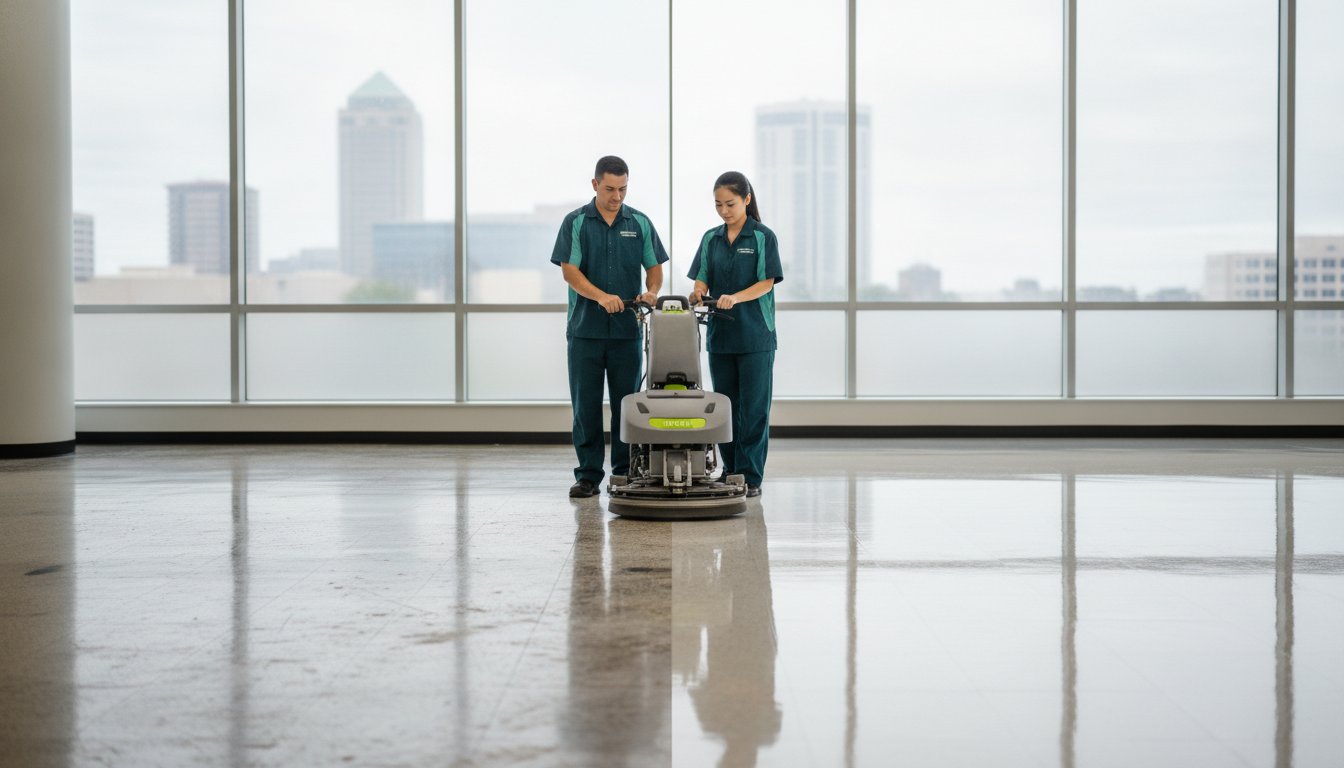
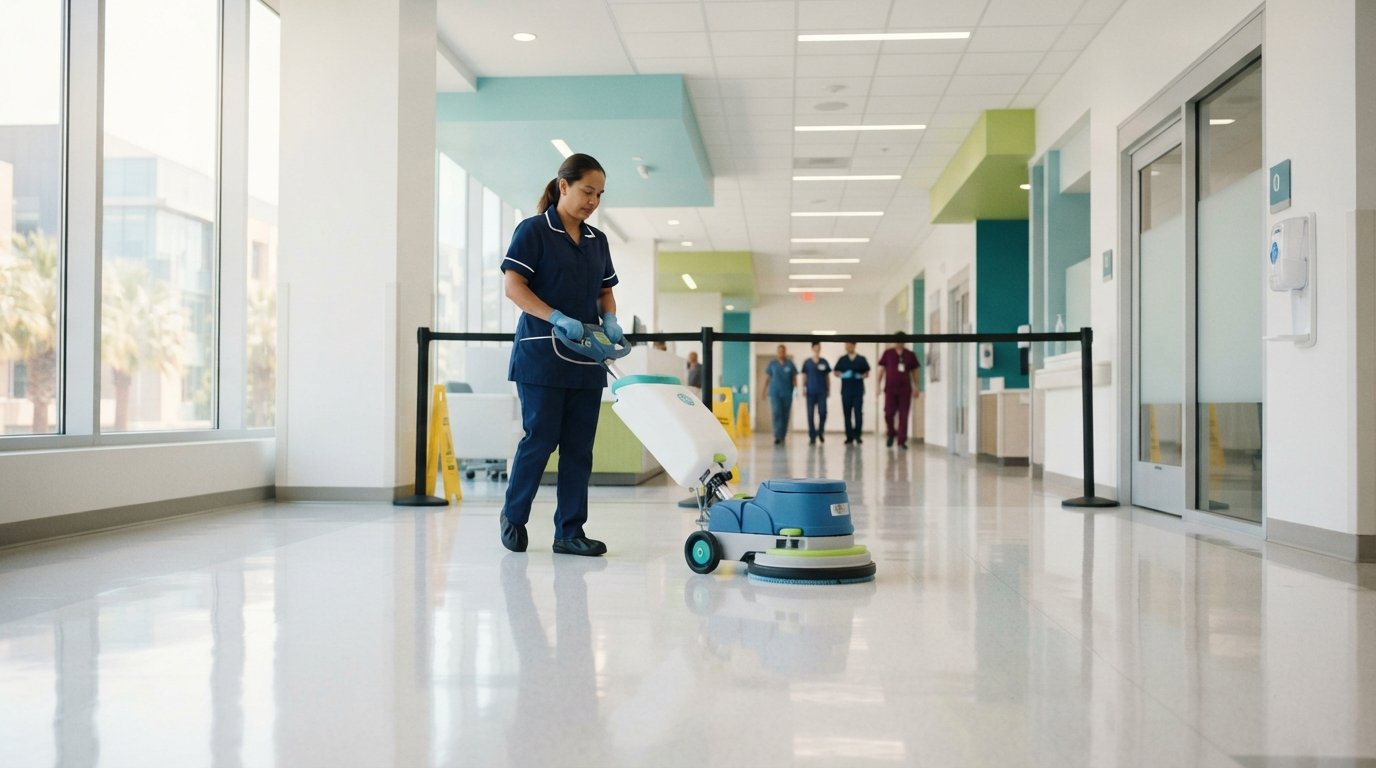
Traditional string mops remain one of the primary vectors for cross-contamination in commercial buildings. After a single pass across a restroom floor, rinse water becomes contaminated with suspended bacteria, uric acid salts, and biological soils. Dipping that same mop back into the bucket merely spreads contaminated liquid across porous ceramic tile and unsealed grout lines. Over time, this moisture feeds stubborn bacterial biofilms that resist common deodorizers and emit chronic, pungent odors. Rather than pushing contaminated water across floors, modern clinical protocols deploy touchless chemical application and low-pressure soil extraction systems. These systems actively lift contaminants from grout pores and vacuum them directly into sealed recovery tanks, establishing an ideal sanitary baseline alongside routine daily cleaning services.
Regulatory Compliance: Cal/OSHA and Sacramento Health Expectations
Maintaining sanitary restrooms is also a mandatory workplace compliance standard across California. Cal/OSHA regulations require employers to maintain clean, sanitary, and fully functional toilet facilities equipped with proper handwashing stations, running water, and sanitary supplies. At a fundamental level, commercial public health relies on the safe disposal of human urine and faeces to prevent infectious cross-contamination across shared interior spaces. High-occupancy corporate centers and medical clinics carry distinct liabilities if sanitation lapses lead to viral outbreaks or compliance infractions. Meeting these benchmarks requires disciplined sanitization schedules:
- High-density corporate offices: Daily fixture disinfection combined with monthly or quarterly deep soil extraction.
- Medical and laboratory settings: Daily hospital-grade germicidal decontamination backed by documented compliance logs.
- Multi-tenant commercial buildings: Continuous day porter touchpoint wiping paired with structured chemical deep sanitization.
Securing specialized restroom sanitation services Sacramento facility directors rely on keeps high-traffic buildings fully compliant, odor-free, and safe for every occupant.
The Core Phases of an Advanced Restroom Sanitation Protocol
Achieving true biological decontamination requires a methodical, multi-stage process rather than a quick wipe-down. Chemical disinfectants cannot penetrate through layers of grease, scale, and organic soils. If a disinfectant is applied over dirty surfaces, its active ingredients are quickly neutralized by the organic load. Professional crews follow a rigorous four-stage decontamination process: physical pre-cleaning, germicidal disinfection with mandated dwell times, low-pressure rinsing, and final vacuum extraction. Precise chemical dilution ratios are critical throughout this sequence. Incorrect mixing creates sticky surface residues that actually attract dirt and accelerate recontamination.
Step 1: Bio-Soil Removal and Fixture Preparation
Technicians begin by stripping away surface soils, urine deposits, and mineral scale using targeted cleaning agents. Porcelain fixtures, flush valves, and under-rim surfaces receive focused attention. Technicians use carefully balanced descaling compounds that dissolve stubborn mineral rings without degrading porcelain enamels or corroding fixture seals. Removing this physical barrier exposes the bare fixture surfaces, ensuring subsequent germicidal treatments can work effectively.
Step 2: High-Touch Point Disinfection and Germ Hotspot Mapping
Next, crews apply broad-spectrum, EPA-registered hospital-grade disinfectants across all touchpoints, including stall latches, paper dispensers, flush levers, and entry hardware. Following manufacturer-mandated dwell times is essential. If a disinfectant doesn't remain wet on a surface for its full contact time, usually between three to ten minutes, pathogens survive. Integrating disciplined daily cleaning services maintains these touchpoints between deep sanitation cycles, keeping facilities aligned with established OSHA sanitation standards across commercial environments.
Step 3: Deep Tile and Grout Decontamination
Grout lines act like ceramic sponges, absorbing liquid wastes and fostering microbial colonies beneath the floor surface. Advanced sanitation protocols target this hidden zone with pressurized, heated soil extraction. Specialized equipment injects active cleaning solutions deep into grout pores, agitating embedded biological soils and immediately vacuuming them into containment tanks. Bio-enzymatic agents are applied to break down remaining organic matter beneath the surface, permanently neutralizing odor-causing bacteria rather than temporarily masking them.
Executing this multi-stage protocol restores peace of mind to facility managers facing persistent maintenance headaches. To establish a structured maintenance plan designed specifically for your building, you can consult with our local facility team for tailored operational support.
Eliminating Persistent Restroom Odors and Cross-Contamination Risks
Air fresheners and aerosol dispensers don't resolve persistent restroom odors. Heavy perfumes merely mask sulfurous compounds, creating a cloying environment that visitors immediately recognize as a cover-up. True environmental control requires targeting volatile organic compounds at their molecular origin. In facilities seeking lasting hygiene, specialized restroom sanitation services Sacramento providers deliver must address the chemical behavior of human waste deposits and microbial off-gassing rather than simply spraying synthetic fragrances into the air.
Eradicating Uric Acid Salt Deposits in Porous Surfaces
Uric acid contains insoluble salt crystals that standard neutral or alkaline floor cleaners can't dissolve. When liquid waste splashes against unsealed grout lines, porcelain rims, or porous concrete subfloors, moisture evaporates and leaves behind concentrated uric salts. Dormant bacteria feed on these mineral structures. Whenever ambient humidity rises or routine mopping introduces water, these microbes reactivate, metabolize the uric acid, and release pungent ammonia gas.
Breaking this biological loop requires specialized enzymatic solutions formulated to penetrate deep within grout capillaries. Bio-enzymatic agents break down complex proteins and consume trapped organic colonies entirely. Service teams also inspect floor drains where trap seal liquid frequently evaporates. When water barriers dry out, sewer gases vent directly into tenant suites. Regular drain priming and bio-enzymatic flushes restore an airtight barrier against these toxic vapors.
Color-Coded Microfiber Protocols to Protect Shared Workspaces
Decontaminating the restroom solves only half the challenge; strict containment prevents those pathogens from migrating into adjacent tenant offices. Commercial facilities face severe cross-contamination risks when custodial crews reuse cleaning cloths across different facility zones. Enteric pathogens like E. coli and norovirus quickly spread from flush handles directly onto breakroom tables, reception desks, and office keyboards.
Disciplined sanitation relies on a strict four-color microfiber management system:
- Red: Exclusively reserved for high-risk sanitary fixtures, urinals, and toilet bowls.
- Yellow: Designated for secondary restroom surfaces, including stall partitions, mirrors, and dispensers.
- Blue: Restricted to general office spaces, conference desks, and administrative corridors.
- Green: Dedicated strictly to employee breakrooms, pantries, and food preparation surfaces.
This physical separation ensures pathogens remain isolated and eradicated. Enforcing strict zoning protocols protects occupant health, satisfies broader OSHA sanitation standards, and mirrors the rigorous infection controls outlined in our guide to medical office cleaning Sacramento facilities.
Evaluating Commercial Restroom Sanitation Providers in Sacramento
Selecting a sanitation contractor shouldn't come down to a race to the bottom on price. Commercial properties require service partners who combine specialized technical expertise with transparent accountability. When evaluating commercial restroom sanitation services Sacramento providers offer, facility managers must look closely at operational infrastructure. This means verifying annual registration with the California Labor Commissioner's Office, securing proof of comprehensive liability insurance, and confirming thorough background checks for every technician who enters your building. Reliable providers back their promises with active field supervisors and digital inspection dashboards that document completed work in real time.
Chemical Safety, EPA Registrations, and Dwell-Time Compliance
Chemical efficacy directly dictates whether your facilities are truly safe. Professional providers utilize EPA-registered hospital-grade disinfectants capable of neutralizing resilient pathogens on contact. Your contractor must train personnel to observe mandatory chemical dwell times. Spraying a surface and wiping it off instantly fails to kill microbes; products must remain visibly wet for the full duration specified by the manufacturer. Reputable providers maintain organized Safety Data Sheets (SDS) on-site and enforce Cal/OSHA hazard communication standards, ensuring safe chemical handling across every square foot of your property.
Matching Sanitation Frequency to Facility Traffic and Industry
Hygiene frequencies must align with actual building traffic patterns. A multi-tenant office building with hundreds of daily commuters faces vastly different sanitation demands than an industrial warehouse. Consider these baseline operational recommendations:
- Corporate office parks: Daily sanitizing cycles paired with quarterly deep floor and fixture extraction.
- High-volume customer hubs: Bi-weekly clinical soil extraction backed by midday day porter monitoring.
- Industrial and distribution hubs: Focused heavy-duty degreasing and fixture sanitation designed around employee shift rotations.
During heavy peak hours, standard evening cleaning often isn't enough to prevent fixture degradation or depleted supplies. Integrating on-site porter services keeps dispensers full, handles sudden spills, and maintains clean fixtures throughout the working day. You can review how daily tasks merge with specialized care in our guide to commercial janitorial services Sacramento facilities rely on.
When you're ready to partner with an experienced local contractor that prioritizes consistency, compliance, and occupant health, contact Cleanit Maintenance Systems today for a customized facility hygiene assessment.
Cleanit Maintenance Systems: Trusted Sacramento Restroom Sanitation
Maintaining pristine commercial restrooms requires more than temporary fixes; it demands an experienced local partner dedicated to consistent execution. Cleanit Maintenance Systems has served Greater Sacramento commercial properties since 1994, delivering dependable hygiene solutions that relieve facility managers of daily operational burdens. When you need specialized restroom sanitation services Sacramento businesses have relied on for over three decades, our team provides the disciplined personnel, commercial-grade equipment, and verified processes required to protect your property.
Over Three Decades of Reliable Greater Sacramento Service
Our foundation rests on long-term client relationships, operational integrity, and steady, thorough service delivery. Over the past 30 years, we've supported diverse regional properties, ranging from multi-story corporate towers in downtown Sacramento to sprawling industrial distribution centers across the valley. We don't rely on transient subcontractors. Every cleaning professional on our team is carefully vetted, background-checked, and extensively trained in modern sanitation safety and chemical handling protocols. This level of oversight guarantees dependable service and absolute discretion in sensitive commercial environments. You can learn more about how our integrated approach to facility cleaning and maintenance helps regional operators streamline daily facility management.
Customized Facility Restroom Programs and Flexible Scheduling
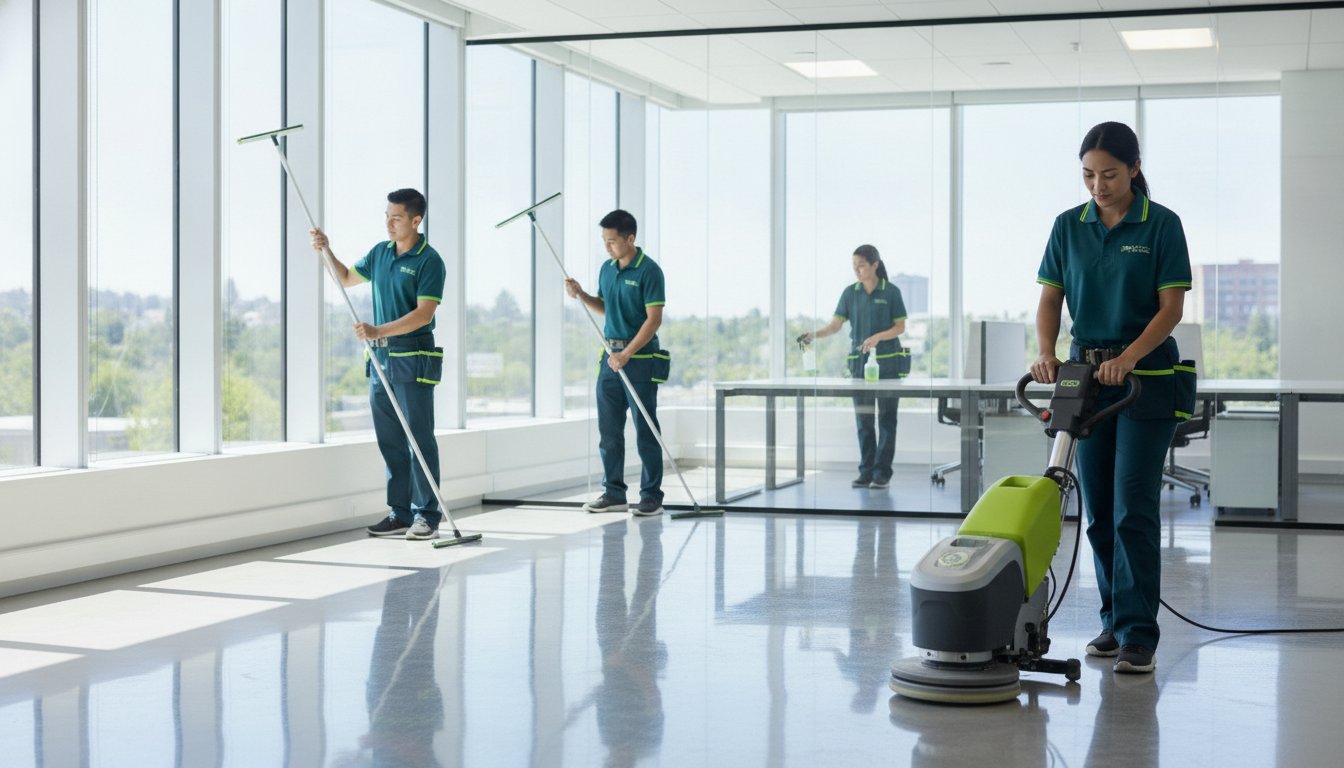
Every facility operates on a unique cadence, which is why we build customized hygiene programs around your specific workflow. We schedule intensive soil extraction and deep decontamination during after-hours shifts, ensuring zero disruption to tenants, employees, or visiting clients. These periodic deep treatments seamlessly merge with ongoing commercial janitorial and day porter care to maintain an elevated baseline of cleanliness year-round:
- Targeted chemical sanitization: Hospital-grade biocides eliminate hidden pathogen reservoirs across fixtures and partitions.
- Porcelain and hardware descaling: Precise mineral removal restores fixture luster without damaging protective manufacturer seals.
- Comprehensive inventory replenishment: Consistent stocking of hand soaps, sanitizers, and paper products prevents supply outages.
Pairing structured deep treatments with routine janitorial care provides a cleaner, healthier workplace for your entire community. If you're seeking dependable restroom sanitation services Sacramento facility directors trust, reach out to our local leadership team to schedule an onsite walkthrough and tailored program proposal.
Protect Your Workplace with Dependable Facility Sanitation
Achieving a safe, immaculate environment across commercial facilities requires moving far beyond mop buckets and superficial surface wiping. By investing in clinical soil extraction, observing chemical contact dwell times, and deploying targeted enzymatic treatments to dissolve uric acid crystals, you eliminate biological hazards at their source while keeping your properties aligned with Cal/OSHA standards.
Since 1994, Cleanit Maintenance Systems has served as a dependable partner for corporate offices, healthcare suites, and commercial complexes across Greater Sacramento. Our vetted, thoroughly trained personnel execute hospital-grade hygiene protocols designed to safeguard your occupants and preserve your physical building assets. Take the uncertainty out of facility maintenance and restore complete peace of mind to your daily operations. Request an onsite restroom sanitation assessment today to experience the lasting standard of restroom sanitation services Sacramento business leaders trust.
Frequently Asked Questions
How often should a commercial office restroom undergo deep sanitation services?
Most commercial facilities should schedule deep sanitation services on a quarterly or semi-annual schedule. High-traffic environments, such as public venues, multi-tenant lobbies, or busy medical offices, often require monthly clinical soil extraction. While routine custodial crews address daily trash and visible wiping, scheduled deep treatments strip embedded bio-soils and mineral deposits. Matching your service cadence to actual foot traffic prevents stubborn grout contamination and protects long-term fixture integrity.
What is the difference between standard janitorial cleaning and restroom sanitation?
Standard janitorial cleaning focuses primarily on surface aesthetics, such as taking out trash, wiping counters, and restocking paper supplies. In contrast, technical restroom sanitation services Sacramento properties require involve microbiological decontamination. This clinical process removes uric acid buildup, destroys protective bacterial biofilms, and applies EPA-registered germicides with mandatory dwell times. Sanitation extracts soils completely rather than merely redistributing dirt across tile with a mop.
Why do commercial restrooms still smell bad even after being cleaned?
Persistent odors usually originate from uric acid crystals trapped deep inside porous grout, unsealed concrete, and floor drain lines. Standard neutral floor cleaners cannot break down these mineralized salts. When humidity shifts or fresh moisture touches the surface, dormant bacteria reactivate and release pungent ammonia gases. Eliminating the smell permanently requires specialized enzymatic compounds that digest organic soils at the biological root rather than masking them with fragrances.
Are the disinfectants used in commercial restroom sanitation safe for office occupants?
Yes, professional hospital-grade disinfectants are completely safe for building occupants when properly applied and ventilated by trained technicians. Vetted crews utilize EPA-registered solutions mixed to precise dilution ratios, preventing harsh chemical off-gassing or sticky surface residues. Scheduled treatments are typically executed after regular business hours, allowing surfaces to dry completely and reach full antimicrobial efficacy long before employees or visitors return to the facility the following morning.
Can commercial sanitation services remove hard water and mineral stains from porcelain?
Yes, professional sanitation technicians use targeted acidic descaling agents formulated to dissolve calcium, lime, and rust scale safely. Routine custodial scrubbing often leaves heavy water rings untouched because alkaline cleaners cannot dissolve mineral deposits. Commercial descaling breaks the chemical bonds holding scale to porcelain surfaces, restoring original fixture appearance while preserving factory enamel finishes and rubber hardware seals against premature erosion.
How does proper restroom sanitation prevent cross-contamination in office facilities?
Proper sanitation breaks the transmission chain by eliminating enteric microbes directly at high-touch contact points, such as flush valves, partition latches, and soap dispensers. Commercial providers enforce strict four-color microfiber protocols to stop cross-contamination. Red cloths designated for sanitary fixtures never enter conference rooms or shared desks. This disciplined isolation keeps biological pathogens contained within the restroom, preventing the spread of illness across surrounding office suites.
What qualifications should I look for in a Sacramento commercial sanitation company?
Facility managers evaluating restroom sanitation services Sacramento providers offer should verify annual registration with the California Labor Commissioner's Office, comprehensive general liability coverage, and strict background checks for all personnel. Look for an established local provider with multi-decade regional experience, dedicated field supervision, and clear quality control processes. Seasoned regional contractors offer dependable execution, responsive communication, and specialized hygiene programs designed to meet local commercial demands.