Sacramento has several companies listed for school or educational-facility cleaning, giving school teams a starting point for comparing janitorial services for schools in Elk Grove. The right fit depends on more than a general cleaning checklist: schedules, busy areas, and the needs of floors and carpets all shape the plan.
Schools in Sacramento need dependable janitorial services that keep campuses clean and orderly without adding to staff workloads. A tailored plan can coordinate routine classroom and common-area care with focused attention to floors, carpets, and changing campus needs.
This guide explains how to compare cleaning providers, shape a school-specific plan, and include floor and carpet care in ongoing maintenance. It also outlines how Cleanit Maintenance Systems’ commercial janitorial and floor care services can support schools in Sacramento.
Key Takeaways
- Compare providers by how clearly they address school routines, facility needs, and service consistency.
- Shape a cleaning plan around the campus’s priorities, traffic patterns, and everyday spaces.
- Match floor and carpet care to the surfaces and conditions that need attention.
- Understand how routine tasks such as mopping, vacuuming, dusting, and trash removal support a well-maintained school.
- Identify the janitorial services that best fit your school’s operating needs before choosing a service plan.
Commercial janitorial service providers in Elk Grove
Elk Grove has 3 companies listed for school or educational-facility cleaning. The number gives school teams a starting point, not a complete measure of fit. Compare each service scope against the campus: classroom cleaning, shared spaces, floor care, and support during the school day can require different plans.
District janitorial contracts are awarded through the process described in each district’s solicitation. That document sets the scope, submission requirements, and evaluation criteria, so the route and selection priorities depend on the specific contract. Elk Grove lists 2 companies for government-building cleaning, but that separate category does not establish how a school district awards its contracts.
California schools should base cleaning routines on applicable requirements, district policies, and product directions. A written scope can list the spaces and tasks covered, such as cleaning classroom surfaces, restrooms, and common areas. It should also distinguish routine cleaning from a targeted response to a specific issue.
Background screening and training should follow the district’s contract and applicable rules. The agreement can specify screening requirements for site access and the orientation workers need before entering campus. Training may cover building access, task expectations, and following product labels.
Product requirements for California schools depend on applicable rules and district purchasing policies. Schools can set preferred product criteria and require staff to follow label directions for each task. For example, choose a hard-floor product for the surface and cleaning purpose, rather than treating one product as a universal solution.
Insurance and certification requirements should be stated in the district’s solicitation or contract. Schools can specify the coverage documents and credentials required for the work without assuming one certification applies to every contractor. A clear contract also names the services, responsibilities, and reporting expectations.
Outsourcing can leave gaps when the scope, access arrangements, or communication process is unclear. A missed restroom task or delayed response to a spill can disrupt daily operations. Reduce these risks by defining who receives concerns, how task completion is recorded, and how school staff and the cleaning team communicate schedule changes.
Compare proposals against the same practical details: included spaces, task frequency, floor and carpet responsibilities, staffing arrangements, and how concerns are communicated. A school’s needs may change between occupied classrooms and less-used areas, so the scope should make those distinctions clear. A defined daily cleaning schedule can help clarify which routine tasks support the campus each day.
Customized janitorial plans
A school cleaning plan works best when it reflects the building’s actual routines. A classroom used for lessons, a cafeteria serving meals, and a gym hosting activities create different needs. Start by mapping each area, its surfaces, and how people use it. This detail helps organize tasks without treating every room as though it has the same purpose.
Planning janitorial services for schools in Elk Grove starts with matching cleaning frequency to room use, foot traffic, visible soil, and activity schedules. Restrooms and cafeterias need plans for use-related messes, while classroom and gym routines should reflect occupancy and activities. Document priorities in a site-specific plan and adjust tasks when operations change.
A practical plan separates routine work from tasks that arise during the day. A spill in a busy hallway, for example, may need attention before the next scheduled visit. A planned assembly can also change how the gym and nearby corridors are used. Clear instructions show staff which issues need prompt attention and which belong on the regular task list.
- Classrooms: Identify desks, shared surfaces, floors, and waste points, then match tasks to room use.
- Restrooms: Set clear expectations for visible soil, included supply replenishment, and reporting issues.
- Cafeterias: Account for meal periods, tables, floor surfaces, and food-related messes.
- Gyms and corridors: Consider activity schedules, tracked-in debris, and traffic changes after events.
Good communication keeps a tailored plan useful. A school contact can report changes, such as a room becoming a temporary meeting space or a campus store getting heavier foot traffic. The cleaning team can follow updated instructions and record completed tasks. A direct reporting process also helps surface recurring concerns early.
For effective janitorial services for schools in Elk Grove, define the spaces, tasks, schedule, and process for reporting changing needs. Separate routine cleaning from periodic work, such as focused care for a particular floor or carpeted area. This makes the scope easier to understand and clarifies which tasks the agreed plan covers.
To discuss a plan shaped around your school’s spaces and routines, start a school cleaning plan conversation.
Ron Boehm has worked in the customer service industry for over 20 years, bringing long-standing customer service experience to conversations about school cleaning plans.
Hard-surface floor and carpet maintenance
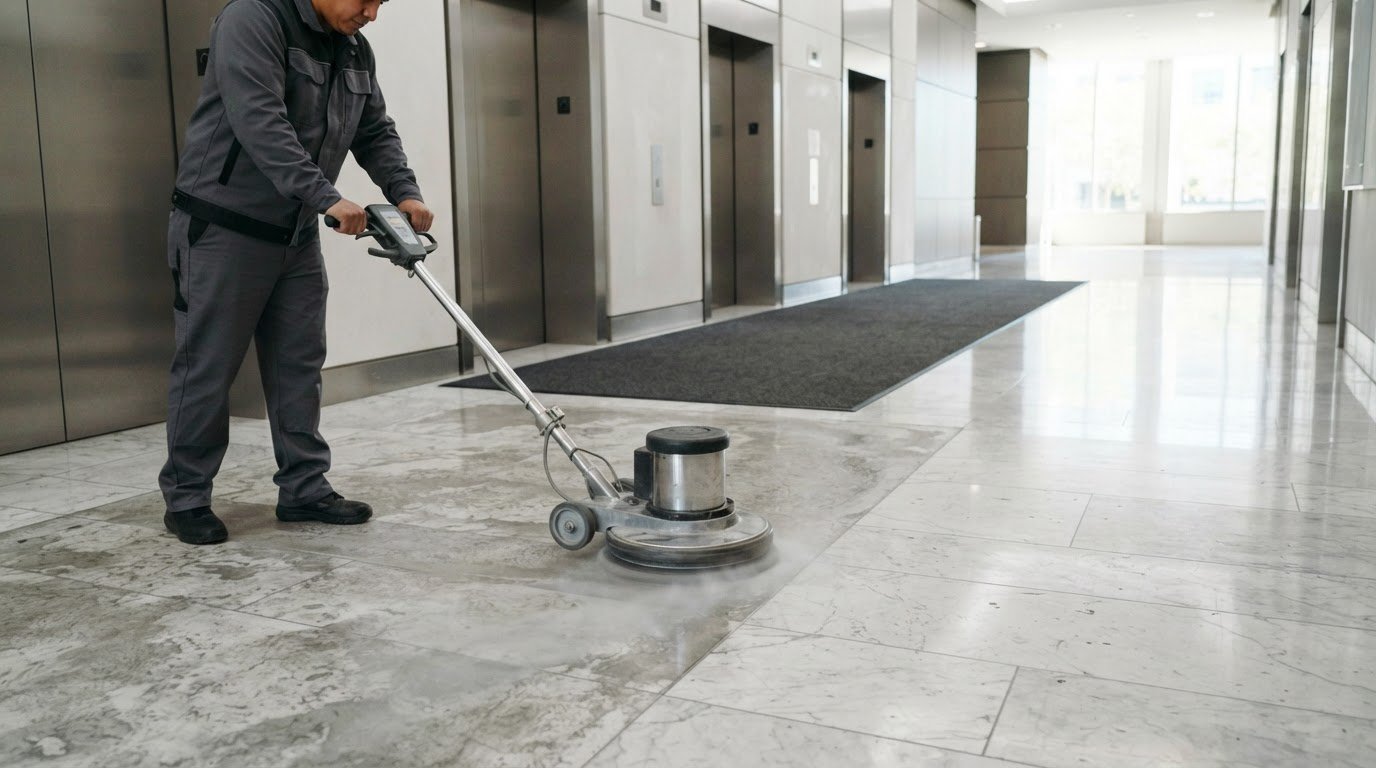
Floor care starts with identifying each surface in the facility. A sealed hallway floor, resilient classroom flooring, and a carpeted reading area need different approaches. Record each surface type and location, along with visible soil and recurring concerns. This gives the maintenance team a practical basis for selecting suitable tasks and cleaning solutions.
Regular soil removal helps limit the grit and tracked-in debris that can dull floors. Entryways and corridors often collect more outdoor dirt than lightly used rooms. A planned routine can prioritize high-traffic zones while preserving time for less-used areas. The goal is consistent upkeep, not the same treatment for every surface.
- Hard floors: Match the cleaning method to the floor material and its condition.
- Carpet: Address visible spots promptly and plan deeper cleaning around room use.
- Transitions: Pay attention where hallways meet carpeted rooms, since debris can collect at edges.
- Review: Record recurring marks or wear so the maintenance plan responds to actual conditions.
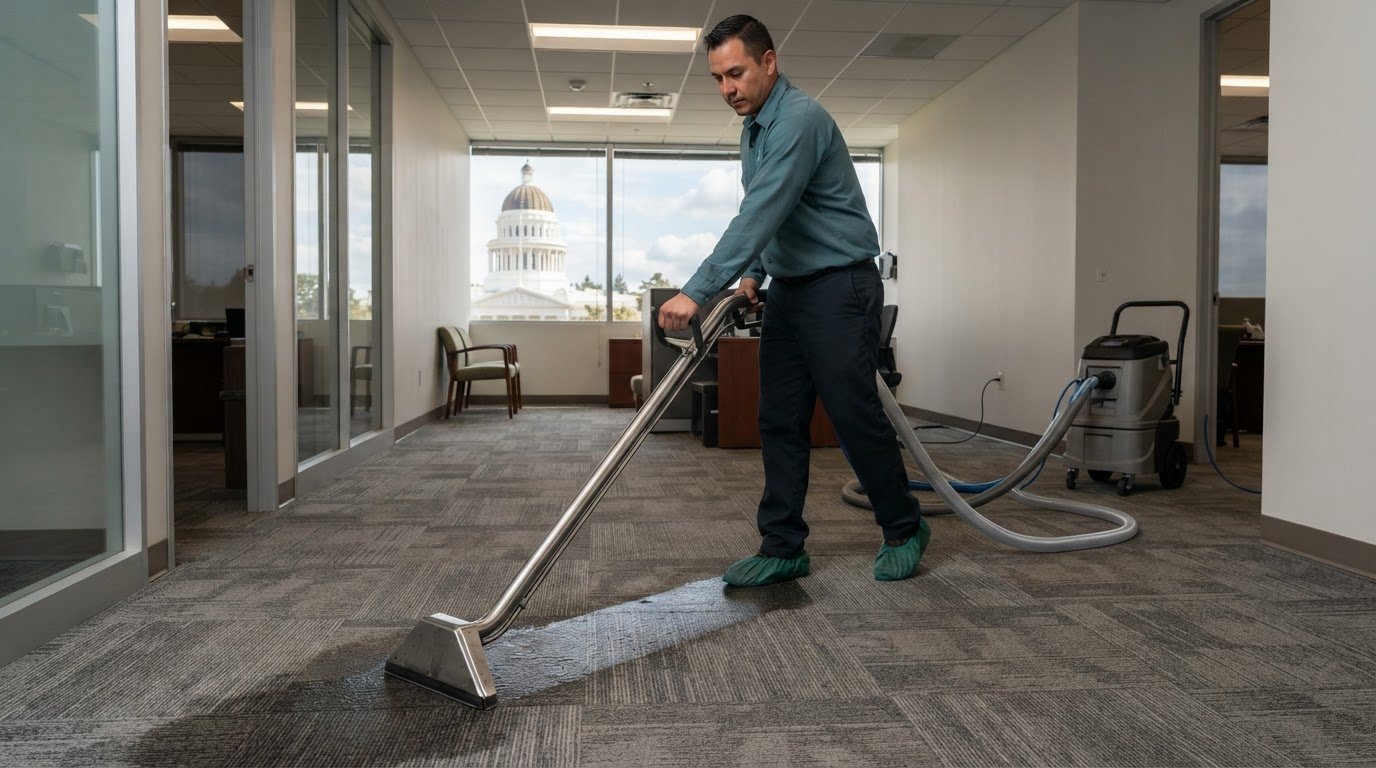
Carpet maintenance combines routine soil removal with periodic focused cleaning. A classroom entrance, for example, may need more attention than carpet beneath desks. Spot treatment should suit both the carpet and the mark. A professional assessment helps determine the right carpet cleaning approach without applying an unsuitable solution across the entire area.
Hard-surface floors also need care suited to their finish and use. A cafeteria floor faces different spills and traffic from a quieter office area. The plan should identify spaces for routine cleaning and those needing periodic restoration or protection. This supports steady upkeep while directing specialized work to floors that need it.
Clean floors contribute to an orderly learning environment, but appearance is not the only useful measure. School staff and the cleaning team can note persistent stains, dull patches, or worn areas and use those observations to refine the schedule. Clear records help distinguish recurring cleaning issues from surfaces that need a different maintenance treatment.
Professional floor and carpet care works best as part of a coordinated routine. A maintenance plan connects surface identification, suitable cleaning solutions, regular attention, and periodic review. A corridor with tracked-in soil and a carpeted classroom with spots, for example, call for different tasks. This separation helps maintain each area without treating the whole school as one floor type.
Mopping, vacuuming, dusting, and trash removal
Daily cleaning works best as a coordinated sequence across each school area. A professional team can collect loose waste, remove dust, vacuum carpets, and mop suitable hard floors. Clearing debris before mopping, for example, helps prevent it from spreading across a classroom floor. A consistent order also supports more reliable results from room to room.
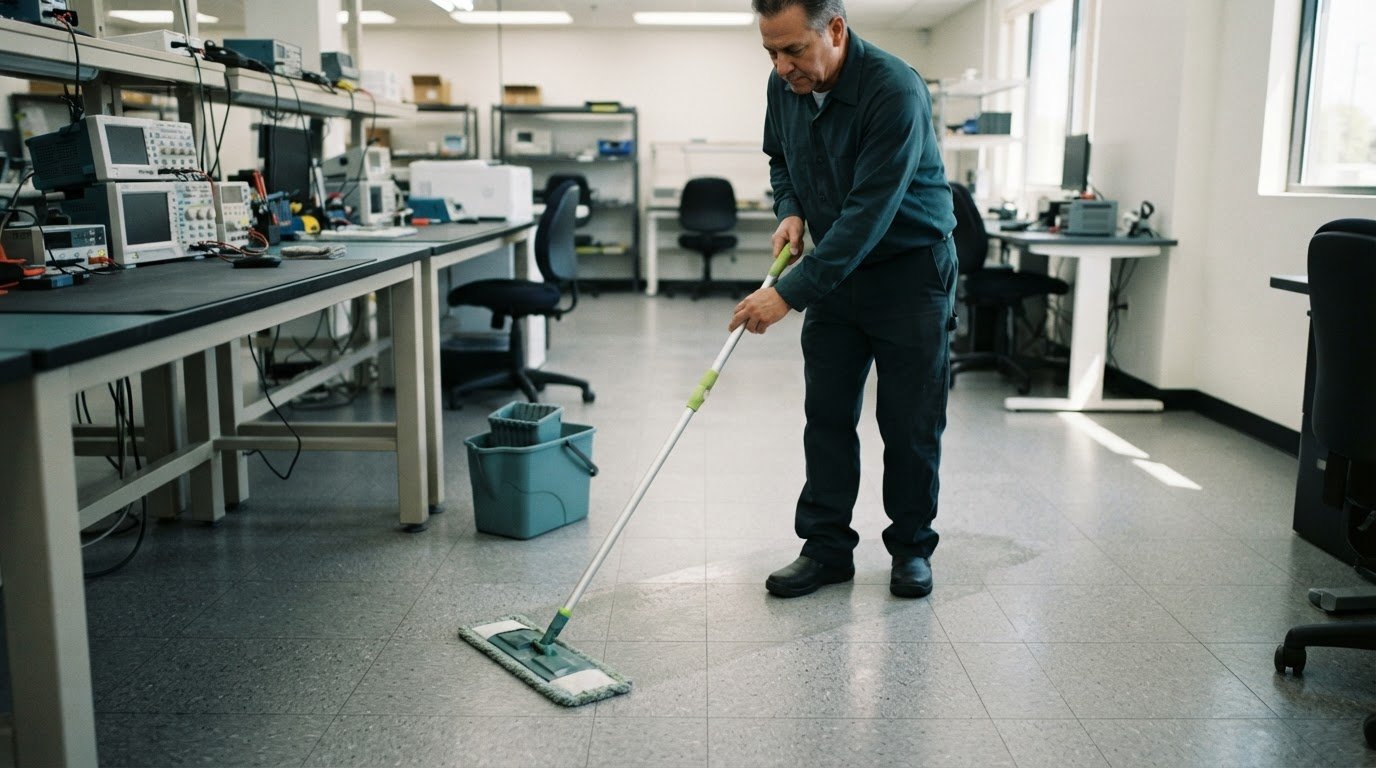
Mopping starts with matching the method to the floor and the soil. A hallway with tracked-in dirt may need different attention from a lightly used classroom. The cleaning team can address edges and corners, then check for missed marks or residue. Schedule wet-floor work to avoid periods of heavy student movement.
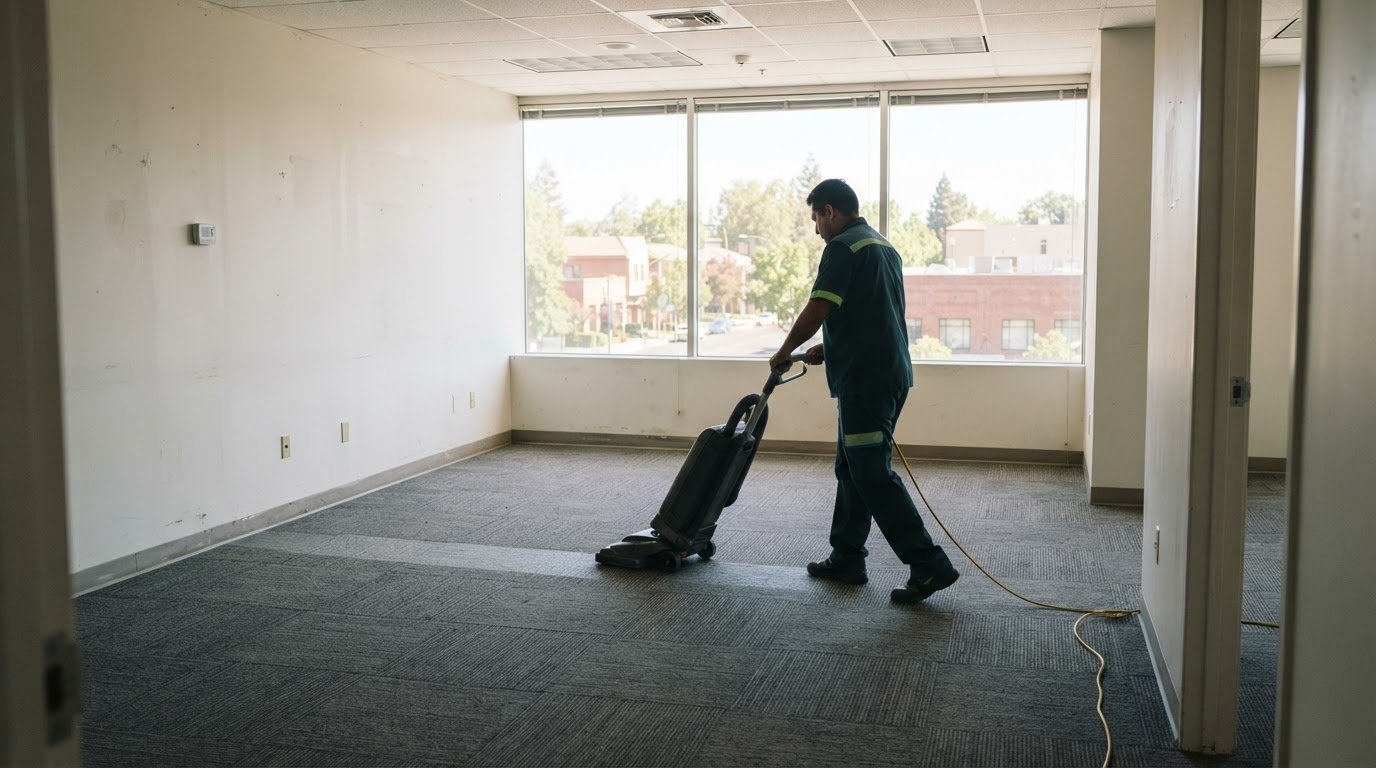
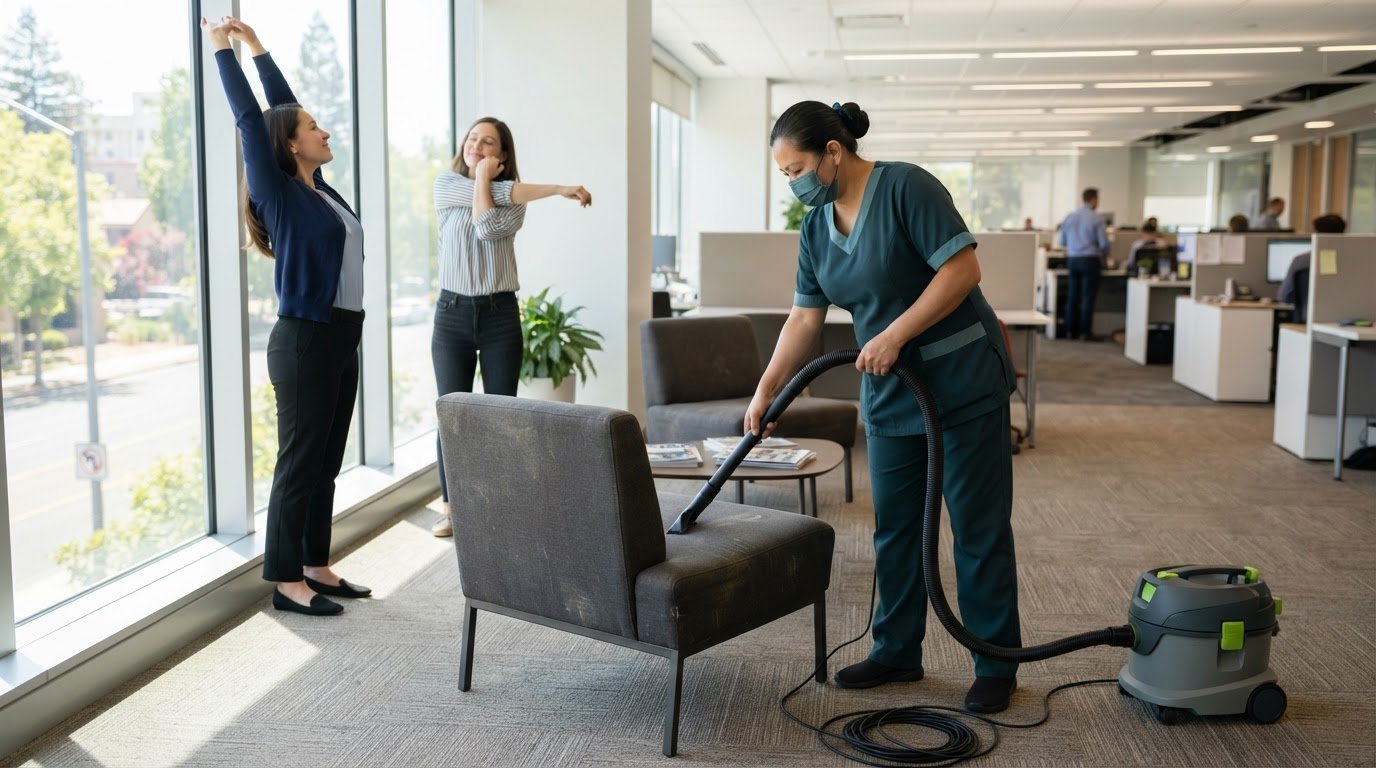
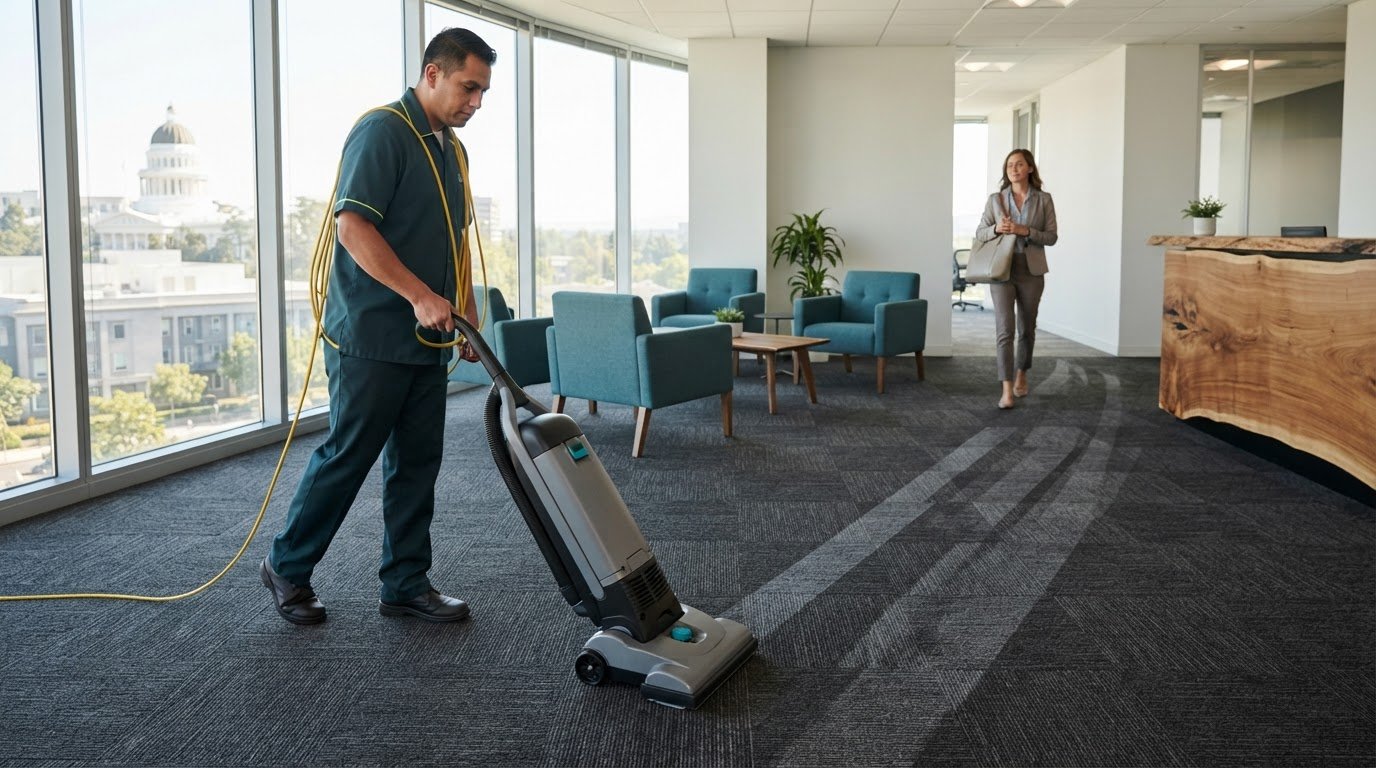
Vacuuming supports carpet care by removing loose debris from classrooms, offices, and shared spaces. A school plan can identify carpeted areas for routine attention and places that collect more dirt, such as entrances. In rooms with frequent activities, coordinate vacuuming with room use so it fits the campus schedule.
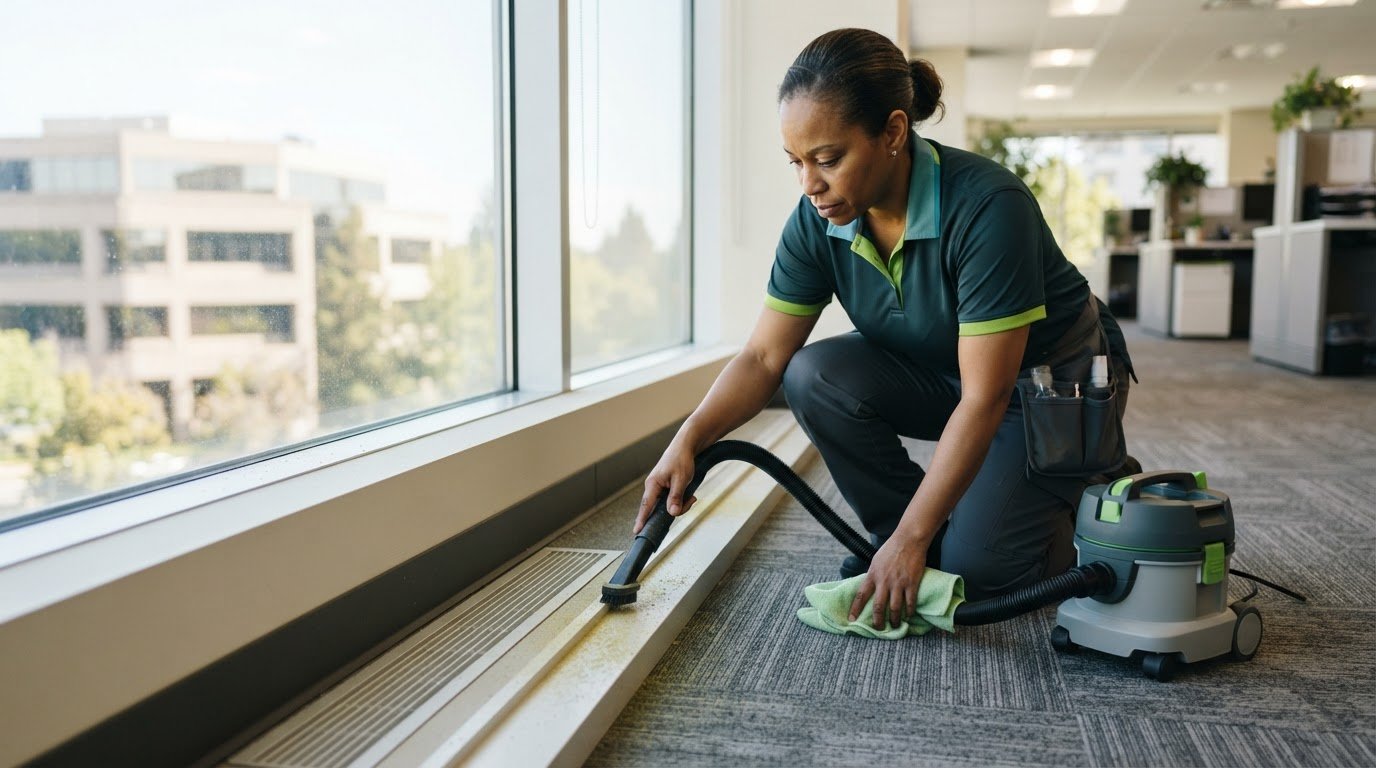
Dusting should follow the surfaces and reachable areas listed in the cleaning scope. In a classroom, this may include desks, ledges, and other commonly used surfaces. A consistent route helps the team cover the listed areas instead of focusing only on obvious dust. The scope should also identify specialized tasks that need separate scheduling.
Trash removal should reflect each room’s use and the waste points included in the plan. A cafeteria, staff room, and classroom can fill at different rates during the school day. The cleaning team can empty designated bins and note recurring overflow locations. This helps adjust priorities without assuming every room needs identical attention.
- Mopping: Match the method to the floor surface and schedule work around room traffic.
- Vacuuming: Prioritize carpeted areas based on use and visible debris.
- Dusting: Follow a defined route through the surfaces in the agreed scope.
- Trash removal: Collect waste from designated bins and track recurring problem spots.
Disinfection is distinct from routine soil removal, so its purpose and scope should be clear. A school may include targeted disinfection of specified touchpoints rather than treating every surface the same way. Product directions and the cleaning scope should guide the work.
A reliable schedule connects tasks to the school’s rooms, traffic patterns, and operating needs. Staff can report recurring issues, such as debris near an entrance or bins overflowing after an event. The cleaning team can use this information to refine the task sequence and keep routine work aligned with campus conditions.
Set cleaning frequency according to each area’s use and traffic, rather than applying the same schedule throughout the building. Classrooms and other busy spaces, along with areas that collect more dirt or waste, may need more routine attention.
What janitorial services do Elk Grove schools need?
School cleaning needs depend on how each area is used. Classrooms, cafeterias, restrooms, gyms, and front offices each require different tasks. A useful scope maps those spaces to routine cleaning, floor care, waste removal, and responses to changing conditions. This helps school leaders choose services that fit campus operations rather than relying on a generic checklist.
Classrooms benefit from planned care for desks, shared surfaces, floors, and waste bins. Restrooms need regular attention to visible soil and frequently used fixtures. Cafeterias require cleaning that accounts for food debris and tables, while gyms need floor care suited to their activities and surface types. Describe these tasks clearly in the service scope.
Routine cleaning is the foundation. Commercial janitorial work can cover agreed tasks throughout the school, while daily cleaning services support a regular schedule. A day porter can address needs during occupied hours, such as a hallway spill or overflowing bin. The scope should distinguish these daytime tasks from scheduled cleaning.
Include floors and carpets in the service plan, rather than treating them as an afterthought. Entryways collect tracked-in debris, corridors see steady movement, and classroom carpets can develop visible spots. Hard-surface floor maintenance and carpet cleaning address different materials and conditions. Schools can specify which areas need routine attention and where periodic restoration or protection is appropriate.
- Classrooms and offices: Include agreed surface care, floors, and waste collection.
- Restrooms and cafeterias: Define cleaning priorities around frequent use and visible mess.
- Gyms and corridors: Match floor tasks to the surface, activities, and traffic.
- Shared spaces: Identify who handles spills or other issues during school operations.
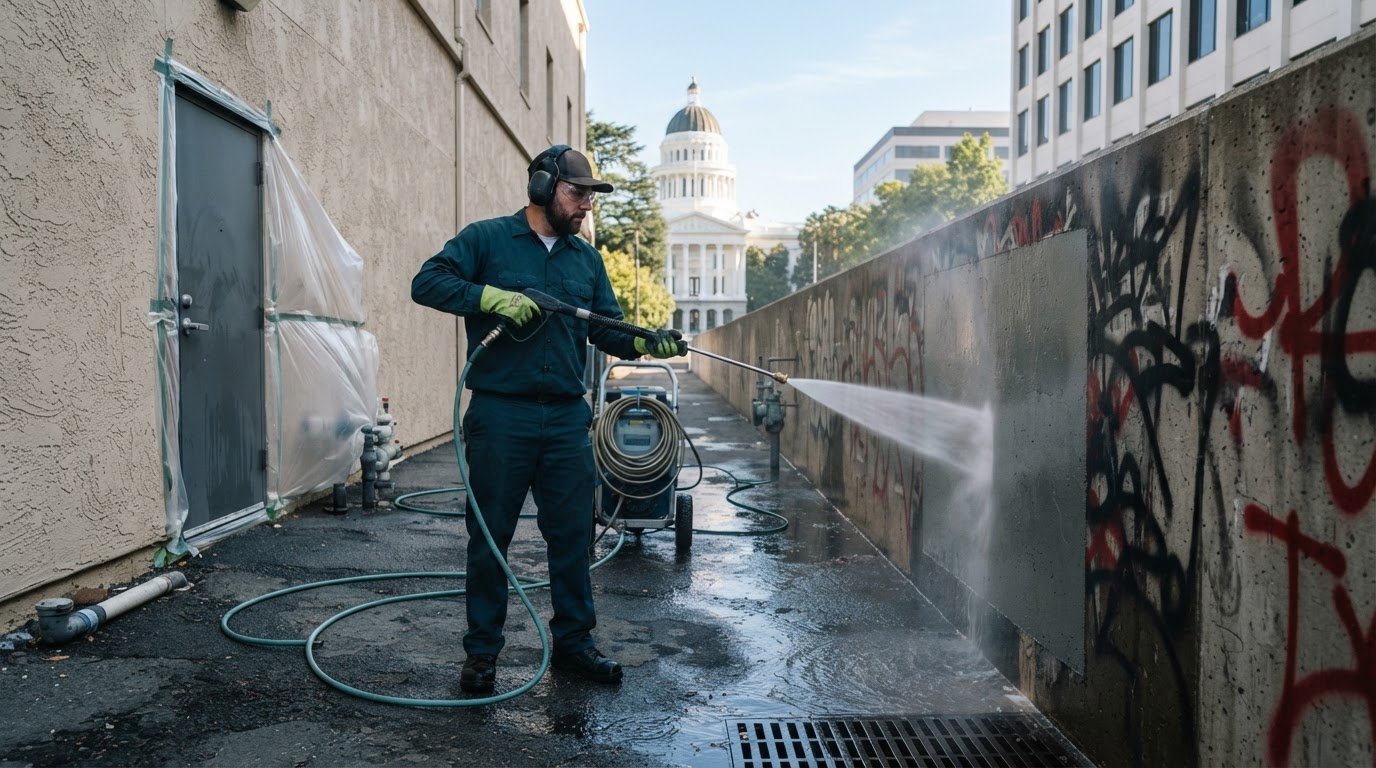
Some campuses also need window washing or pressure washing for exterior surfaces. These services address different parts of the facility from indoor janitorial routines, so list them separately in the scope. An exterior walkway, for example, may need attention while nearby classrooms remain part of the regular indoor schedule.
Before setting priorities, school staff can provide a room list, identify high-use areas, and describe operational constraints. The cleaning plan can connect each space to its tasks and timing. Clear reporting arrangements help staff communicate changes, such as an event that affects how the gym or cafeteria is used.
For an Elk Grove school seeking a coordinated scope, discuss janitorial service needs and the spaces requiring regular attention.
Cleanit Maintenance Systems: Commercial Janitorial
Cleanit Maintenance Systems provides commercial janitorial services for schools seeking janitorial services for schools in Elk Grove. The service can be tailored to campus spaces, routines, and cleaning priorities, helping school teams define a practical scope for everyday facility care.
Daily Cleaning Services support recurring school needs, while Office Cleaning addresses administrative spaces. For schools evaluating janitorial services for schools in Elk Grove, matching each service to its purpose helps create a clear, workable plan.
If you’re considering a cleaning plan for your school, contact Cleanit Maintenance Systems.
Set a Clear Course for School Cleaning
A dependable campus cleaning plan should fit school routines and adapt as needs change. Start by turning your priorities into a practical scope: identify the spaces that matter most, the tasks they need, and how service should fit daily operations. This gives your team a useful basis for discussing janitorial services for schools in Elk Grove.
Cleanit Maintenance Systems provides Commercial Janitorial, Office Cleaning, and Daily Cleaning Services. These services can support schools that need consistent attention across administrative spaces and everyday campus areas. A clear discussion of your facility’s needs can establish which tasks belong in the cleaning plan and how they fit the school schedule.
When you’re ready to discuss a plan for your school, contact Cleanit Maintenance Systems. A thoughtful next step can make ongoing facility care easier to organize and manage.
Frequently Asked Questions
Can I compare other cleaning services in Elk Grove?
Yes. Compare school cleaning proposals by how well each scope matches your campus, not by service labels alone. One proposal may focus on scheduled building care, while another includes floor maintenance or support during occupied hours. Use the same room list and task expectations to review each proposal. This makes coverage differences easier to understand and shows which plan best fits your school’s operations.
What should you include in your request?
Include the school’s room list, operating schedule, surface types, and service priorities. Note whether the request covers classrooms, administrative offices, a gym, or outdoor areas. Explain how concerns should be reported and identify spaces with restricted access. A clear request helps define a scope around the facility instead of relying on assumptions about school cleaning.
Which janitorial companies serve schools in Elk Grove, California?
Cleanit Maintenance Systems provides commercial janitorial services in the Greater Sacramento area, serving the needs of local facilities. A current market listing identifies three companies offering school or educational-facility cleaning in Elk Grove, but the available listing does not name each company. For your comparison, focus on documented service scope and how well it matches school operations. Cleanit’s commercial janitorial work is a relevant option for schools seeking professional facility care.
What do school cleaning services in Elk Grove cost?
The price depends on the facility and is provided after a quote request. Key factors include facility size, room types, service frequency, floor and carpet needs, and the tasks included. A school with extensive shared areas may need a different scope from one seeking limited coverage. Describe the campus and requested work clearly so the quote reflects the actual cleaning plan, not an assumed package.
How can Elk Grove schools compare janitorial service providers?
Compare proposals using the same scope and practical service details. Review which spaces and tasks each covers, how routine work is scheduled, and how communication works when needs change or tasks are missed. For example, clarify whether a floor-care task covers every hallway or only specified areas. These distinctions help school leaders understand what each proposal includes and avoid comparing unlike services.
How do schools in Elk Grove request janitorial bids or quotes?
Schools can request bids through the district’s procurement process, following the solicitation instructions and contract evaluation criteria. For a quote request, provide facility details, requested spaces, task scope, schedule, and any required proposal format. Specify how questions or updates should be submitted. Following the stated process keeps the request organized and gives respondents a consistent basis for describing their work.
How often should classrooms, restrooms, cafeterias, and gyms be cleaned?
Set cleaning frequency according to each area’s use, foot traffic, visible soil, and activity schedule. Restrooms and cafeterias need plans for use-related messes, while classroom and gym routines should reflect occupancy and activities.