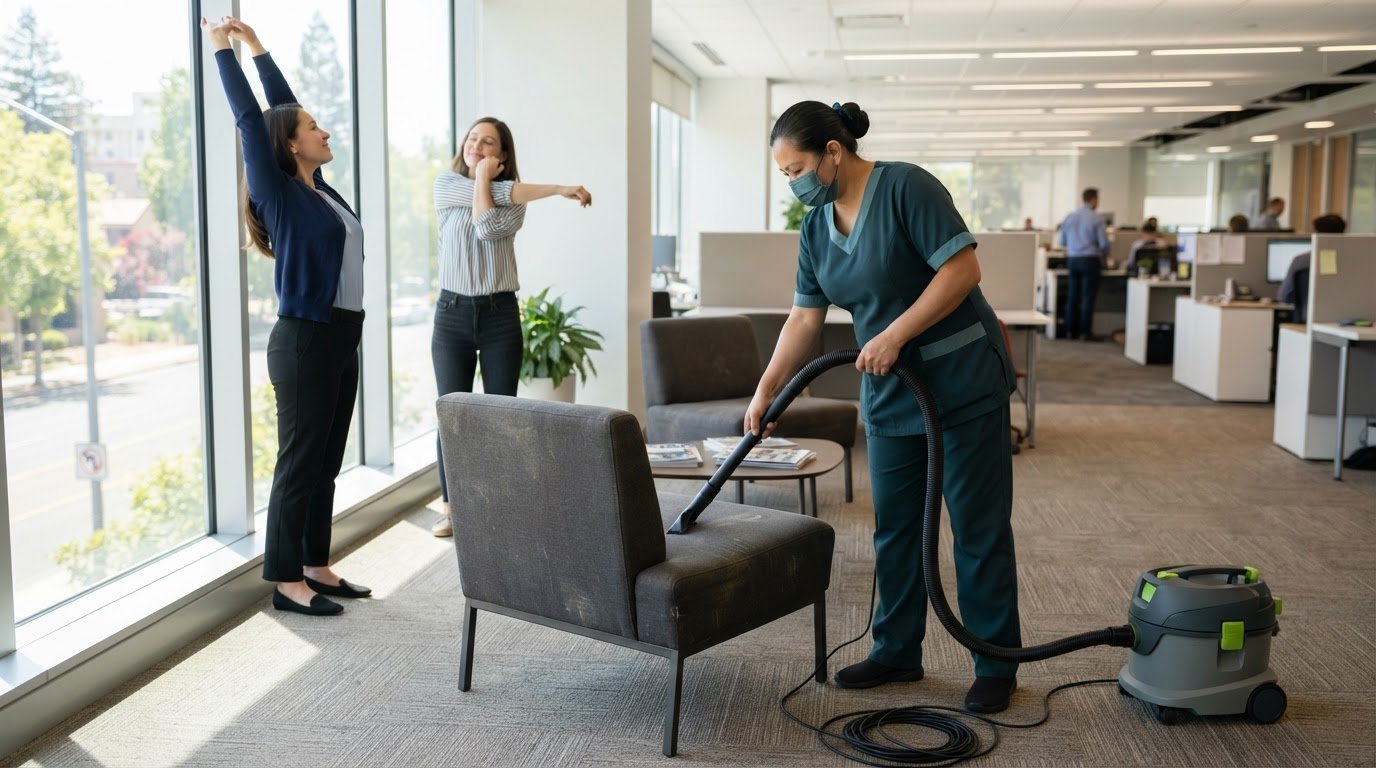
Can school cleaning keep pace when the calendar shifts from regular class days to busy events and peak seasons? Yes. Private school cleaning services in Sacramento can be scheduled around changing school activities, with attention to floors, classrooms, and shared spaces. A thoughtful plan also accounts for building access and how cleaning fits alongside daily operations.
Clean, well-kept spaces matter to students, staff, families, and visitors, but maintaining them should not add to an already full school schedule. A practical approach balances routine care with flexibility during busy periods and sets clear expectations for every space.
This article explains how school cleaning can accommodate special events and peak seasons, what floor and common-area care may involve, and why staff screening and coordination with school operations matter. It also outlines how cleaning needs can differ between private and public schools, helping school leaders understand what to consider when planning a dependable service.
Key Takeaways
- Plan cleaning around school events and peak periods so essential care can fit the rhythm of the school day.
- Match carpet and hard-surface floor care to the materials and traffic each area receives.
- Give classrooms and shared spaces a clear cleaning priority, especially when use increases.
- Consider how each school’s schedule and facility needs shape a practical cleaning plan for private or public settings.
- See how Cleanit Maintenance Systems’ commercial janitorial and pressure washing services can support school facilities.
Trained, insured, and background-checked cleaning staff
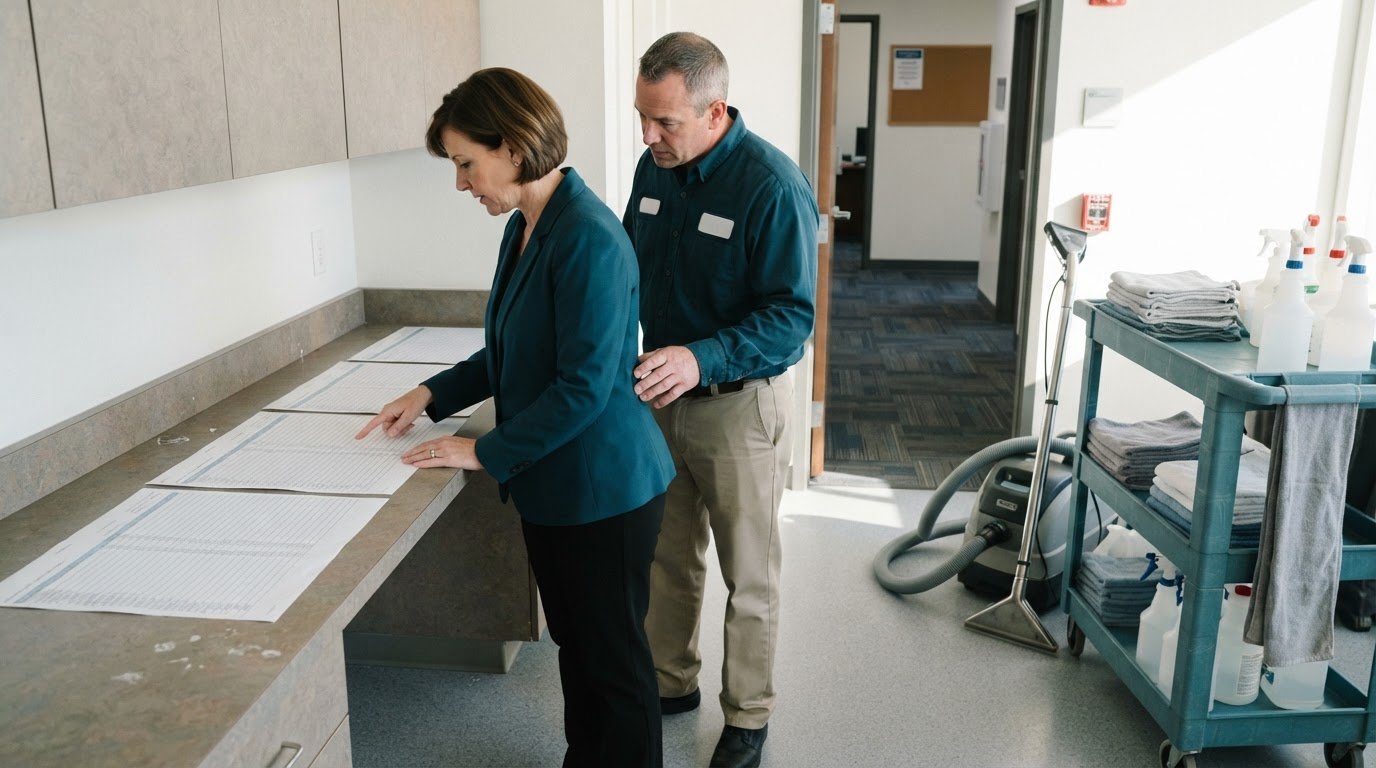
A school seeking private school cleaning services in Roseville needs more than a task list. Cleaning staff enter classrooms, offices, corridors, and other occupied spaces, so dependable work starts with clear assignments. A sound staffing plan identifies who is authorized to enter, which areas each person handles, and how completed work is recorded. For example, a classroom checklist can cover desks, floors, and frequently touched surfaces.
Screening should be a defined process, not a general assurance. A provider’s procedures can document identity checks, background screening, and staff access to school spaces. Insurance documentation also belongs in vendor records, helping clarify coverage for the work and the people performing it. Requirements vary by agreement, so define the scope and required documentation before routine cleaning begins.
Training makes those procedures practical. Staff need clear instructions on assigned tasks, products and equipment, and room-access expectations. A training plan can include a sample classroom walkthrough, supervised work, and a checklist review. Clear instructions also help staff recognize when a room needs attention beyond its routine scope and report the issue.
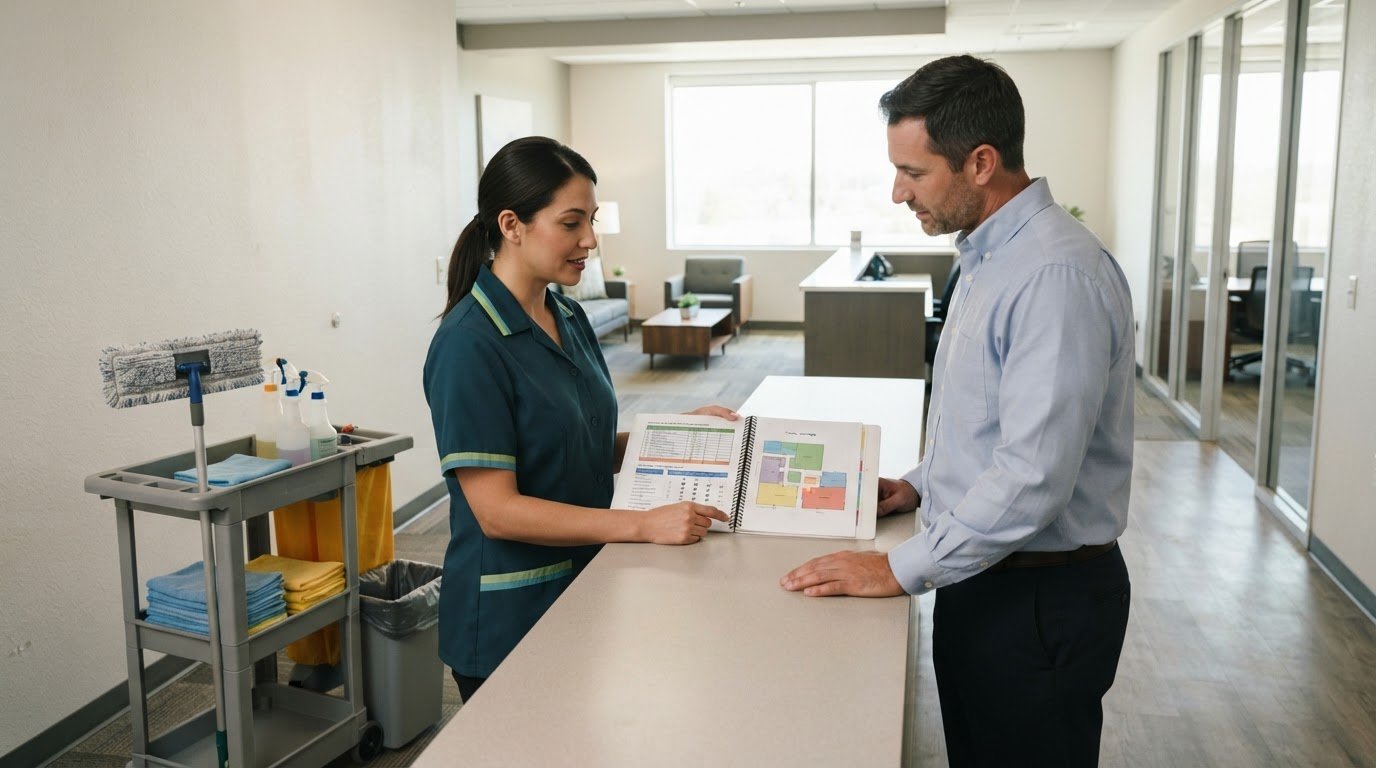
Consistency matters when schedules change. Cleaning teams can coordinate with school maintenance staff and work in areas when they aren’t needed for classes. A scheduling plan can mark occupied rooms, event spaces, and changing access times, then adjust assignments for assemblies or busy seasonal periods. Coordinated daily cleaning schedules help define which spaces receive routine attention and when staff can enter them.
What are the risks of hiring an unqualified school cleaning provider in Roseville? Inconsistent training can leave tasks incomplete, disrupt classroom use, or lead to unsuitable product handling. The U.S. Access Board notes that janitorial supplies can emit volatile organic compounds, worsen indoor air quality, and create access barriers for people with asthma, allergies, or chemical sensitivities.
Stable staffing reduces repeated handoffs and helps preserve knowledge of the site. A supervisor can maintain assignment records, communicate schedule changes, and document when a regular employee is replaced. For example, a substitute should receive the same room list and access instructions as the usual team member. These steps clarify who is responsible for each space and how daily work fits school operations.
Carpet and hard-surface floor cleaning
Floor care starts with identifying the material, its condition, and how each space is used. A carpeted classroom collects different soil than a tile corridor by the entrance. Cleaning plans can account for tracked-in debris, chair movement, spills, and daily foot traffic. This helps schools set practical priorities instead of applying the same routine to every floor.
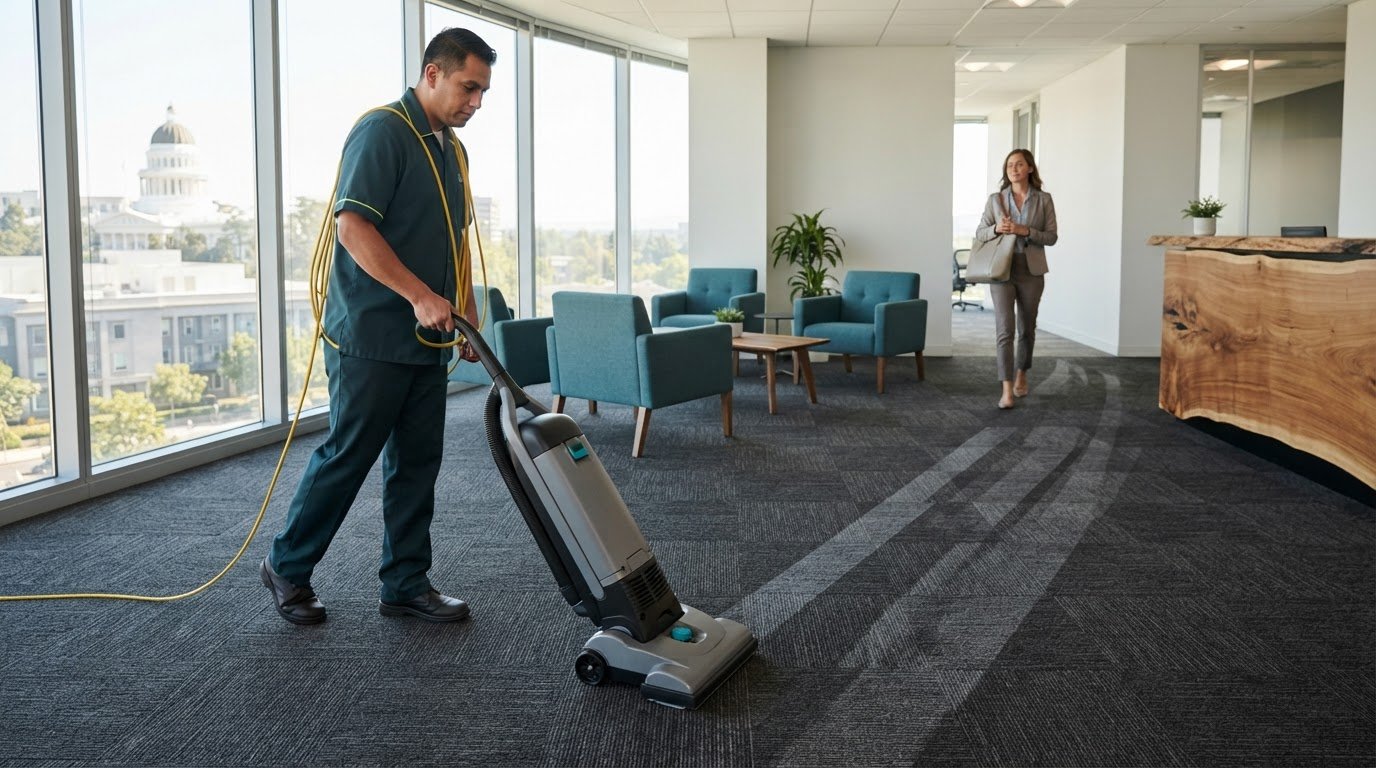
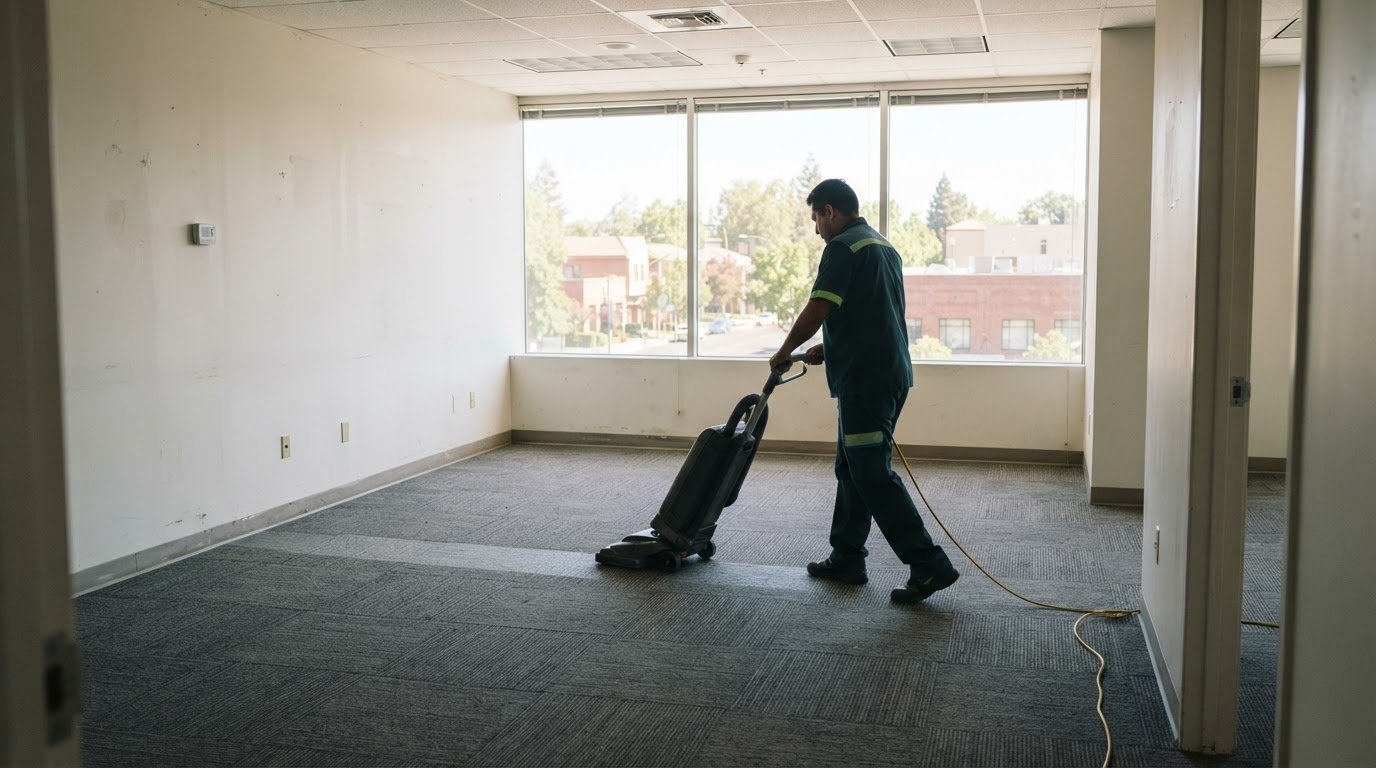
Carpet cleaning can address visible spots and accumulated soil in classrooms, libraries, and carpeted offices. A cleaning professional can assess the surface, select an appropriate method, and schedule the work around room use. Deep cleaning may help when routine upkeep no longer addresses embedded dirt or lingering marks. The method depends on the carpet’s condition and the school’s access schedule.
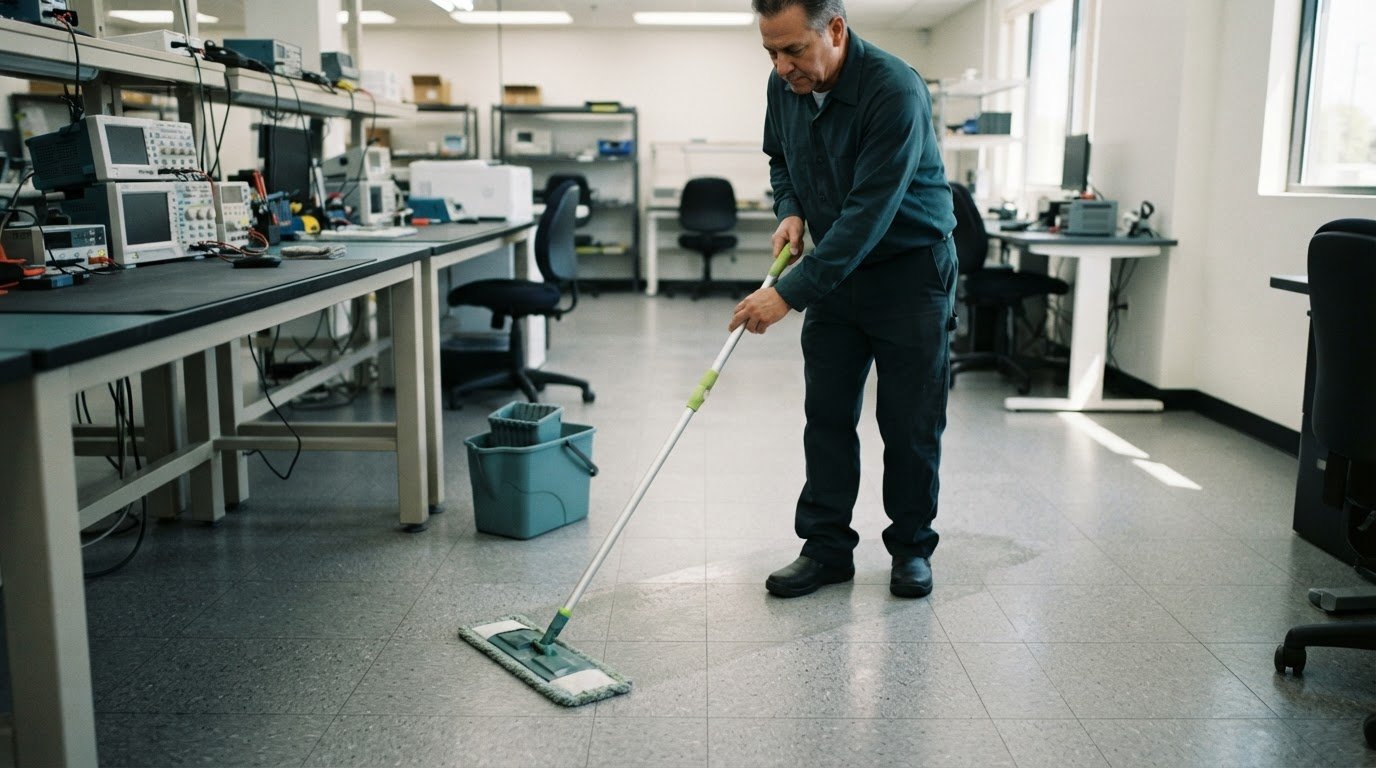
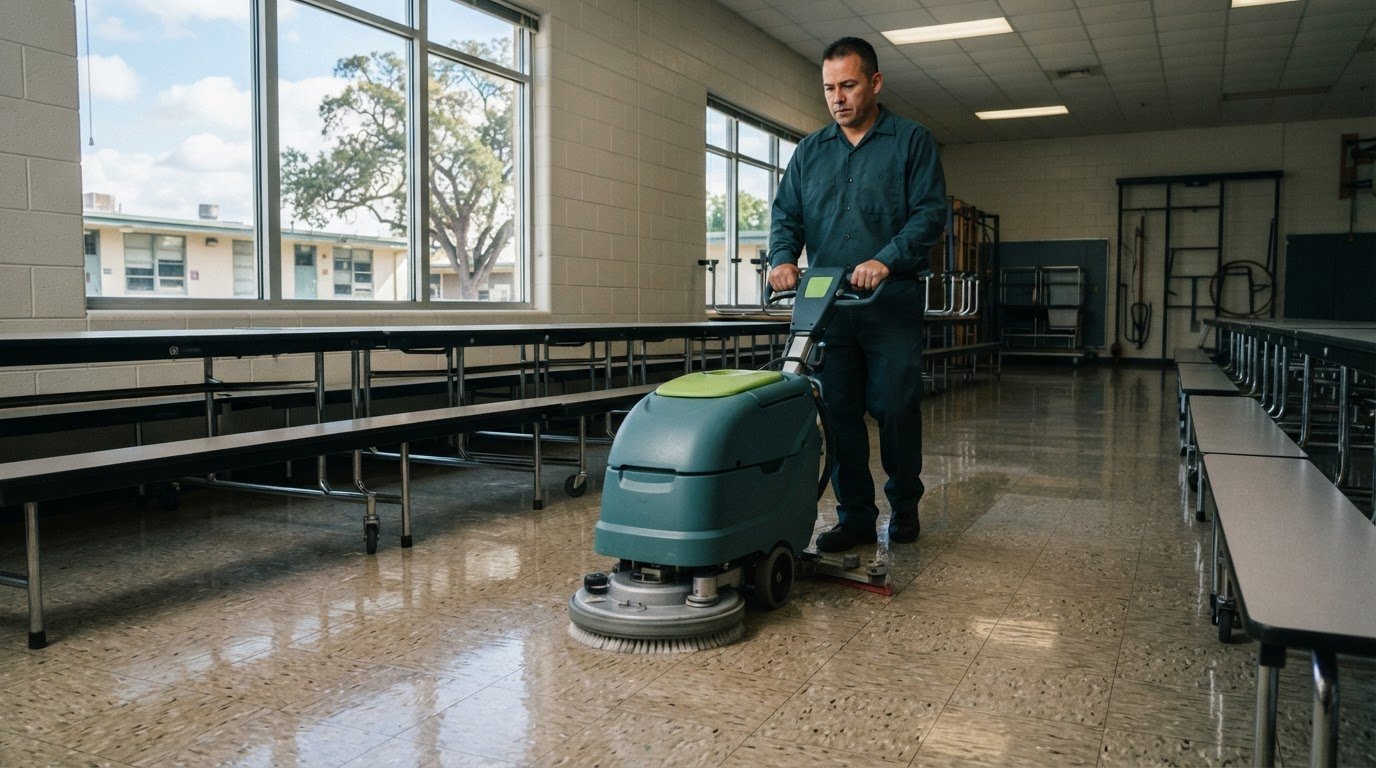
Hard surfaces need a different plan. An entryway may collect grit, while a cafeteria floor faces food spills and frequent movement. A schedule can prioritize these areas according to use and include edges and corners that daily traffic often bypasses. For finished floors, care should also reflect the surface’s condition and maintenance history.
- Carpeted classrooms: Account for spots, tracked soil, and furniture placement.
- Corridors and entrances: Prioritize visible debris and high-traffic paths.
- Shared rooms: Align floor work with room access and school activities.
- Hard surfaces: Match cleaning to the material and existing finish.
Timing matters as much as the task. A classroom used throughout the day may need cleaning when students are elsewhere, while an entrance may need more frequent attention during busy periods. Coordinating access gives floors time to dry before a room returns to use. School staff can flag sensitive areas, special events, and rooms with changing schedules.
Professional carpet cleaning and floor-care support can help schools plan care for both carpet and hard-surface flooring. Clear priorities make the scope easier to manage: identify the rooms, note the floor types, describe visible concerns, and set access windows. That gives the cleaning team a useful starting point without assuming every space needs the same treatment.
Cleaning classrooms and school common areas
A school cleaning plan works best when it distinguishes classrooms from shared areas. In a Roseville classroom, desks, chairs, and teaching surfaces need different care than cafeteria tables or corridor touchpoints. A room-by-room scope clarifies what receives attention at each visit. It also makes changes easier when a classroom becomes an event space or a room serves several groups.
For classrooms, the cleaning sequence can follow the room’s layout. Staff can address desks and other frequently touched surfaces, then clean visible soil from floors and accessible areas. An art room, for example, may need attention to tables and nearby floors. A reading room may call for more focus on seating and open surfaces. Clear task lists tie the work to each room’s use.
Shared spaces need priorities of their own. Cafeterias, corridors, entrances, and restrooms serve different purposes, so one checklist may not fit all four. A cafeteria plan can include tables and food-service areas, while an entrance plan can focus on tracked-in debris and visible marks. Roseville schools can prioritize shared spaces such as classrooms and cafeterias to help minimize germ spread.
- Classrooms: Set tasks for desks, chairs, accessible surfaces, and floors.
- Cafeterias: Include tables and the areas around food service.
- Corridors: Focus on traffic paths, visible soil, and entry points.
- Restrooms: Define fixtures, counters, floors, and replenishment responsibilities.
Attention to detail also means accounting for changes during the school day. A room may host lessons in the morning and a family meeting later. An assembly can increase use of corridors and shared seating. A cleaning schedule should identify these shifts, prioritize the affected areas, and note access windows. This helps teams work around school activity rather than treating every day the same.
Communication supports consistent results across the property. School staff can report a spill, room change, or upcoming event through an agreed process. The cleaning team can then record the affected space and adjust the task sequence. For example, a cafeteria reserved for an evening gathering may need attention before and after the event, depending on the agreed scope.
A written scope gives school administrators a useful way to review completed work. It can name each space, list routine tasks, and record exceptions such as a locked classroom. Those records help identify recurring concerns, such as a corridor that gathers debris or a classroom that needs extra attention after activities. Clear assignments help ensure shared areas and teaching rooms receive care suited to their use.
Cleaning services for private and public schools
Private and public schools share practical cleaning needs, but their schedules, facilities, and priorities can differ. A clear service scope connects tasks with the school’s daily operations and campus layout.
Sanitation and Disinfection Standards
A useful sanitation plan distinguishes routine cleaning from targeted disinfection. It identifies the spaces and surfaces covered, the responsible team, and when each task takes place. For example, a school may schedule routine classroom care separately from disinfection after a specific concern. In California, schools should align written procedures with their own policies and the directions for the products used.
Administrators can review whether the plan defines task frequency, access, and documentation. A detailed scope makes it easier to understand what happens in classrooms, restrooms, and shared areas.
Available Cleaning Services
School cleaning can include classrooms and common areas, carpet cleaning, hard-surface floor care, and attention to kitchens and bathrooms. Roseville schools with heavy daily traffic may need daily commercial cleaning; smaller or less busy facilities may choose weekly or biweekly service. The right schedule depends on space use, traffic, and the school calendar.
Private and public schools can plan around assemblies, family events, and seasonal peaks. A written schedule should identify spaces that need extra attention and explain how work changes during busier periods.
Private School Specialization
Rather than relying on a company label alone, assess whether the service plan addresses school operations. Relevant experience should show how cleaning is coordinated with maintenance staff, classroom access, events, and changing schedules. References and reviews can indicate consistency, while specific examples of school work make a provider’s approach easier to understand.
Roseville school leaders can compare providers by reviewing the proposed scope, staffing approach, and communication process. Private schools may also consider how cleanliness reflects care for the facility and the families it serves.
When reviewing experience, references, and reviews, look for specific examples of similar facilities, clear descriptions of the work, and feedback about consistency. A school-focused plan should explain how cleaning staff coordinate with school maintenance and adapt when rooms or schedules change.
A cleaning contract should define covered spaces, tasks, schedules, access arrangements, communication, and how changes are handled. It should also describe documentation and each party’s responsibilities, keeping expectations clear during routine weeks and school events.
A school’s cleanliness can communicate care and attention to detail. When reviewing proposed work, administrators can ask whether the scope covers the spaces and tasks that matter to the school. A plan that clearly states what will be cleaned and how the work will be coordinated gives decision-makers a practical basis for assessing whether the service fits their priorities.
Before approving an arrangement, school leaders can make sure expectations are clear to both the provider and the school team. They can review how changes to room access or schedules will be communicated and how questions about the work will be resolved. These details connect the written scope to daily operations. Periodic reviews also give the school a chance to discuss whether the agreed tasks remain appropriate as its needs change.
What private school cleaning services are available in Roseville?
Roseville schools can build a cleaning plan around their facilities, schedules, and daily traffic. A campus with active classrooms, a cafeteria, and shared corridors may need routine cleaning alongside periodic carpet care. Start with a room-by-room scope that identifies priorities, access times, and work frequency.
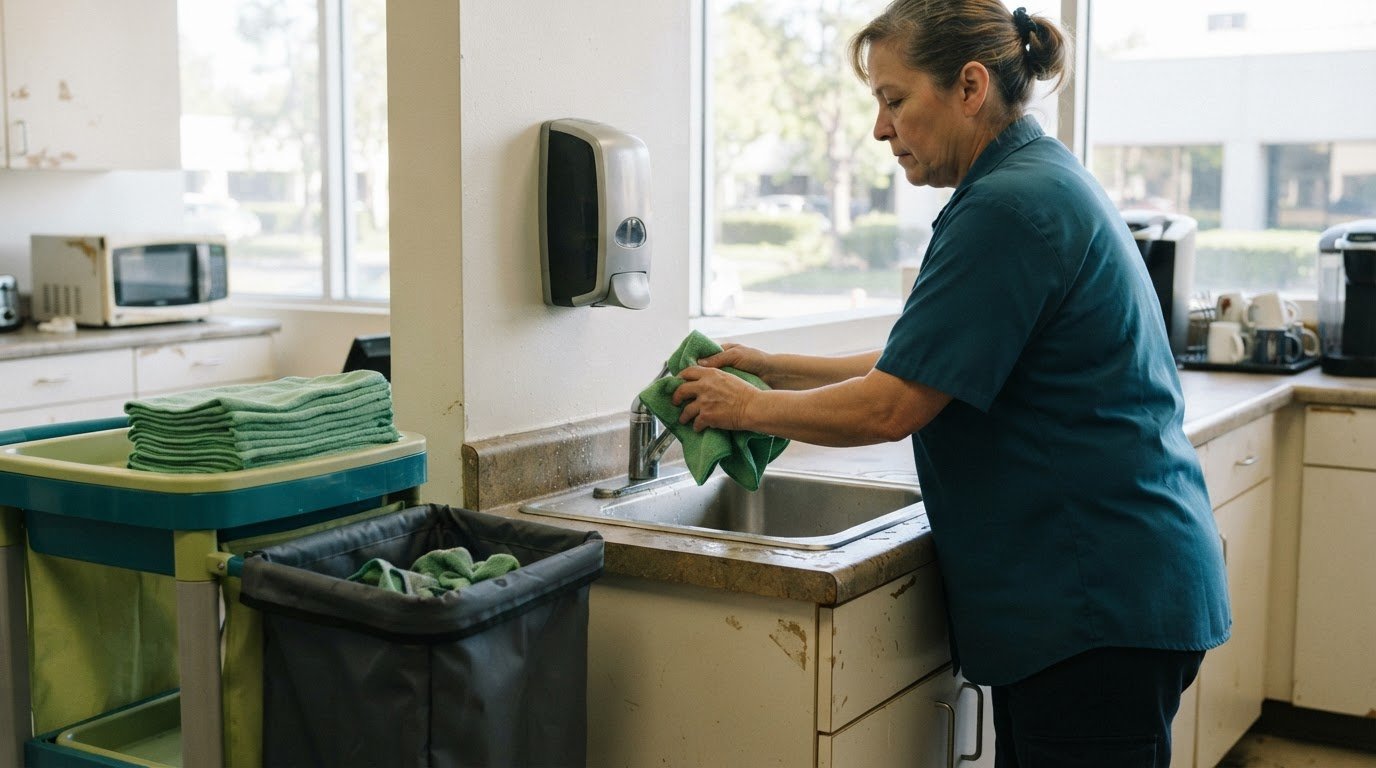
Routine commercial cleaning can cover classrooms, offices, restrooms, and common areas. A school can define tasks for desks, counters, floors, and other surfaces according to how each room is used. An office may need regular attention to work areas, while a cafeteria needs a scope suited to food service and shared tables.
Cleaning frequency depends on activity and space use. Roseville schools and other high-traffic workplaces often need daily commercial cleaning. Smaller or less busy workplaces may choose weekly or biweekly service. A school can also adjust its schedule for assemblies, family events, and seasonal peaks, identifying which spaces need extra attention during those periods.
- Daily cleaning: Establish recurring tasks for regularly used rooms and shared areas.
- Day porter service: Support daytime upkeep where ongoing building activity creates changing needs.
- Carpet cleaning: Address carpeted rooms as part of a planned floor-care scope.
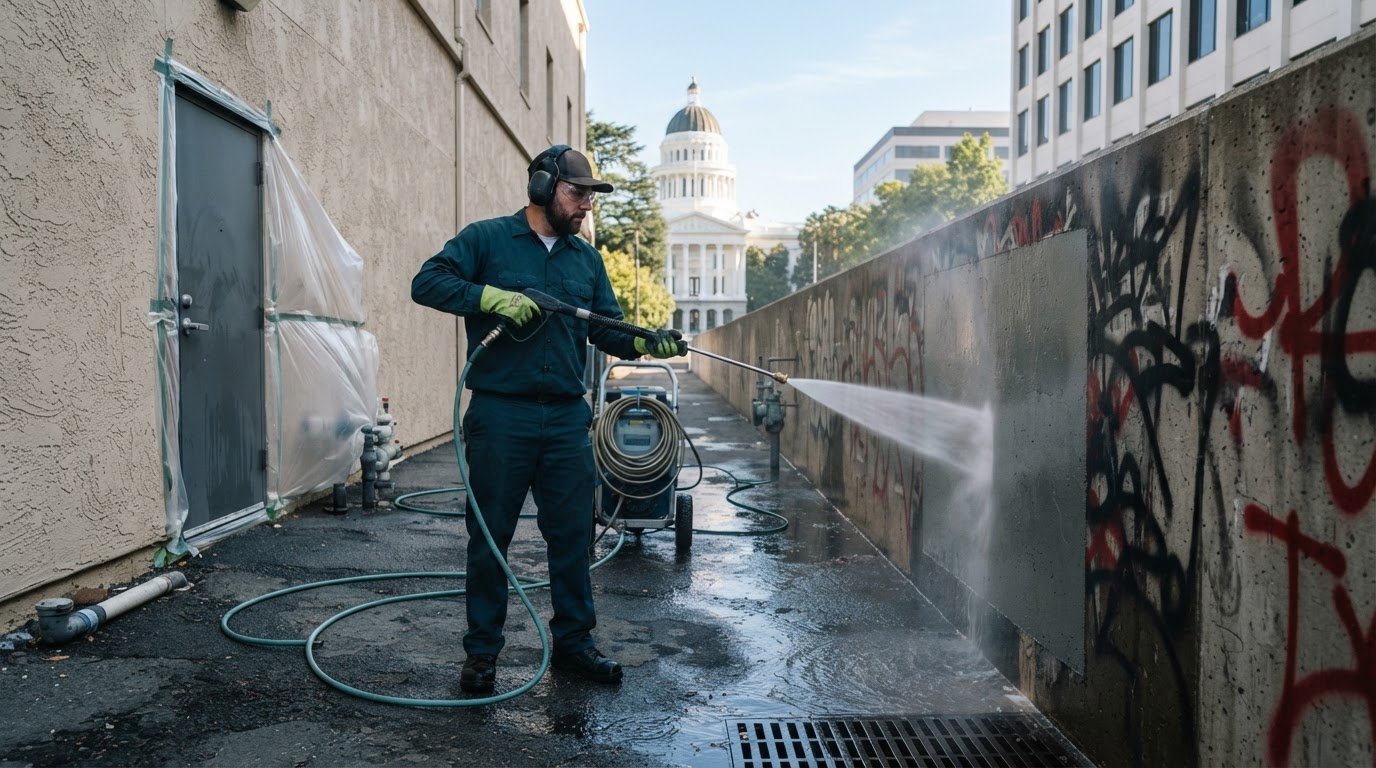
- Pressure washing: Include exterior surfaces when outdoor areas need cleaning.
- COVID-19 cleaning: Use specialized cleaning protocols as part of workplace sanitation.
Kitchen and bathroom cleaning can also be part of a school’s wider janitorial scope. The plan should name the rooms and tasks rather than rely on a general phrase such as “clean the building.” That detail helps distinguish routine work from periodic needs, such as carpet cleaning or exterior maintenance.
Before setting a schedule, school administrators can map facility use across a typical week. Note which rooms remain occupied, which areas host events, and when cleaning access is practical. A private school’s calendar may shift during enrollment events or special programs, while a public school may have different building routines. In either case, a written scope helps teams adapt without losing track of essential tasks.
For a school-specific plan, request a cleaning service discussion based on your spaces, priorities, and schedule. A clear starting scope can identify routine tasks, periodic services, and the areas that need extra attention during busy school periods.
These services can be considered when defining a private school’s scope, alongside the rooms and surfaces administrators want addressed. Clarify which spaces are included in general room cleaning and whether window washing covers the areas the school has in mind. A written description keeps expectations clear and distinguishes regular room care from window work.
Administrators can identify access times and priorities before discussing the service, so the proposed work fits campus routines. If the school is considering an hourly arrangement, it can ask how the requested tasks fit within that plan and which areas should be prioritized. A specific scope helps the school assess whether the services address its needs, while leaving room to adapt as facility use changes.
Cleanit Maintenance Systems: Pressure Washing Service
Cleanit Maintenance Systems provides pressure washing for school facilities with exterior surfaces that need attention. School administrators can include walkways and other outdoor areas in their maintenance planning. This service complements indoor cleaning without replacing classroom and shared-space care.
For ongoing interior upkeep, commercial janitorial, office cleaning, and daily cleaning services can address routine facility needs. A school can include these services in a defined scope for occupied spaces, alongside separate attention to outdoor surfaces. Matching the work to the building’s priorities keeps the plan focused and practical.
To discuss cleaning needs for your school, contact Cleanit Maintenance Systems.
Set a Clear Plan for the School Year Ahead
A practical next step is to turn your school’s priorities into a written service scope. Identify which spaces need routine attention, where floor care matters most, and how cleaning should fit around the school calendar. This gives administrators and cleaning staff a shared basis for coordinating daily work and adapting during busy periods.
A plan for private school cleaning services in Roseville can bring these details together without treating every classroom, office, and shared area alike. Cleanit Maintenance Systems provides commercial janitorial, office cleaning, and daily cleaning services to support facility needs with a defined scope of work. Start a conversation about your spaces, schedule, and priorities.
For a calm, organized next step, contact Cleanit Maintenance Systems to discuss your school’s cleaning needs. A thoughtful plan can help your team move into the school year with greater clarity and confidence.
Frequently Asked Questions
Can cleaning services be adjusted for special events or peak seasons?
Yes, a school’s cleaning plan can account for events and busy periods. For a family gathering, the scope might cover the rooms used, nearby restrooms, and entrance areas. Sharing the school calendar gives the cleaning team advance notice of changing room use. The schedule can then specify which tasks shift, which remain routine, and when event spaces are available for cleaning.
How often should a Roseville business schedule commercial cleaning?
High-traffic Roseville schools and workplaces often need daily commercial cleaning, while smaller or less busy workplaces may choose weekly or biweekly service. The practical choice depends on foot traffic, room use, and how quickly visible soil builds up. A busy entrance, for example, may need frequent attention even if offices are cleaned less often. Set the schedule according to actual facility use.
What cleaning services do private schools typically need?
Private schools commonly need routine care for classrooms, offices, restrooms, and shared areas, along with carpet and hard-surface floor cleaning. A campus with a cafeteria may include kitchen and dining areas in its scope. Schools can schedule periodic services, such as carpet cleaning, separately from recurring janitorial tasks. This makes routine work and facility projects easier to track.
Do Roseville school cleaners offer daily, nightly, or weekend schedules?
Daily cleaning is a common fit for high-traffic school facilities, and work can be coordinated around when rooms are needed for classes. The schedule should clearly state service days and access windows. Include nighttime or weekend timing in the agreed schedule rather than assuming it. For example, a school hosting an evening event can specify when the room becomes available for cleaning.
What licenses, insurance, and background checks should school cleaning companies have?
A school’s vendor records should clarify the provider’s applicable business credentials, insurance documentation, and staff screening process. The cleaning agreement can also identify who is authorized to enter school spaces and how access changes are communicated. Screening and insurance documents serve different purposes, so record each separately. Clear records help administrators track vendor arrangements without implying that one universal credential covers every situation.