The option that seems to offer more control can also add work for your managers. When comparing in-house cleaning staff vs professional service Sacramento facility leaders need to consider more than who completes daily tasks. They also need to account for hiring, supervision, supplies, coverage, and changing schedules.
It’s reasonable to want a clean, consistent facility without losing visibility or responsiveness. An in-house team gives you direct oversight, while a professional service can take on responsibility for delivering an agreed cleaning scope. The right fit depends on your facility’s size, hours, service needs, and the time your team can devote to managing cleaning operations.
This comparison covers the responsibilities, cost factors, coverage considerations, and flexibility of each model. Use it to assess workload and accountability, not headcount alone. You’ll also find practical questions to consider before requesting a Sacramento-area proposal, including which tasks need regular attention and how cleaning needs may change over time.
Key Takeaways
- Compare the full workload behind each cleaning model, including staffing coordination, supplies, supervision, and coverage.
- Evaluate in-house cleaning staff vs professional service Sacramento businesses can use by looking beyond wages or a vendor quote alone.
- Outsourcing can shift responsibility for cleaning operations, but clear expectations and regular quality follow-up still matter.
- Map your facility’s cleaning needs, operating schedule, and internal management capacity before choosing an approach.
- Document current tasks and pain points to make a service proposal discussion more specific and useful.
In-House vs. Professional Cleaning: What Changes?
For a Sacramento office or commercial facility, the core difference is who manages the cleaning work. With in-house cleaning, your business employs the staff and directly oversees their work. With an outsourced arrangement, a service provider performs the work according to an agreed scope and schedule. Both models require coordination, but the responsibilities sit in different places.
Commercial cleaning covers a range of workplace needs, but the right staffing model depends on your facility, not a standard formula. Daily cleaning services may be part of either a broader in-house plan or an outsourced scope.
Staffing is one practical consideration. This video discusses hiring and retaining cleaning staff, a responsibility businesses may take on when they manage cleaning in-house:
What does an in-house cleaning team require?
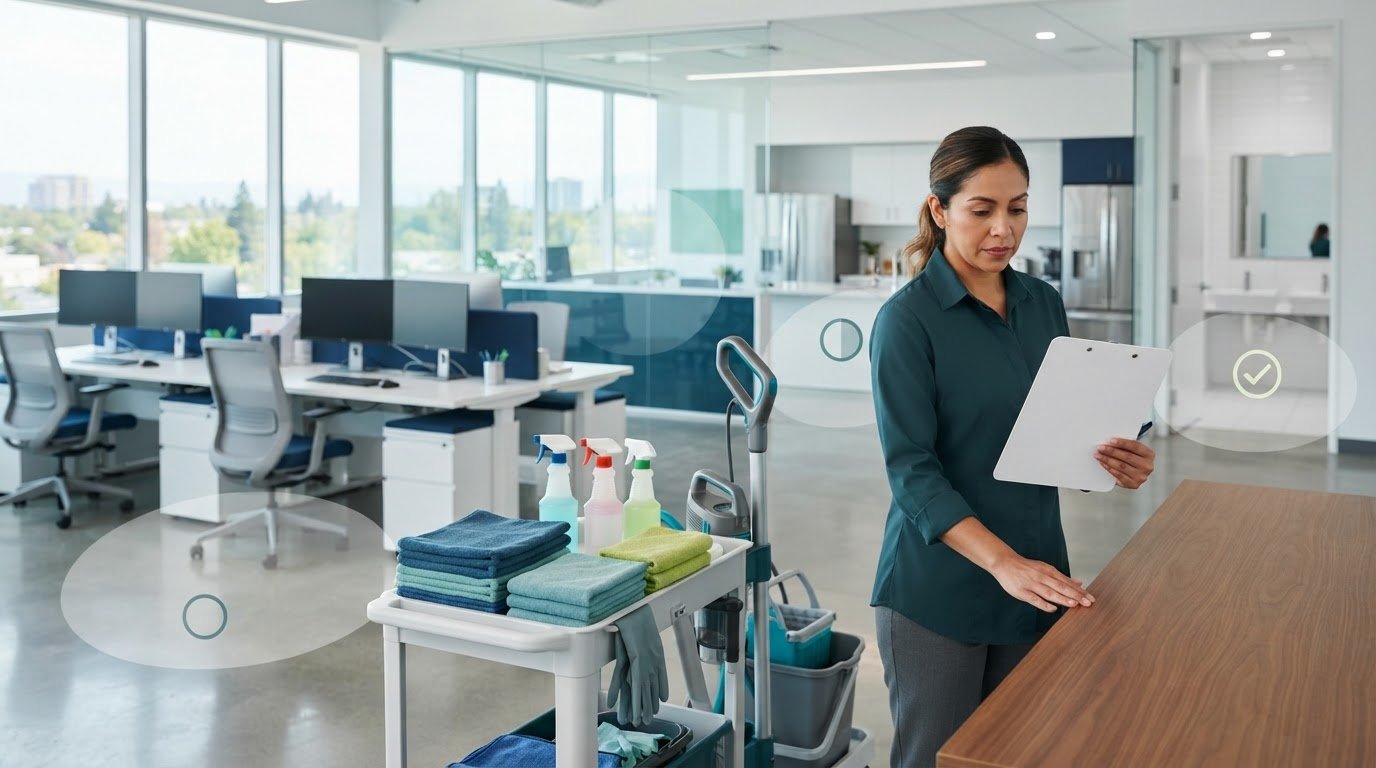
Your business handles recruiting, task assignments, shift planning, training, and supervision. It also arranges supplies and plans how duties will be covered when an employee is absent. Managers or designated staff need to check performance, address missed tasks, and adjust priorities as workplace needs change. The workload depends on facility size, operating hours, and cleaning scope.
What does a professional cleaning service take on?
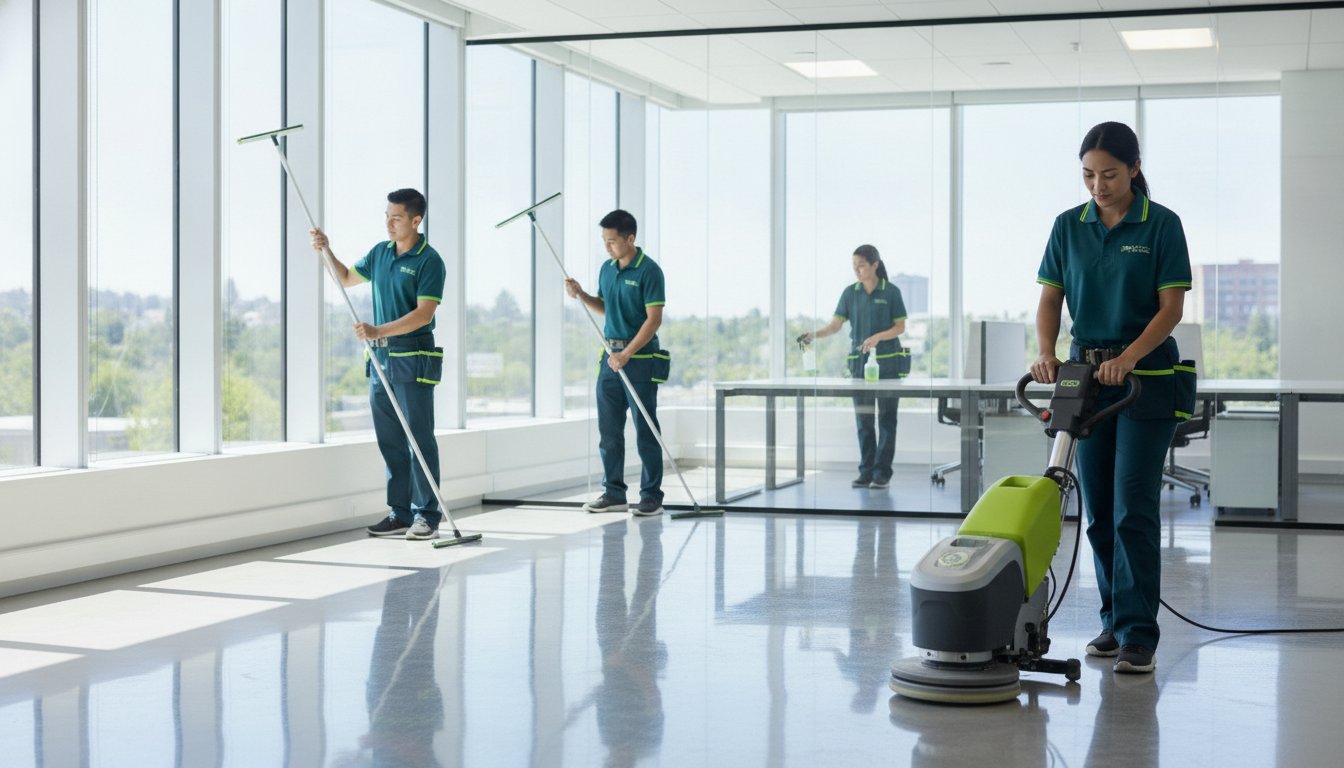
A provider takes on the cleaning work defined in the service agreement and coordinates delivery of that scope and schedule. Your business still needs a point of contact, clear task expectations, and a process for reviewing results and raising concerns. Outsourcing changes who manages daily cleaning operations; it doesn’t remove your role in setting expectations and communicating facility needs.
The distinction is easier to see side by side:
| Responsibility | In-house team | Professional service |
|---|---|---|
| Hiring and staffing | Managed by your business | Managed by the provider |
| Scheduling and coverage | Planned internally, including absences | Coordinated under the agreed service arrangement |
| Supplies and task assignments | Selected and assigned internally | Set according to the agreed scope |
| Oversight and follow-up | Direct supervision and review | Client expectations, communication, and review process |
Neither approach is automatically better. The in-house cleaning staff vs professional service Sacramento decision comes down to the level of direct control you need and the coordination your team can sustain. A business that values close daily oversight may prefer its own staff. One that wants to assign recurring cleaning work to a provider may prefer an external arrangement. Match the model to your facility’s actual requirements.
Compare the Full Operating Cost of In-House and Outsourced Cleaning
A fair comparison looks beyond payroll or a service quote. In-house cleaning brings direct costs, along with staff time spent organizing the work. Outsourced cleaning has a quoted cost tied to a defined scope, but that figure is only useful when you know what the provider will and won’t do.
Which internal responsibilities affect the total cost?
Start with your own records. Add direct labor, then estimate the time managers spend recruiting, onboarding, assigning tasks, planning shifts, and following up on performance. Include supply purchases, equipment upkeep, schedule gaps, and time spent arranging coverage when someone is absent. These figures vary by facility, so use your business’s records rather than a general benchmark.
Also account for coordination that can be easy to overlook. For example, a manager may spend time ordering supplies or rearranging tasks when a shift is short-staffed. Include safety planning in your review. For relevant workplace guidance, consult OSHA cleaning industry standards.
How should businesses assess a service proposal?
Compare each proposal against the same checklist. Specify the areas to be cleaned, the task list, how often work is expected, and the hours when service can take place. Then confirm which supplies and equipment are included, whether specialty work is part of the proposed scope, and how schedule changes or quality concerns will be handled.
Check exclusions as carefully as inclusions. A proposal may cover routine office cleaning while treating carpet cleaning or floor restoration as separate work. A daily cleaning services overview can help you consider how recurring work might fit your facility’s needs. Confirm the specific tasks and arrangements in any proposal.
For a practical side-by-side review, organize your notes into these categories:
- In-house: labor, recruitment and onboarding, supplies and equipment, management time, and planned or unplanned coverage.
- Professional service: quoted scope, schedule, included tasks and supplies, exclusions, specialty work, and review or change procedures.
This makes the in-house cleaning staff vs professional service Sacramento comparison specific to your operation, without relying on broad savings claims or an incomplete price figure. If you’re weighing a defined commercial cleaning scope, start a conversation about your cleaning needs with your task list and schedule in hand.
Control, Consistency, and Coverage: Addressing the Outsourcing Concern
Outsourcing doesn’t mean giving up oversight. It changes how cleaning is coordinated, but your business still sets priorities, communicates facility needs, and reviews whether the agreed work is being completed. With in-house employees, a manager can give instructions directly. With a provider, expectations need to be clear in the service scope and supported by a practical communication process.
Consistency depends on more than who employs the cleaners. Both models benefit from repeatable procedures, clear task descriptions, regular follow-up, and a way to raise concerns. For an outside service, agree on your facility contact, how to report an issue, and how priorities can be reviewed if workplace needs change. Ask how coverage is handled when scheduled personnel are unavailable instead of assuming a particular arrangement.
How can a business retain oversight with an outside provider?
Begin with a written task scope that identifies areas, priorities, and expected work frequency. Assign an internal contact to share access details, communicate changes, and receive follow-up on concerns. Periodically compare observed results with the agreed priorities. If facility use changes, for example, some areas may need renewed attention or the scope may need to be discussed and clarified.
Keep recurring janitorial work distinct from specialized needs. Routine cleaning may follow a regular schedule, while carpet cleaning or floor restoration may require separate planning and a clearly defined scope. Separating these needs helps prevent assumptions about what recurring service includes.
When might an internal team offer more direct control?
An in-house team may suit a facility where tasks change often during the workday and managers need to assign or reprioritize duties directly. That proximity can be useful, but it comes with ongoing responsibility for recruiting, supervising, and maintaining coverage. Consider whether your organization has the time and management capacity to support that level of control reliably.
For a Sacramento workplace weighing the in-house cleaning staff vs professional service Sacramento options, the choice is less about control versus no control and more about how accountability is organized. A provider relationship can still include defined tasks, communication, and review. An internal team still needs procedures and consistent oversight. The commercial cleaning industry trends discussed by ISSA offer broader context for how cleaning needs and service approaches develop.
If routine workplace care is the central concern, review the scope of office cleaning services as one reference point. Whichever model you choose, document the work, establish a way to address missed priorities, and revisit the arrangement when facility needs change.
How Sacramento Businesses Can Choose the Right Cleaning Model
The best fit depends on the work your facility needs and your organization’s capacity to coordinate it. Use this assessment to compare in-house cleaning staff vs professional service Sacramento options against your actual operating conditions, rather than assumptions about either model.
- Map the facility. List occupied areas, visitor traffic, special-use spaces, and the cleaning frequency each area needs. For clinics or laboratories, document specific requirements separately and confirm that any proposed scope can address them.
- Identify the work pattern. Decide whether the main need is recurring daily cleaning, daytime attention from a day porter, or periodic specialty work such as carpet cleaning or floor restoration. These needs may call for different schedules or service arrangements.
- Check internal capacity. Identify who would manage hiring, supplies, task assignment, supervision, and absences if you keep cleaning in-house. Consider whether that person has time to coordinate the work consistently.
- Define schedule and accountability. Record operating hours, access arrangements, who confirms tasks, and who handles changes or concerns. For an outside service, verify that the provider’s service area and proposed schedule fit your facility’s location and requirements.
Use your findings to compare options without treating either as the default winner:
- In-house may fit when frequent task changes make direct supervision valuable and your business can provide ongoing management and coverage.
- A professional service may fit when you want to assign recurring cleaning to a provider under a defined scope, or when routine cleaning and specialty work need to be coordinated in a service discussion.
- Either model may need added planning when daytime attention, specialized facility requirements, or changing access conditions affect how work should be scheduled.
Before deciding, ask: Who coordinates daily work? How will completed tasks be confirmed? What happens when priorities or schedules change? For a provider proposal, clarify scope, exclusions, communication, coverage arrangements, and review expectations. For an internal plan, identify who is accountable for staffing, supplies, oversight, and absence coverage.
Sacramento facilities can use their task list and schedule to compare needs with the scope of commercial janitorial services in Sacramento. If you’re considering outside support, discuss your facility’s cleaning requirements and use those details to guide a practical scope conversation.
Move from Comparison to a Practical Cleaning Plan
A sound decision starts with an accurate picture of your current operation. Before changing staffing models or requesting a service proposal, document what gets cleaned, how often it’s done, where coverage falls short, and how much staff time goes into coordinating the work. This baseline helps you compare responsibilities and services your facility actually needs, rather than relying on assumed savings.
What information should a business prepare?
Build a brief facility profile that a manager or prospective provider can understand quickly. Include:
- Facility type, approximate areas, occupied spaces, and any special-use areas.
- Operating hours, building access procedures, and the current cleaning schedule.
- Tasks and their frequency, plus concerns such as missed priorities or schedule gaps.
- Whether the need is daily cleaning, daytime support, or periodic specialized maintenance.
- Decision-makers, the internal contact, and the preferred way to review performance or report concerns.
Describe the work rather than relying on broad labels. For instance, separate routine office cleaning from periodic needs such as carpet cleaning or floor restoration. If your facility is a medical office, describe its cleaning requirements for discussion instead of assuming a general scope will address them.
How can Cleanit Maintenance Systems fit into the evaluation?
Cleanit Maintenance Systems provides commercial janitorial and office cleaning in the Greater Sacramento area. Its service range includes daily cleaning, day porter services, medical office cleaning, carpet cleaning, and floor restoration and protection. Which offerings are relevant depends on your facility and the scope you’re evaluating. Cleanit Maintenance Systems is a locally owned business that has operated for over 30 years.
Use your notes to ask practical questions about the proposed scope, schedule, access, communication, and review process. That gives you a clearer basis for comparing an outside service with the internal responsibilities of an in-house team, without presuming either model will suit every business.
If you’re ready to discuss your Sacramento facility’s specific requirements, contact Cleanit Maintenance Systems about your cleaning needs.
Choose a Cleaning Plan That Fits Your Facility
The right choice isn’t simply a matter of in-house cleaning staff vs professional service Sacramento. Compare the full operating responsibilities, identify the coverage your facility needs, and decide how your team will set expectations and review results. A clear record of tasks, schedules, and coordination time gives you a practical basis for evaluating either model.
For some facilities, direct employee oversight may suit changing daily priorities. For others, a defined relationship with a commercial janitorial provider may better align with recurring cleaning or specialized needs. The deciding factors are your facility’s requirements, schedule, and available management capacity.
Cleanit Maintenance Systems serves commercial customers across the Greater Sacramento area and is a locally owned business that has operated for over 30 years. If you’re considering outside support, share your facility’s needs and priorities to start a focused discussion.
Discuss your Sacramento facility's cleaning needs. A well-informed plan can help your team move forward with greater clarity and confidence.
Frequently Asked Questions
Is it cheaper to hire in-house cleaning staff or a professional cleaning service?
Neither option is always cheaper. Compare the full cost of operating each model for your facility. In-house expenses can include wages, recruiting, payroll administration, supplies, equipment, supervision, and arranging coverage. For a professional service, assess the proposed scope, schedule, included tasks, supplies, and exclusions. The in-house cleaning staff vs professional service Sacramento comparison is most useful when it includes your own records and management time, not just a wage or quote.
What are the advantages of in-house cleaning staff for a commercial facility?
In-house staff can give a business direct supervision and the ability to assign or reprioritize tasks internally. That can be useful when facility needs shift often or managers want close involvement in daily work. The trade-off is that the employer must coordinate hiring, training, schedules, supplies, performance follow-up, and absence coverage. Consider whether your team has the capacity to sustain that oversight alongside its other responsibilities.
Can a professional cleaning service provide consistent results?
Consistency is possible when the service scope, schedule, task expectations, communication, and follow-up are clear. Before work begins, document priority areas and agree on how concerns or changing needs will be raised. Then review results against the agreed tasks and discuss gaps promptly. Outsourcing doesn’t remove the client’s role in setting expectations, but a defined process can make responsibilities easier to track over time.
What should a business include when comparing cleaning service proposals?
Compare proposals using the same list of facility areas, tasks, frequency, and acceptable service hours. Check which supplies and equipment are included, whether specialty work such as carpet cleaning is part of the scope, and what is excluded. Also ask how schedule changes, coverage arrangements, concerns, and quality reviews are handled. A proposal is easier to assess when it reflects your actual facility needs rather than a broad description of cleaning.
When does a Sacramento business need a day porter instead of scheduled cleaning?
A day porter may be worth considering when a facility needs cleaning attention during operating hours rather than only at scheduled cleaning times. For example, assess whether shared or visitor-facing areas need attention throughout the day. Scheduled cleaning may suit tasks that can be completed at planned intervals. Map the locations, timing, and type of work first, then confirm whether day porter services fit the facility’s needs and proposed service arrangements.
How can a business switch from in-house cleaning to a professional service?
Start by documenting current tasks, schedules, facility access procedures, pain points, and the internal time spent coordinating cleaning. Identify which duties should continue, change, or be considered separately, such as periodic carpet cleaning. Use that record to discuss a defined scope and transition responsibilities with a prospective provider. Confirm communication contacts, review expectations, and timing before changing the current arrangement, so the handoff is based on clear information.
Does outsourcing commercial cleaning eliminate the need for oversight?
No. Your business still needs to set priorities, designate a contact, communicate changes, and review whether the agreed work meets facility needs. The provider coordinates the contracted cleaning work, while your team remains responsible for explaining expectations and raising concerns. A simple review process can help both parties address missed tasks or changing requirements. Clarify the process in advance rather than assuming oversight will happen automatically.